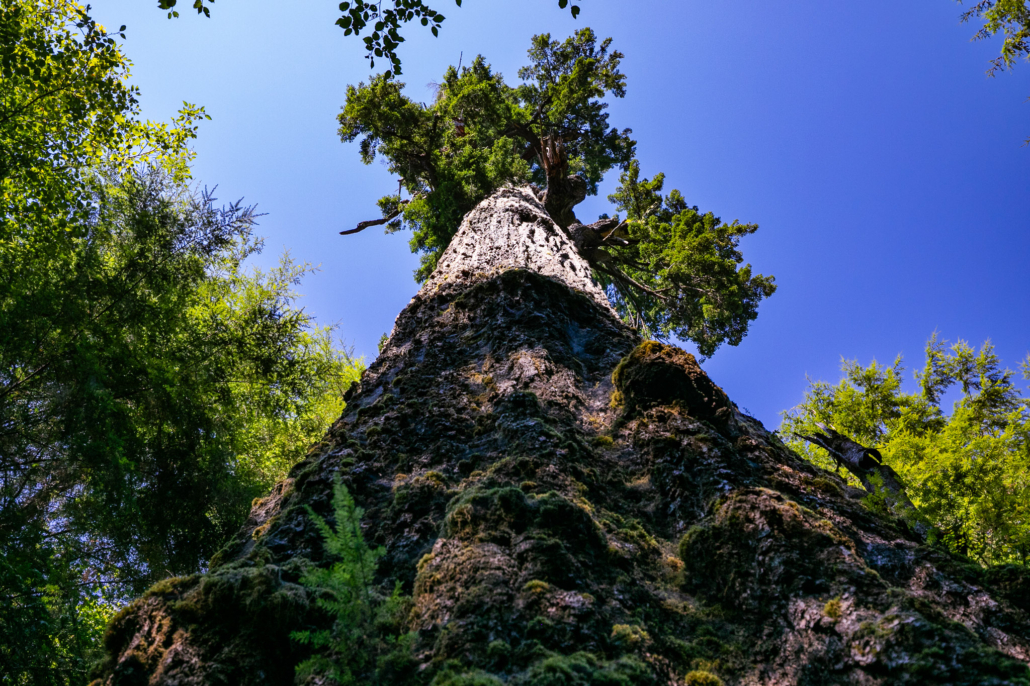
UPDATED: Port Renfrew Big Trees Map
Explore the updated Port Renfrew Big Trees Map with new directions, trails, and routes to iconic giants like Big Lonely Doug, Eden Grove, and more.
https://staging.ancientforestalliance.org/wp-content/uploads/2025/05/13-Red-Creek-Fir.jpg
1365
2048
TJ Watt
https://staging.ancientforestalliance.org/wp-content/uploads/2026/05/Ancient-Forest-Alliance-logo.svg
TJ Watt2026-05-29 15:39:342026-05-29 15:40:49UPDATED: Port Renfrew Big Trees Map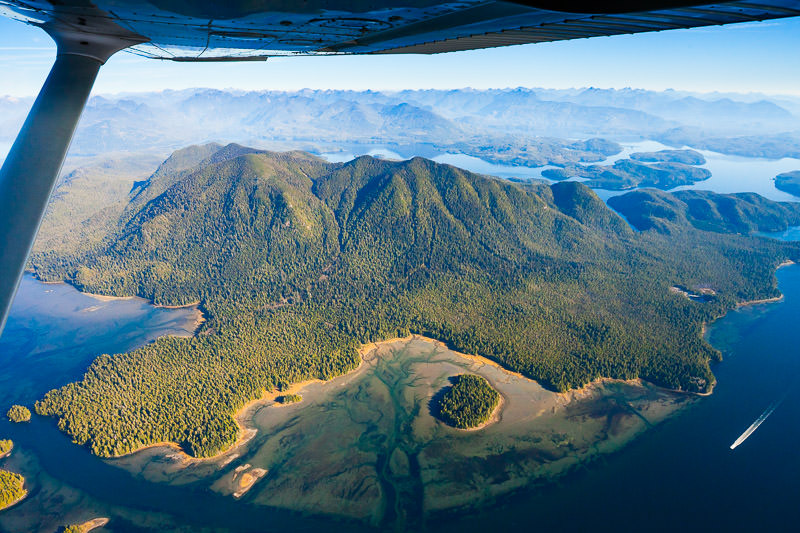
NEW! West Coast Old-Growth Hiking Guide
Explore AFA’s NEW West Coast old-growth hiking guide. From Clayoquot Sound to Port Alberni, there are trails for every skill level!
https://staging.ancientforestalliance.org/wp-content/uploads/2026/05/meares-island-big-tree-trail-tofino-1200px-338.jpg
533
800
TJ Watt
https://staging.ancientforestalliance.org/wp-content/uploads/2026/05/Ancient-Forest-Alliance-logo.svg
TJ Watt2026-05-29 12:06:002026-05-29 15:42:38NEW! West Coast Old-Growth Hiking Guide
Now Hiring: Contract Graphic Designer!
Ancient Forest Alliance is hiring a contract Graphic Designer to help bring our campaigns to life through print and digital materials.
https://staging.ancientforestalliance.org/wp-content/uploads/2026/05/flores-island-wildside-trail-1200px-430.jpg
800
1200
TJ Watt
https://staging.ancientforestalliance.org/wp-content/uploads/2026/05/Ancient-Forest-Alliance-logo.svg
TJ Watt2026-05-22 12:22:292026-05-22 12:22:29Now Hiring: Contract Graphic Designer!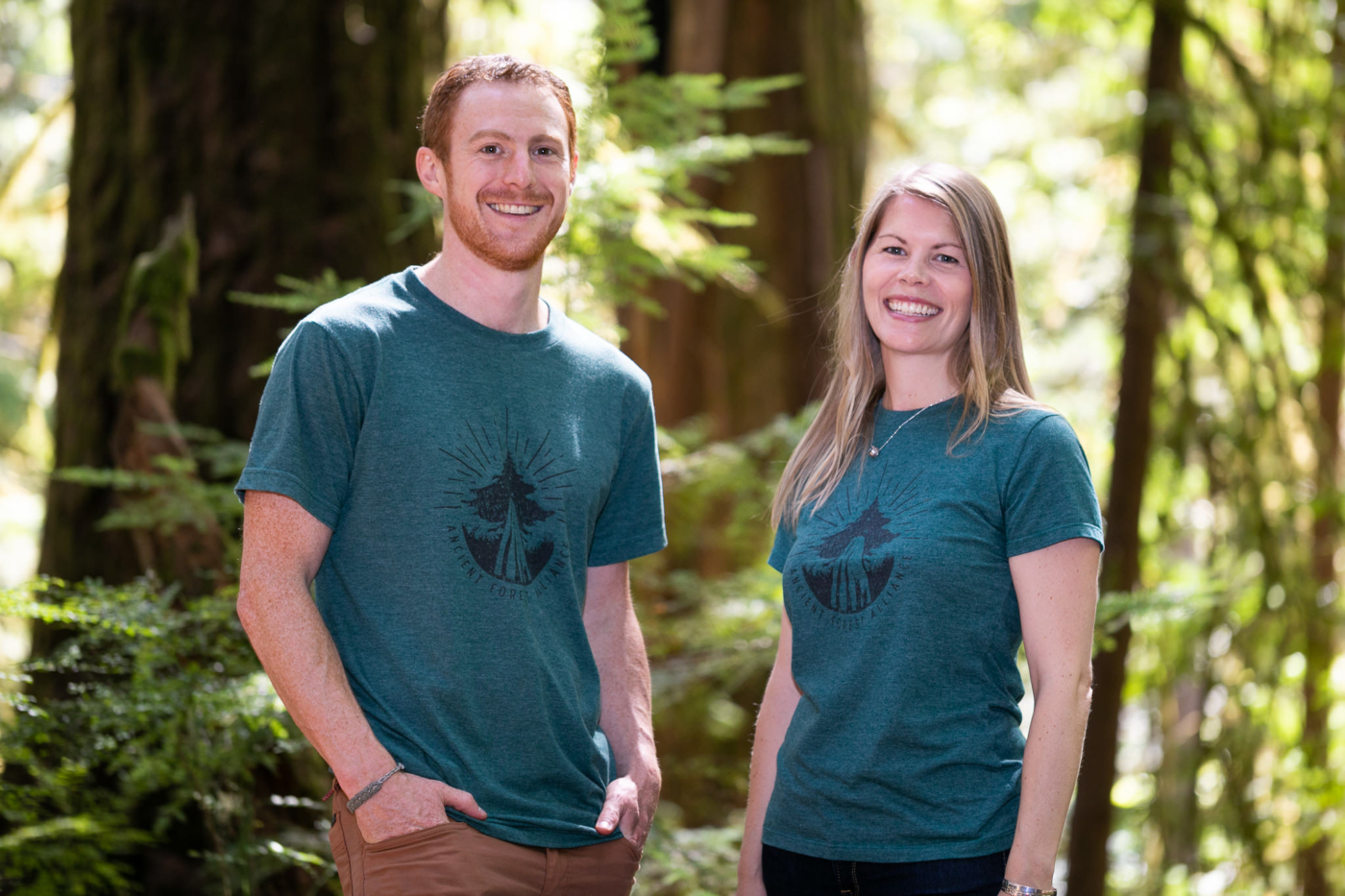
Design AFA’s Next T-Shirt and Help Protect Old-Growth Forests!
Calling all artists! For Earth Month, AFA is launching our first-ever Community T-Shirt Design Contest.
https://staging.ancientforestalliance.org/wp-content/uploads/2026/04/AFA-T-Shirt-Green-Mens-Womens.jpg
1365
2048
TJ Watt
https://staging.ancientforestalliance.org/wp-content/uploads/2026/05/Ancient-Forest-Alliance-logo.svg
TJ Watt2026-05-15 08:13:232026-05-19 09:33:44Design AFA’s Next T-Shirt and Help Protect Old-Growth Forests! Donate
 Send a Message
Pine Beetle used as Trojan Horse to Increase Privatization of BC’s Forests through Ministerial Fiat instead of Democratic Legislative Vote
/in Media ReleaseFor Immediate Release
February 22, 2013
Pine Beetle used as Trojan Horse to Increase Privatization of BC’s Public Forest Lands through Ministerial Fiat instead of Democratic Legislative Vote
On Wednesday, the BC Liberal government introduced a proposed bill that would enable the massive increase of private property rights for major logging companies on BC’s public forest lands by empowering the Forest Minister to quickly create new Tree Farm Licences (TFL’s) in BC through fiat – that is, through policy decree rather than through a vote in the Legislative Assembly of elected politicians (Members of the Legislative Assembly – MLA’s). See: [Original article no longer available]
The proposal was inserted in a larger omnibus bill, the Miscellaneous Statutes Amendment Act (see: https://www.leg.bc.ca/39th5th/1st_read/gov08-1.htm)
“This is a dangerous, undemocratic proposal that will give increased rights to the major logging corporations on public lands at the expense of local communities. Greater certainty through exclusive logging rights over huge areas for these companies will make it harder to conserve forests for wildlife, recreation and scenery, and will exacerbate the overcutting already taking place at the expense of local communities ,” stated Ken Wu, executive director of the Ancient Forest Alliance.
“While the government has stated that the pine beetle-killed trees are the reason for wanting to give logging companies greater rights in the Central Interior, the proposed bill gives province-wide powers for the Forest Minister to do this anywhere through policy fiat instead of through a democratic vote in the Legislative Assembly,” Wu continued. “On the ground it means more clearcuts, less old-growth forests, ruined scenery and recreational opportunities, more dirty drinking water, and destroyed salmon streams.”
A Tree Farm Licence (TFL) is a defined geographic area that is tens or hundreds of thousands of hectares in size that confers exclusive logging rights to one logging company on Crown (public) lands. TFL’s currently constitute a minor fraction of BC’s landbase, perhaps about 10% of the geographic area and about 20% of the cut. Most of the province’s forests are found in Timber Supply Areas (TSA’s) where no specific geographic area is granted to companies for exclusive logging rights – instead they are given a volume of wood (in cubic meters) through a Forest Licence (FL) that they are allowed to cut within each massive TSA each year in cutblocks planned by the Forest Service.
The BC Liberals’ public relations spin about this proposal include such lines as:
Myth: This is for the benefit of local communities, as many people want to see more Community Forests and small businesses in the forest industry.
Fact: The proposal would enable those with replaceable volume-based licences, mainly Forest Licences, to be turned into Tree Farm Licences. The vast majority of Forest Licences are held by large logging companies, they are the ones who will receive the main benefits of this “rollover” from volume-based licences to area-based Tree Farm Licences and will generally oppose any allocation of their cut to communities.
Myth: This will help logging corporations plan for the future to invest in responsible forestry and act as stewards for the resource by increasing their certainty to the land base.
Fact: Corporations are not communities. They don’t hike, fish, hunt, recreate, or benefit from having endangered species and clean water in the forests where they log. They are highly mobile, moving on to other areas as needed and are bought and sold regularly, with no long term ties to the land and certainly not to the myriads of life forms adapted to standing forest ecosystems. In 2004 the BC Liberals changed the Forest Act to allow TFL’s to be bought and sold without public oversight, enabling greater flexibility and mobility for the major logging corporations that have TFL’s, as well as removing the requirement that companies must process the logs in BC. The history of Tree Farm Licences in BC shows a regular change-over in their ownership often every several years and massive clearcut logging, depletion of old-growth forests, destruction of salmon streams and wildlife habitat, and damage to the tourism potential of our forests.
Myth: This proposal comes out of the recommendations of the Special Committee on the Mid-Term Timber Supply that was convened last summer to take public input on what to do about the impending shortage of timber to feed mills in BC’s Central Interior.
Fact: The Committee did not recommend an expansion of TFL’s and certainly not through ministerial fiat – they noted there was an appetite in communities for greater control over the resource, such as tenures like Community Forests and for small enterprises. This proposal would go the opposite direction, increasing corporate control on BC’s forests lands at the expense of communities, conservation, and First Nations rights and title by increasing corporate certainty over unceded lands. Due to the shortage of timber in BC due to overcutting and the pine beetle expansion, few companies would be willing to hand over any significant portions of their allowed cut to communities during the change over from a Forest Licence to a Tree Farm Licence – the net effect being increased corporate logging rights, not greater community control.
“Christy Clark’s BC Liberal government is increasingly out of touch with the electorate with poor to atrocious judgement. To propose something as sweeping as this before a BC election is not only outrageous, but foolish. The government needs to smarten up – and the NDP opposition needs to come out of its careful slumber too. This is now an election issue – we guarantee it,” stated Wu.
Links:
B.C. land protection insufficient to conserve species biodiversity: report
/in News CoverageEnvironmental protection of B.C.’s landscapes is fragmented, inconsistent and falls woefully short of what scientists say is needed to conserve species biodiversity, according to a comprehensive land-use review released Thursday by environmentalists.
The report by Vancouver-based ForestEthics Solutions with assistance from West Coast Environmental Law, says 15.55 per cent of the B.C.’s land base (including private property and water bodies) has been placed in the highest categories of protection. That includes 14.4 per cent as parks and protected areas, and 1.15 per cent as wildlife management areas and municipal watersheds.
Another 13.16 per cent has been given moderate protection, a rating that may allow one form of resource extraction while restricting others, 20.57 per cent of land has a few limitations on resource extraction, and 50.72 per cent of land has no specific conservation or resource-restricted designations.
The existing amount of conservation and resource extraction-restricted lands “fail to protect biological diversity and ecological integrity at the provincial scale,” the report says.
ForestEthics recommends a provincewide conservation network that connects legally-designated protected areas and conservation lands; augmentation of land-use plans by all governments using the best available climate-conservation science and cumulative impacts assessments; and updating of laws and policies to better protect biodiversity and help B.C. transfer to a “clean, green economy.”
WCEL executive-director Jessica Clogg said the report does not provide specific targets for protection, because “ultimately the answer to how much conservation is enough should be informed by the best available science and indigenous knowledge.”
The global Nature Needs Half initiative suggests “protecting and interconnecting at least half of the planet’s land and water is necessary to sustain the health, function and diversity of all life.” Supporters include Joel Holtrop, former deputy chief of the U.S. National Forest System and now on the board of directors of the Wild Foundation.
Jim Pojar, a former forest ecologist with the B.C. government, recommended in a 2010 report for a coalition of environmental groups that half of B.C.’s land base should be managed to maintain biodiversity and locked-in carbon, noting “natural forests store carbon dioxide better than do industrial forests.”
New land designations and tenures will likely be required to guide management of the expanded conservation network outside of existing parks and protected areas, his report stated. Only activities “compatible with the long-term objectives of biodiversity conservation and adaptation” should be allowed in these new areas, his report said.
B.C. is home to three-quarters of Canada’s mammal and bird species, 70 per cent of its freshwater fish, 60 per cent of its evergreen trees, and thousands of other animals and plants, that report noted.
Original article in the Vancouver Sun by Larry Pynn, February 19, 2013
The Ancient Forests of Cortes Island #2: The Carrington Bay Children’s Forest
/in News CoverageThere is very little common ground between Island Timberlands’ logging methods and how the community would like forestry to be done on Cortes—but as this is private managed forestland, there’s not a whole lot they can legally do about it. And, as long as the province is benefitting from these operations through their investment wing, the BC Investment Management Corporation (BCIMC)—which manages all of the public sector pension funds—there will continue to be a disturbing incentive for them to maintain the status quo, regardless of what communities may want.
According to Ken Wu of the Ancient Forest Alliance (AFA), “Ultimately, if these lands are going to be protected, they need to be purchased.” But despite the fact that Brookfield Asset Management purchased their coastal timber holdings for bottom dollar, they are now insisting on highly inflated prices. (We will discuss a concrete example of this in two weeks when we explore the Whaletown Commons.) How on earth are humble Cortesians supposed to purchase these forestlands for such astronomical prices?
One option is to engage a Land Trust organization. BC has two provincial land trusts to choose from: Nature Trust and The Land Conservancy. And then there are some smaller, more localized land trusts, such as the Islands Trust. These groups raise tens of millions of dollars each year for the preservation of special areas that happen to fall on private land. But once the lands are purchased, how does a community ensure that those lands remain protected in perpetuity?
In addition to raising funds, land trusts also help with the legal process of placing conservation covenants on privately held land. A conservation covenant is when a private landowner makes a legally binding promise to protect the land in specific ways of his or her choosing. The land trust agrees to monitor the covenant and ensures that its promise is being upheld. Covenants are very flexible as to what one can specify to be protected or restricted on the land, and they are attached to the land title forever—regardless of who owns it in the future.
Or, you could do what they did on Cortes and create your very own Trust. The Forest Trust for the Children of Cortes Island was just incorporated this past summer, with the sole purpose of purchasing and protecting with covenants what is known as the Children’s Forest. This area lies at the mouth of Carrington Lagoon, adjacent to Carrington Bay Regional Park. It contains some of the only stands of old sitka spruce trees on the island. James Creek runs right through the forest and supports spawning salmon. The origin of the name comes from the area’s history of being a place where students would come and learn about forest stewardship, ecology, mushrooms, wildlife, and salmon enhancement.
Island Timberlands, to its credit, has acknowledged the uniqueness of this area and has left it off its immediate logging plans. The company has engaged in a process with the Children’s Forest Trust to allow them some time to raise the necessary funds to be able to acquire the property. The next step is to agree on a fair price—which could number in the tens of millions. If Cortes Island is going to achieve this seemingly unatainable goal, they are going to need a lot of help from the outside world.
But with just two provincial land trusts in BC, there are not a whole lot of places that they can turn to. But even if they are able to get the funds they need to save this forest, the reality is that private land trusts will never be equipped to purchase all these endangered private lands fast enough to save them from liquidation. The only organization in BC with a budget large enough to make these purchases is the provincial government.
Up until 2008 the province had a land acquisition fund. However, since the recession, a fund has not been included in the budget. That is why the Ancient Forest Alliance has authored a petition calling on the provincial government to establish a BC Park Acquisition Fund of $40 million a year—or about 0.1% of the annual provincial budget.
Over ten years this fund would add up to $400 million and could be used to purchase lands with important ecological, cultural, and recreational value, to be added to the BC parks system. The petition also points out that, “For every $1 invested by the BC government in our parks system, another $9 is generated in the provincial economy through tourism revenues.” Not to mention the ecological services that a forest provides in purifying our air and water. (We will discuss ecological services next week in Green Valley.)
There is a compelling economic argument to be made for investing in a standing forest—simply to allow it to continue doing its job as a forest. But before that can happen with the Cortes Island Children’s Forest, Island Timberlands will have to agree to sell the land at fair value. And even if that does occur, the province will have to start making the acquisition of private forestlands a priority if communities like Cortes are going to survive, let alone purchase these lands. And no matter what, the Children’s Forest Trust is going to have a huge amount of fundraising on their hands.
But perhaps most importantly, for all the land that is going to remain in the hands of the corporations, there is a need for stronger regulations and enforcement of violations on Private Managed Forestland. Sensitive ecosystems and species at risk do not understand property lines. And the long-term effects of industrial logging practices have innumerable downstream consequences for neighboring communities. So the whole argument that says, “It’s their private land, they can do whatever they want.” Well, therein lies the problem—and I don’t buy it.
Next week we will take a journey into Green Valley, a luscious, mossy valley that purifies the drinking water for the people of Cortes Island. This is the next section of forestland in Island Timberlands’ logging plans.