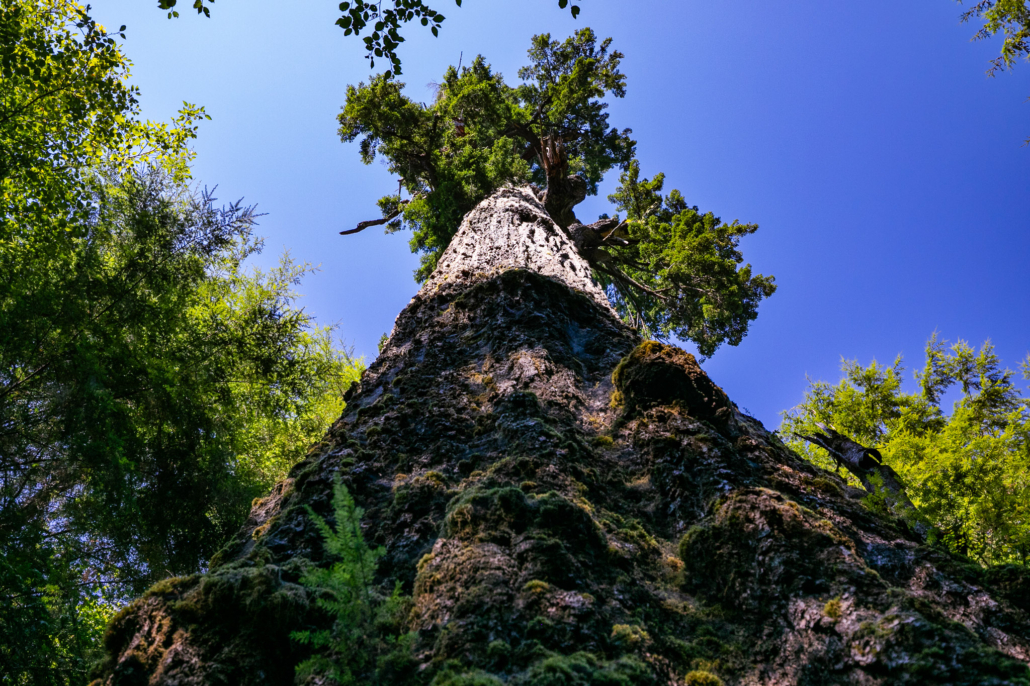
UPDATED: Port Renfrew Big Trees Map
Explore the updated Port Renfrew Big Trees Map with new directions, trails, and routes to iconic giants like Big Lonely Doug, Eden Grove, and more.
https://staging.ancientforestalliance.org/wp-content/uploads/2025/05/13-Red-Creek-Fir.jpg
1365
2048
TJ Watt
https://staging.ancientforestalliance.org/wp-content/uploads/2026/05/Ancient-Forest-Alliance-logo.svg
TJ Watt2026-05-29 15:39:342026-05-29 15:40:49UPDATED: Port Renfrew Big Trees Map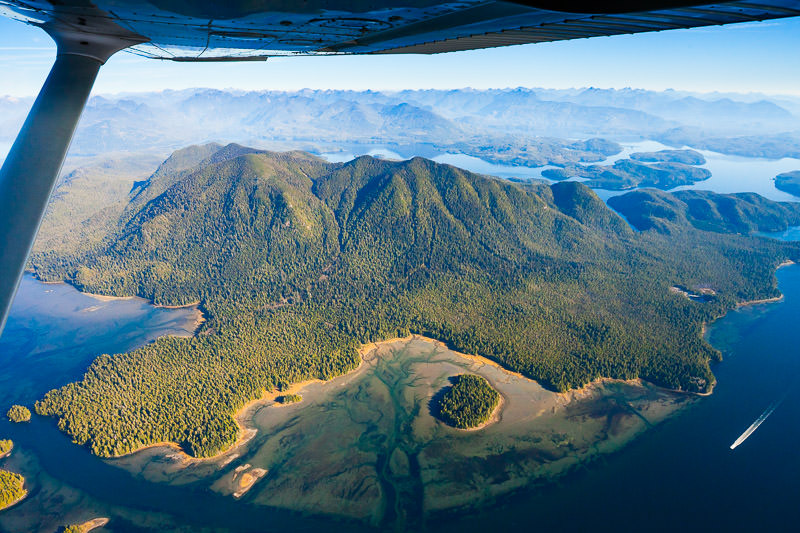
NEW! West Coast Old-Growth Hiking Guide
Explore AFA’s NEW West Coast old-growth hiking guide. From Clayoquot Sound to Port Alberni, there are trails for every skill level!
https://staging.ancientforestalliance.org/wp-content/uploads/2026/05/meares-island-big-tree-trail-tofino-1200px-338.jpg
533
800
TJ Watt
https://staging.ancientforestalliance.org/wp-content/uploads/2026/05/Ancient-Forest-Alliance-logo.svg
TJ Watt2026-05-29 12:06:002026-05-29 15:42:38NEW! West Coast Old-Growth Hiking Guide
Now Hiring: Contract Graphic Designer!
Ancient Forest Alliance is hiring a contract Graphic Designer to help bring our campaigns to life through print and digital materials.
https://staging.ancientforestalliance.org/wp-content/uploads/2026/05/flores-island-wildside-trail-1200px-430.jpg
800
1200
TJ Watt
https://staging.ancientforestalliance.org/wp-content/uploads/2026/05/Ancient-Forest-Alliance-logo.svg
TJ Watt2026-05-22 12:22:292026-05-22 12:22:29Now Hiring: Contract Graphic Designer!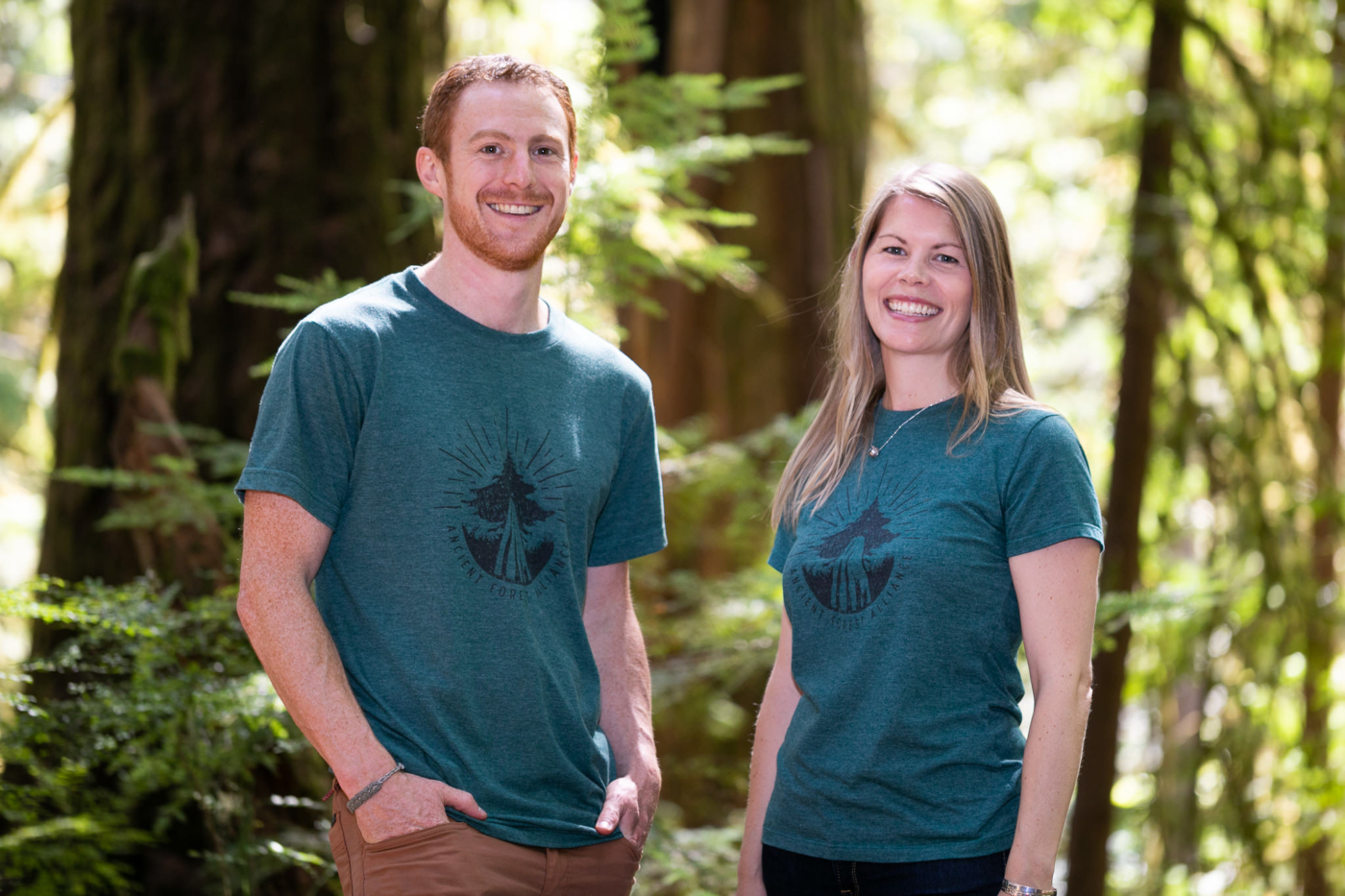
Design AFA’s Next T-Shirt and Help Protect Old-Growth Forests!
Calling all artists! For Earth Month, AFA is launching our first-ever Community T-Shirt Design Contest.
https://staging.ancientforestalliance.org/wp-content/uploads/2026/04/AFA-T-Shirt-Green-Mens-Womens.jpg
1365
2048
TJ Watt
https://staging.ancientforestalliance.org/wp-content/uploads/2026/05/Ancient-Forest-Alliance-logo.svg
TJ Watt2026-05-15 08:13:232026-05-19 09:33:44Design AFA’s Next T-Shirt and Help Protect Old-Growth Forests! Donate
 Send a Message
Mossiest forest in Canada creating buzz in Lake Cowichan
/in News CoverageEnvironmentalists with the Ancient Forest Alliance on Vancouver Island have recently discovered what is being dubbed as “Canada’s mossiest rainforest.” And it’s extremely close to Lake Cowichan.
Located near Honeymoon Bay, roughly a 40-minute drive from Lake Cowichan, Mossy Maple Rainforest supports two different growth sites. These stand close together and are surrounded by second-growth maples, red alders and conifers. One section is located on private land and the is found on Crown land, both in unceded territories of the Hul’qumi’num.
Previously the area had been owned by TimberWest until the company sold its private lands last summer to two public sector pension funds, the B.C. Investment Management Corporation and the federal Public Sector Pension Investment Board without consulting the Hul’qumi’num people.
Nicknamed Fangorn Forest, in reference to the deciduous forest featured in the second Lord of the Rings film, Mossy Maple Rainforest truly is a magical place.
Moss covers nearly everything here. Growing all the way up to the top of most trees, the moss provides a thick fuzzy green layer up these twisted giants. Getting so thick, collections of gigantic moss clumps have fallen and now carpet the ground of Mossy Maple Rainforest. Upon inspection, some of these masses weigh several pounds.
Ken Wu of the Ancient Forest Alliance helped discover Mossy Maple and said the deciduous trees bark is rich in calcium, which moss loves and is why it thrives here.
Diverse mosses, licorice ferns and lobaria “lettuce” lichens and more fauna grows on the trees in Mossy Maple. According to Wu, Mossy Maple hosts more plants growing on trees than any other trees in North America. The area is also home to bears, cougars, elk and a host of other wildlife.
Wu believes the area will soon put the Lake Cowichan-area on the map and is hopeful that Mossy Maple can transform into the Canadian-equivalent of Olympic National Park in Washington, which also boasts stunning old-growth deciduous forests.
“The potential for tourism is massive here,” explained Wu.
The maple syrup industry is also beginning to thrive in B.C.. Boasting a more milder flavor than maple syrup from Eastern Canada, the supply for B.C. maple syrup far surpasses its demand. This could also be economically beneficial to the area without destroying the forest’s majestic beauty.
“This type of forest is new to most conservationists and to the general public, few of whom are aware of old-growth deciduous rainforest. It’s sort of like spotting a wooly rhinoceros among a regular herd of endangered rhinos. Big leaf maples support First Nations cultures, abundant wildlife, salmon streams, B.C. maple syrup and important scenery. The last ancient stands must be protected,” said Wu.
Wu noted that a walking will need to be erected through the Mossy Maple site, so as to prevent damage to the area caused by people traffic.
It’s unknown what the future holds for Mossy Maple Rainforest. Old growth big leaf maples are important commodities to the logging industry for their strong, dense wood. Wu said no current logging plans exist for this area as of yet. However, he also highlighted that no protective measures have been proposed yet either. Wu was quick to state logging can help promote the growth of second-growth maples.
“Logging helps to spread young second-growth maples by reducing competition. It also eliminates the old-growth maples. Our goal is to protect the old-growth forests,” said Wu.
Hul’qumi’num Treaty Group chief negotiator, Robert Morales is worried about Mossy Maple’s future.
“Our culture and our identity as Hul’qumi’num people are tied to our land. The large scale clearcutting on our unceded territories is an assault on our culture and on our human rights. The Hul’qumi’num land use plan calls for the protection of the last old-growth remnants in our territories. The B.C. government failed to consult with us regarding the sale of TimberWest lands to the two pension funds and they still refuse to negotiate compensation for the give-away of over 80 per cent of our territories to private interests through the E&N land grant over a century ago,” said Morales.
Big leaf maples can grow up to three metres or 10 feet in trunk diameter and can live to upwards of 300 years, making them one of the most gigantic deciduous trees in North America.
Arvid Charlie, an elder with the Cowichan Tribes has an extensive knowledge of the traditional uses of plants and resources, especially big leaf maples.
“Big leaf maples because of their hard wood was used by our people to make many things, especially paddles, while the large variety of understory plants are still used for many types of medicines and foods. The herds of elk and the remaining salmon have always been vital foods to our culture,” said Charlie.
Ancient Forest Aliance co-founder and photographer, T.J. Watt has also come under the hypnotic spell of Mossy Maple.
“These ancient maple rainforests are some of the mossiest and awesome — or ‘mossome’ as we like to say — forests on Earth. If done sensitively, they could support a significant eco-tourism and cultural tourism industry that would benefit the local economy, much as the famous big leaf maple rainforests of the Hoh Valley in Washington’s Olympic National Park do,” said Watt.
[Link to Lake Cowichan Gazette article no longer available]
Scientific American: Designate a species with your name or your pooch’s
/in News CoverageIf you discovered a new species, what would you name it? Some scientists go the descriptive route: Bambiraptor is a little raptor. Others try to make a joke – Aha ha is a species of Australian wasp named in 1977 by the entomologist Arhold Menke as a joke (Menke also used the name for his vanity license plate). Others are just sort of odd: Myzocallis khawaluokalani is an aphid whose name supposedly translates from Hawaiian to “you fish on your side of the lagoon and I’ll fish on the other, and no one will fish in the middle.” There are species named after famous people: Strigiphilus garylarsoni is a louse named after the cartoonist Gary Larson. And after the scientists themselves: Linnaeus named Linnea borealis after himself. But in the past ten years a new trend has emerged in species names: selling them to the highest bidder.
This time, if you’re willing to cough up the cash, you can have your very own horsehair lichen named for whoever, or whatever your desire (sorry, Polemistus chewbacca is already taken by a wasp). Trevor Goward, a Canadian botanist, discovered the lichen in British Columbia, where it grows in hairy mats along the branches of trees. The proceeds of the bidding go to the Ancient Forest Alliance, a non-profit conservation group in British Columbia working to conserve the old growth forests in the area. Bidding on the name, organized by charitybuzz, ends tonight.
This isn’t the first time scientists have put their discoveries up for auction. In 2008, Purdue University auctioned off the names to seven bats and two turtles. In 2007 the names for ten new species brought in $2 million for conservation projects in Indonesia, and in 2009 Steven Colbert harnessed the power of his viewers to win him the rights to Agaporomorphus colberti – a Venezuelan diving beetle.
So, if you had the bucks, what would you name the lichen? After you dog? Your husband? Your favorite Twilight character? Think carefully, because whatever it is, it will most likely last far longer than you will.
Read the article in the Scientific American: https://blogs.scientificamerican.com/observations/2011/12/14/liken-yourself-to-a-lichen-designate-a-species-with-your-name-or-your-poochs/
TONIGHT! Chief treaty negotiator Robert Morales speaks on the Hul’qumi’num Treaty Group’s fight for their forests and human rights!
/in AnnouncementsJoin the Hul’qumi’num Treaty Group’s (HTG) Robert Morales for a presentation about the Hul’qumi’num’s fight to sustain their culture, their land and their human rights against the large scale clearcutting and development on their unceded territories.
Time: 7:00-8:30 PM
Date: TONIGHT, Tuesday, Dec.13 th
Location: Garry Oak Room – Fairfield Community Association. 1335 Thurlow Rd (by Moss St), Victoria.
Map: https://g.co/maps/hskn7
Cost: By Donation
See YouTube clip (3min) of clear cutting in HTG Traditional Territory: https://youtu.be/yEpuciCDCcw
The Hul’qumi’num are a conglomerate of six First Nations bands on southeastern Vancouver Island representing 6200 members in the Cowichan Ladysmith, and Nanaimo areas. The HTG’s Land Use Plan calls for protection of the remaining old-growth forest in their territories. Unfortunately, over 80% of their traditional lands were given away to private interests during the E&N Land Grant over a century ago.
The HTG have lodged a complaint to Inter-American Commission on Human Rights (IACHR), the human rights monitoring organ of the Organization of American States (OAS), stating that the privatization and subsequent resource liquidation of their unceded territories has resulted in the loss of their culture and infringed on their human rights.
The Ancient Forest Alliance is supporting the HTG’s call for the BC government to consult and accomodate their interests with regards to these privatized corporate forest lands and to respect their land use plan.
Please come out and bring friends for this interesting and important event!