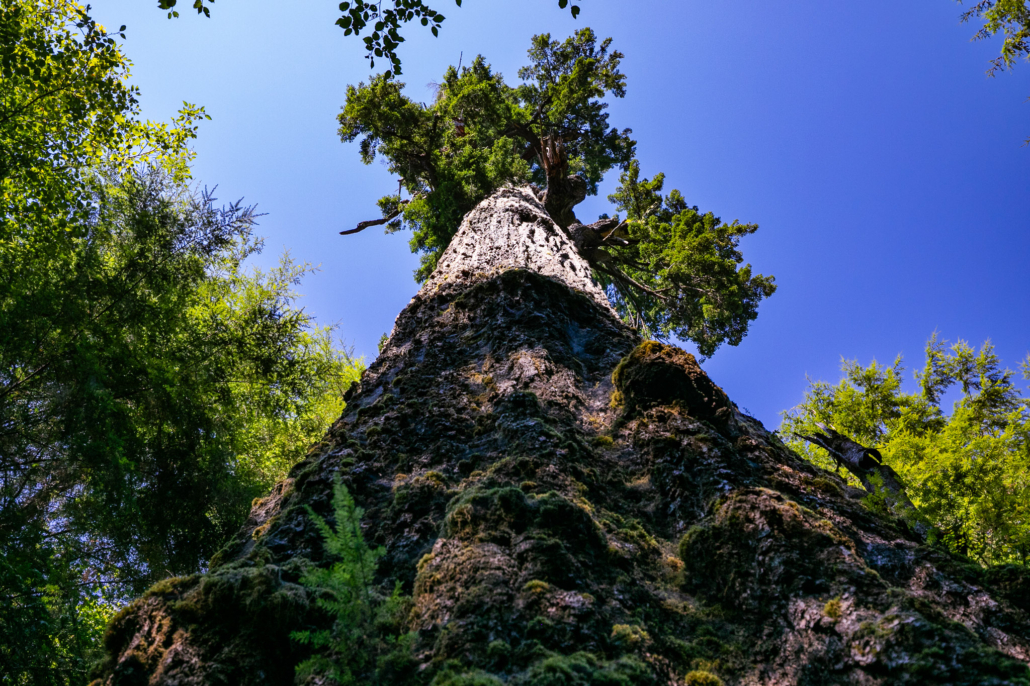
UPDATED: Port Renfrew Big Trees Map
Explore the updated Port Renfrew Big Trees Map with new directions, trails, and routes to iconic giants like Big Lonely Doug, Eden Grove, and more.
https://staging.ancientforestalliance.org/wp-content/uploads/2025/05/13-Red-Creek-Fir.jpg
1365
2048
TJ Watt
https://staging.ancientforestalliance.org/wp-content/uploads/2026/05/Ancient-Forest-Alliance-logo.svg
TJ Watt2026-05-29 15:39:342026-05-29 15:40:49UPDATED: Port Renfrew Big Trees Map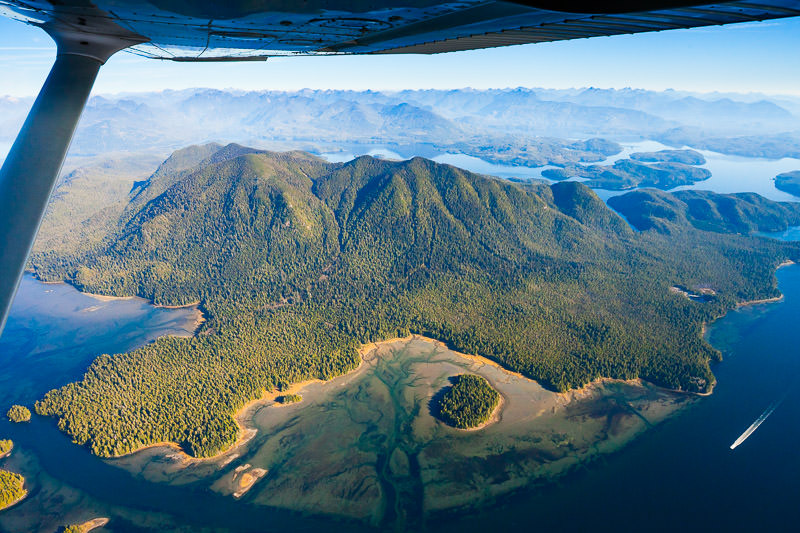
NEW! West Coast Old-Growth Hiking Guide
Explore AFA’s NEW West Coast old-growth hiking guide. From Clayoquot Sound to Port Alberni, there are trails for every skill level!
https://staging.ancientforestalliance.org/wp-content/uploads/2026/05/meares-island-big-tree-trail-tofino-1200px-338.jpg
533
800
TJ Watt
https://staging.ancientforestalliance.org/wp-content/uploads/2026/05/Ancient-Forest-Alliance-logo.svg
TJ Watt2026-05-29 12:06:002026-05-29 15:42:38NEW! West Coast Old-Growth Hiking Guide
Now Hiring: Contract Graphic Designer!
Ancient Forest Alliance is hiring a contract Graphic Designer to help bring our campaigns to life through print and digital materials.
https://staging.ancientforestalliance.org/wp-content/uploads/2026/05/flores-island-wildside-trail-1200px-430.jpg
800
1200
TJ Watt
https://staging.ancientforestalliance.org/wp-content/uploads/2026/05/Ancient-Forest-Alliance-logo.svg
TJ Watt2026-05-22 12:22:292026-05-22 12:22:29Now Hiring: Contract Graphic Designer!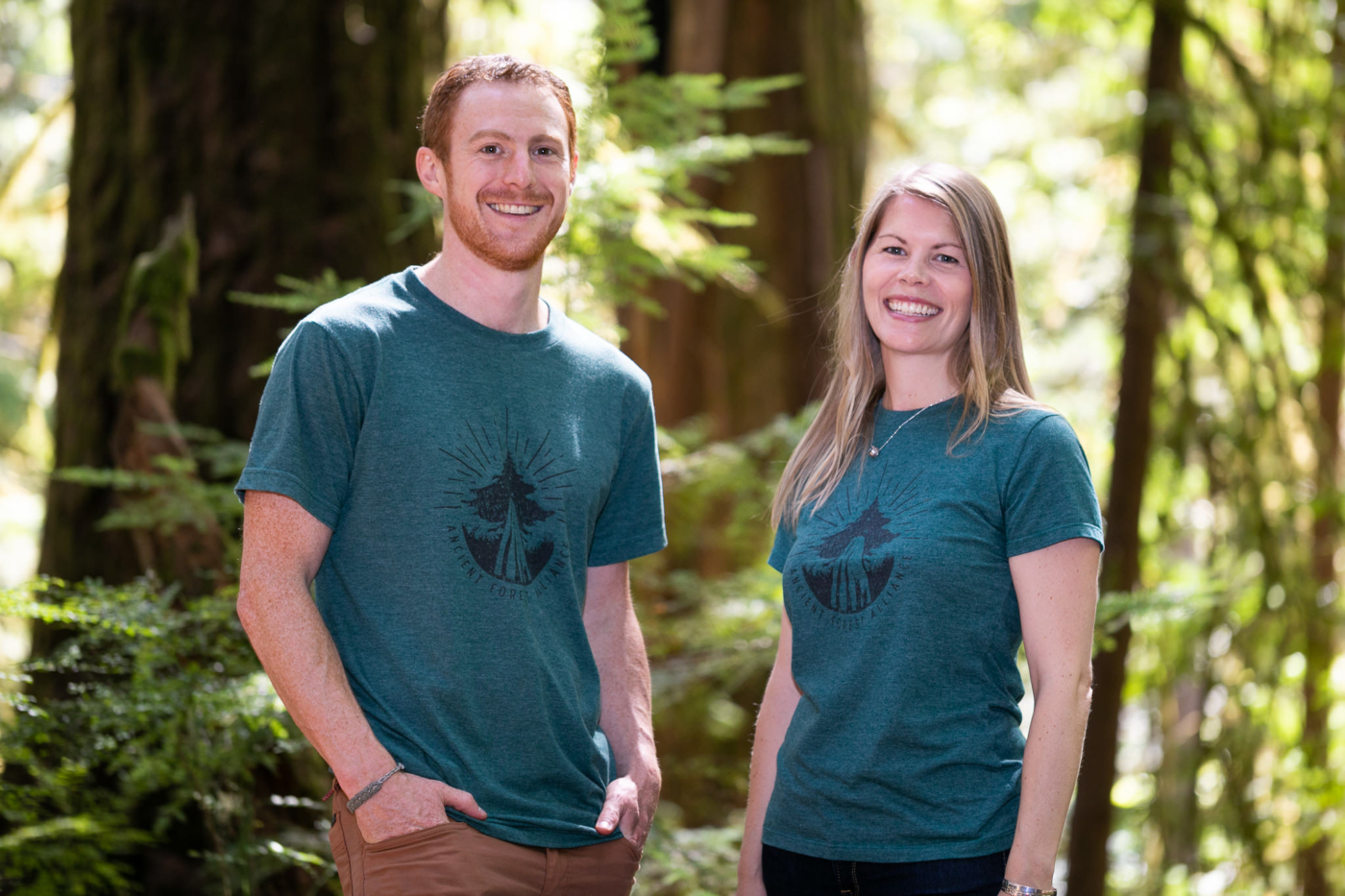
Design AFA’s Next T-Shirt and Help Protect Old-Growth Forests!
Calling all artists! For Earth Month, AFA is launching our first-ever Community T-Shirt Design Contest.
https://staging.ancientforestalliance.org/wp-content/uploads/2026/04/AFA-T-Shirt-Green-Mens-Womens.jpg
1365
2048
TJ Watt
https://staging.ancientforestalliance.org/wp-content/uploads/2026/05/Ancient-Forest-Alliance-logo.svg
TJ Watt2026-05-15 08:13:232026-05-19 09:33:44Design AFA’s Next T-Shirt and Help Protect Old-Growth Forests! Donate
 Send a Message
Overharvesting – Who is watching our forests?
/in News CoverageIt is an outrageous amount. According to a document from the Ministry of Forests that was recently brought to light in the provincial legislature (1), for the five years between 2008 – 2013, the forest company giants, Canfor and West Fraser, overcut 928,000 cubic metres of non-pine wood in the Morice Timber Supply Area (TSA), a region in north-western British Columbia. This overharvesting was done in direct violation of the Allowable Annual Cut (AAC), and is equivalent to about 23,000 logging truck loads of timber.
What is particularly galling is that, while this flagrant overcutting has been taking place, communities in the BC Interior have been facing dozens of mill closures and thousands of job losses in the wake of the pine beetle devastation of the forests and looming drop in the AAC. Having an adequate mid-term supply of non-pine wood is crucial to see the communities through this rough period, but it is precisely this mid-term supply that, in defiance of forestry regulation, Canfor and West Fraser targeted for severe overharvesting. Indeed, as part of a controversial timber swap with Canfor, West Fraser has since announced it would be closing its Houston mill in the Morice TSA by the summer of 2014.
The Morice TSA case raises the question: How much overharvesting has been going on in other Timber Supply Areas of the Interior? But to catch overharvesting and other violations of the Forest Act, oversight is needed from forestry inspectors and scientists. Unfortunately, the number of government forestry personnel has been dramatically slashed over the last decade in British Columbia.
In 2010, forestry analyst Ben Parfitt noted that the BC Forest Service had lost 1,006 positions or about a quarter of its workforce. Between 2001 and 2005 alone, field inspections fell by 46 per cent “opening the door to a range of potential abuses, including illegal logging and log theft, unmarked logs and therefore unpaid provincial stumpage fees, and environmentally destructive logging operations.” He further pointed out that, in Northeast BC, each forest service employee oversees an average of 232,240 hectares of land, compared to just 2,666 hectares of land for a US forest service employee (2).
The provincial government’s own Auditor General issued a devastating report in 2012 that sharply criticized the Ministry of Forests for its forest management, inspection and monitoring practices. The report noted that there had been a steady decline of forest practice inspections from over 31,000 in 2000/01 to about 15,000 in 2008/09. It concluded that “the ministry has not demonstrated whether its existing compliance and enforcement inspections are sufficiently robust to ensure industry compliance” (3).
In July of 2013, the Forest Practices Board weighed in with a Special Investigation of its own. It found that, since 2008/09, the number of inspections further plummeted from about 15,000 to less than 5,000 with only 2,800 of those focusing on harvesting and roads. It expressed concern that, with the “steep drop” in inspections and cuts to forest service staff, “licensees’ activities may not be inspected enough, particularly harvesting and road activities that pose a high risk of harm to resource values” (4).
The board also found that government figures regarding violations of the Forest Act and other statutory requirements were not accurate because they only took into account cases where actual enforcement actions had been taken, and did not include instances where warning tickets or non-compliance notices were issued.
Most recently, in March 2014, the Professional Employees Association released a report noting that the number of Licensed Science Officers working for the provincial government dropped by 15 percent between 2009 and 2014. For forestry science officers, the drop was even more dramatic – 27 percent.
The Association states that many technical reports used to make regulatory decisions are now being prepared by external consultants paid for by the companies. It argues that a significant number of these reports “included conclusions that were inappropriate due to incorrect or biased analyses,” and that, if left uncorrected, “would have resulted in regulatory decisions that favoured the regulated party [i.e. companies] and adversely impacted the environment.” Furthermore, as a result of staff cutbacks, much of the data regarding timber resource management and the health of the forests is no longer being collected.
The Association report concludes that professionally trained Licensed Science Officers “are the first-line stewards of B.C.’s natural resources and primary protectors of the safety of public infrastructure facilities.” Yet there are not enough of these experts to “adequately look after the interests of British Columbians” (5).
None of these reports inspire much confidence in the state of forestry oversight in the province of British Columbia. Especially with severe shortages of timber supply looming in some regions.
Oh, and what did happen to Canfor and West Fraser as a result of the 23,000 truckloads of timber they overharvested from 2008 to 2013? Were they prosecuted? Did they receive severe penalties of some kind?
Not quite. The Ministry did issue a penalty of triple stumpage for volume of timber illegally harvested. But there was a catch. It only applies to timber that may be illegally harvested in the future, i.e. it did not apply to the 2008-2013 period. In other words, the companies got away virtually scot-free. Even the Houston mill closure was not criticized or disputed.
There was one very feeble slap on the wrist. And that was a requirement that Canfor and West Fraser work with the Ministry on a plan that promises how, in the future, their harvesting will only “target the highest priority [timber] stands and protect the mid-term timber supply.”
So how much overharvesting has taken place in other Timber Supply Areas of the province? Can the Minister of Forests honestly say that he really knows, given the dramatic cutbacks in forest service staff and oversight? This is not a minor question given the increased pain that Interior communities will be feeling in the wake of dramatic AAC reductions.
We live in an era dominated by globalized corporations that continually lobby governments to reduce regulation and oversight. But what are the consequences? Without proper oversight, do British Columbia and its vast forests risk being reduced to the status of a squeezed lemon – to be thrown away once all the juice is extracted?
Big Lonely Doug coverage in Epoch Times
/in News Coverage“Big Lonely Doug” is covered in a Chinese-language newspaper, the Epoch Times.
See here:
https://www.epochtimes.com/gb/14/3/30/n4118760.htm%E5%8A%A0%E5%9B%BD%E7%AC%AC%E4%BA%8C%E5%A4%A7%E5%B7%A8%E6%9D%89-%E7%9F%97%E7%AB%8B%E6%B8%A9%E5%93%A5%E5%8D%8E%E5%B2%9B.html
VIDEO: Big Lonely Doug
/in News CoverageGlobal TV “pre-news piece” snippet using the AFA’s still photos about Big Lonely Doug, which may be Canada’s second largest Douglas-fir.
Direct video link: https://globalnews.ca/news/1235236/canadas-second-largest-douglas-fir-tree-may-have-been-found-near-port-renfrew/