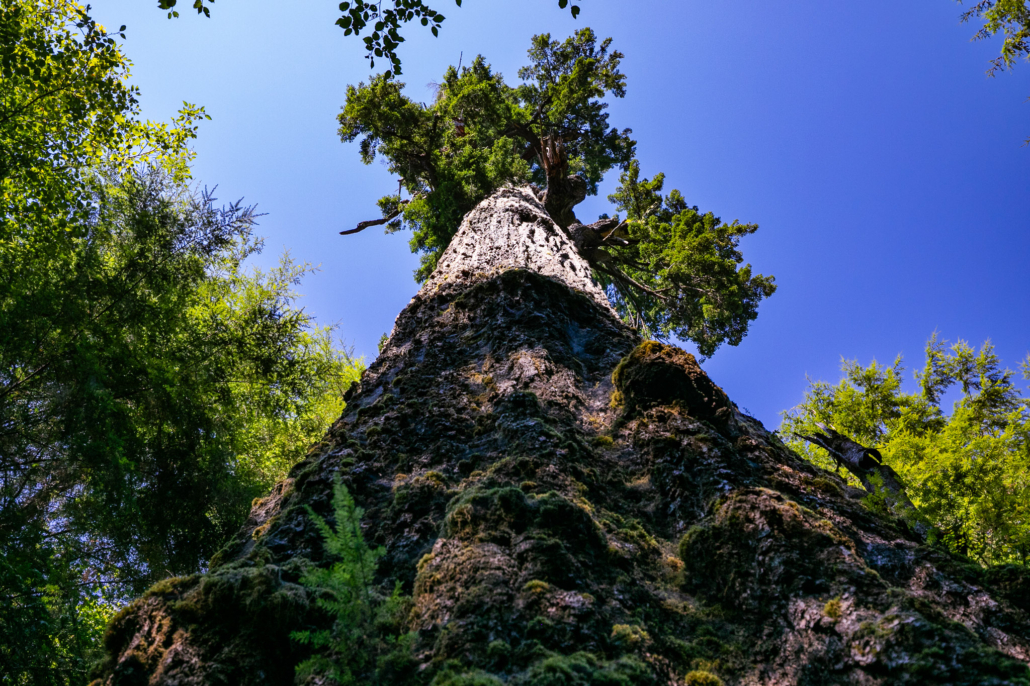
UPDATED: Port Renfrew Big Trees Map
Explore the updated Port Renfrew Big Trees Map with new directions, trails, and routes to iconic giants like Big Lonely Doug, Eden Grove, and more.
https://staging.ancientforestalliance.org/wp-content/uploads/2025/05/13-Red-Creek-Fir.jpg
1365
2048
TJ Watt
https://staging.ancientforestalliance.org/wp-content/uploads/2026/05/Ancient-Forest-Alliance-logo.svg
TJ Watt2026-05-29 15:39:342026-05-29 15:40:49UPDATED: Port Renfrew Big Trees Map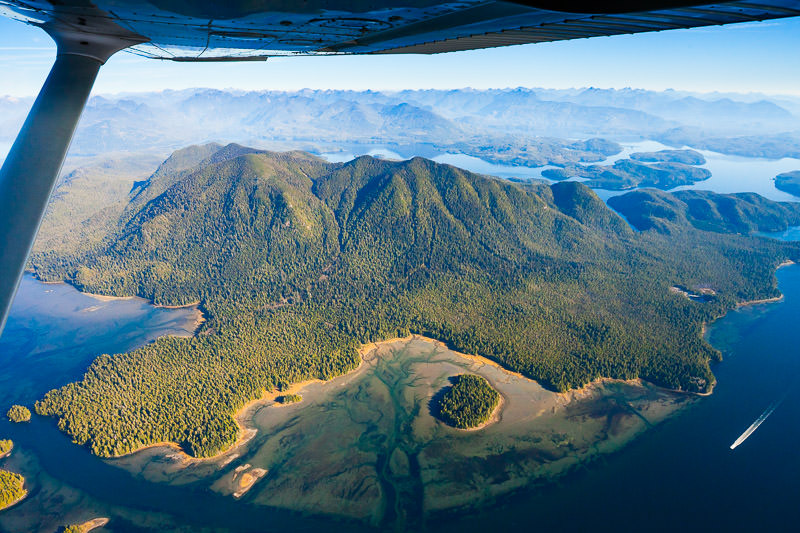
NEW! West Coast Old-Growth Hiking Guide
Explore AFA’s NEW West Coast old-growth hiking guide. From Clayoquot Sound to Port Alberni, there are trails for every skill level!
https://staging.ancientforestalliance.org/wp-content/uploads/2026/05/meares-island-big-tree-trail-tofino-1200px-338.jpg
533
800
TJ Watt
https://staging.ancientforestalliance.org/wp-content/uploads/2026/05/Ancient-Forest-Alliance-logo.svg
TJ Watt2026-05-29 12:06:002026-05-29 15:42:38NEW! West Coast Old-Growth Hiking Guide
Now Hiring: Contract Graphic Designer!
Ancient Forest Alliance is hiring a contract Graphic Designer to help bring our campaigns to life through print and digital materials.
https://staging.ancientforestalliance.org/wp-content/uploads/2026/05/flores-island-wildside-trail-1200px-430.jpg
800
1200
TJ Watt
https://staging.ancientforestalliance.org/wp-content/uploads/2026/05/Ancient-Forest-Alliance-logo.svg
TJ Watt2026-05-22 12:22:292026-05-22 12:22:29Now Hiring: Contract Graphic Designer!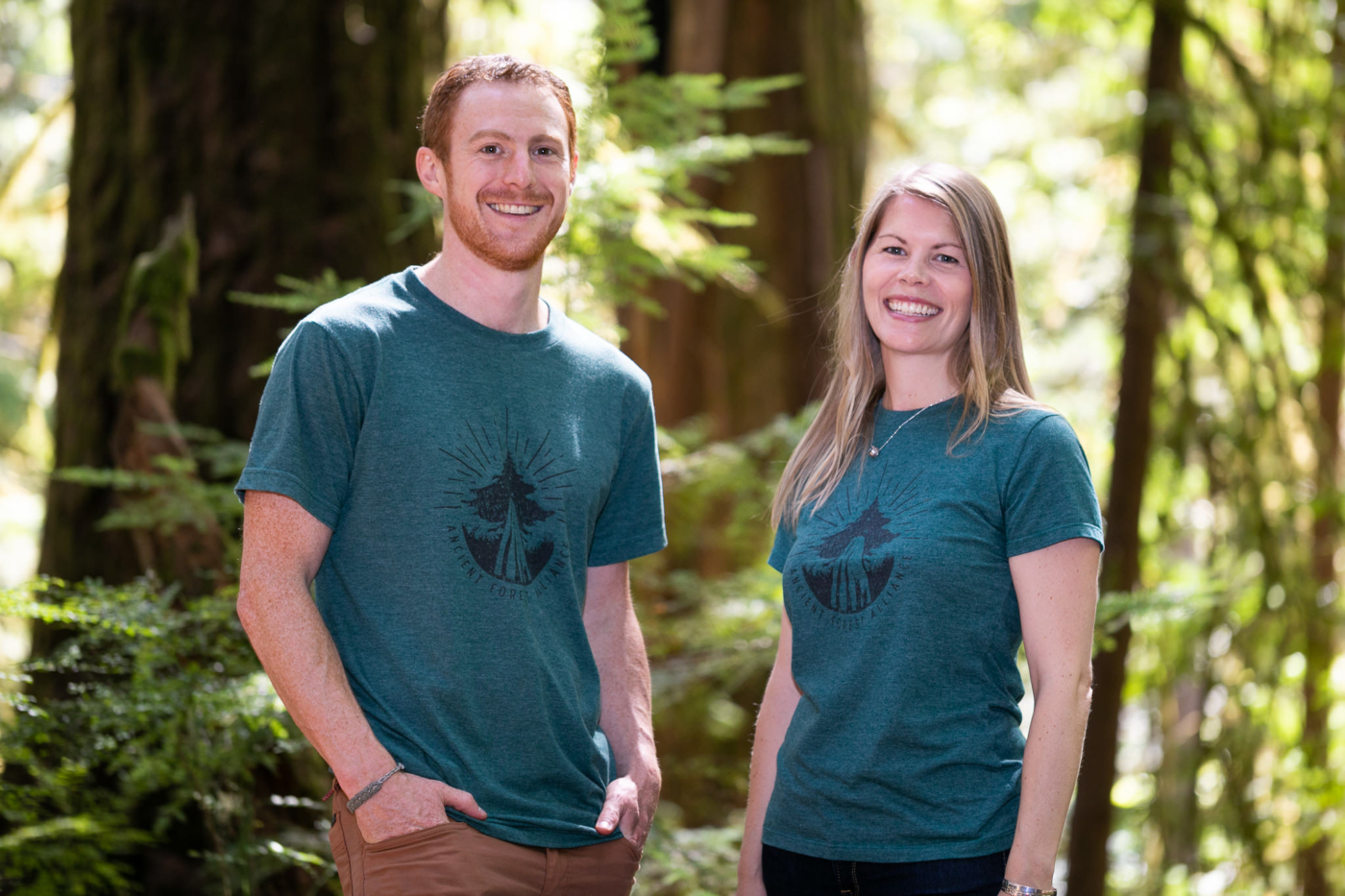
Design AFA’s Next T-Shirt and Help Protect Old-Growth Forests!
Calling all artists! For Earth Month, AFA is launching our first-ever Community T-Shirt Design Contest.
https://staging.ancientforestalliance.org/wp-content/uploads/2026/04/AFA-T-Shirt-Green-Mens-Womens.jpg
1365
2048
TJ Watt
https://staging.ancientforestalliance.org/wp-content/uploads/2026/05/Ancient-Forest-Alliance-logo.svg
TJ Watt2026-05-15 08:13:232026-05-19 09:33:44Design AFA’s Next T-Shirt and Help Protect Old-Growth Forests! Donate
 Send a Message
A love of big trees rewarded
/in News CoverageDr. Al Carder was recently awarded the 2014 Forest Sustainability Award from the Ancient Forest Alliance for his decades of service to document, research and promote the conservation of old-growth trees in British Columbia.
The 104-year-old Carder is considered the oldest forest conservationist in the province. His relationship with giant trees began in 1917, when he was seven and he helped his father measure a tall tree near their home in the lower Fraser Valley. He went on to become Canada’s first agrometeorologist after earning a doctorate in plant ecology.
In his retirement, he and his wife, Mary, set off on a “World Big Tree Hunt,” with Mary often being used as human scale next to giant trees in photographs he took of his finds. His work was published in two books: Forest Giants of the World, Past and Present (1995) and Giant Trees of North America and the World (2005).
“Al Carder was researching and raising awareness about B.C.’s biggest trees years before old-growth forests became an issue of popular concern in this province,” said Ken Wu, Ancient Forest Alliance executive director. “His work decades ago on the most iconic parts of our old-growth forests, their unbelievably huge trees, helped to lay the foundation of public awareness that fostered the rise of the subsequent ancient-forest movement.”
Carder’s children, Judith, Mary-Clare and Andrew, accepted the award on behalf of their father, who is currently ill with pneumonia.
Along with his books, Carder is perhaps best known for his work to highlight the Red Creek Fir, the world’s largest known Douglas-fir tree, located in the San Juan Valley near Port Renfrew. Since then, the town has become known as the Tall Trees Capital of Canada, with tourists from around the world coming to visit the Red Creek Fir, nearby Avatar Grove and the Walbran and Carmanah valleys.
The Ancient Forest Alliance is a B.C.-based conservation group working to protect endangered old-growth forests and to ensure a sustainable, second-growth forest industry. For more information, go to ancientforestalliance.org.
Read more: https://www.timescolonist.com/our-community-a-love-of-big-trees-rewarded-1.1653607
VIDEO: Port Alberni Old-Growth Threatened by Island Timberlands
/in VideoWatch the latest video by filmmaker Daniel J Pierce who has spent years documenting the controversies surrounding old-growth logging by Island Timberlands – this time at McLaughlin Ridge and the Cameron Valley Ancient Forest near Port Alberni, featuring the campaign led by the Port Alberni Watershed-Forest Alliance, whom the Ancient Forest Alliance has been working with for many years!
Watch the film on Vimeo here.
Read more about the Ancient Forest Alliance’s campaign to create a BC Park Acquisition Fund.
Learn more about Island Timberlands’ logging in Port Alberni and to support the Watershed Forest Alliance.
Video by Daniel J. Pierce, director of Heartwood: A West Coast Documentree
B.C.’s Oldest Forest Conservationist Reminds Us How Much the Wild Has Changed
/in News CoverageEarlier this week, B.C.'s oldest forest conservationist, 104-year-old Dr. Al Carder — who is older than most of B.C.'s second-growth trees — received the 2015 Forest Sustainability Award from the Ancient Forest Alliance. The award honours his decades of service to document, research, and promote the conservation of B.C.'s old-growth trees. (As Dr. Carder is currently ill with pneumonia, his children, Judith, Mary-Clare, and Andrew, received the award on his behalf.)
Al Carder was researching and raising awareness about B.C.'s biggest trees years before old-growth forests became an issue of popular concern. Along with his books, Carder is perhaps best known for his work to protect the Red Creek Fir, the world's largest known Douglas-fir tree found in 1976 by loggers near Port Renfrew. It was measured and highlighted by Carder. Today the Red Creek Fir is within a Forest Service Recreation Area, and is also listed in B.C.'s Big Tree Registry.
I first heard of Carder when I was a teenager in the early 1990s through the late, great conservationist Randy Stoltmann, who spoke highly about Carder's work and who worked with him to document the province's largest trees. Earlier this year, I had the pleasure to meet Carder in person for the first time. Carder is hard of hearing and plagued with various ailments as you'd expect after living for over a century, so I was impressed with his continued enthusiasm for big trees.
With help from his daughter Judith, he spoke about how he remembered taking a train through the Fraser Valley near Cloverdale and Langley back in 1917. Today those suburbs of Vancouver are known for their box stores, residential neighbourhoods, and farmland. But back then the railway went through a forest “like Cathedral Grove,” lined with towering ancient Douglas-fir trees, including a felled specimen that Carder and his father measured to be over 340 feet (100 metres) tall!
It's amazing to think about what B.C.'s southern coast would have been like a century ago when Carder was born in 1910. Ancient forests, vital for sustaining endangered species, climate stability, clean water, wild salmon, tourism, and First Nations culture, would have dominated the forested landscapes, carpeting the valley bottoms up to the mountaintops and over to the adjacent valleys, unbroken for millions of hectares. This would have included vast stands of old-growth coastal Douglas-fir trees, which today have been reduced to just one per cent of their former extent.
Grizzlies would have roamed the Lower Mainland around Vancouver in those days, while more than 1,000 breeding adult spotted owls were estimated to have inhabited the region's ancient forests. Today, less than a dozen spotted owls survive in B.C.'s wilds.
The unique Vancouver Island wolverine — a 27-kilogram, wilderness-dependent mustelid that can fight off a bear and that once feasted on the Vancouver Island marmot — hasn't been seen since 1992. Many thousands of mountain caribou would have once roamed the inland rainforest of B.C.; today, only 1,500 remain. Coastal rivers and streams, once overflowing with spawning salmon, are now sad remnants of their former glory, degraded by logging debris and silt.
Not only have native ecosystems been collapsing as a result of the resource depletion policies of successive governments, but so have forestry-dependent communities. The overcutting of the biggest and best old-growth stands in the lowlands that historically built B.C.'s forest industry has resulted in diminishing returns as the trees get smaller, lower in value, and harder to reach high up on steep mountainsides.
Today, 75 per cent of the original, productive old-growth forests have been logged on B.C.'s southern coast, including over 90 per cent of the most productive old-growth forests in the valley bottoms. The ensuing second-growth tree plantations, harvested every 30 to 80 years on the coast, fail to support the old-growth dependent species, the tourism industry, the climate, and traditional First Nations cultures in the same way that our original centuries-old forests do.
In a report for the B.C. Ministry of Forests (Ready for Change, 2001), Dr. Peter Pearse described the history of high-grade overcutting: “The general pattern was to take the nearest, most accessible, and most valuable timber first, gradually expand up coastal valleys and mountainsides into more remote and lower quality timber, less valuable, and costlier to harvest. Today, loggers are approaching the end of the merchantable old-growth in many areas … Caught in the vise of rising costs and declining harvest value, the primary sector of the industry no longer earns an adequate return …”
B.C.'s coastal forest industry, once Canada's mightiest, is now a mere remnant of its past. Over the past decade, about 80 B.C. mills have closed and over 30,000 forestry jobs lost.
In his 2001 report, Pearse also stated: “Over the next decade, the second-growth component of timber harvest can be expected to increase sharply, to around 10 million cubic metres … To efficiently manufacture the second-growth component of the harvest, 11 to 14 large mills will be needed.”
Today, more than a decade later, there is only one large and a handful of smaller second-growth mills on the coast, and very little value-added wood manufacturing.
The B.C. Liberal government's myopic response to their own resource depletion policies has been to open up some protected forest reserves and to relax environmental standards in parts of the province. It's like burning up parts of your house for firewood after you've used up all your other wood sources: it won't last long, and in the end you're a lot worse off. To try to defer the consequences of unsustainable actions with more unsustainable actions is precisely what has brought this planet to the ecological brink.
The B.C. government has a responsibility to learn from — rather than to repeat — history's mistakes.
Unless the B.C. government reorients the coastal forest industry toward sustainable, value-added second-growth forestry — rather than old-growth liquidation, unsustainable rates of overcutting, and raw log exports — the crisis will only continue.
It's in the memories of our elders like Dr. Al Carder — a conservationist with a deep connection to the natural world from his earliest days — where we can recall our histories and learn the wisdom to make a better world.
Read more: https://www.huffingtonpost.ca/ken-wu/bcs-oldest-forest-conservationist_b_6239054.html