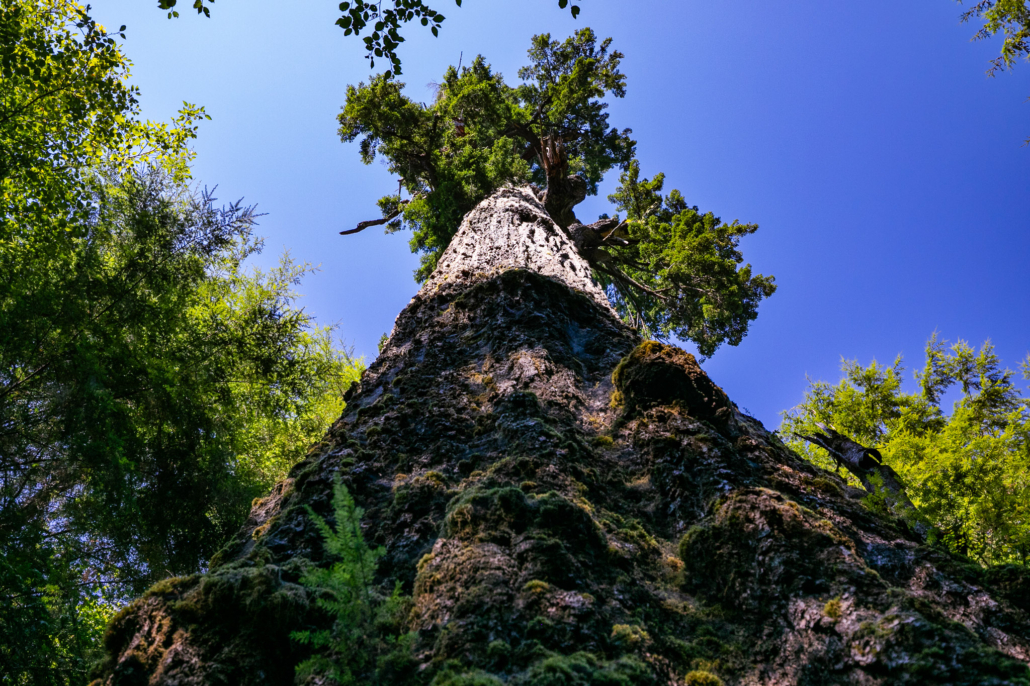
UPDATED: Port Renfrew Big Trees Map
Explore the updated Port Renfrew Big Trees Map with new directions, trails, and routes to iconic giants like Big Lonely Doug, Eden Grove, and more.
https://staging.ancientforestalliance.org/wp-content/uploads/2025/05/13-Red-Creek-Fir.jpg
1365
2048
TJ Watt
https://staging.ancientforestalliance.org/wp-content/uploads/2026/05/Ancient-Forest-Alliance-logo.svg
TJ Watt2026-05-29 15:39:342026-05-29 15:40:49UPDATED: Port Renfrew Big Trees Map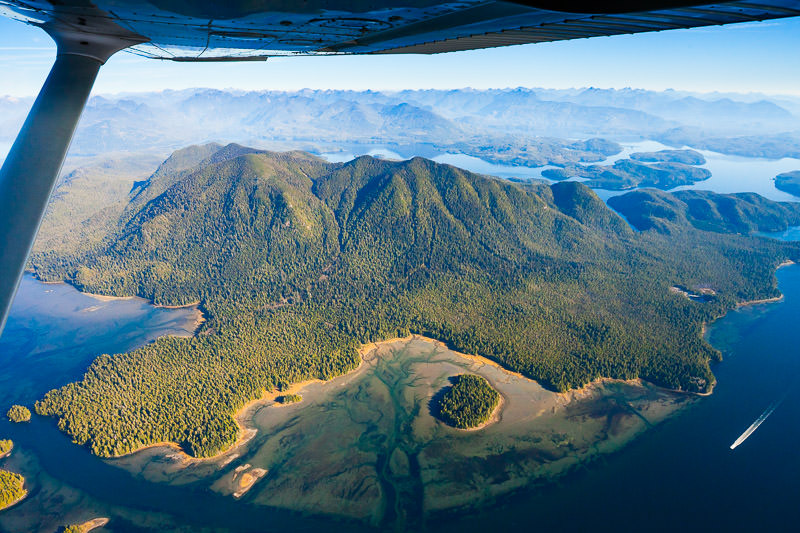
NEW! West Coast Old-Growth Hiking Guide
Explore AFA’s NEW West Coast old-growth hiking guide. From Clayoquot Sound to Port Alberni, there are trails for every skill level!
https://staging.ancientforestalliance.org/wp-content/uploads/2026/05/meares-island-big-tree-trail-tofino-1200px-338.jpg
533
800
TJ Watt
https://staging.ancientforestalliance.org/wp-content/uploads/2026/05/Ancient-Forest-Alliance-logo.svg
TJ Watt2026-05-29 12:06:002026-05-29 15:42:38NEW! West Coast Old-Growth Hiking Guide
Now Hiring: Contract Graphic Designer!
Ancient Forest Alliance is hiring a contract Graphic Designer to help bring our campaigns to life through print and digital materials.
https://staging.ancientforestalliance.org/wp-content/uploads/2026/05/flores-island-wildside-trail-1200px-430.jpg
800
1200
TJ Watt
https://staging.ancientforestalliance.org/wp-content/uploads/2026/05/Ancient-Forest-Alliance-logo.svg
TJ Watt2026-05-22 12:22:292026-05-22 12:22:29Now Hiring: Contract Graphic Designer!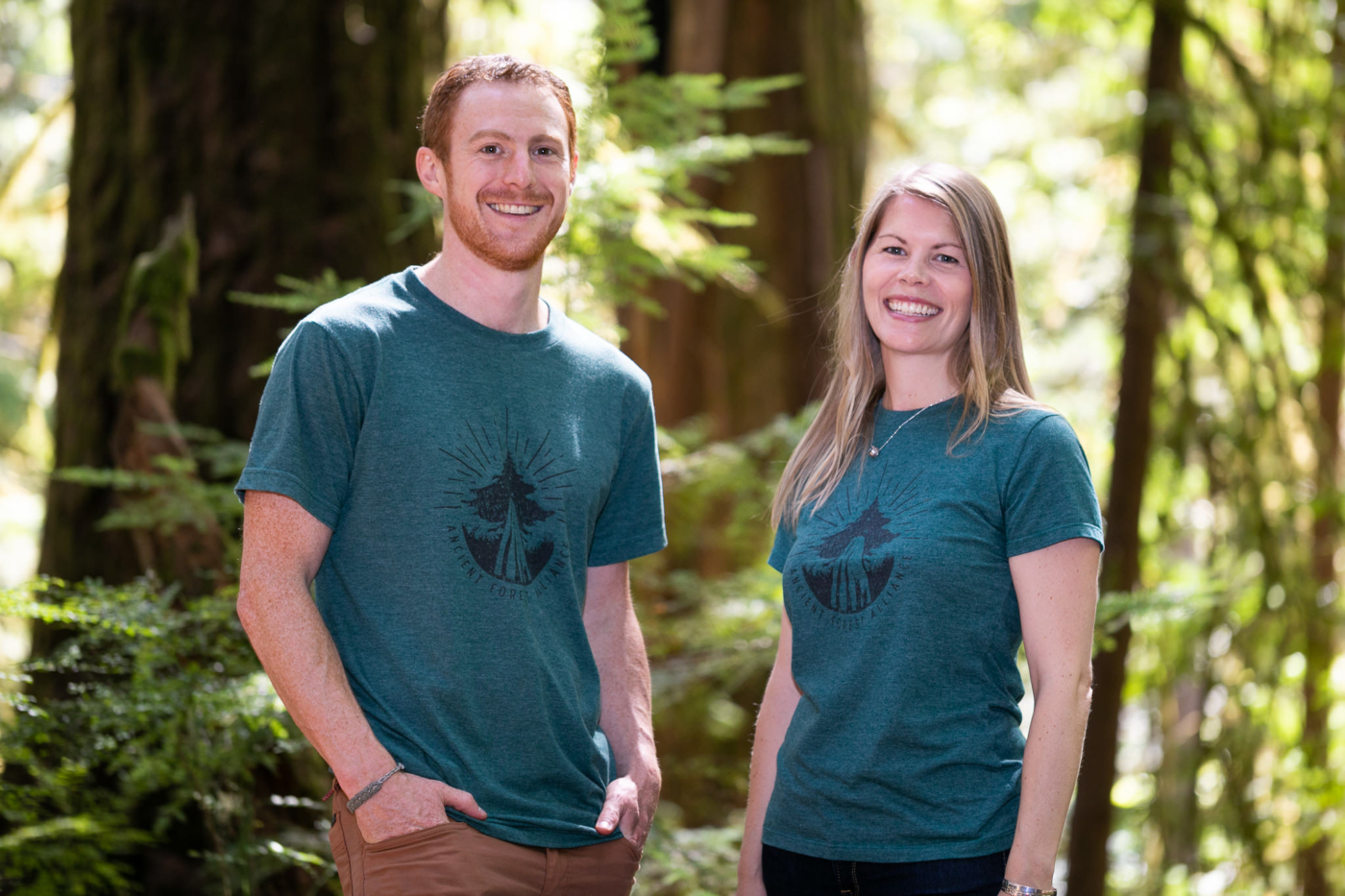
Design AFA’s Next T-Shirt and Help Protect Old-Growth Forests!
Calling all artists! For Earth Month, AFA is launching our first-ever Community T-Shirt Design Contest.
https://staging.ancientforestalliance.org/wp-content/uploads/2026/04/AFA-T-Shirt-Green-Mens-Womens.jpg
1365
2048
TJ Watt
https://staging.ancientforestalliance.org/wp-content/uploads/2026/05/Ancient-Forest-Alliance-logo.svg
TJ Watt2026-05-15 08:13:232026-05-19 09:33:44Design AFA’s Next T-Shirt and Help Protect Old-Growth Forests! Donate
 Send a Message
Chinese-language forest tours to educate more B.C. residents on conservation
/in News CoverageHere is today's Vancouver Sun article about the Chinese-Language Ancient Forest Tours program that we're developing. Volunteer educators who we are training about old-growth ecology and conservation issues will be giving the tours starting in Stanley Park at dates to be announced. Note that the tours are also open to those who are interested in learning Mandarin or Cantonese.
*******
When environmentalist Ken Wu was a child, his father gave him a book that blew him away: an illustrated natural history of Canada.
One photograph, of four couples dancing on top of an enormous stump, captured his imagination. “I begged my parents to take me to B.C. to see old-growth forests,” said Wu, whose family lived in Toronto.
Wu, who went on to study environmental sciences at UBC and now lives in Victoria, has been a passionate advocate of sustainable forestry practices ever since. Now he wants Canadians of all cultural backgrounds to have access to, and be educated about, the rare wonders of old-growth forests.
On Saturday, Wu led the first session to train Mandarin-speaking environmental tour guides in Stanley Park.
The educational program is co-sponsored by the Ancient Forest Alliance (www.AncientForestAlliance.org), the Hua Foundation (www.HuaFoundation.org) and the Stanley Park Ecology Society (www.StanleyParkEcology.ca). The aim is to make ecology, conservation and enjoyment of B.C.’s old-growth forests accessible to the half-million Lower Mainland residents who have one of the Chinese languages as their mother tongue.
Wu, who heads the Ancient Forest Alliance, said he noticed relatively few Chinese-speaking Vancouverites were participating in old-growth tours and broader environmental actions. For many, language was a significant barrier.
“If the goal is to diversify and broaden the movement to protect and sustain old-growth forest, and expand the movement so it has the strength to influence and change government policy, it makes sense that one of the biggest demographics in the Lower Mainland be involved,” said Wu.
After English, the next largest group of people in the Lower Mainland list Mandarin, Cantonese or Taiwanese as their first language.
“The tours are non-political,” said Wu, “but over time we’d like to engage as many people as possible to take part in democracy in relation to our forest policy.”
Wu was born in Canada, but his mother and father had immigrated from Taiwan. The experience of his parents made him aware of how isolating a language barrier can be. Although his father, a university professor, was fluent in Chinese and English, his mother was less comfortable in English. Wu saw firsthand how the language barrier affected her ability to engage in different activities.
“It’s hard being an immigrant. Language is a barrier for some, and there would be much higher level of participation in Canadian politics and Canadian social life if the language barrier was diminished.”
Wu said the training sessions are also open to anyone who is studying or learning Mandarin and wants to become more proficient.
Close to a dozen enthusiastic volunteers showed up for the first training session, which took place yesterday in Stanley Park. Wu does not speak Mandarin or Cantonese, so the training sessions are conducted in English, with an interpreter on hand to help translate the specialized terminology.
Wu and the Hua Foundation’s Kevin Huang chose Stanley Park for the educational tours because it is one of the few areas in the Lower Mainland where 800-year-old red cedars still stand. Participants will learn to be guides, to identify and explain the plants, wildlife and ecology of old growth forests, why they are important for a healthy eco-system, for biodiversity and tourism.
Wu believes that with knowledge and access, a new generation of Canadians will come to love and revere what is left of B.C.’s old growth forests. Diversity is, after all, one of the cornerstones of sustainability.
For more information or to join the program, contact (www.AncientForestAlliance.org), the Hua Foundation (www.HuaFoundation.org) and the Stanley Park Ecology Society (www.StanleyParkEcology.ca)
Read more: https://vancouversun.com/news/local-news/chinese-language-forest-tours-to-educate-more-b-c-residents-on-conservation
Ancient Forest Alliance offering Stanley Park tree tours in Mandarin, Cantonese
/in News CoverageHere's a CBC piece about the launch of our Chinese-Language Ancient Forest Tours (at least the training for the volunteers – the actual public tours in Mandarin and Cantonese are still at least a couple months away). Take note that these will simply be public nature walks (not protests or anything like that!), and it's through the AFA that tour participants can later choose to find out how they can take action to protect other areas – but the emphasis on the tours is to simply see the big trees and learn about the ecology, plants, animals, and conservation status of old-growth forests in Mandarin and Cantonese. Also note that we're not anti-logging, but rather we support sustainable second-growth forestry but are against the logging of endangered old-growth forests, such as those on Vancouver Island and in the southwest mainland etc..
******
B.C.'s Ancient Forest Alliance is hoping to draw Chinese language speakers to its cause by offering Stanley Park nature tours in Mandarin and Cantonese.
“Our goal is to expand the ancient forest movement,” said Ken Wu with the alliance on Saturday, as he walked through the park with a small team of potential guides.
“I think in the Lower Mainland, the most important way we can help protect old growth forests is to engage a massive chunk of the population which we haven't engaged in the past.”
According to 2011 Canadian census data, close to 350,000 Metro Vancouver residents say they speak a Chinese language.
While Stanley Park is a protected space with massive, old growth trees, the goal from the alliance is to teach more Chinese-Canadians about the trees' history and importance, ecologically, across the province.
Join protest
“The goal here will be to increase the level of conservation and awareness so that people can take part in democracy and make sure their voices are heard for protection of the unprotected ancient forest,” Wu said.
“They are vital for the climate, for endangered species, for clean water, for tourism, for First Nations' culture.”
Wu, along with others from the alliance, hope to show off Stanley Park's Tatlow and Lovers trails, where four-metre-wide, 800-year-old red cedars still stand.
The volunteer guides are being trained in English, but will then work with translators from the Hua Foundation to create materials to be able to conduct the specialized tours in either Mandarin or Cantonese.
Wu hopes the walks could commence as early as December and, if successful, be expanded to the Walbran Valley, Avatar Grove, Eden Grove, and Echo Lake Ancient forests.
Read more: https://www.cbc.ca/news/canada/british-columbia/ancient-forest-alliance-chinese-language-stanley-park-tours-1.3817704
Forest tours offered in Chinese to promote conservation in B.C.
/in News CoverageHere's a new Canadian Press article about our Chinese-language Ancient Forest Tours, which aims to engage the half a million Chinese speakers in the Vancouver region to diversify and broaden the movement to protect old-growth forests, which in recent times now also includes businesses and chambers of commerce, unions and forestry workers, local governments in the UBCM and AVICC, and naturalist clubs across the province calling for old-growth protection.
******
VANCOUVER — Conservationists have their eyes on a demographic that hasn't been tapped into before in terms of educating people about British Columbia's old growth forests.
About half a million people in B.C.'s Lower Mainland are Chinese-language speakers, yet most environmental programs and tours are offered in English only, said Ken Wu, executive director of the Ancient Forest Alliance.
The group is partnering with the Stanley Park Ecology Society and Hua Foundation to train volunteers to give tours of Stanley Park in Mandarin and Cantonese.
“The goal here will be to increase the level of conservation awareness,” Wu said.
Old growth forests that exist in Stanley Park and other areas across the province are vital to the broader ecosystem and climate, Wu said.
There has been a growing movement in recent years as diverse groups including businesses and municipalities push for the protection of these areas from logging and development.
But the movement to preserve these forests hadn't made a concerted effort until now to include the local Chinese-speaking population, Wu said.
“One of the most important ways we can protect old growth forests is to engage a massive part of the population which we haven't engaged in the past.”
Wu led about a dozen volunteers through Stanley Park on Saturday to train them on becoming ecological tour guides.
The first training day was conducted in English to cover the basics, but subsequent trainings will incorporate more language translation.
The tour will not be a verbatim translation of existing English-language forest tours in Stanley Park, but will incorporate expert and crowd-sourced translation.
“It's important for us to be able to fill in the knowledge gaps that are often lost in translation,” said Kevin Huang, who works with the Hua Foundation.
Getting experts and the general public to weigh in on terms that refer to conservationism, the environment and specific species of animals and plant life will help create a more engaging tour that uses common Chinese terms.
“We really try to engage audiences and empower them from their own community angle instead of using straight translations,” Huang said.
The tour is designed for all ages but volunteers said they see the greatest potential in connecting with adults and seniors who didn't grow up in a culture of environmentalism.
Volunteer Joy Peng said she hopes she can encourage Vancouver's large Mandarin-speaking population to take an interest in protecting forests for future generations.
“It would be really great to inspire them because all together, everyone could make a big difference in preserving old growth trees and nature in general,” she said.
Organizers expect Chinese-language tours to begin before the end of the year and will run by donation.
Read more: https://www.ctvnews.ca/sci-tech/forest-tours-offered-in-chinese-to-promote-conservation-in-b-c-1.3127551