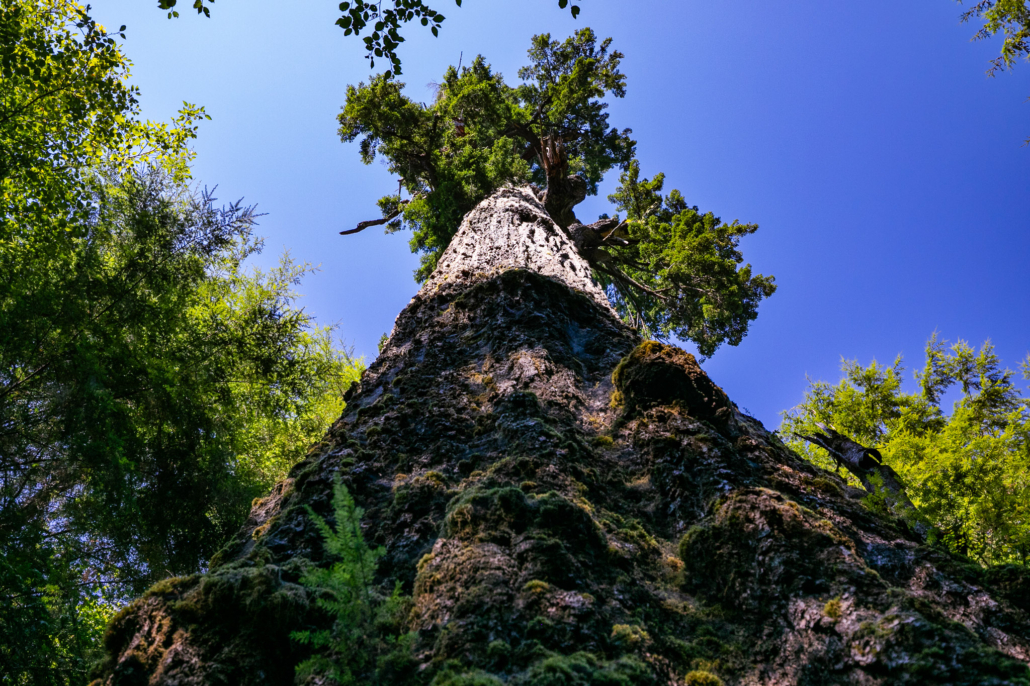
UPDATED: Port Renfrew Big Trees Map
Explore the updated Port Renfrew Big Trees Map with new directions, trails, and routes to iconic giants like Big Lonely Doug, Eden Grove, and more.
https://staging.ancientforestalliance.org/wp-content/uploads/2025/05/13-Red-Creek-Fir.jpg
1365
2048
TJ Watt
https://staging.ancientforestalliance.org/wp-content/uploads/2026/05/Ancient-Forest-Alliance-logo.svg
TJ Watt2026-05-29 15:39:342026-05-29 15:40:49UPDATED: Port Renfrew Big Trees Map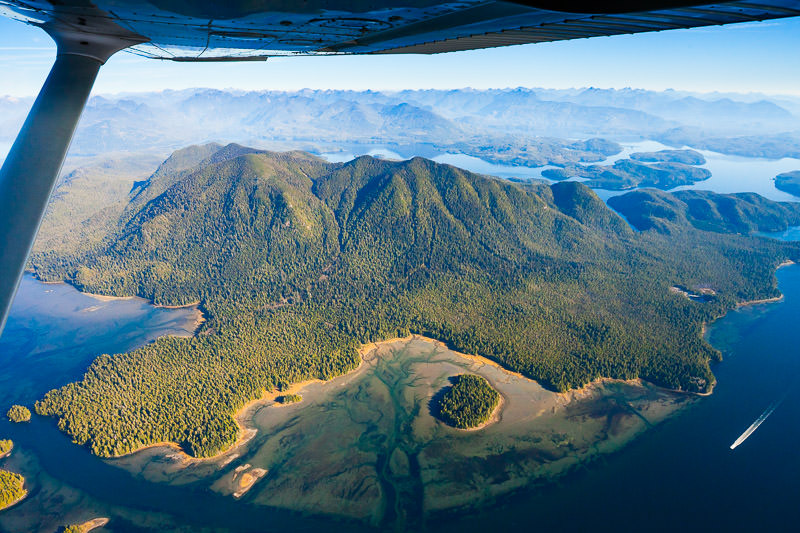
NEW! West Coast Old-Growth Hiking Guide
Explore AFA’s NEW West Coast old-growth hiking guide. From Clayoquot Sound to Port Alberni, there are trails for every skill level!
https://staging.ancientforestalliance.org/wp-content/uploads/2026/05/meares-island-big-tree-trail-tofino-1200px-338.jpg
533
800
TJ Watt
https://staging.ancientforestalliance.org/wp-content/uploads/2026/05/Ancient-Forest-Alliance-logo.svg
TJ Watt2026-05-29 12:06:002026-05-29 15:42:38NEW! West Coast Old-Growth Hiking Guide
Now Hiring: Contract Graphic Designer!
Ancient Forest Alliance is hiring a contract Graphic Designer to help bring our campaigns to life through print and digital materials.
https://staging.ancientforestalliance.org/wp-content/uploads/2026/05/flores-island-wildside-trail-1200px-430.jpg
800
1200
TJ Watt
https://staging.ancientforestalliance.org/wp-content/uploads/2026/05/Ancient-Forest-Alliance-logo.svg
TJ Watt2026-05-22 12:22:292026-05-22 12:22:29Now Hiring: Contract Graphic Designer!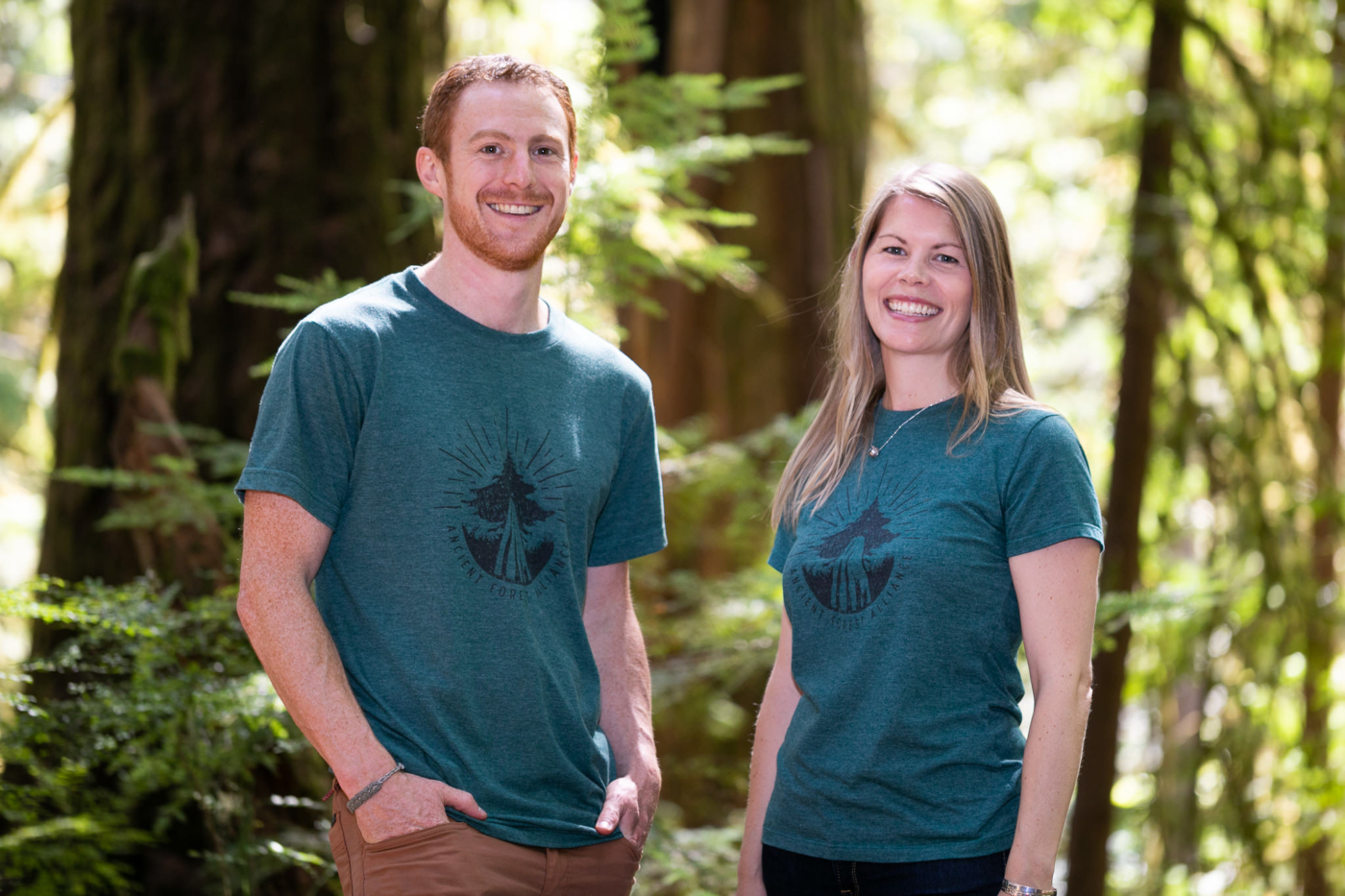
Design AFA’s Next T-Shirt and Help Protect Old-Growth Forests!
Calling all artists! For Earth Month, AFA is launching our first-ever Community T-Shirt Design Contest.
https://staging.ancientforestalliance.org/wp-content/uploads/2026/04/AFA-T-Shirt-Green-Mens-Womens.jpg
1365
2048
TJ Watt
https://staging.ancientforestalliance.org/wp-content/uploads/2026/05/Ancient-Forest-Alliance-logo.svg
TJ Watt2026-05-15 08:13:232026-05-19 09:33:44Design AFA’s Next T-Shirt and Help Protect Old-Growth Forests! Donate
 Send a Message
Conservation Group Releases Pre-Election Summary of BC’s Political Parties’ Policies on Old-Growth Forests and Forest Policies
/in Media ReleaseVICTORIA – The Ancient Forest Alliance has released a summary of BC’s major political parties’ policy platforms and governance track records (NDP and Liberals) on old-growth forest protection and related forestry issues in BC ahead of the April 9 election.
See the summary infographic and the full analysis here: https://staging.ancientforestalliance.org/2017-provincial-election-summary-bc-party-platforms-on-old-growth-forests-and-related-forestry-issues/
“Forest protection and logging are hot-button topics in many parts of BC, but it’s not always clear where our politicians stand on these issues,” said Ken Wu, the Ancient Forest Alliance’s Executive Director. “We want voters to head to the polls on Tuesday armed with the facts.”
“An informed electorate is key to making democracy work. With the upcoming election, British Columbians have a unique opportunity to influence public policy around the issues that matter, including the health of our forests, wildlife, and watersheds and the creation and retention of sustainable forestry jobs.”
So far, no party has made the protection of old-growth forests a central issue, with the exception of a number of Green Party candidates in certain ridings.
One of the two shining lights of progress that are of interest to the Ancient Forest Alliance is in the Green Party’s forestry platform, where they have committed to identifying and protecting BC’s old-growth forests. Neither the Liberals nor NDP make any mention of old-growth forests in the forestry sections of their platforms.
The other positive light is in the NDP’s environment platform, where they make reference to using the ecosystem-based management approach of the Great Bear Rainforest as a model for old-growth forest management and land use planning in BC. While vague with considerable wriggle room, if interpreted in its strongest, most direct way, such an approach would likely end the logging of old-growth forests across much of the province, such as on Vancouver Island and the southwest mainland where old-growth forests are far more scarce than in the Great Bear Rainforest.
However, the NDP party has not directly stated that they would end old-growth logging anywhere – with the exception of Esquimalt-Metchosin NDP Mitzi Dean, who stated at an all candidates debate recently:
“Within the BC NDP platform we do mention old growth. We are committed to protecting old growth, that is in our platform and we are committed to that. Our strategy around that is that we will use the land planning process to make sure that we will protect old-growth forests. It’s really important to build that plan to protect old-growth forests … Second growth forests will be logged and not old-growth forests and those will be protected …We have it in our platform. We have the intention of protecting old-growth forests. Personally, I am committed to no further old-growth forests being logged as quickly as possible.”
Whether party leader John Horgan will officially commit the party to ending old-growth logging is of interest to the Ancient Forest Alliance.
Alas, the NDP and Liberals’ forestry platforms don’t make mention of old-growth forests and reflect the unsustainable status quo. They both commit to plant more trees, promote more wood construction projects in BC, help expand markets for BC wood, try to get a better softwood lumber deal with the US, and work with forest companies to try to create more jobs. Their forestry platforms state nothing about protecting old-growth forests, restricting raw log exports with specific policies or regulations, or providing incentives for converting old-growth mills for second-growth processing or value-added manufacturing.
As a whole, the NDP’s track record on protecting old-growth forests during their 10 years in power was significantly better than the BC Liberals’ governing track record over 16 years. In that time, the NDP increased protection in BC by 6% systematically across much of the province, while the BC Liberals increased protection by 3%, largely concentrated in the Great Bear Rainforest, Haida Gwaii, and Squamish Nation territory, while refusing any new protected areas across most of the rest of the province.
Besides calling for old-growth protection, the Green platform also proposes tax relief for companies investing in wood manufacturing and speaks of an interest in curbing raw log exports, although fails to propose specific mechanisms. Unlike the BC Liberals and NDP however, the Greens have no governing track record to judge them on.
“In summary, the Greens have the strongest platform for old-growth forests and wood manufacturing jobs, but no governing track record, while the NDP has a stronger platform and track record than the BC Liberals regarding old-growth protection and log exports,” stated Ken Wu.
Court rulings also show that the most important governing body for determining the ultimate fate of BC’s old-growth forests are the province’s diverse First Nations, whose unceded lands encompass most the of BC. The provincial government can facilitate old-growth protection by supporting First Nations’ old-growth conservation plans, like the Tla-o-qui-aht Tribal Parks and the Ahousaht Land Use Vision; providing financial support for sustainable, economic alternatives to old-growth logging in First Nations communities; and by facilitating a shift from old-growth to second-growth forestry policy across BC.
The Ancient Forest Alliance is calling on the BC government to implement comprehensive, science-based legislation to protect BC’s endangered old-growth forests while ensuring a sustainable, value-added second-growth forest industry. Old-growth forests are vital to support endangered species, tourism, the climate, clean water, wild salmon, and many First Nations cultures. About 75% of the original, productive old-growth forests have been logged on BC’s southern coast, including 90% of the valley bottoms with the largest trees and richest biodiversity.
See before and after maps of southwest BC’s old-growth forest cover: https://staging.ancientforestalliance.org/ancient-forests/before-after-old-growth-maps/
See a new time lapse video showing logging activities in southwest BC since European settlement: https://staging.ancientforestalliance.org/news-item.php?ID=1113
See the parties’ election platforms here:
BC Liberal Platform: https://www.bcliberals.com/wp-content/uploads/2017/04/2017-Platform.pdf
NDP Platform: https://action.bcndp.ca/page/-/bcndp/docs/BC-NDP-Platform-2017.pdf
Green Platform: https://d3n8a8pro7vhmx.cloudfront.net/greenpartybc/pages/2300/attachments/original/1493054476/2017-platform-bcgreenparty-print.pdf?1493054476
Time Lapse Forest Cover Map Shows the Progressive Demise of Vancouver Island’s Old-Growth Forests over the past Century
/in Media ReleaseFor Immediate Release
Time Lapse Forest Cover Map Shows the Progressive Demise of Vancouver Island’s Old-Growth Forests over the past Century
Victoria – A time lapse map of Vancouver Island has been released showing the demise of the Island’s old-growth forests over a century of industrial logging. Well over 90% of the original, high productivity, low elevation old-growth forests on Vancouver Island with the biggest trees have already been logged, according to the data analysis, while over 75% of the moderate to high productivity old-growth forests (ie. the commercially valuable old-growth forests) have been logged. Conservation groups, businesses and chambers of commerce, forestry workers and unions, naturalist clubs, city and town councils across BC, and many First Nations are calling on the provincial government to expand protection for BC’s endangered old-growth forests. Instead, a sustainable, value-added second-growth forest industry would support and enhance employment for BC’s forestry workers.
See the time-lapse map sequence here: https://youtu.be/c9hTF2oxLjo
A series of new maps have been developed and placed in a time-lapse sequence to show the demise of Vancouver Island’s old-growth forests for over a century. The maps, developed by Commons BC for use by conservation groups and the public, start in 1900 and end in 2016, and were created through a combination of satellite imagery, government data, and archives of old aerial photos.
They show that the productive old-growth forests have been progressively clearcut across Vancouver Island, starting with the flat lowlands on southeastern Vancouver Island at the turn of the century and progressing west and north through the mountains, up the major valleys and across steep, rugged terrain in recent decades.
“These maps make it clear how successive governments have overseen and facilitated the demise of the greatest ancient rainforests on earth here on Vancouver Island for over a century – and it’s still going on at a rapid pace today. Our second-growth tree plantations don’t replicate the original ancient forests for species, the climate, water conservation, or for recreation and tourism opportunities, and they are to be logged again every 50 to 80 years. Therefore old-growth forests under BC’s system of logging are a non-renewable resource – we’re mining our old-growth forests. Once they are logged, they are not coming back, and future generations will be shocked to see how governments were thinking in this era to take these ecosystems to the brink of extinction,” stated Vicky Husband of Commons BC.
“Next to the US redwoods, Vancouver Island’s old-growth forests are the grandest on Earth. Here, trees can grow as tall as skyscrapers and as wide as living rooms. Given the fact that they are vital for tourism, endangered species, the climate, clean water, and many First Nations cultures – and that most of our forests are now second-growth today – it should be a no-brainer that the BC government needs to move fast to save what’s left of our scarce ancient forests”, stated Ken Wu, Executive Director of the Ancient Forest Alliance. “Instead, they’ve continued to spin the tale that old-growth forests are not endangered on Vancouver Island by including vast tracts of the stunted ‘bonsai’ trees growing in bogs and at the tops of mountains in their statistics. It’s like including your Monopoly money with your real money, and then claiming to be a millionaire, so why stop spending?”
“The full transition into a purely second-growth forest industry is inevitable when the last of the unprotected old-growth forests are logged. We’re just saying let’s do it sooner, while we still have significant tracts of these ancient forests still standing”, stated Arnold Bercov, President of the Public and Private Workers of Canada (PPWC). “By ending raw log exports and creating incentives and regulations for processing and value-adding second-growth logs, we can sustain and enhance forestry employment levels while protecting BC’s endangered old-growth forests at the same time.”
BC’s premier business lobby, the BC Chamber of Commerce, representing 36,000 businesses, passed a resolution last May calling on the province to expand protection for BC’s old-growth forests to support the economy, after a series of similar resolutions passed by the Port Renfrew, Sooke, and WestShore Chambers of Commerce. See: www.ancientforestalliance.org/news-item.php?ID=1010
Both the Union of BC Municipalities (UBCM), representing the mayors, city and town councils, and regional districts across BC, and Association of Vancouver Island and Coastal Communities (AVICC), representing Vancouver Island local governments, passed a resolution last year calling on the province to protect the Vancouver Island’s remaining old-growth forests by amending the 1994 land use plan. See: www.ancientforestalliance.org/news-item.php?ID=1057
The Private and Public Workers of Canada (PPWC), formerly the Pulp, Paper, and Woodworkers of Canada, representing thousands of sawmill and pulp mill workers across BC, recently passed a resolution calling for an end to old-growth logging on Vancouver Island. See: https://staging.ancientforestalliance.org/news-item.php?ID=1100
The Ahousaht First Nation band north of Tofino in Clayoquot Sound recently announced that 82% of their territory will be off-limits to commercial logging. They now need provincial legislation and funding to help make their vision a reality.
The Ancient Forest Alliance is calling on the BC government to implement a comprehensive science-based plan to protect all of BC’s remaining endangered old-growth forests, and to also ensure a sustainable, value-added second-growth forest industry.
Old-growth forests are vital to sustain unique endangered species, climate stability, tourism, clean water, wild salmon, and the cultures of many First Nations. On BC’s southern coast, satellite photos show that at least 75% of the original, productive old-growth forests have been logged, including well over 90% of the valley bottoms where the largest trees grow. Only about 8% of Vancouver Island’s original, productive old-growth forests are protected in parks and Old-Growth Management Areas. Old-growth forests – with trees that can be 2000 years old – are a non-renewable resource under BC’s system of forestry, where second-growth forests are re-logged every 50 to 100 years, never to become old-growth again.
See maps and stats on the remaining old-growth forests on BC’s southern coast at: www.ancientforestalliance.org/old-growth-maps.php
In order to placate public fears about the loss of BC’s endangered old-growth forests, the BC government’s PR-spin typically over-inflates the amount of remaining old-growth forests by including hundreds of thousands of hectares of marginal, low productivity forests growing in bogs and at high elevations with smaller, stunted trees, lumped in with the productive old-growth forests, where the large trees grow (and where most logging takes place). See a rebuttal to some of the BC government’s PR-spin and stats about old-growth forests towards the BOTTOM of the webpage: https://www.ancientfo<wbr
CHEK TV News on the Jurassic Grove
/in News CoverageSee the CHEK News report to read more and watch the TV coverage: https://www.cheknews.ca/newly-discovered-old-growth-forest-vancouver-island-312417/