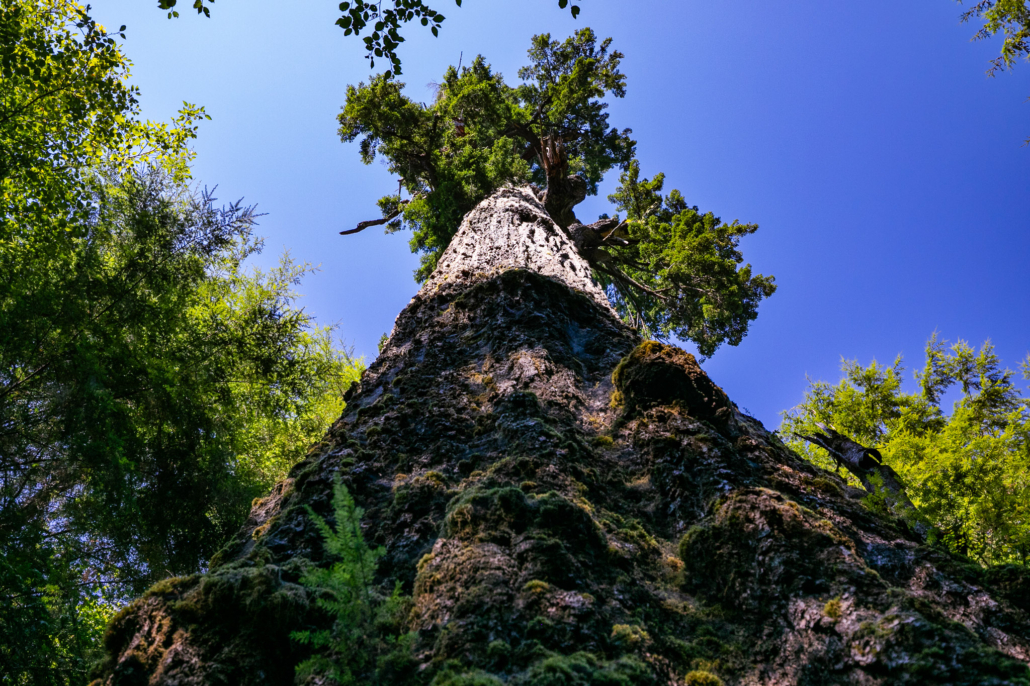
UPDATED: Port Renfrew Big Trees Map
Explore the updated Port Renfrew Big Trees Map with new directions, trails, and routes to iconic giants like Big Lonely Doug, Eden Grove, and more.
https://staging.ancientforestalliance.org/wp-content/uploads/2025/05/13-Red-Creek-Fir.jpg
1365
2048
TJ Watt
https://staging.ancientforestalliance.org/wp-content/uploads/2026/05/Ancient-Forest-Alliance-logo.svg
TJ Watt2026-05-29 15:39:342026-05-29 15:40:49UPDATED: Port Renfrew Big Trees Map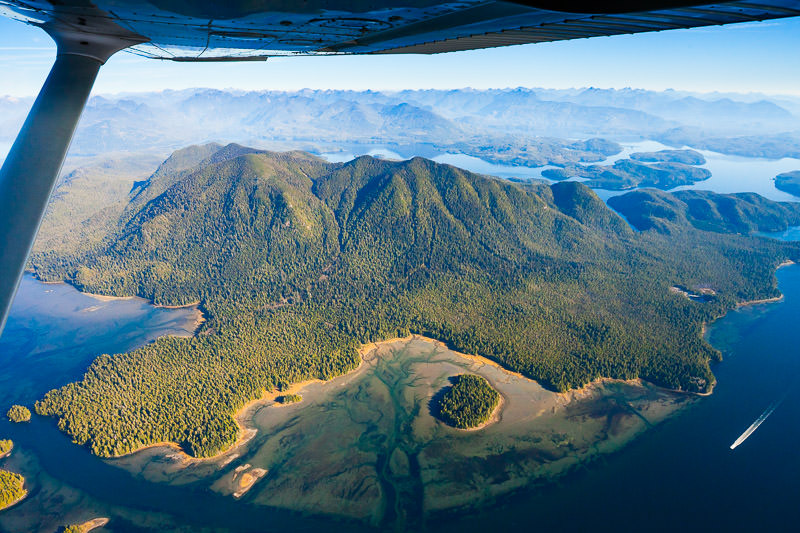
NEW! West Coast Old-Growth Hiking Guide
Explore AFA’s NEW West Coast old-growth hiking guide. From Clayoquot Sound to Port Alberni, there are trails for every skill level!
https://staging.ancientforestalliance.org/wp-content/uploads/2026/05/meares-island-big-tree-trail-tofino-1200px-338.jpg
533
800
TJ Watt
https://staging.ancientforestalliance.org/wp-content/uploads/2026/05/Ancient-Forest-Alliance-logo.svg
TJ Watt2026-05-29 12:06:002026-05-29 15:42:38NEW! West Coast Old-Growth Hiking Guide
Now Hiring: Contract Graphic Designer!
Ancient Forest Alliance is hiring a contract Graphic Designer to help bring our campaigns to life through print and digital materials.
https://staging.ancientforestalliance.org/wp-content/uploads/2026/05/flores-island-wildside-trail-1200px-430.jpg
800
1200
TJ Watt
https://staging.ancientforestalliance.org/wp-content/uploads/2026/05/Ancient-Forest-Alliance-logo.svg
TJ Watt2026-05-22 12:22:292026-05-22 12:22:29Now Hiring: Contract Graphic Designer!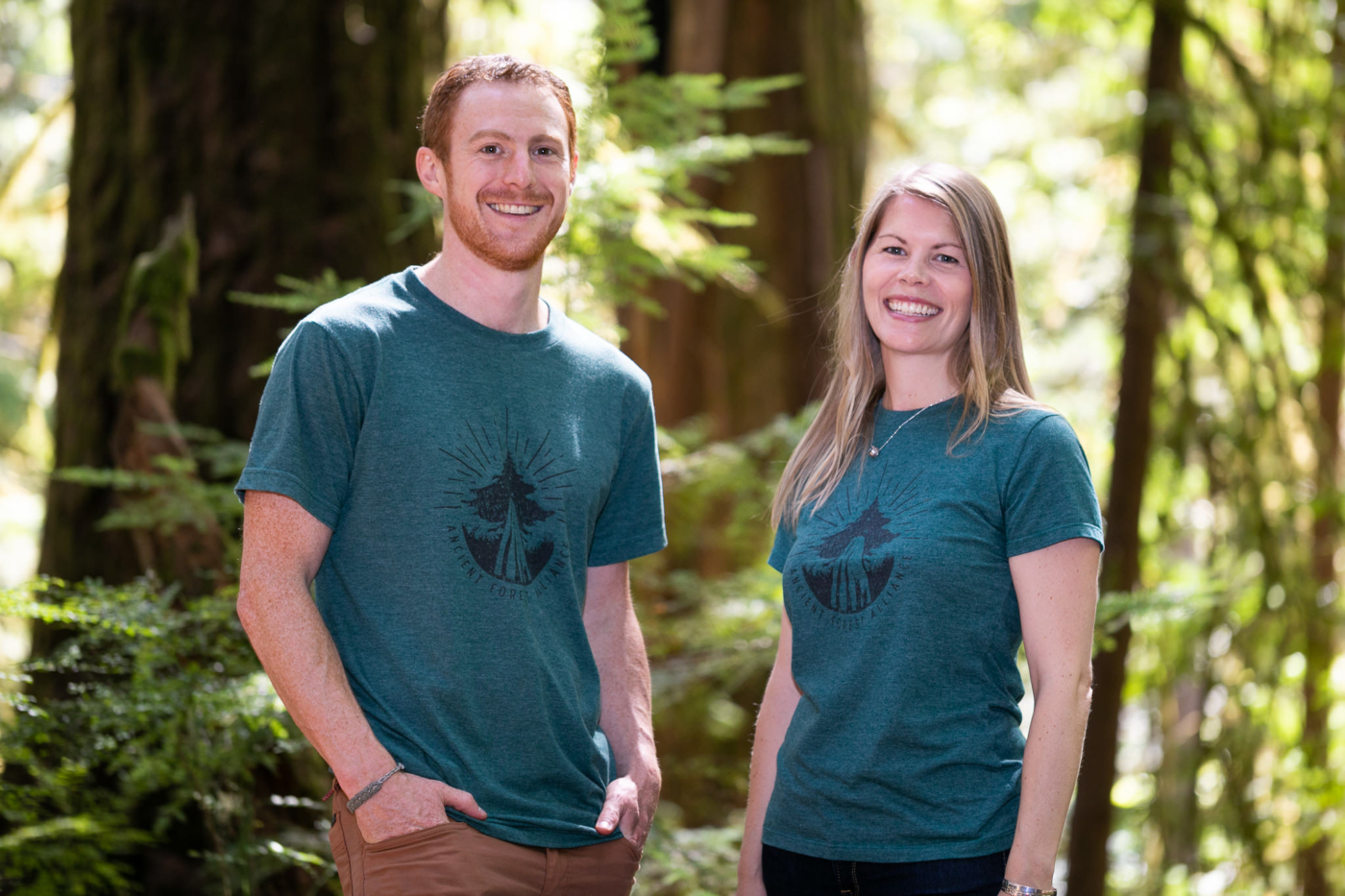
Design AFA’s Next T-Shirt and Help Protect Old-Growth Forests!
Calling all artists! For Earth Month, AFA is launching our first-ever Community T-Shirt Design Contest.
https://staging.ancientforestalliance.org/wp-content/uploads/2026/04/AFA-T-Shirt-Green-Mens-Womens.jpg
1365
2048
TJ Watt
https://staging.ancientforestalliance.org/wp-content/uploads/2026/05/Ancient-Forest-Alliance-logo.svg
TJ Watt2026-05-15 08:13:232026-05-19 09:33:44Design AFA’s Next T-Shirt and Help Protect Old-Growth Forests! Donate
 Send a Message
Conservationists decry absence of funding for old-growth, forestry paradigm shift in BC Budget
/in Media ReleaseVictoria, BC – The Ancient Forest Alliance is disappointed the NDP government’s provincial budget, released yesterday, fails to allocate funding to protect endangered old-growth forests or enact the necessary paradigm shift in BC’s forest sector.
“The BC government has missed a critical opportunity to show British Columbians it’s serious about its old-growth commitments,” stated Ancient Forest Alliance campaigner Andrea Inness.
“Despite promising a complete paradigm shift in the way BC’s forests are managed, the NDP government’s 2021 budget is bereft of meaningful solutions to make it happen. In fact, the Ministry of Forests budget is being slashed by $41 million this year and a further $30 million in 2022.”
“How does the province expect to protect ancient forest ecosystems, support communities, and overhaul its forest management regime with less funding than it had before?”
The provincial budget comes six months after Premier Horgan committed to the full implementation of the 14 recommendations set out by the BC NDP-appointed Old Growth Strategic Review Panel, which submitted its final report one year ago. The recommendations include an immediate halt to logging in BC’s most at-risk old-growth forests within six months; a new, science-based approach to forest management that prioritizes biodiversity; and proactive, adequately funded local and provincial transition plans.
Since the panel’s report was released publicly in September, the BC government introduced a regulation to protect an estimated maximum of 1,500 of BC’s biggest trees and deferred logging in nine areas encompassing 353,000 hectares. However, only 3,800 of those hectares are previously unprotected, at-risk old-growth forest, leaving the majority of BC’s remaining productive old-growth forests open to logging.
While Budget 2021 does include increased funding for land-use planning modernization (an inadequate $7.3 million over three years), $180 million to support negotiations with First Nations communities, which ideally will include engagement on the Old Growth Panel recommendations, and $17 million to enact the Declaration on the Rights of Indigenous Peoples Act (DRIPA), it’s missing critical funding pieces needed to fully implement the Old Growth Panel’s recommendations.
“The provincial budget lacks funding to relieve economic pressure faced by BC First Nations so that logging deferrals become an economically viable option for them,” stated Inness.
“There’s also no funding for new Indigenous Protected Areas that conserve old-growth forests, no conservation financing to support the economic diversification of First Nations communities while old-growth is protected, and no funding to help workers and communities transition away from old-growth logging. In terms of funding sustainable forestry solutions, this budget is as bleak as an old-growth clearcut.”
The Ancient Forest Alliance, other conservation groups, and hundreds of British Columbians sent feedback to the BC government’s Select Standing Committee on Finance and Government Services last year, calling for funding for old-growth protection in Budget 2021. That feedback was reflected in the Standing Committee’s final report, in which it recommended the BC government “fund a transition to second growth harvesting and away from primary forests” in Budget 2021.
An additional 4,200 messages were also sent in the weeks leading up to the budget announcement, illustrating British Columbians’ expectations that the province follow up its old-growth commitments with timely and adequate funding.
“The Standing Committee’s recommendation and British Columbians’ wishes seem to have fallen on deaf ears,” stated campaigner TJ Watt. “By failing to fund the Old Growth Panel’s recommendations, the NDP government will be severely limited in how far they can go to protect old-growth, setting the stage for more of BC’s endangered ancient forests to fall.”
“That the BC government also failed to fund old-growth protection and sustainable economic development in Clayoquot Sound is particularly disappointing, especially after the federal government in 2019 committed matching funds for the implementation of the Tla-o-qui-aht and Ahousaht land-use visions, which set the vast majority of those Nations’ territories in Clayoquot Sound aside from industrial development,” stated Watt.
“On Monday, the federal government committed $2.3 billion – in addition to the $1.3 billion it committed in 2018 – to protect one million square kilometers of Canada’s land and freshwater and to support Indigenous Protected and Conserved Areas, Indigenous Guardians programs, provincial and territorial protected areas, and to protect species at risk.”
“The NDP government has a unique opportunity to obtain matching funds from the federal government. They’re missing a golden opportunity to support Indigenous Protected and Conserved Areas while delivering the paradigm shift that was promised.”
-30-
No New Money for Old Growth Protection in BC’s Budget
/in News CoverageSpending plan ‘absolutely shatters’ hopes that province is taking changes to forest industry seriously, says advocate.
The Tyee
Apr 2021
Despite calls to end old-growth logging in B.C. and government promises to overhaul its forestry practices, there is no new funding for that transition in the budget announced today.
Instead, the ministry responsible for B.C.’s forest management will see an overall drop in funding over the next three years.
The budget comes seven months after the province released a strategic panel review on old-growth logging, which called for a paradigm shift to prioritize ecosystem health over the timber supply and recognize values like biodiversity, clean water and cultural resources.
The report made 14 recommendations that would totally overhaul the management of old-growth forests, starting with grounding the system in a government-to-government framework involving both the provincial and Indigenous governments.
In releasing the report last September, the province deferred logging in 353,000 hectares of forest, some of which was old growth. The deferral expires Aug. 31, 2022.
In the weeks leading up to B.C.’s fall election, Premier John Horgan promised to implement all 14 recommendations of the old-growth strategic panel review, saying his government is “committed to implementing the report in its totality.” Horgan has cited the need to consult with First Nations as a factor delaying more action on the recommendations.
When asked where funding for implementing the promised changes are in the budget, Finance Minister Selina Robinson said funding already exists under the existing Ministry of Forests budget.
When pressed about the reduction in funding to the ministry — cut 4.4 per cent this year — she repeated her response.
“Like I said, that funding exists, it’s available to the Ministry of Forests, and I’m assured by the minister that they can accommodate that within their budget,” Robinson said.
Torrance Coste, national campaign director with the Wilderness Committee, called the response “frankly shocking.”
“To hear the finance minister say any changes, the paradigm shift itself, just exists within standard… budget absolutely shatters any notion that this government is taking this seriously,” he said, noting that the ministry has other challenges, such as wildfires, that are causing costs to increase.
“They called for a paradigm shift, and now they’re cutting the budget of the ministry that oversees forests. That doesn’t make sense to me,” he said. “At the end of the day, the budget needs to be going up if you’re going to do a paradigm shift. Or if it doesn’t, then they need to explain why.”
The budget, which projects an $8.1-billion deficit, says employment is rebounding following unprecedented job losses early in the pandemic and promises to consult with “businesses, economists and Indigenous and community leaders to ensure a strong and sustainable recovery for all B.C. communities.”
In introducing the budget, which focused on health and economic recovery, Robinson touched on the province’s relationship with First Nations, citing its passing of the Declaration on the Rights of Indigenous Peoples Act in 2019.
“The declaration recognizes and respects the human rights of Indigenous Peoples and ensures that they are involved in decisions that affect them and their territories,” Robinson said, adding that greater Indigenous participation in decision-making provides more certainty for resource-sector investment.
But apart from a significant increase in funding to the Ministry of Indigenous Relations and Reconciliation for treaty and other land-use agreements, the budget does little to reflect that priority.
It promises $60 million in annual base funding to support engagement with Indigenous Peoples and $17 million over three years to support the implementation of DRIPA and government’s commitments under existing reconciliation agreements, including land transfers.
But Coste noted the Forest Ministry budget for “Forest Policy and Indigenous Relationship” is less than $10.5 million, up from just over $9 million last year.
Last month, environmental organizations Ancient Forest Alliance, Sierra Club BC and Wilderness Committee issued a statement on the six-month anniversary of the old-growth report assessing progress.
It gave the province a failing grade on providing economic alternatives for First Nations and funding a transition in the industry as old-growth logging is deferred.
It called on the province to provide the needed funding, saying it is fundamental to implementing the old-growth strategy.
In the throne speech delivered two weeks ago, Lt. Gov. Janet Austin noted that economic growth in B.C. has often come at the expense of the environment.
That must change, Austin said, reading a speech written in the premier’s office.
“We can no longer rely on simple resource extraction to generate wealth with no regard to long-term consequences,” she said, promising to work on reforming the Forest Act and the Forest and Range Practices Act and updating land-management practices to emphasize environmental protection.
“Your government will continue to take action on the independent report on old growth, which recommended important new protection for remaining old-growth stands not already protected,” she said. “Our economic recovery must become an opportunity to accelerate environmental protection, not an excuse to relax our commitment to sustainability.”
Yet old-growth logging continues in B.C.
Several protestor blockades are currently in place on Vancouver Island to prevent old-growth logging. On April 1, the BC Supreme Court granted an injunction to logging company Teal Cedar, a division of the Teal-Jones Group, to have the protesters removed.
As of yesterday, the injunction had not been enforced.
Forest revenue is expected to increase by 7.4 per cent next year but decline an average of 12.8 per cent annually over the following two years, as the province projects a 20-per-cent decrease in stumpage rates, which are paid by industry to the government for timber on Crown land.
There were no significant changes to forest harvests, dropping from 46 million cubic metres over the next year to 45 million over the next two years, with harvests slightly down in the Interior but up on the coast.
Coste said that also needs to change.
“At the end of the day, we do need to bring the cut down a bit,” he said. “The government says value over volume every second breath. They’re talking about all the things they’re doing to bring the value up; eventually they’re going to have to start talking about how to bring the volume down and leave more forest.”
The Union of BC Indian Chiefs passed a resolution in September calling on the province to implement all 14 recommendations of the old-growth panel and to ensure that immediate deferrals include all threatened old-growth forests.
The Tyee reached out to UBCIC on Monday about what it hoped to see in the budget. In an emailed statement, UBCIC president Grand Chief Stewart Phillip reiterated the organization’s passion for protecting old growth and the need to move forward in a way that allows sustainable old-growth management to protect, respect and advance First Nations rights and title.
“UBCIC would like to see funding put towards stronger, comprehensive old-growth policy, including the full implementation of the recommendations from the Strategic Old Growth report, and more engagement and consultation with First Nations on how they can impose a moratorium on old-growth logging that directly impacts their territories,” Phillip said.
BC Green Party Leader Sonia Furstenau said she was surprised by the finance minister’s comments that existing funding under the Ministry of Forests would finance a transition in the forest industry, particularly as the province was set to reduce its budget.
“In order to have the paradigm shift away from old-growth logging, we need to see investment in Indigenous-led conservation efforts, we need to see conservation financing put on the table by the provincial government so that Indigenous communities can have that economic opportunity to invest in their future in ways that does not undermine the long-term health of their environment and their ecosystems,” she said.
Furstenau pointed to long-term, sustainable opportunities like the Great Bear Rainforest and investments in eco-tourism, sustainable aquaculture and sustainable forestry.
“There are so many ways that we could be leaning into the paradigm shift that is needed to get away from old-growth logging, to have her say that… is disappointing and it’s a clear indication that this government does not take their commitment to protecting old growth seriously,” she said.
Read the original article
Falling fast
/in News CoverageThree decades after the so-called ‘War of the Woods,’ the logging of B.C.’s ancient forests goes on, prompting protest from a new generation of eco-activists
Watt’s ‘before and after’ photos have drawn worldwide attention to old-growth logging in B.C. (TJ Watt)
McLean’s magazine
April 13, 2021
It came as a bit of a shock to Shawna Knight, a 43-year-old mother of two who runs the Buddha Box, a locally sourced food outfit in Shirley, on Vancouver Island’s southwest coast. Co-founder of the famous Cold Shoulder Cafe in the local surfing mecca of Jordan River, Knight says she figured she was as clued in as anyone to what was happening in the wild world around her. “We hunt for mushrooms, we do nettles every spring. I felt like we were connected. But we weren’t. We so obviously were not.”
Knight says she’d taken it for granted that the days when British Columbia was internationally notorious for cutting down the world’s last remaining stands of temperate old-growth rainforest were well and truly over. She thought the “War in the Woods” that had brought thousands of protesters to Canada’s West Coast from all over the world, when she was in her teens, had been fought and won. “Boy, was I wrong,” Knight tells me. “I just assumed we weren’t old-growth logging anymore. Turns out we’re doing it as fast as we can, right now.”
The realization came like a bolt out of the blue following a chance find on a Facebook chat group last summer—the ancient trees were still falling. It’s what prompted Knight to shut down the Buddha Box and spend her time ever since, a week on and a week off, where I met her: at a blockade on a remote logging road known as the Edinburgh Main, a branch of the Gordon River Main, in the mountains above Port Renfrew, an old fishing and logging town about two hours’ drive northwest of Victoria.
The camp on the Edinburgh Main is one of a half-dozen protest sites that have been springing up and moving around since last August on roads that the Teal-Jones logging company has been trying to punch into the Fairy Creek watershed, one of the last unprotected old-growth valleys on Vancouver Island.
The Teal-Jones Group is a 70-year-old logging and milling firm that bought the provincial timber rights to a huge tract of Vancouver Island’s southwest forests—Tree Farm Licence 46—in 2004. Ever since the first blockade appeared last August, the company has been in and out of court, hoping for an injunction that would order the dozens of protesters who have been encamped on its roads to get out of the way.
Although no cutblocks had been authorized within the Fairy Creek watershed, Teal-Jones says it is within its rights to log there, and it intends to take trees from only about 200 hectares of the 1,200-hectare watershed. The company is just trying to build logging roads to get at the trees. It sounds like a fairly straightforward contest. But it isn’t.
It’s not just about the Fairy Creek watershed, and it’s not just about TFL 46. In some ways, it’s as though the War in the Woods that began in the mid-1980s and lasted a decade is still going on. “It never really ended,” Knight tells me.
***
But there’s a lot that’s different about “protest” this time around: digital technologies, the rise of social media, the new capacities available to First Nations authorities, the economic transformation of formerly logging-dependent communities, and the realigned roles of the federal and provincial governments.
It’s not even clear how it came to pass, exactly, that all those protesters suddenly showed up last summer camping in cars, tents and old buses in the mountains around Fairy Creek. But it would appear that word of a Teal-Jones logging road breaching a ridge line above the watershed first came from Joshua Wright, a 17-year-old activist and filmmaker with highly developed computer skills. Wright had been live-monitoring road construction in the area using advanced digital-mapping software from his home across the Juan de Fuca Strait and across the Canada-U.S. border in Olympia, Wash.
Knight in a camp bus at a blockade (Photograph by Jen Osborne)
That’s a far cry from what might be called the first shot fired in the War in the Woods back in the 1980s. You could situate that event on Nov. 21, 1984, when Tla-o-qui-aht Chief Moses Martin stood on the beach of Meares Island, just off Tofino in Clayoquot Sound, and addressed a group of MacMillan Bloedel officials and loggers who’d arrived to start clearing the forest. Martin told them their provincially issued logging rights counted for nothing against Tla-o-qui-aht law, and that they were welcome to stay for a meal but they’d have to put down their chainsaws first.
The MacMillan Bloedel party withdrew, but not without a fight in the courts. They lost, and so did the provincial government. Sixteen years later, Clayoquot Sound, with its giant trees still standing after 1,000 years, towering as high as 20-storey buildings, was a UNESCO biosphere reserve. Along the way, thousands of protesters had made their way to Vancouver Island to protest old-growth logging. In one protest, at the Kennedy Lake Bridge, 859 people were arrested and eventually convicted on contempt charges for violating an anti-blockade injunction. It’s still considered the largest act of civil disobedience in Canadian history.
The activists and the Tla-o-qui-aht won most of their demands, and further prohibitions on industrial-scale logging were secured in the nearby Megin River Valley, portions of the Walbran and Carmanah valleys and other remnants of ancient forest on Vancouver Island immediately north of Teal-Jones’ TFL 46. On B.C.’s mainland coast, where much of the readily accessible timber had already been taken out, the Great Bear Rainforest was made off limits to further large-scale logging.
Over the years, there were other compromises between the lumber and conservation interests as the industry went through a series of convulsions, including a pine beetle infestation that carried off much of B.C.’s Interior woodlands. Then came years of forest-protection backsliding during the Liberal party governments of Gordon Campbell and Christy Clark.
When New Democrat John Horgan was elected with a Green-backed minority in 2017, hopes were high that Vancouver Island’s dwindling ancient forests would win some reprieve—TFL 46 falls entirely within Horgan’s home riding of Langford-Juan de Fuca. There was much consultation and study, including a key “Old Growth Strategic Review.” When Horgan beat back the Greens and the Liberals to form a majority in last September’s snap election, he had his eye on the public’s hardening mood: a 2019 opinion poll showed 92 per cent of voters wanted action to protect endangered old-growth forests, partnerships with Indigenous people and a more diversified economy.
Logging truck drivers protesting forest-industry layoffs in 2019 (Darryl Dyck/CP)
Teal-Jones, too, insists the company intends to meet the high standards the public increasingly demands. In a recent statement, Gerrie Kotze, the company’s chief financial officer, declared: “Our work on this tree farm licence will be done in a way consistent with our values of sustainable forest management.” Teal-Jones, he added, “is committed to harvesting with the care and attention to the environment.”
Conservationists heralded the Old Growth report and its recommendations as the makings of a welcome “paradigm shift” in B.C.’s dysfunctional forest policies, putting ecosystem health above all other considerations. While Horgan’s government committed to following the review panel’s recommendations, further consultations would be required. Horgan nonetheless pledged to protect “nearly 353,000 hectares of old-growth forests,” in nine large areas, saying, “that’s just the beginning.”
Then the caveats began to reveal themselves. The nine parcels weren’t being “protected,” exactly. Logging was merely being deferred for two years. As for the “old-growth” in the deferral areas, half the landscapes were either alpine bonsai trees, or not even forest, or second-growth, or old-growth that was already protected. The Ministry of Forests had to clarify that only 196,000 hectares of “old-growth” was involved. In any case, when would the “paradigm shift” laid out in the review actually begin?
Maclean’s reached out to newly appointed B.C. Forests Minister Katrine Conroy’s office for answers. Will the review’s recommendations be implemented within the deferral’s two-year timeline? Conroy’s spokesperson, Tyler Hooper, explained by email that it’s going to take time because the government is committed to “doing this right,” adding that the Old Growth panel’s timeline “related to when work should be under way,” not completed. Besides, he noted, the recommendations came before the COVID-19 crisis: “We’ve started high-priority work in keeping with the report’s recommendations. But it will take engagement with the full involvement of Indigenous leaders, organizations, industry and environmental groups to find consensus on the future of old-growth forests in B.C.”
A closer review undertaken by forest ecologists Karen Price and Rachel Holt with professional forester Dave Daust, authors of the report “B.C.’s Old-Growth Forest: A Last Stand for Biodiversity,” reckon that only 3,800 hectares of Horgan’s deferred 350,000 hectares contain forests of the type that the Old Growth panel classified as in need of immediate action. So about one per cent, in other words, was forest of the ancient, tall-tree kind that most people imagine when they hear the term “old-growth.”
***
You have to squint at all these numbers to notice the point that the activists are trying to make when they say the bad old days in British Columbia are back. It’s complicated, and that’s where Ancient Forest Alliance photographer TJ Watt comes into the picture. He’s one of the main reasons that a handful of activists who first met at Lizard Lake near the Teal-Jones Granite Main logging road last August have acquired so many friends and well-wishers.
The 36-year-old Watt has been cutting through the cacophony of data with photographs. After a childhood in rural Metchosin, just outside Victoria, and summers in Port Renfrew, where his parents ran a marina, Watt has emerged as a key figure in the campaign to save the few groves of ancient forest that remain on Vancouver Island’s southwest coast. He’d found himself enchanted by the forest early on, and by his early 20s he’d developed a fascination with photography.
Watt’s leadership in the Ancient Forest Alliance grew out of a random event, in his early 20s, when he came upon the Western Canada Wilderness Committee’s storefront office on Johnson Street in Victoria. He walked in and hit it off right away with WCWC’s veteran campaigner, Ken Wu, who put him to work taking photographs of a forestry protest rally in town. Ten years ago, after Watt and Wu struck out on their own and founded the Ancient Forest Alliance, Watt found himself drawn deeper into Vancouver Island’s distant groves of cedar, fir, hemlock and spruce.
“The more remote landscapes were a blank spot on the map to me,” Watt says. “You spend three or four hours on a logging road, and then you arrive in this wonderland, with cascading waterfalls and emerald green pools and rivers, and these ancient forests, with trees that are nearly five metres across. I was just blown away how these forests were not protected.”
Watt’s early photographs of the still-standing trees in the unprotected portions of the Walbran Valley, and his 2018 portraits of the just-felled giants in the entirely unprotected Nahmint Valley near Port Alberni, caused a sensation. The photographs were partly a catalyst for the Horgan government’s old-growth review.
But it was last November that his disturbing “before and after” pictures of Teal-Jones logging operations in the Caycuse Valley drew international attention. “That was an explosion,” he says. “People from around the world get it, when they see the striking contrast in a tree that’s lived for 800 or 1,000 years, and the next day, it’s gone.”
His methodology is straightforward. He finds a big tree, picks an angle, sets up his tripod, shoots his photographs, and keeps careful notes—measuring the distance from the camera to the tree with a range finder; taking reference photographs of his set-up; noting the camera lens he’s used; noting the focal length; and recording the GPS coordinates so he can accurately retrace his steps through the logging slash to the “before” location, to take an “after” photograph.
Watt posted his first Caycuse “before and after” photographs on his Instagram account on Nov. 24, and they’ve since shown up in the U.K.’s Guardian newspaper, Outside magazine and countless social media posts. The scenes he depicted have been seen by millions of people.
“Humans are visual creatures, and photography allows you to understand an issue in an instant,” Watt says. “People see that it’s a permanent loss. Old-growth forests do not come back. We get one chance, and one chance only, to save these trees.”
Wu in the Avatar Grove forest (Photograph by Jen Osborne)
Because of the mischief they’ve been making in and around TFL 46, you’d think TJ Watt, Ken Wu and the Ancient Forest Alliance would be considered villains in a town like Port Renfrew. They’re not. They’re more likely to be considered heroes.
In the forests above the town, Wu and Watt have drawn widespread public attention to several patches of old-growth—like Avatar Grove and Eden Grove—and to individual trees with names like Big Lonely Doug, the San Juan Spruce and the Red Creek Fir. Avatar Grove, named after James Cameron’s blockbuster 2009 science fiction movie, is now classified as a forest ministry recreation site, and it’s become world-famous. Every year, tens of thousands of people visit the strange and mossy stand of giants, while Port Renfrew has taken to billing itself as the “Tall Tree Capital of Canada.” What the forest industry took away, the tourist industry is giving back.
That’s another huge difference from the 1980s and 1990s. Back then, the whole point of forest policy on Vancouver Island’s west coast was to convert old-growth forests, with their wolves, Roosevelt elk, black-tailed deer, black bears and cougars, into monocultural tree plantations. In those pseudo-forests, as the celebrated B.C. environmentalist Vicky Husband used to put it, “a deer would have to pack a lunch.”
***
The Teal-Jones Group isn’t simply the villain of the piece, either. The company is one of the loudest industry voices behind a broad-based move spearheaded by environmentalists to push back on the pace and scale of raw log exports from B.C.’s coastal forests.
Dozens of sawmills have closed over the past 20 years, and B.C. forests ministry records show that from 1998 onward raw log exports to China, the United States and elsewhere grew from about one per cent of the coastal cut to 30 per cent by 2018, reaching a recent average of four million cubic metres annually.
To put that in perspective: because a standard logging truck can hold around 40 cubic metres of timber, the volume of unprocessed logs from coastal forests shipped out of B.C. has been adding up to the equivalent of 100,000 fully loaded logging trucks in a bumper-to-bumper convoy stretching roughly from Vancouver to Winnipeg, every year.
Another big change from the days of the War in the Woods: First Nations are increasingly becoming major players in the forest industry.
Watt’s photos of old-growth logging (like his drone image of Caycuse, above) exploded on social media (TJ Watt)
The Fairy Creek watershed, along with almost all of TFL 46, falls within the traditional territory of the Pacheedaht Nation, a community of about 300 Nuu-chah-nulth people. While the Pacheedaht forestry initiatives include a set-aside for 400 years’ worth of cedar sufficient for their traditional ocean-going canoes, the Nation now also manages or co-manages an annual cut of about 140,000 cubic metres and runs its own small sawmill. It takes a percentage of the stumpage fees from every tree cut down in its traditional territory and co-owns a portion of Tree Farm Licence 25 in the Jordan River watershed. The Pacheedaht have declined to take an official position in the Fairy Creek controversy.
Ken Wu, the veteran forest activist, has since moved on to establish the Endangered Ecosystems Alliance, which works mainly at the federal level. Wu, who now works out of Montreal, tells me a major change from the 1980s and 1990s is that, while logging-road blockades are a necessary “catalyst” to action, the harder and more lasting work involves building broader alliances with “non-traditional” partners in the resource industries.
The Trudeau government has committed Canada to achieve 30 per cent protection of marine and terrestrial ecosystems by 2030. Wu says that’s not near enough. The Endangered Ecosystems Alliance is aiming for 50 per cent. As for holding the line to protect the last stands of Canada’s West Coast temperate rainforest, Wu says the key is offering Indigenous communities a viable alternative to the trap between a rock and hard place—between old-growth logging and poverty.
“The point is, there’s hardly any of the high-productivity old-growth left,” Wu says, “and we have to protect everything that remains. B.C. is one of the very last jurisdictions on earth that still condones and supports the large-scale logging of 500- and 1,000-year-old trees. It doesn’t grow back. Once it’s gone, it’s gone forever.”
This article appears in print in the May 2021 issue of Maclean’s magazine with the headline, “Falling fast.” Subscribe to the monthly print magazine here.
Read the original article