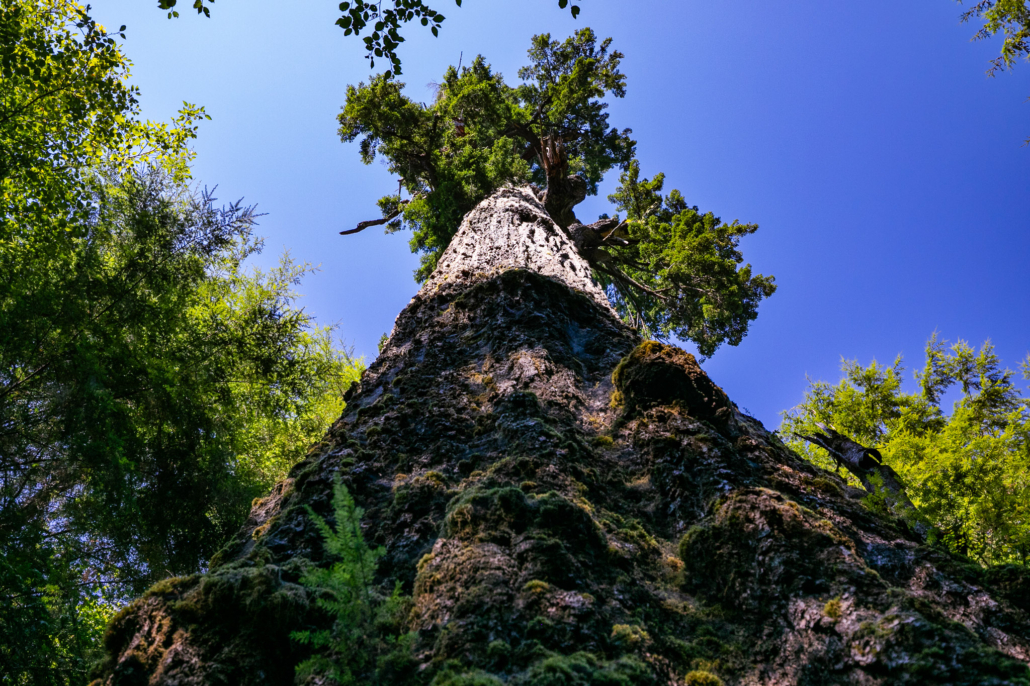
UPDATED: Port Renfrew Big Trees Map
Explore the updated Port Renfrew Big Trees Map with new directions, trails, and routes to iconic giants like Big Lonely Doug, Eden Grove, and more.
https://staging.ancientforestalliance.org/wp-content/uploads/2025/05/13-Red-Creek-Fir.jpg
1365
2048
TJ Watt
https://staging.ancientforestalliance.org/wp-content/uploads/2026/05/Ancient-Forest-Alliance-logo.svg
TJ Watt2026-05-29 15:39:342026-05-29 15:40:49UPDATED: Port Renfrew Big Trees Map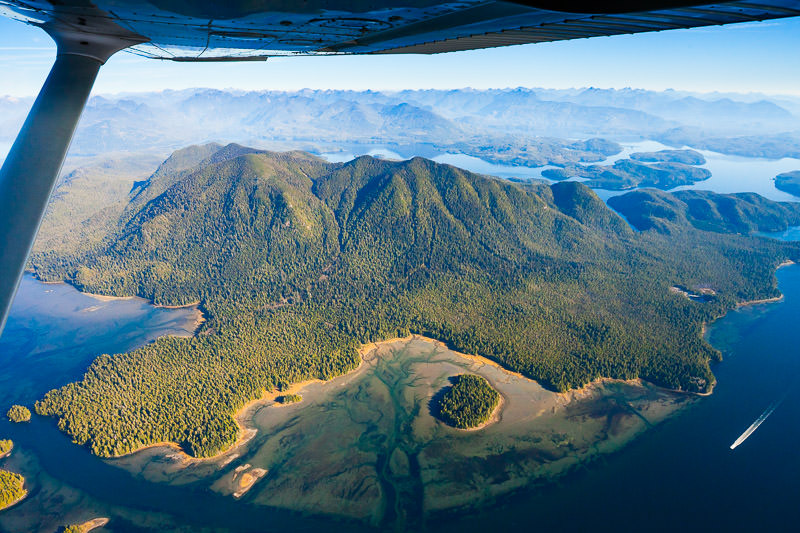
NEW! West Coast Old-Growth Hiking Guide
Explore AFA’s NEW West Coast old-growth hiking guide. From Clayoquot Sound to Port Alberni, there are trails for every skill level!
https://staging.ancientforestalliance.org/wp-content/uploads/2026/05/meares-island-big-tree-trail-tofino-1200px-338.jpg
533
800
TJ Watt
https://staging.ancientforestalliance.org/wp-content/uploads/2026/05/Ancient-Forest-Alliance-logo.svg
TJ Watt2026-05-29 12:06:002026-05-29 15:42:38NEW! West Coast Old-Growth Hiking Guide
Now Hiring: Contract Graphic Designer!
Ancient Forest Alliance is hiring a contract Graphic Designer to help bring our campaigns to life through print and digital materials.
https://staging.ancientforestalliance.org/wp-content/uploads/2026/05/flores-island-wildside-trail-1200px-430.jpg
800
1200
TJ Watt
https://staging.ancientforestalliance.org/wp-content/uploads/2026/05/Ancient-Forest-Alliance-logo.svg
TJ Watt2026-05-22 12:22:292026-05-22 12:22:29Now Hiring: Contract Graphic Designer!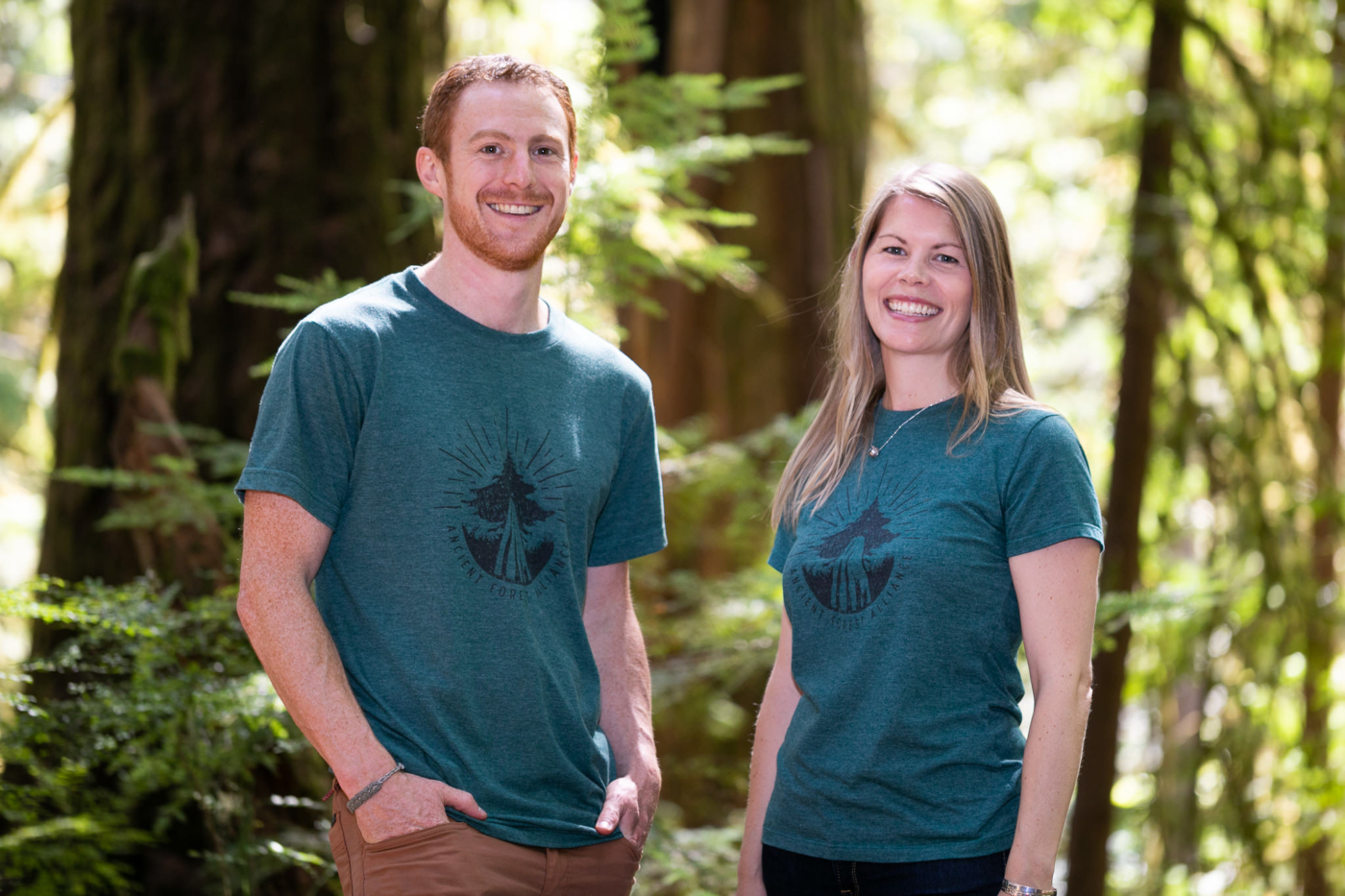
Design AFA’s Next T-Shirt and Help Protect Old-Growth Forests!
Calling all artists! For Earth Month, AFA is launching our first-ever Community T-Shirt Design Contest.
https://staging.ancientforestalliance.org/wp-content/uploads/2026/04/AFA-T-Shirt-Green-Mens-Womens.jpg
1365
2048
TJ Watt
https://staging.ancientforestalliance.org/wp-content/uploads/2026/05/Ancient-Forest-Alliance-logo.svg
TJ Watt2026-05-15 08:13:232026-05-19 09:33:44Design AFA’s Next T-Shirt and Help Protect Old-Growth Forests! Donate
 Send a Message
The Times Colonist: BC’s $300M old-growth fund puts First Nations ‘in the driver’s seat’
/in News CoverageOctober 26, 2023
Times Colonist
By Stefan Labbé
$300-million investment aims to save BC’s old-growth forests by offering First Nations sustainable economic alternatives to industrial logging.
The BC government and BC Parks Foundation have teamed up to provide $300 million to protect old-growth forests across the province — a move environmental groups have described as a critical step in turning local economies away from unsustainable logging.
Praise for the new green funding came from all sides. Ken Wu, executive director of Endangered Ecosystems Alliance, said the new fund will put First Nations “in the driver’s seat.”
“If you don’t have the funding for the nations… it’s like asking them to jettison their primary source of revenues and jobs,” said Wu.
“It’s the fuel that will actually allow old growth to get saved.”
On the coast, the BC government defines old-growth trees as those more than 250 years old, while in the Interior, the designation depends on the type of forest and can range from more than 140 years to more than 250 years old. Such old-growth forests make up roughly 20 per cent of BC’s forests, according to the province.
Under a new conservation financing mechanism, the money will go toward building alternative economies so First Nations can build revenue outside the harvesting of old-growth trees. That could include anything from ecotourism, clean energy projects and sustainable seafood operations to non-timber forest products like wild mushrooms and jobs managing new protected areas, Wu said.
Earlier Thursday, Premier David Eby said conserving nature is “one of the most important things we can do to protect against the worst effects of climate change.”
Terry Teegee, a board member of the BC Parks Foundation, said many nations are looking for alternatives to transform jobs into a sustainable economy.
“First Nations have always believed that if we take care of nature, it will take care of us,” said Teegee, who is also a regional chief with the BC Assembly of First Nations.
“This funding will help support nations who have a vision of abundance in their territories. That will benefit everyone.”
The announcement was also lauded by other environmental groups.
“This conservation financing mechanism puts major wind in the sails for the protection of old-growth forests in BC,” added TJ Watt, a campaigner and photographer with the Ancient Forest Alliance.
Torrance Coste, national forest and climate campaigner for the Wildness Committee, said the money was one of the “missing ingredients” in protecting old-growth forests in BC, but that the province has yet to “stand up to logging corporations.”
Linda Coady, president of the BC Council of Forest Industries, said it supported the new fund, describing it as a “new and innovative BC-based approach.”
“These last three years have been challenging for the BC forest sector since the November 2021 provincial announcement to defer old-growth logging. While temporary, the uncertainty about the future of the deferral areas impacts forest sector jobs and communities across BC,” the industry group, which represents some of BC’s biggest forestry companies, said in a statement.
The conservation financing mechanism will be managed by an oversight committee independent of the BC government, according to the Ministry of Forests.
It is meant to work alongside forest landscape plans meant to establish new objectives around how to manage old-growth trees, climate change, wildfire risk and biodiversity. Plans under that framework have been confirmed in the Bulkley Valley, 100 Mile House, Williams Lake and Vancouver Island.
This year, the BC government pledged to protect 30 per cent of BC’s land base by 2030. But just how it will do that has not been clear. The latest announcement offers a long-term source of money Wu says will grow as it’s matched through crowd-sourcing, and federal, provincial and philanthropic funding agreements still under negotiation.
Anyone interested in contributing to the fund can do so through the BC Parks Foundation.
Wu, who has been one of the leading advocates of the funding scheme since 2017, says there remain at least three big gaps in how the province intends to protect its oldest and most vulnerable forest ecosystems.
First, he said the conservation financing mechanism has yet to be tied to specific ecosystem-based targets, which would ensure the most endangered and least represented ecosystems are protected. Consider big-treed valley bottoms, he said. It’s a lot harder to protect them than a sparsely treed alpine area.
“Without ecosystem-based targets, it’s like sending in the fire crews to hose down all the non-burning homes while the houses on fire get ignored,” Wu said.
A second gap, according to Wu, is a lack of money to support First Nations economic activities while old-growth deferrals are in place over the next couple of years. Without that, he said there’s no room to figure out what to do next.
Third, Wu pointed to the province’s failure to uphold standards for the areas it chooses to protect. His worry is that it could lead to loopholes where protected forests still face unsustainable logging.
“The concern here is that the province may be looking at flexitarian protected-area standards — sort of like a vegetarian who still eats chicken and pork and beef,” he said.
Despite the long road ahead, Wu remained hopeful.
“This is a big lead forward. Let’s make no mistake: it’s a great day.”
See the orginal article.
BC Launches Vital Conservation Financing Mechanism to Protect Old-Growth Forests and Ecosystems
/in Media ReleaseFor Immediate Release
October 26, 2023
Starting with an initial $300 million of provincial and philanthropic funding, the indispensable fund that will “fuel” or power the creation of new protected areas by supporting First Nations protected areas initiatives will continue to grow with additional federal, provincial, and private funds. Conservationists give thanks to Premier Eby for fulfilling a key commitment.
Today, the BC government made good on a vital conservation commitment made last December by Premier David Eby to develop a conservation financing mechanism to fund Indigenous Protected and Conserved Areas (IPCAs) by funding First Nations’ economic, capacity, stewardship, and management needs linked to protecting ecosystems. The new fund consists of a $150 million provincial contribution and $150 million to be raised by the BC Parks Foundation, the official charitable fund of the province’s BC Parks agency, for a total of $300 million to start. The fund is likely to grow quickly with major federal protected areas funding soon, additional provincial protected areas funds (conjoined with the federal funds via the BC Nature Fund and BC Old-Growth Funds, two additional funds currently under negotiation), funds from the international philanthropic community, and contributions from private citizens over time.
“This is a vital step forward to protect nature in British Columbia on a major scale — Premier Eby should be thanked for this. Conservation financing is the indispensable ‘fuel’ to power along the establishment of new protected areas in BC — without it, the large-scale protection of the most endangered and contested ecosystems, such as those with the largest trees and greatest timber values, would be largely impossible,” stated Ken Wu, executive director of the Endangered Ecosystems Alliance. “Since 2017 my colleagues and I have been calling on the province to undertake conservation financing, and three years ago we launched the main campaign with diverse allies calling for federal and provincial conservation funding to protect old-growth forests and endangered ecosystems – and today Premier Eby has delivered. This is a huge conservation victory for the many thousands of people who’ve spoken up for years for this.”
“This conservation financing mechanism puts major wind in the sails for the protection of old-growth forests in BC. After we’ve spent years relentlessly focusing on the centrality of conservation financing to support First Nations’ protected areas initiatives, Premier Eby has delivered on one of his three big commitments now. His other major commitments include doubling the protected areas in BC from 15% now to 30% by 2030 — this funding will make it possible as the fund grows — and targeting protection for biodiverse areas, which we interpret to mean the potential development of ecosystem-based protection targets which haven’t happened yet. We will continue working to ensure these commitments come to fruition,” stated TJ Watt, campaigner and photographer with the Ancient Forest Alliance.
Ancient Forest Alliance Campaigner & Photographer, TJ Watt, stands beside an unprotected old-growth redcedar tree in the Jurassic Grove near Port Renfrew in Pacheedaht territory.
In BC, it’s important to note that the province cannot unilaterally establish protected areas and “just save the old-growth” on Crown lands — the support of local First Nations governments is a legal necessity in their unceded territories. Protected areas establishment and logging deferrals move at the speed of the local First Nations whose territories it is. The BC government’s policies and funding can facilitate or hinder, help speed up or slow down, the abilities of First Nations to protect ecosystems. Conservation financing is a vital enabling condition that can speed up the protection of old-growth forests.
Across BC, First Nations have an economic dependency on forestry jobs and revenues, including in old-growth logging — a dependency fostered and facilitated by successive BC governments. Many First Nations also have an economic dependency on other resource industries, including mining and oil and gas. Hence, conservation financing to fund First Nations’ sustainable economic alternatives in ecotourism, clean energy, sustainable seafood, non-timber forest products (eg. wild mushrooms), and other industries, linked to the establishment of new protected areas, is vital for First Nations to be able to transition from their dependency on old-growth logging revenues and jobs and other resource industries in endangered ecosystems. Without conservation financing, the establishment of new protected areas in areas with high timber values would be like asking First Nations to simply jettison their main source of revenues and jobs — something that no major human population would do without economic alternatives and support.
On BC’s Central and North Coasts (ie. the Great Bear Rainforest), a conservation financing investment of $120 million in 2006 ($30 million from the province, $30 million from the federal government, $60 million from conservation groups) for First Nations sustainable economic development and stewardship needs, resulted in the protection of about one third of the region, about 1.8 million hectares. The initial investment, as a result of interest and carbon offsets, has ended up providing over $300 million in investments to First Nations’ owned businesses and stewardship initiatives, supporting over 100 First Nations-owned businesses, funding over 1000 jobs, and raising the average per household income substantially in First Nations communities.
Several loopholes or gaps remain in the BC government’s protected areas and conservation financing initiatives that the Endangered Ecosystems Alliance and Ancient Forest Alliance will continue to work to close.
“We’re watching with great concern as the province might be looking to establish new ‘flexitarian’ designations – tenuous or fake ‘protected areas’ that still allow logging or boundary shifts to occur. These types of loopholes can easily result in the high-grade logging within such ‘protected areas’ of the very geographically limited monumental old-growth stands and the most endangered ecosystems, which can often constitute one or two percent or less of any major landscape area,” stated Ken Wu, Endangered Ecosystems Alliance executive director.
Endangered Ecosystems Alliance Executive Director, Ken Wu, beside an old-growth redcedar tree in the unprotected Eden Grove near Port Renfrew in Pacheedaht territory.
“The big campaign now will be for ecosystem-based protection targets — without them, we’ll see a massive number of hectares of new protected areas in alpine and subalpine areas with little to no timber value, and that skirt around saving the big timber that will still get logged. Without ecosystem-based targets, it’s like calling in fire trucks to hose down all the houses that are not burning, while the houses on fire get ignored. Ecosystem-based targets means you aim protected areas establishment right, to save the most endangered and least represented ecosystems”, stated Ken Wu, EEA executive director.
“Premier Eby has done something great today and we thank him. We still have to close several gaps and loopholes, related to linking conservation financing to ecosystem-based targets and the most at-risk old-growth, to ensure protected areas integrity moving forward, and to ensure deferral funding comes from various government sources. But make no mistake, this is a very good day,” stated TJ Watt, AFA campaigner.
Old-growth forests are vital to support unique and endangered species, climate stability, clean water, wild salmon, First Nations cultures, and BC’s multi-billion dollar tourism industry. They have unique characteristics that are not replicated by the ensuing second-growth tree plantations that they are being replaced with and that are logged every 50 to 70 years on BC’s coast, never to become old-growth again. Well over 80% of the original, productive old-growth forests (medium to high productivity sites where most big trees and timber values reside) have already been logged, and over 5 million hectares of big tree, rare (by ecosystem type), and very ancient old-growth forests remain unprotected in BC.
Watch this small video series by the Endangered Ecosystems Alliance’s Ken Wu explaining conservation financing, BC’s old-growth policy progress and remaining loopholes, and ecosystem-based targets.
See the news article and the media release that launched the campaign in 2020 for conservation financing from the provincial and federal governments.
The Canadian Press: Poor data hinders B.C. old-growth logging deferrals, advocates say
/in News CoverageOctober 22, 2023
By Brenna Owens
The Canadian Press
Published in The Globe and Mail – Read the original article.
Irreplaceable ancient forests that should meet criteria for interim protection are being left open to logging in British Columbia due to outdated and inaccurate government data, advocates and an ecologist who advised the province say.
“The deferral process was intended to stop the bleed,” said Karen Price, an ecologist who served on the provincially appointed panel that identified 2.6 million hectares of high-priority old growth and recommended it be set aside from logging.
“It was intended to be a quick and dirty stopgap so First Nations and everyone could get together and do sensible planning, and it has not worked that way.”
In November 2021, B.C. announced a process to temporarily defer harvesting in those priority forests, provided First Nations agreed with the proposal in their territories, allowing time for longer-term planning.
It followed an earlier pledge by the province to implement the recommendations from an old-growth strategic review, which urged B.C. to act within six months to defer harvesting in ecosystems at high risk of irreversible biodiversity loss.
The Forests Ministry did not provide the latest deferral numbers. Staff are working on an update that’s expected in the coming weeks, a spokesperson said.
In a statement last July, the ministry said deferrals had been implemented across 1.2 million hectares identified by the panel, while an estimated 11,578 hectares of proposed deferrals were logged between November 2021 and December 2022.
But Price said old growth remains unidentified and open to logging due to “problematic” data that underestimates its age, especially for ancient forests.
The advisory panel worked with provincial data, specifically the vegetation resources inventory, based mostly on aerial images, Price explained.
AFA’s Ian Thomas beside a 10 foot wide cedar stump cut in an area missed for logging deferral on northern Vancouver Island, BC.
But the expert panel had access to on-the-ground data from nearly 7,000 sites throughout B.C. and used it to confirm the remote data.
The panel found the accuracy of projected age of trees in the database dropped “considerably” for stands older than 200 years, Price said.
The discrepancy increases with age, so “ancient forests are severely under-represented in the inventory data,” the panel said in a supplementary report.
That means B.C.’s deferral process is missing areas that should meet the criteria for high-priority old growth at risk of permanent loss, Price said.
A statement from the Forests Ministry this month said a total of 2.33 million hectares of old-growth forests have been “deferred or protected,” a figure that includes areas identified by First Nations in addition to the advisory panel.
B.C. is improving data collection on forests, it said. That includes the use of light detection and ranging technology, known as LiDAR, to help governments, First Nations and resource-based companies make better decisions, the ministry said.
TJ Watt, a photographer and co-founder of the Ancient Rainforest Alliance, said he recently visited a cut block on northern Vancouver Island, where he saw a three-metre-wide stump in a stand classified by the province as being 212 years old.
“Walking into the forest, one could tell this is a highly productive ancient forest filled with giant cedar trees,” Watt said of the area in Quatsino First Nation territory.
Many trees in the grove were likely at least 500 years old, he said.
An incredible trio of ancient cedars at risk on northern Vancouver Island, BC.
B.C. hasn’t publicly stated which nations have agreed to the proposed deferrals, but Watt said the area wasn’t captured by the deferral mapping in the first place.
Details contained in B.C. government mapping show the “interpretation date” for the area’s vegetation data was January 2000, nearly 24 years ago, he said.
Watt said he isn’t aware of any process for the public to flag potentially misclassified old-growth for deferral consideration.
The old-growth advisory panel used three categories to identify areas of high priority for potential deferral: ancient, remnant, and big-treed.
B.C. classifies ancient forests as 250 years and older in ecosystems that experience more frequent natural disturbances, such as wildfire, and 400 years and older in moist or high-elevation areas where such events are rare, Price said.
It’s in those less-frequently disturbed areas, often found along the coast, where the issue of ancient forests missing from B.C.’s data is “widespread,” she said.
“There’s a lot that would be classified as ancient, and in some of these regions there’s very little,” Price said, referring mostly to coastal areas.
In response to a request for comment, the Forests Ministry said the panel worked with higher-level mapping and “acknowledged that the modelling would need to be verified and that some areas may turn out not to be what they had thought.”
Eddie Petryshen, a conservation specialist with Wildsight, an environmental charity based in southeastern B.C., said he has also seen firsthand the discrepancy between the province’s data and the true ages and types of forests he has visited.
In one example from last July, he said the data for two approved cut blocks north of Revelstoke, B.C., showed the area had trees that were about 245 years old, missing the threshold for the ancient classification in the Interior by five years.
“I went in there and, you know, it was beautiful old-growth inland temperate rainforest with trees that are in the one- to two-metre diameter range, the largest cedars. I would expect those trees to be 300 to 500 years old,” Petryshen said.
It takes longer for cedars to grow to that width in the globally unique inland temperate rainforest than it does on B.C.’s coast, he noted.
“These are ancient trees.”
Petryshen said the forests in those cut blocks should have been captured by B.C.’s deferral process, especially as provincial mapping shows they overlap with a deferral area where the cedar-leading forest was classified as being 265 years old.
AFA’s Ian Thomas walks along a logging road between scattered patches of old growth and adjacent cutblocks.
He said the B.C. government is allowing old-growth ecosystems to be logged without fully understanding what it is that’s being lost forever.
“We’ve been making really heavy-handed decisions that are based on prioritizing timber for a long time without really good data,” he said.
In looking at the forests B.C. defined as ancient, Price said the panel also found some areas aligned with management boundaries rather than ecological ones, suggesting the criteria hadn’t been equally applied by those doing the analysis.
“There’d be a district line and on one side there would be this forest that was all marked as ancient, and on the other side it wasn’t,” she said.
“The data actually demonstrated that some people were more interested or capable of defining ancient forest than others.”
The cut blocks north of Revelstoke represent the kind of situation that Petryshen said should be addressed through B.C.’s field verification process.
The advisory panel had recommended “precautionary interpretation” of provincial data and local validation before any potential logging of high-priority forests.
But Price said they were concerned from the start that field verification would result in more forests being removed from the deferrals than old growth.
“There’s nobody who’s trying to add to the deferrals, but there’s a whole bunch of people who have an economic incentive to take the deferrals out,” she said.
A provincial guidance document says field verification can be used to both add and remove areas from the deferral mapping in forests where logging is planned.
When an area is removed from the deferrals through field verification, the guidance says another area with the same type of old forest must replace it.
“In most, but not all cases, they seek replacements of equivalent forest,” the ministry statement said of the forest operators carrying out the assessments.
It said field verification has resulted in the identification of 262 hectares as “eligible to be removed” while 103 hectares have been deemed suitable replacements.
“The majority of the 159 hectares … that were removed but not replaced were areas that were burnt to such a significant degree that they no longer qualified as priority at-risk old-growth so (they) did not need replacing,” the statement said.