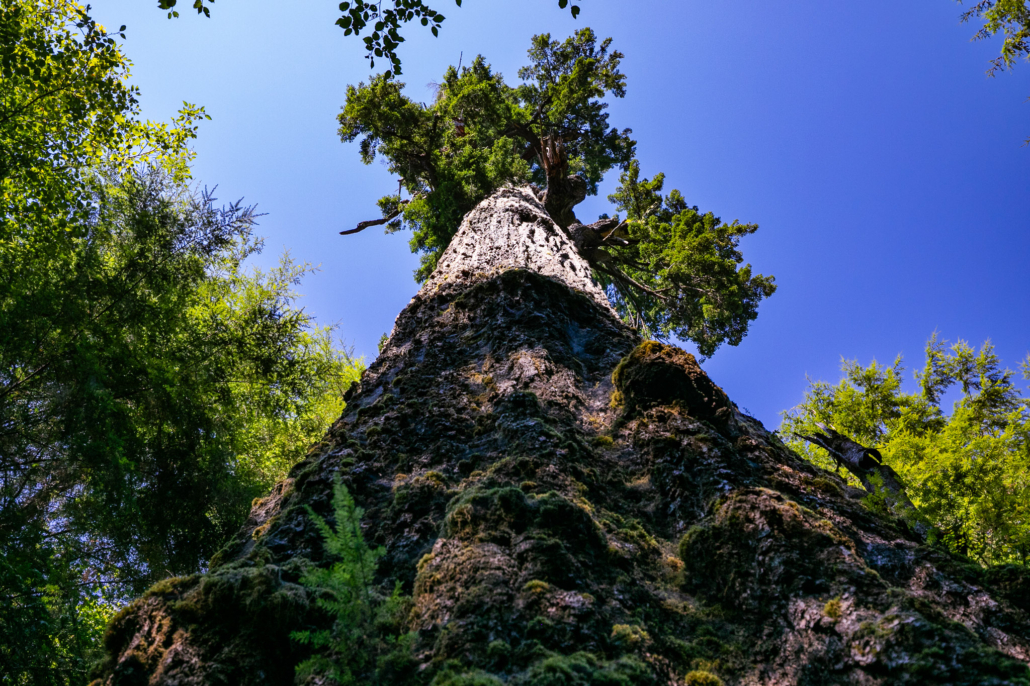
UPDATED: Port Renfrew Big Trees Map
Explore the updated Port Renfrew Big Trees Map with new directions, trails, and routes to iconic giants like Big Lonely Doug, Eden Grove, and more.
https://staging.ancientforestalliance.org/wp-content/uploads/2025/05/13-Red-Creek-Fir.jpg
1365
2048
TJ Watt
https://staging.ancientforestalliance.org/wp-content/uploads/2026/05/Ancient-Forest-Alliance-logo.svg
TJ Watt2026-05-29 15:39:342026-05-29 15:40:49UPDATED: Port Renfrew Big Trees Map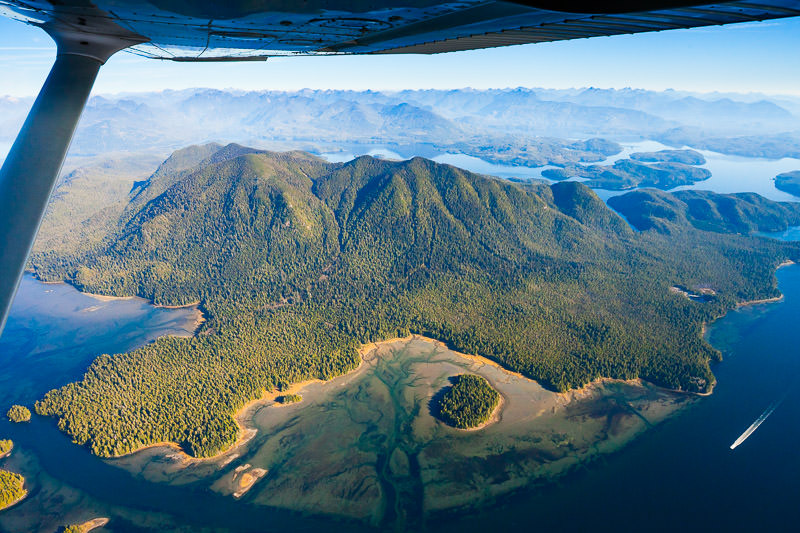
NEW! West Coast Old-Growth Hiking Guide
Explore AFA’s NEW West Coast old-growth hiking guide. From Clayoquot Sound to Port Alberni, there are trails for every skill level!
https://staging.ancientforestalliance.org/wp-content/uploads/2026/05/meares-island-big-tree-trail-tofino-1200px-338.jpg
533
800
TJ Watt
https://staging.ancientforestalliance.org/wp-content/uploads/2026/05/Ancient-Forest-Alliance-logo.svg
TJ Watt2026-05-29 12:06:002026-05-29 15:42:38NEW! West Coast Old-Growth Hiking Guide
Now Hiring: Contract Graphic Designer!
Ancient Forest Alliance is hiring a contract Graphic Designer to help bring our campaigns to life through print and digital materials.
https://staging.ancientforestalliance.org/wp-content/uploads/2026/05/flores-island-wildside-trail-1200px-430.jpg
800
1200
TJ Watt
https://staging.ancientforestalliance.org/wp-content/uploads/2026/05/Ancient-Forest-Alliance-logo.svg
TJ Watt2026-05-22 12:22:292026-05-22 12:22:29Now Hiring: Contract Graphic Designer!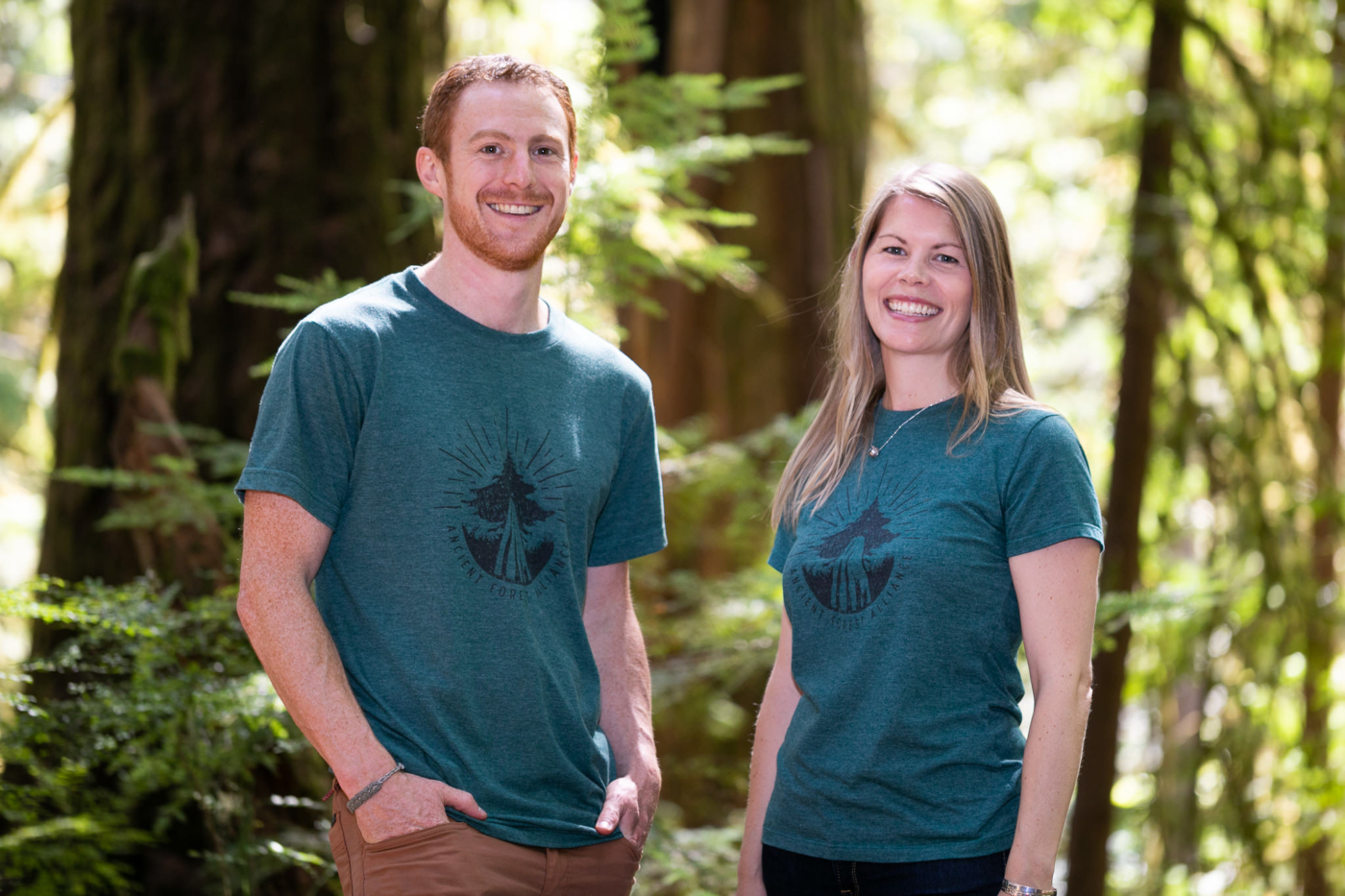
Design AFA’s Next T-Shirt and Help Protect Old-Growth Forests!
Calling all artists! For Earth Month, AFA is launching our first-ever Community T-Shirt Design Contest.
https://staging.ancientforestalliance.org/wp-content/uploads/2026/04/AFA-T-Shirt-Green-Mens-Womens.jpg
1365
2048
TJ Watt
https://staging.ancientforestalliance.org/wp-content/uploads/2026/05/Ancient-Forest-Alliance-logo.svg
TJ Watt2026-05-15 08:13:232026-05-19 09:33:44Design AFA’s Next T-Shirt and Help Protect Old-Growth Forests! Donate
 Send a Message
Lichen: the new immortalization
/in AnnouncementsA rolling stone may gather no moss, but two environmental groups are hoping their fungus initiative sticks. And for those looking for that special gift this year, nothing says “I care” quite like eternalizing someone’s name in a species of lichen.
In an effort to raise funds, the Ancient Forest Alliance (AFA) has partnered with the Land Conservancy (TLC) of B.C. this week to auction off two different species of lichen. The fungus, which forms those haunting “elegant black tresses” on the branches in old-growth forests, is going to come at a pretty price: the highest bid for the AFA lichen is sitting at $1,000 right now, and the one for the TLC is at $3,000. Don’t give up hope yet, though. The auction doesn’t close until Oct. 2 — just in time for Christmas planning.
The undiscovered species was found in B.C. by botanical researcher and taxonomist Trevor Goward, and has been supported by two teams of molecular researchers working in Finland and Spain. According to scientific protocol, the right to give a new species its scientific name goes to the person who describes it, but Goward has donated those rights to whoever scores highest bidder. For the TLC, that money will wind up serving a land conservation project in the Clear Water Valley, and the AFA will put it toward old-growth environmental education.
“Many people want to be immortalized, and this is one way to do this — your name, or the name of someone or something you care about will be there for all of eternity,” says Barry Booth, TLC’s northern regional manager. “It starts by honouring someone’s contribution to the world, but the end result is conservation action, which is a wonderful way to be remembered.”
TLC is hoping the bid is able to cover the cost of the entire Clear Water Valley acquisition project, or $350,000. While it may be steep, bidders could even join the ranks of President Barack Obama, who has the “Obamae” lichen named after him.
For information on how to throw in your bid, visit ancientforestalliance.org, or conservancy.bc.ca.
If you take a lichen to them, name them
/in News CoverageThe naming rights for two newly discovered B.C. lichens have been put up for auction by a pair of conservation groups.
“You can put your name [on] a charity or a building, and those will eventually fall down, but these names will be around as long as the name Shakespeare is around,” said Trevor Goward, who discovered the species. A renowned lichenologist, Mr. Goward’s name has been attached to at least five plant species by fellow biologists.
Proceeds from the two auctions will benefit B.C.’s The Land Conservancy (TLC) and the Ancient Forest Alliance.
While new lichens are discovered on an almost monthly basis, most of those are in the “dime-a-dozen” category of crust lichens, said Mr. Goward. The two lichens up for auction are from the much more prestigious “macrolichens” category.
They are also more celibate. Unlike most lichens, which reproduce sexually, the two up-for-auction lichens reproduce asexually. The Land Conservancy’s lichen also has the distinction of being a cousin of the Scottish lichens that are used to dye tartan.
Both species were discovered by Mr. Goward in or near B.C. rainforests as early as the 1990s. It took two teams of European researchers to plod through the world’s lichen literature before they could be confirmed as new species.
Naming rights auctions have emerged as a popular style of fundraiser in recent years, with groups selling off the names of everything from shrimp to butterflies to stars. In 2005, the Wildlife Conservation Society held a naming auction for a new species of monkey as a fundraiser to protect the monkey’s Bolivian habitat. Ultimately, gambling website GoldenPalace.com beat out Ellen Degeneres for the right to the monkey’s name with a bid of $650,000.
The Land Conservancy is doubtful it will be able to pull in monkey-sized levels of funding, but they are hoping for at least $350,000. An opening bid of $3,000 has already been filed, said Barry Booth, a TLC regional manager.
Founded in 1997, the Land Conservancy of B.C. works differently from most conservation groups in that, instead of canvassing government to conserve land, the Conservancy simply buys up conservation land itself. To date, the group has gathered up enough protected land to equal the size of Toronto.
The revenue from the lichen auction will go towards buying a well-trodden wildlife corridor located between two sides of a B.C. provincial park. The Land Conservancy is buying up 27 acres of land for $350,000. In return, the landowner is throwing on another 57 acres for free.
“When we do these kinds of projects … we’re always looking for a way to get the most for our conservation dollar,” said Mr. Booth.
The Ancient Forest Alliance, the other beneficiary of the lichen auction, works to nudge the B.C. logging industry towards logging second-growth, instead of old-growth forests.
Lichenologists, like deep sea researchers, are among the few scientists who still discover new species. Although new birds and rodents occasional show up in remote areas of South America, most land animals were named in the 19th and early 20th centuries.
“We’re interested in things that fly around and look pretty, but we haven’t really paid attention to where the real biodiversity is,” said Mr. Goward.
Original article: https://news.nationalpost.com/2011/06/18/if-you-take-a-lichen-to-them-name-them/
Your name could go on a lichen
/in News CoverageIf you’re liking lichen, you’ve got a chance to put your – or a loved one’s – name to one.
A botanist from the University of B.C. has donated the naming rights to two species of lichen he’s discovered to two environmental groups. The Ancient Forest Alliance and The Land Conservancy are auctioning off the right to name the species to the highest bidders.
Neither lichen can be found on Vancouver Island but the campaign raises awareness of the role these sybiotic union of fungi and algae play in the ecosystem.
“My idea was to try to help people set aside biologically critical land,” said Trevor Goward, a lichenologist with the UBC department of botany.
“I see old-growth forests as a biological archive.
They’ve been capturing the history, like a library. Yet we cut down these nodes of vast biological knowledge – these things have been accumulating for centuries, for millennia – and I just don’t think that’s right.”
Lichens are sensitive to pollution and disturbance and become rare in urban and industrial landscapes. Some lichens provide critical winter food for mountain caribou in B.C.’s inland rainforests and black-tailed deer in B.C.’s coastal rainforests.
The lichen on loan to the Ancient Forest Alliance is a bryoria or horsehair lichen, which forms elegant black tresses on branches of old-growth trees. The TLC’s lichen is a parmelia or crottle lichen which consists of strap-like lobes that are pale grey above and black below.
“We got our first bid [Friday] of $100,” said Ken Wu, executive director for the Ancient Forest Alliance.
“I hope people get it, that this is part of a bigger campaign to protect old growth.”
Those who want to make a bid to have one of the new species named after themselves or a loved one can visit the Ancient Forest Alliance’s website at www.ancientforestalliance. org or phone 250-896-4007.
The Land Conservancy can be reached at www.conservancy.bc.ca or by calling 1-877-485-2422.