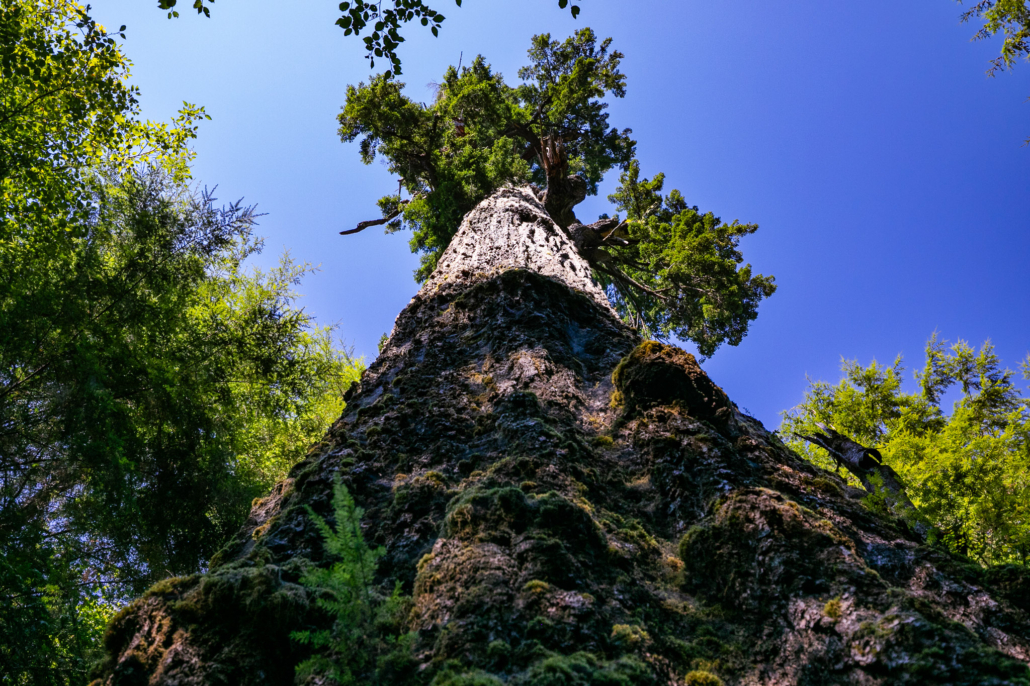
UPDATED: Port Renfrew Big Trees Map
Explore the updated Port Renfrew Big Trees Map with new directions, trails, and routes to iconic giants like Big Lonely Doug, Eden Grove, and more.
https://staging.ancientforestalliance.org/wp-content/uploads/2025/05/13-Red-Creek-Fir.jpg
1365
2048
TJ Watt
https://staging.ancientforestalliance.org/wp-content/uploads/2026/05/Ancient-Forest-Alliance-logo.svg
TJ Watt2026-05-29 15:39:342026-05-29 15:40:49UPDATED: Port Renfrew Big Trees Map
NEW! West Coast Old-Growth Hiking Guide
Explore AFA’s NEW West Coast old-growth hiking guide. From Clayoquot Sound to Port Alberni, there are trails for every skill level!
https://staging.ancientforestalliance.org/wp-content/uploads/2026/05/meares-island-big-tree-trail-tofino-1200px-338.jpg
533
800
TJ Watt
https://staging.ancientforestalliance.org/wp-content/uploads/2026/05/Ancient-Forest-Alliance-logo.svg
TJ Watt2026-05-29 12:06:002026-05-29 15:42:38NEW! West Coast Old-Growth Hiking Guide
Now Hiring: Contract Graphic Designer!
Ancient Forest Alliance is hiring a contract Graphic Designer to help bring our campaigns to life through print and digital materials.
https://staging.ancientforestalliance.org/wp-content/uploads/2026/05/flores-island-wildside-trail-1200px-430.jpg
800
1200
TJ Watt
https://staging.ancientforestalliance.org/wp-content/uploads/2026/05/Ancient-Forest-Alliance-logo.svg
TJ Watt2026-05-22 12:22:292026-05-22 12:22:29Now Hiring: Contract Graphic Designer!
Design AFA’s Next T-Shirt and Help Protect Old-Growth Forests!
Calling all artists! For Earth Month, AFA is launching our first-ever Community T-Shirt Design Contest.
https://staging.ancientforestalliance.org/wp-content/uploads/2026/04/AFA-T-Shirt-Green-Mens-Womens.jpg
1365
2048
TJ Watt
https://staging.ancientforestalliance.org/wp-content/uploads/2026/05/Ancient-Forest-Alliance-logo.svg
TJ Watt2026-05-15 08:13:232026-05-19 09:33:44Design AFA’s Next T-Shirt and Help Protect Old-Growth Forests! Donate
 Send a Message

Harper changes the rules for the environment
/in News CoverageFour years ago, sitting in the house he built with his own two hands way up the coast in Echo Bay, 73-year-old Billy Proctor listed the ways he could tell salmon stocks had collapsed.
Hungry eagles had taken to hunting seagulls, had even killed a couple of loons before his eyes. Bears had been reduced to clawing through creek beds for salmon eggs. Seals were chasing fish far up the streams.
Proctor even saw a humpback whale scare herring right onto the mudflats in front of his home on Gilford Island, which sits in the heart of the Broughton Archipelago, a float-plane ride east of Port McNeill.
Overfishing was partly to blame for the loss of salmon, Proctor said. So was predation by seals, sea lions and dolphins. But particularly galling was the free for-all in the forest industry: bridges and culverts disrupting streams, mudslides silting up the spawning gravel, the shock of blasting for road building killing roe.
When the shade-giving trees along the banks of a high altitude river were cleared, the rocks heated, the water temperature rose and the salmon eggs died. The rules go out the window when the logging is done away from prying eyes, Proctor said.
Me, I just sat and listened, having been advised that when Proctor opened his mouth, the smartest thing to do was keep yours shut. A commercial fisherman for 60 years, and a logger, too, his knowledge of the natural world is legendary on the coast.
The conversation came to mind Wednesday with two stories out of Ottawa.
The first one dealt with the leak of a proposal to weaken 36-year-old rules protecting fish habitat, the intent being to clear some of the barriers faced by projects such as the proposed Enbridge pipeline from Alberta to Kitimat.
The fisheries minister’s office reacted to the leak with a statement saying “federal fisheries policies designed to protect fish are outdated and unfocused in terms of balancing environmental and economic realities.”
The second story dealt with a government plan to “modernize” environmental assessment legislation for the same purpose. The Conservatives talk about being “efficient” and “effective,” about needing to save industrial development from getting bogged down by time consuming environmental reviews. They paint a picture of economic opportunities being lost to the woolly headed, woolly hatted ecoshrubs who say “no” to every job-creation idea that involves shifting a rock or chopping down a tree.
Hold on, replies Green Party leader Elizabeth May. That’s a nicely spun narrative, but not one rooted in fact.
In the entire history of the environmental review process, only three projects have been flat-out rejected, says the Saanich-Gulf Islands MP.
That includes the most commonly cited example, Ottawa’s thumbs-down to a proposed mine near Williams Lake in 2010. The rest of the time, the review process is merely used to tweak proposals to mitigate their environmental damage, not stop them altogether.
“This isn’t a system that’s set up to operate with a red light and a green light,” May said Wednesday from Ottawa.
She maintains there is really only one reason the Conservatives are intent on “gutting” the Fisheries and Canadian Environmental Assessment acts: “It’s all about fast-tracking oilsands projects that link to supertankers.”
The broader consequences will be disastrous and should alarm any Canadian, regardless of political persuasion, who cherishes the great outdoors, she says. Prime Minister Stephen Harper is intent on stripping Canada of environmental safeguards that have been around for generations.
We can assume the prime minister has a different take. And maybe he’s right. It’s a matter of perspective and priority.
But the thing is, the farther you get from Ottawa (or Victoria, for that matter), with the sound of ideological warfare fading with every step, it’s hard to think of the Canadian wilderness as being over-regulated.
Mismanaged, perhaps, and more troubled than a Hollywood marriage – but even when rules exist, they’re enforced so sporadically that sometimes they might as well not exist at all. No wonder David Suzuki is always scowling.
When the Conservatives talk of “balancing environmental and economic realities,” it’s easy to imagine a voice bouncing back from Echo Bay saying, “That would be a good idea.”
Read more: https://www.timescolonist.com/technology/Harper+changes+rules+environment/6305828/story.html
Liberals ignoring committee on raw log exports: Dix
/in News CoverageThe B.C. Liberal government has, since December, been exporting raw logs that its own advisory committee has been saying should be going to producers in B.C.
On Tuesday, New Democratic Party leader Adrian Dix said the Timber Export Advisory Committee (TEAC) deter-mined last December that logs from Quatsino Sound on Vancouver Island should be sold to Teal-Jones of Surrey instead of being shipped overseas.
But Minister of Forests, Lands and Natural Resource Operations Steve Thomson overruled that recommendation, Dix said, allowing the logs to be sold into foreign markets.
“The minister owes people an explanation for his decision,” Dix said during question period Tuesday.
“The committee made the determination that keeping those logs in British Columbia was better for our economy than exporting them, and the minister overruled them.”
Thomson said his ministry rejected the recommendation because TEAC had changed the way it was evaluating whether or not logs should be sold to foreign buyers.
“Without just taking their advice directly, in this case because we knew there was policy implications that needed to be considered, we administered the policy the way that it had always been administered and the way they had previously been providing advice to us,” Thomson said Tuesday, adding the committee has no regulatory function, and is an advisory body only.
“It’s not a process of overruling TEAC,” he continued, “it’s a process of a shift in policy advice being received from the advisory committee.”
Ministry staff said the issue stretches beyond Teal-Jones, and has affected about 150 applications since December, comprising about 116,000 cubic metres of timber.
The ministry said that staff overturned TEAC recommendations on 86 applications in December and January, covering 70,145 cubic metres.
In February, the ministry stopped referring anything to the committee from the west coast of Vancouver Island, as they expected the decisions would be overturned. There were 47 offers in February, comprising 35,532 cubic metres.
In March, TEAC requested it be allowed to review cases again, and government agreed. The committee has so far reviewed 18 offers for 10,168 cubic metres, staff said.
Thomson said he has met with members of the committee and is reviewing the change they made in December to deter-mine if it’s something government is willing to adopt.
“We’re continuing to review that with [TEAC] and we’ve committed to get back to them,” he said, adding he will have an answer before the committee’s next meeting in April.
“But because there was a change in determination and a change in policy in terms of their advice we know we needed to look at this and have a discussion around the implications of the policy.”
At issue in the matter is the way TEAC judges fair market value for logs.
As of December, the commit-tee began looking at domestic offers for coastal logs that did not include the costs to ship the logs to the buyer. This represents a change from before, where the offer made for the logs had to include the cost of freight.
It means domestic offers can potentially be more competitive than before.
On Tuesday, NDP forest critic Norm Macdonald said the issue goes beyond the details of how to calculate market value, adding the key is all about jobs.
“You have manufacturers that are ready. You have Teal-Jones that has gone through the pro-cess. This is a company that produces jobs,” said Macdonald. “You have a host of companies that are ready, and these are the crumbs we’re talking about that go through this advisory committee. These are the crumbs, and even them – this minister will deny those mills.”
In 2011, British Columbia exported 5.87 million cubic metres of coastal raw logs. That was up from the 3.86 million cubic metres that were exported from the coast in 2010.
Read more: https://www.vancouversun.com/Liberals+ignoring+committee+exports/6298779/story.html#ixzz1p7mGGyHA
Minister costing logging jobs, critics say
/in News CoverageB.C. Forests Minister Steve Thomson has overruled recommendations from his own advisory board on log exports dozens of times in the past three months, electing to send millions of dollars worth of raw logs to Asia rather than local mills.
The minister’s decisions effectively put logging profits ahead of jobs in B.C. mills, says a forestry executive whose bid for coastal logs was approved by the minister’s Timber Export Advisory Committee but quashed by the minister.
Mr. Thomson said he has rejected his committee’s advice, citing an arcane policy debate about freight costs. But the result is that workers at a Teal-Jones Group sawmill in Surrey are facing down time this week because of a shortage of fibre, while buyers in China, Japan and South Korea are purchasing B.C. logs in record volumes at premium prices that B.C. mills can’t afford.
“There is room for exports, but I think the significant increase in exports is going to ensure nobody can put up another mill in B.C.,” said Hanif Karmally, chief financial officer for the Teal-Jones Group.
Teal-Jones, which owns a string of forestry operations across the province, found that the committee started approving its domestic timber bids in December – after a year that saw a 50-per-cent increase in the volume of logs being shipped overseas.
But the minister’s office disagreed with the committee’s new-found reluctance to declare as “surplus” those logs that were being sought by local mills. Throughout December and January, the ministry spiked 86 recommendations by the advisory board that would have kept roughly 70,000 cubic metres of wood in B.C. mills. By February, the ministry simply stopped sending the applications to the committee at all, directly rejecting another 47 local offers for 35,000 cubic metres of wood.
The wood is being sold to Asian mills at about double the domestic price.
The minister’s decisions were raised in the legislature on Tuesday, just hours after Premier Christy Clark held a press conference to tout the success of her jobs plan.
NDP Opposition Leader Adrian Dix blasted her government for putting mill jobs at risk. “They specifically intervened to stop jobs from being created in British Columbia,” Mr. Dix later told reporters.
Ms. Clark was not in the legislature on Tuesday. Instead, she attended an event at Seaspan Shipyards to mark the six-month anniversary of her jobs plan.
“That’s the problem when you have a communications exercise dressed up as a jobs plan,” Mr. Dix said. “That’s the reason, ultimately, that the government is in such trouble.”
Mr. Thomson told reporters he rejected the advice of his committee because his government is in the midst of a policy review on raw log exports and the committee appeared to be changing policy on its own by pushing more wood to local mills.
“They are an advisory committee … but given the fact that there was a shift in policy advice, we administered the policy as it had previously been administered.”
He said his government needs to find the “appropriate balance” to ensure harvesting jobs are maintained as well as processing jobs. He is set to visit the Teal-Jones operations next week. “The Teal-Jones boys know we are looking at this policy, what we are telling them is that it is under review.”
He said the question of surplus timber is wrapped up in the larger review of raw-log exports that is under way.
In January, Ms. Clark promised a conference of truck loggers that the review would not shut the door on raw-log exports. “I can assure you that on log exports, my government is taking a common-sense approach,” the Premier said at that time.
Read more in the Globe and Mail: https://www.theglobeandmail.com/news/national/british-columbia/bc-politics/minister-costing-logging-jobs-critics-say/article2368563/