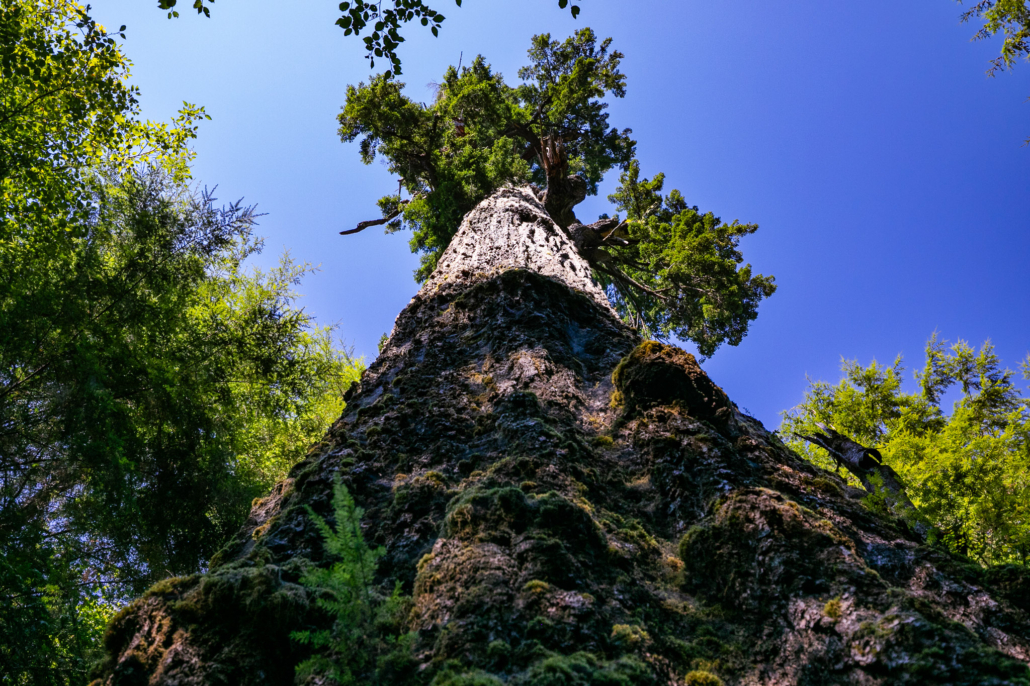
UPDATED: Port Renfrew Big Trees Map
Explore the updated Port Renfrew Big Trees Map with new directions, trails, and routes to iconic giants like Big Lonely Doug, Eden Grove, and more.
https://staging.ancientforestalliance.org/wp-content/uploads/2025/05/13-Red-Creek-Fir.jpg
1365
2048
TJ Watt
https://staging.ancientforestalliance.org/wp-content/uploads/2026/05/Ancient-Forest-Alliance-logo.svg
TJ Watt2026-05-29 15:39:342026-05-29 15:40:49UPDATED: Port Renfrew Big Trees Map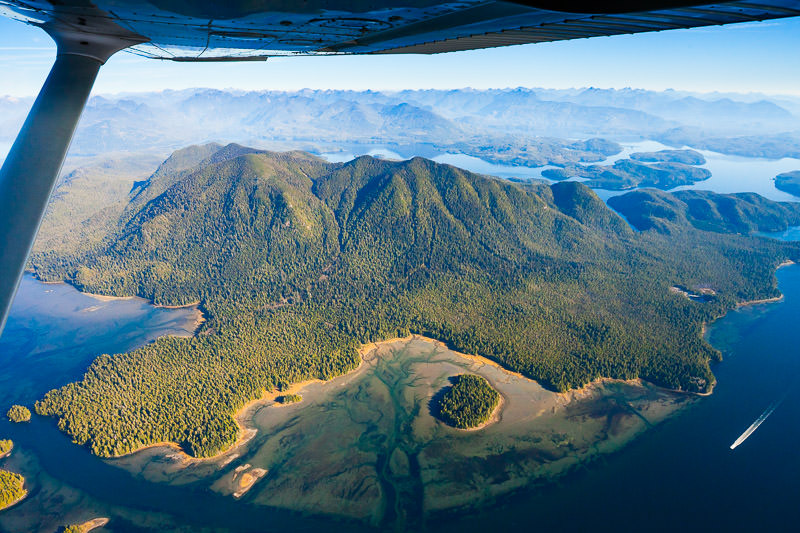
NEW! West Coast Old-Growth Hiking Guide
Explore AFA’s NEW West Coast old-growth hiking guide. From Clayoquot Sound to Port Alberni, there are trails for every skill level!
https://staging.ancientforestalliance.org/wp-content/uploads/2026/05/meares-island-big-tree-trail-tofino-1200px-338.jpg
533
800
TJ Watt
https://staging.ancientforestalliance.org/wp-content/uploads/2026/05/Ancient-Forest-Alliance-logo.svg
TJ Watt2026-05-29 12:06:002026-05-29 15:42:38NEW! West Coast Old-Growth Hiking Guide
Now Hiring: Contract Graphic Designer!
Ancient Forest Alliance is hiring a contract Graphic Designer to help bring our campaigns to life through print and digital materials.
https://staging.ancientforestalliance.org/wp-content/uploads/2026/05/flores-island-wildside-trail-1200px-430.jpg
800
1200
TJ Watt
https://staging.ancientforestalliance.org/wp-content/uploads/2026/05/Ancient-Forest-Alliance-logo.svg
TJ Watt2026-05-22 12:22:292026-05-22 12:22:29Now Hiring: Contract Graphic Designer!
Design AFA’s Next T-Shirt and Help Protect Old-Growth Forests!
Calling all artists! For Earth Month, AFA is launching our first-ever Community T-Shirt Design Contest.
https://staging.ancientforestalliance.org/wp-content/uploads/2026/04/AFA-T-Shirt-Green-Mens-Womens.jpg
1365
2048
TJ Watt
https://staging.ancientforestalliance.org/wp-content/uploads/2026/05/Ancient-Forest-Alliance-logo.svg
TJ Watt2026-05-15 08:13:232026-05-19 09:33:44Design AFA’s Next T-Shirt and Help Protect Old-Growth Forests! Donate
 Send a Message

A Shocking Glimpse of BC’s New Forest Plan
/in News CoverageFor more than a quarter century, logging companies at the government’s blessing have been on a tear through British Columbia’s expansive interior forests.
In the name of “salvaging” economic value from forests attacked by mountain pine beetles, beginning with a smaller outbreak centered in the Williams Lake area in the 1980s and followed by the much larger beetle epidemic that erupted a decade ago, millions more trees have been logged than would otherwise have been the case.
Anyone with even a passing familiarity with the issue has known for years that this spelled trouble. A catastrophic “falldown” in future logging rates loomed because the industry was literally cutting out the ground from beneath its own feet. But the illusion of abundance was sustained as the beetle attacks spread and more timber became available on a one-time basis only to salvage log.
Well the day of reckoning is now very close at hand and the government’s response leaves a heck of a lot to be desired.
As revealed by Mark Hume in the Globe and Mail a couple of weeks ago, the government is so loathe to acknowledge the obvious — that what has gone on cannot be sustained — that it is seriously considering throwing out the last vestiges of responsible forest management in an attempt to buy a few more years of higher employment in an industry that must, inevitably, make the transition to a future in which fewer trees, not more, are harvested.
So-called “reserves” of forest that would otherwise not have been logged — biologically rich remnant patches of old-growth trees, important forests for wildlife species, forests in visually stunning valleys or slopes near towns, economically more marginal tracts of trees, forests higher up on mountain slopes — are now all about to be placed on the chopping block. All in the name of buying a few more years of logging, which will in turn place an even higher burden on future generations.
The biggest proponent of this so-called plan turns out not to be the current forests minister, Steve Thomson, but his cabinet colleague Pat Bell, minister of jobs, tourism and innovation, and MLA for Prince George-Mackenzie.
Bell and John Rustad, who is the MLA for the nearby riding of Nechako Lakes, have both publicly declared that they have found a way to free up more trees for logging — trees that they say will go a long way to providing a basis for a new sawmill to be built in the community of Burns Lake. If built, a new mill would replace one that burned to the ground in January following an explosion that killed two mill workers and put 250 local residents out of work.
Earlier this month in an interview with Prince George Citizen reporter Mark Nielsen, Bell said he believes that opening forest reserves to logging would yield four million cubic metres of wood per year, which would be enough wood to keep “four fairly large sawmills, each employing about 500 people between people that work in the bush and the people in the mill.”
This may sound impressive. But the devil’s in the details. And it’s the details that Bell and Rustad are not talking much about.
For whose eyes only?
The details are contained in a tightly guarded Ministry of Forests document that took a hard look at the so-called “mid-term timber supply” in four of the most heavily impacted forested areas in the province where pine beetles had attacked and where the provincial government had responded by approving big increases in logging rates.
A few days ago, Bob Simpson, the Independent MLA for Cariboo North, publicly called for the release of the report. And yesterday a confidential draft of it was briefly posted on the web, before it was summarily removed a few hours later.
Simpson, like other MLAs in the interior, is keenly interested in what’s in the report that was prepared by officials in the provincial chief forester’s office. The forests around Simpson’s hometown, Quesnel, are more heavily weighed to lodgepole pine trees — which the pine beetles have fed on and killed — than are other tracts of interior forest.
When he saw a copy of the briefly posted document he was flabbergasted, as it seemed to undermine so much of what Bell and Rustad have contended.
In the first page of text, the report notes that “under current lumber market conditions” it is “uneconomical” for most logging companies to make money because of the increasingly longer distances that the companies must travel from their sawmills to find trees to log. The growing scarcity of economically viable wood to run through mills is becoming so acute the same report notes, that within 1.5 years in the case of Quesnel and five years in the case of Prince George local mills will be out of wood.
“All of this begs the question,” Simpson says. “Why are we beginning this discussion now when we’re looking at just one-and-a-half years of cut? In 2002, the growth curve for the mountain pine beetle went from normal background levels to straight up. At that point, everyone knew that we were going to lose the pine forest. And for 10 years, this government has done nothing. Now, they’ve put lipstick on a pig. They’re putting the forest at risk in order to avoid job losses. That’s what it looks like.”
Waiting for promised ‘dialogue’
In questions in the legislature yesterday, Simpson tried to draw Thomson out on what was in the report prepared by his staff. But on each occasion, it was Bell who answered questions. In response to one on what “options” the government was weighing in terms of relaxing the rules on what could and could not be logged, Bell said:
“There is a lot of work going on. It is in the broader mountain pine beetle region. We are likely a month or two away from having a broader public discussion. I think that dialogue is important, and it is a dialogue that we’ll be encouraging as we move into the summer months.”
If that dialogue does happen, however, it will be interesting to see the public’s reactions to the projections in the report. Because as the draft that briefly circulated on the web yesterday makes clear, even by escalating logging activities in forests that ought to be left alone given their great biological value, Bell and Rustad are not likely to succeed in staving off job losses. There is simply too much sawmilling capacity and too little remaining wood to delay what will likely translate into a number of mill closures in the very near future.
The report, which looked at available logs in the Lakes, Prince George, Quesnel and Williams Lake timber supply areas, offers a sobering look at what lies ahead.
Kill old growth, then jobs gone
The Lakes TSA, is particularly interesting in that regard as it would be the major source of logs for any new sawmill in Burns Lake. The report notes that “it is possible” to increase log supplies in the region by basically throwing all constraints out the window. But it buys few jobs while jeopardizing local moose and caribou populations and essentially finishing off the remaining old-growth forest.
“This increase is projected to maintain 87 more direct, indirect and induced person years of employment in Lakes TSA communities” the report claims. But this does not translate into increased jobs over time. In fact all it does is lessen the severity of future job losses and not by very much. As the same report notes relaxing the constraints simply means “potentially limiting the (jobs) decline from 1,572 pre-epidemic total jobs to 521 total jobs instead of 434.”
For 10 years of delayed economic pain, the same report notes, the region then must resign itself to 50 years — half a century — of logging rates at one quarter of the artificially propped up rates that Bell and Rustad publicly support.
Whoever in government decided to pull yesterday’s briefly posted online report had good reason to believe that the public might find a lot to be concerned about with the proposed logging of forest reserves.
Anthony Britneff, who worked in several senior positions within the provincial Forest Service for nearly 40 years before retiring a couple of years ago, has been actively writing and critiquing forest policies since leaving the public service. He said Tuesday that he was alarmed at the report’s projections in large part because the numbers being used to estimate the number of trees that remain are highly suspect.
The Lakes TSA in particular, Britneff said, has some of the poorest, most out-of-date inventory data of any forested region in the province. In fact, the last robust inventory or counting of trees in the TSA took place before the pine beetle attack not after.
“As the Forest Practice Board and the auditor general for British Columbia have already pointed out, one has to question the reliability of the information the government is using to mitigate timber supply falldown and to assess the viability of a new Babine Forest Products mill at Burns Lake,” Britneff said after reading the briefly posted timber supply report.
If there’s a silver lining, he says, it’s that mayors and local town councillors are skeptical of what they are hearing from the provincial government.
“Fortunately for forest-dependent communities, some local mayors and councillors are beginning to wake up to why the government in Victoria is preferring not to engage local communities and citizens in discussions about changes to their land-use plans,” he said.
Read more: https://thetyee.ca/Opinion/2012/04/18/BC-Forest-Plan/
Power Grab Eyed by Clark Gov’t to Set Logging Levels
/in News CoverageA leaked provincial cabinet document indicates that the provincial government is contemplating “suspending” the powers of one of its most powerful public servants in order to expedite a controversial logging program that has raised alarm bells in the professional forestry community.
The document leaked late Tuesday afternoon, is the second confidential report in as many days to find its way out of government through back channels — a sign, perhaps, of the growing unease that some public servants in the Ministry of Forests, Lands and Natural Resource Operations have with some aspects of the “jobs” agenda of Pat Bell, minister of jobs, tourism and innovation.
Bell, MLA for Prince George-Mackenzie, and John Rustad, MLA in the nearby riding of Nechako Lakes, have been actively promoting a plan to ease or eliminate environmental constraints on logging activities so as to artificially extend logging rates in the interior of the province where several rural communities are heavily dependent on logging and milling jobs.
The driving force behind the move is that after 25 years of elevated logging rates in the central interior of the province in response to two outbreaks of mountain pine beetles that killed upwards of one billion mature lodgepole pine trees, the logging and milling industries are running out of trees to cut. Personal Student Loans For College
The growing scarcity of trees came sharply into focus in January when an explosion and ensuing fire at the Babine Forest Products sawmill in Burns Lake — the town’s largest employer — destroyed the mill, killing two workers and displacing 250 more.
In the immediate aftermath of the mill burning down, word rapidly spread that the mill would likely not reopen given the generally depleted nature of forests throughout the region. But Bell and Rustad claim to have found enough trees to provide Hampton Affiliates Ltd. — the owner of the aforementioned mill — with enough wood fibre to reinvest in a new facility.
The trouble is that to get at the wood, the government would essentially have to override previous forest planning processes that set limits on what could be logged in order to protect remnant patches of old-growth forest, important wildlife corridors that make it possible for important species like woodland caribou and moose to survive, other forests with high biological diversity values, and forests with high visual values, for example forests within sight of communities or in important scenic corridors.
Such a plan, the leaked cabinet document makes clear, would likely place cabinet in a difficult position with the office of the chief forester, one of the most important posts in the Ministry of Forests, Lands and Natural Operations.
‘Extraordinary legislation’ urged
“This action to enable a higher short-term supply would be a deviation from chief forester policy and practice in timber supply management,” the cabinet submission dated April 7 reads. “There is some risk that the independent chief forester of the day may not agree with this action, or of a legal challenge if he/she does.”
The same document then goes on to recommend that Cabinet consider introducing “extraordinary legislation” to artificially prop-up logging rates in the Lakes Timber Supply Area or TSA, thus providing the necessary “certainty” for Hampton to invest in a new Burns Lake mill.
“Under this option,” the leaked memo reads, “government would enact legislation to enable a set of specific actions to add certainty to the supply of timber for a new Babine Forest Products mill over a 15 year period.”
Such actions, the memo continues, would “suspend current Forest Act provisions for the chief forester to set the annual allowable cut and the Minister to make license apportionment decisions in the Lakes TSA.” The legislation would then “vest these functions with the Lieutenant Governor in Council.” In other words the decision would simply be a political decision, driven by the provincial cabinet.
Bruce Fraser, former chair of British Columbia’s independent Forest Practices Board, expressed deep concern over the contents of the memo.
“The independent status of the chief forester is designed to ensure effective management of the forests,” Fraser said. He said that were such legislation to be introduced it would mean that professional and technical expertise within the ministry was superseded by short-term political considerations. “Once that door is open, you can allocate pretty much anything” to be logged. It becomes “the burn the furniture stage.”
Pine beetles, jobs and road miles
A big unanswered question arising from the leaked cabinet document is what the provincial government may yet be contemplating when it comes to the chief forester’s powers in three other large timber supply areas where the pine beetle has also been active. Those TSAs include that in Bell’s riding — the Prince George TSA — as well as the Quesnel and Williams Lake TSAs. Those three TSAs, along with the Lakes TSA, were all each subject to “mid-term timber supply” studies conducted by the chief forester and other ministry staff last year. The studies resulted from a directive issued by Pat Bell, who was then forests minister.
The results of that work were temporarily posted on a government website Tuesday morning and early afternoon before the government summarily removed them following questions about the document raised in the legislature by Independent MLA, Bob Simpson.
That document flagged that there was a serious problem brewing in all four TSAs due to years of elevated logging activities in response to the pine beetle outbreaks.
“Under current lumber market conditions,” the document read, “it is uneconomical to harvest dead pine located at long haul distances from the mills. Licencees [logging companies] have indicated that the economic supply of dead pine varies from 1.5 years in Quesnel to about five years in the Prince George TSA.”
The document went on to suggest that the depth of job losses and mill closures could be offset, somewhat, by relaxing virtually all constraints on logging forests that had been reserved from logging for environmental reasons.
But job losses would, nonetheless, occur and they would be formidable.
In the Lakes TSA, for example, relaxing the logging rules would mean that instead of local milling and logging jobs falling from 1,572 jobs in the days before the pine beetle outbreak to 434 jobs in the near future, the jobs would decline to 521 jobs instead — a difference of 87.
In the Prince George TSA, relaxing the logging rules would “maintain” an additional 1,915 jobs. But overall, the decline in milling and logging jobs would still fall dramatically from 13,371 jobs in the pre-beetle-attack years to 8,763 jobs in the near future.
In the Quesnel area, relaxed logging rules were estimated to “maintain” 377 more forest industry jobs. But again, the overall trend was down from 3,321 jobs in the pre-epidemic period to 2,092 jobs in the near future.
And in the Williams Lake area, relaxing the logging rules allegedly maintained 1,144 jobs than would otherwise be the case. But once again, the trend was down from 4,626 pre-epidemic jobs to an estimated 2,955 jobs.
‘Things that need to be discussed’: Clark
In response to questions in the legislature by opposition leader Adrian Dix about the leaked cabinet memo yesterday, Premier Christy Clark said that the document had not gone before cabinet “in the form” that Dix and others had before them. “But it does discuss many of the things that are under discussion in the community — things that need to be discussed, issues that we’ve talked about with the steelworkers, with the First Nation, with community leaders and with people from across the province,” the premier said. “These are discussions that we have to have, and it’s a much bigger issue than just in Burns Lake.”
Clark also said that the government would be “consulting the public about these issues.” Presumably, it is hoped, that will happen before a decision to “suspend” the chief forester’s authority is made.
Read more: https://thetyee.ca/Opinion/2012/04/19/Logging-Levels/
Hike raises awareness of bluffs
/in News CoverageFriends of Stillwater Bluffs hosted a group of 50 people and 10 dogs on a hike around Stillwater Bluffs on Sunday April 15. It was part of an awareness-raising campaign that this area needs to be protected before Island Timberlands follows through on its plans to log it.
District Lot 3040, known locally as the Stillwater Bluffs, was noted as a priority for protection through the Powell River Regional District’s parks and greenspace plan. However, Island Timberlands timber-cruised the area this winter and stated recently that it plans to begin road building in the next month or so.
A Vancouver Island-based environmental organization, the Ancient Forest Alliance, has included the Stillwater Bluffs campaign in its province-wide push to get the provincial government to create a fund for regional districts to access funds for parks creation that would protect old growth forests and other areas of ecological and social value. Student Loan Consolidation
Three staff members of the alliance attended Sunday’s hike and took photographs. Ken Wu, executive director, said, “Wow, I was so impressed with the dramatic beauty of Stillwater Bluffs, with the bluffs themselves and with the forest and its enormous veteran old-growth trees. You could not find a better park candidate in the area. Island Timberlands needs to back off instead of escalating a conflict, while the regional district and province need to step in to help buy this coastal gem for protection.”
Friends of Stillwater Bluffs have collected over a thousand signatures to protect the area and are working hard to raise awareness about its unique value to the community.
“A representative of Island Timberlands told me they want to log it in a way that would keep anyone from logging there again,” said Nola Poirier, a member of the group. “Instead, we are working to protect it, in a way that will keep anyone from logging there again.”
Meanwhile, David Moore, a member of the group’s organizing committee, made a presentation at the April 10 Powell River Regional District committee-of-the-whole. He told directors he and another member of the group were invited to have a walk around the site with Wayne French, an Island Timberland’s forester, in the last week of March. “He made it very clear to us that they had received no indication from the board here of any interest in the property, so they were going full steam ahead in their logging plans,” Moore said.
Moore explained that the company is moving into an active stage of harvesting planning, which involves mapping, staking, flagging and spray-painting of tree trunks. “This set off the alarm bells that something has to happen soon, or we’re going to see a real incursion on the property, let alone a large investment from their company in terms of manpower, hired work and mapping, if in fact we are going to make a proposal to them for park acquisition,” Moore said. “So, we’re back, simply asking for some direct communication between the board and the company to give them an indication that there is something going on here and would they simply put their train into park mode for just another month or two while we do get our parks process in full swing.”
The regional district has appointed a parks and greenspace plan implementation committee, which is meeting for the first time tonight, April 18. After discussing the issue, the committee passed a motion to send a letter to the president of Island Timberlands requesting a delay on logging activities on the Stillwater Bluffs property until such time as the regional district can discuss a possible acquisition.
Read online: https://www.prpeak.com/articles/2012/04/18/news/doc4f8e05ef3b82f065483061.txt