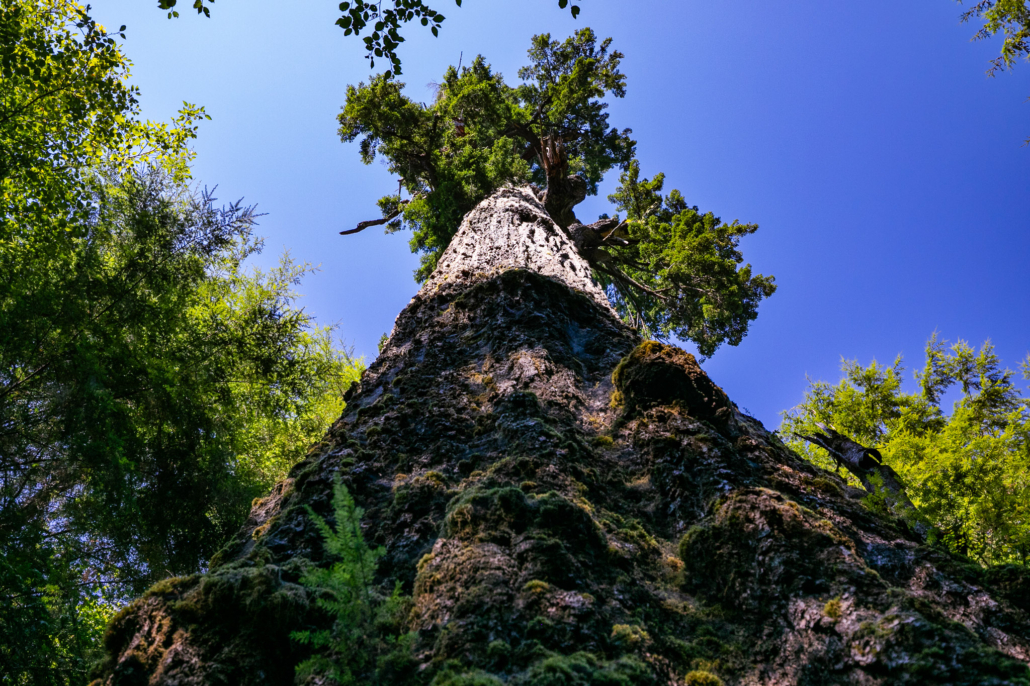
UPDATED: Port Renfrew Big Trees Map
Explore the updated Port Renfrew Big Trees Map with new directions, trails, and routes to iconic giants like Big Lonely Doug, Eden Grove, and more.
https://staging.ancientforestalliance.org/wp-content/uploads/2025/05/13-Red-Creek-Fir.jpg
1365
2048
TJ Watt
https://staging.ancientforestalliance.org/wp-content/uploads/2026/05/Ancient-Forest-Alliance-logo.svg
TJ Watt2026-05-29 15:39:342026-05-29 15:40:49UPDATED: Port Renfrew Big Trees Map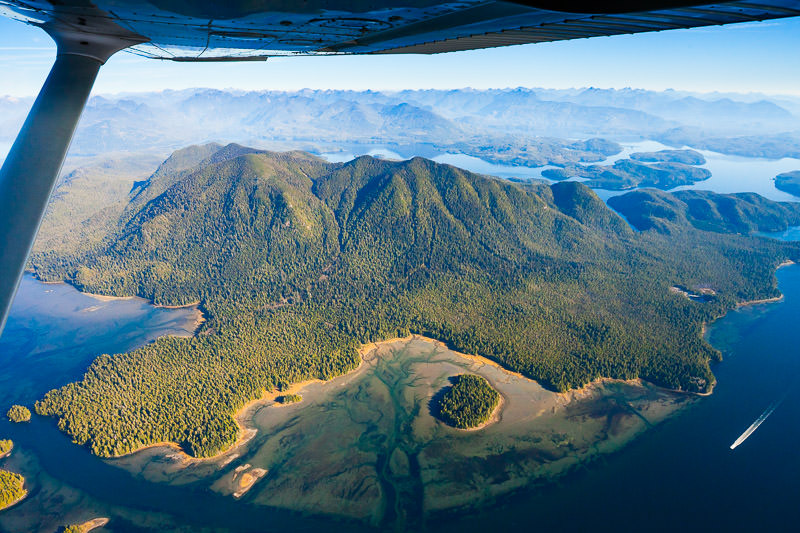
NEW! West Coast Old-Growth Hiking Guide
Explore AFA’s NEW West Coast old-growth hiking guide. From Clayoquot Sound to Port Alberni, there are trails for every skill level!
https://staging.ancientforestalliance.org/wp-content/uploads/2026/05/meares-island-big-tree-trail-tofino-1200px-338.jpg
533
800
TJ Watt
https://staging.ancientforestalliance.org/wp-content/uploads/2026/05/Ancient-Forest-Alliance-logo.svg
TJ Watt2026-05-29 12:06:002026-05-29 15:42:38NEW! West Coast Old-Growth Hiking Guide
Now Hiring: Contract Graphic Designer!
Ancient Forest Alliance is hiring a contract Graphic Designer to help bring our campaigns to life through print and digital materials.
https://staging.ancientforestalliance.org/wp-content/uploads/2026/05/flores-island-wildside-trail-1200px-430.jpg
800
1200
TJ Watt
https://staging.ancientforestalliance.org/wp-content/uploads/2026/05/Ancient-Forest-Alliance-logo.svg
TJ Watt2026-05-22 12:22:292026-05-22 12:22:29Now Hiring: Contract Graphic Designer!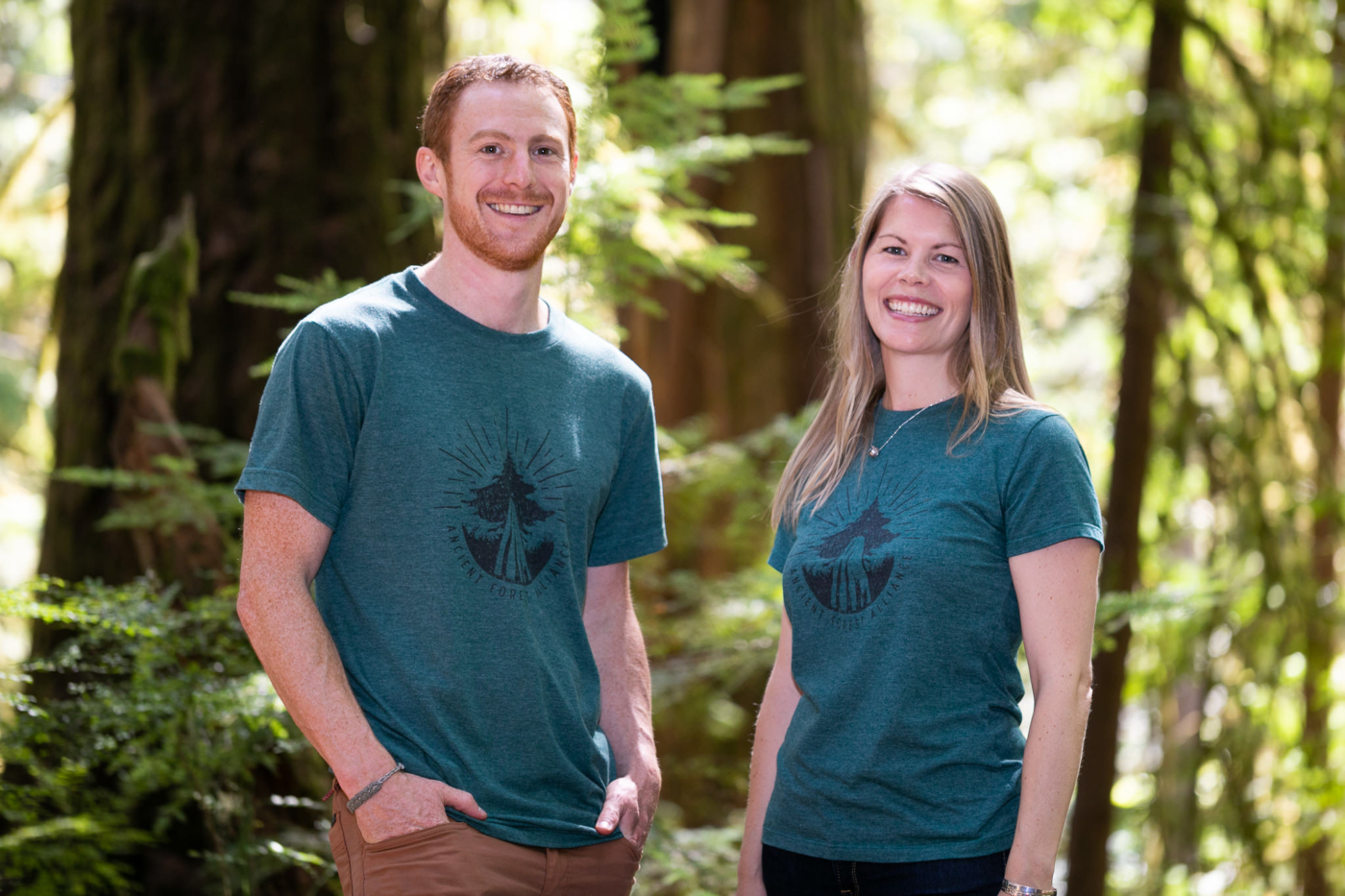
Design AFA’s Next T-Shirt and Help Protect Old-Growth Forests!
Calling all artists! For Earth Month, AFA is launching our first-ever Community T-Shirt Design Contest.
https://staging.ancientforestalliance.org/wp-content/uploads/2026/04/AFA-T-Shirt-Green-Mens-Womens.jpg
1365
2048
TJ Watt
https://staging.ancientforestalliance.org/wp-content/uploads/2026/05/Ancient-Forest-Alliance-logo.svg
TJ Watt2026-05-15 08:13:232026-05-19 09:33:44Design AFA’s Next T-Shirt and Help Protect Old-Growth Forests! Donate
 Send a Message

B.C. warned not to touch reserves for short-term supply
/in News CoverageWhen a special committee of the provincial legislature came to the Interior town of Valemount last week seeking views on how to maintain timber harvests in forests decimated by the pine beetle, it reopened some old wounds for Valemount Mayor Andru McCracken.
A decade ago, Valemount was a thriving forestry town with a large sawmill. There was a district forestry office at nearby McBride, employing 25 people, which oversaw the timber supply in the Robson Valley Forest District.
The district office closed in 2003 as part of a provincewide cutback of government services. The sawmill closed and was dismantled in 2006 after a legislative change removed the requirement that timber be processed locally. Most Robson Valley timber now goes to a mill 300 kilometres away in Prince George.
The Robson Valley’s largely hemlock and cedar forests have not been hit hard by the pine beetle. But timber in the dead forests to the west of Valemount is drying and cracking to the point it can no longer be turned into lumber.
To access more timber, the B.C. government is floating a plan that includes logging in areas that were previously off limits for environmental or “visual quality objectives” and changing the boundaries of forest districts to add timber to one district at the expense of another.
Victoria has already announced plans to ease logging restrictions in the Fraser timber supply area, including upper Stave Lake, upper Harrison Lake and Chehalis Lake.
McCracken is concerned that Valemount will lose control over what timber it has left.
The special committee, struck on May 16, is travelling across the Interior seeking public consultation until July 12 and is to submit a report with recommendations Aug. 15. Nechako Lakes MLA John Rustad is the chair.
Rustad said people speaking at the hearings have been passionate in their views.
“When we are in Burns Lake [which lost its mill in a fire Jan. 21] we are hearing, ‘We want to have our mill rebuilt,’ and in a lot of other communities we are hearing, ‘Whatever you do, don’t put our mills at risk.’ This is a very serious issue across the entire mountain pine beetleimpacted area,” he said.
The plan to take a second look at the remaining timber supply, came about shortly after it was discovered there is not enough timber in the Burns Lake area to warrant rebuilding the sawmill. The government wants to drum up enough timber through other means to save Burns Lake and, by extension, other resource towns also faced with dwindling timber supplies for their mills.
The beetle has destroyed 10 million cubic metres of timber.
“To put that in perspective that’s enough wood to feed eight fairly sizable sawmills. And eight sawmills represents about a third of the forest industry throughout that area,” said Rustad.
Besides logging in forest reserves and changing administrative boundaries, the committee is considering: . Increasing the harvest of marginally economic timber.
. Shifting to area-based tenures giving forest companies more management control over the land.
. More intensive forest management through fertilization and silviculture.
McCracken is flattered that the government wants his opinion but he thinks it’s a bit late to be asking. And he is concerned that the province may end up taking even more timber from the Robson Valley to feed beetleaffected mills to the West.
“We are in a colonial situation,” he said.
McCracken isn’t the only one concerned.
The Association of B.C. Professional Foresters, environmentalists and even the forest industry and the University of B.C. dean of forestry have expressed concerns, specifically over the second look at forest lands that are set aside for ecological reasons.
“The message we want out there is: ‘We are not going to damage our environmental standards,” said John Allan, president of the Council of Forest Industries, which intends to submit a brief. “I am struggling with how you would free up anything more than a few scraps of timber without doing environmental damage.”
Allan said the effect of the beetle is a critical problem that deserves a broader and deeper examination than the committee can accomplish with its tour. The economic future of the forest industry is at stake, he said.
“This issue is so important it calls for more than a few meetings in the middle of summer.”
The 5,400 members of the Association of B.C. Forest Professionals are urging that the government put the forests first.
The forests are the province’s most valuable renewable resource, said Mike Larock, who is travelling to towns along with the committee. He said the professional association fears sustainability may be damaged for political expediency.
“We think that just by focusing on one end product, or one benefit, you actually lose sight of the forest, the very thing that provides all the benefits,” he said.
John Innes, dean of the faculty of forestry at the University of B.C., said that the mills running out of timber will be able to gain a short-term timber supply if reserves are logged but it could be at the expense of sustainable forests.
“What people seem to forget – and I don’t really understand this – is that there was extra capacity created to process this lumber when the beetle reached its peak. Surely people then realized that this was a temporary thing; that it wasn’t going to last.”
Because of the risks of going into the reserves, the outcomes for industry and the environment are uncertain, he said.
“We have never had such proposals for what, in my view, are a pretty regressive step in forest management.”
Vancouver Sun Article: https://www.vancouversun.com/technology/warned+touch+reserves+short+term+supply/6840692/story.html#ixzz1yvXxjait
Province to ease logging restrictions in Fraser region
/in News CoverageThe B.C. government plans to relax logging restrictions on about 9,500 hectares of Crown land, including the well-loved getaway of Harrison Lake.
Areas slated for reduced protection within the Fraser timber supply area include upper Stave Lake and Chehalis Lake, as well as upper Harrison Lake. They had been partly protected previously because of their natural beauty.
The planned changes result from an industry-requested review of Crown lands managed under “visual quality objectives” of the Forest and Range Practices Act. The objectives are used to protect all or part of scenic areas and travel corridors for the benefit of communities and tourism. In some cases, logging must follow natural landscape contours, employ selective cutting, or utilize helicopters without road construction.
Lloyd Davies, a visual resource management specialist with the Ministry of Forests, Lands and Natural Resource Operations, said in an interview that industry argued that the upper end of Harrison Lake received fewer visitors than the south end, near the tourist destination of Harrison Hot Springs. They also noted a major landslide had severely damaged three campgrounds and restricted public access at Chehalis Lake in December 2007.
Logging restrictions in upper Stave Lake will be relaxed to bring the level of protection for viewscapes into line with the rest of the lake.
The Vancouver Sun received details of the changes following a freedom-of-information request.
The relaxations in logging of scenic areas is a concern for tourism operators dependent on wilderness viewscapes.
Fraser River Safari in Mission con-ducts scenic boat tours of Stave Lake and would like to see less logging to benefit tourism in the area.
“It is a concern,” said company co-owner Jo-Anne Chadwick, noting the situation is compounded by reckless public use of Crown land, including rampant littering. “We are working hard to get people to understand, to connect with nature.”
The province plans to make logging less restrictive across 9,453 hectares and more restrictive across 1,200 hectares, mainly to preserve views-capes at Alouette Lake. The difference is 8,253 hectares – an area about 20 times the size of Stanley Park.
Management will not change across another 35,867 hectares.
“We’ve looked at it and tried to make balances,” Davies said.
He noted the province rejected a relaxation of logging requirements in other scenic areas such as along the Coquihalla Highway and Pitt River.
An order allowing the changes is expected to take place as soon as June 29.
Dan Gerak, owner of Pitt River Lodge, said he can support logging that respects the importance of maintaining “visual quality” for tourism operators – something that major clearcuts do not.
“We have seen areas in the Pitt where the company is able to take timber out and leave strips, and from the ground it is hard to see that any-thing is gone. That we are okay with, but not big clearcuts in visually sensitive areas.”
Gerak added that face-to-face dialogue is important because the detailed maps provided by forestry are “very hard to understand for the average person that isn’t in forestry.”
Leave Old Growth Alone Says Union
/in News CoverageA major forest sector union is coming out against proposals from the British Columbia government that could see protected areas opened to logging.
“It’s just short term gain for probably long term pain,” said Arnold Bercov, the forest resource officer for the Pulp, Paper and Woodworkers of Canada, which represents some 2,000 workers in the sector in the province. “As I tell the guys, [if we] cut them all down tomorrow we’re screwed and we don’t cut any down.”
The B.C. Legislature has a committee touring Interior communities this week asking the public where timber supply should come from as cut levels are reduced in the wake of the mountain pine beetle epidemic.
A cabinet document leaked in April outlined several possibilities, including logging at an unsustainable rate, cutting down more old growth and wildlife habitat, and allowing cabinet to make decisions instead of the chief forester. Premier Christy Clark confirmed at the time the document reflected the discussion cabinet was having and that the B.C. public needed to have.
Bob Matters, the chair of the wood council for the United Steelworkers Union, which represents the most forest sector workers in the province, in April told The Tyee that his union generally supported the government’s direction.
USW members include those who worked at the Babine Forest Products sawmill in Burns Lake before it burned after a January explosion. The difficulty finding a timber supply for Hampton Affiliates Ltd. to justify rebuilding the mill led to the production of the cabinet document and the appointment of the legislature’s committee.
No jobs without trees
“I’m not trashing any other union,” said the PPWC’s Bercov. “They can come to whatever conclusion they want.”
He said he’s sympathetic to the Steelworkers, to people who are out of work and to the mill owners. “Nobody’s going to rebuild the mill unless they have fibre supply.”
At 62 years old, Bercov has worked in the industry since he was a teenager. When he started, he said, he didn’t think about where the trees came from and didn’t care, but over time that changed. “I think, where does it end?”
If every tree is protected, there are no jobs, he said. But if everything is logged there are no jobs either, he said. “All I’m saying is we have to find that balance.”
For six years, some of it as co-chair, Bercov was on the board of the Forest Stewardship Council of Canada, the certification and labelling organization that promotes responsible forest management. Through that experience he saw the value of hearing and respecting the perspectives of environmentalists, First Nations, the industry and others, he said.
And today he and the PPWC made a joint a statement with the conservationist group Ancient Forest Alliance on the proposal to log protected areas. Bercov, by the way, said he respects AFA executive director Ken Wu and “I value what he tells me.”
Working with Wu
Wu is of course against logging in protected areas, which he compares to burning your house for firewood.
“This is precedent-setting,” he said, noting the industry in other parts of the province says it faces timber shortages. “There’s no way we’re going to let them do that.”
The legislative committee will hear from stakeholders in Vancouver for three days, but Wu said the committee should add opportunities for the public also to voice their concerns in Victoria and Vancouver.
The committee needs to hear that there is strong opposition to taking trees from areas set aside for old growth, wildlife habitat and views. “It’s rewarding unsustainable behaviour with more unsustainable behaviour,” he said. “You don’t reward the unsustainable activity of the industry with more unsustainable activities.”
There are various reasons the forest industry is facing reduced cuts, he said. They include the expansion of the mountain pine beetle from years of forest fire suppression and climate change and from the industry’s over cutting, he said.
Wu said conservationists are watching the positions the province’s political parties take on logging protected areas and are prepared to make it an election issue.
Bercov said it’s not in his union’s interest to reignite a war between the industry and environmentalists. “Just to go in and renew the battles with environmentalists is a loser for the province,” he said. “I don’t think our union’s interested in refighting them. I’d rather work with environmental groups than against them.”
The province needs to look at ways to get more value from the trees the industry cuts, he said. That means reducing log exports and getting the highest value possible out of each log. It also means more intensive tree planting and silviculture, he said.
And it means managing the reduction in timber in the interior and other areas, rather than desperately seeking more, he said. “Cutting down reserves and angering people isn’t a solution. It’s short term.”
A better managed forest would lead to more jobs, he said. “We want to create employment, not at any cost, but I think you’d create more employment if you did thing right,” he said. “To me it’s about jobs. We want to create as many jobs as we can out of every tree that’s cut here.”
It’s entirely possible to protect the forest, look after the needs of wildlife and still have enough timber supply to provide jobs, he said. “Balance always works best.”