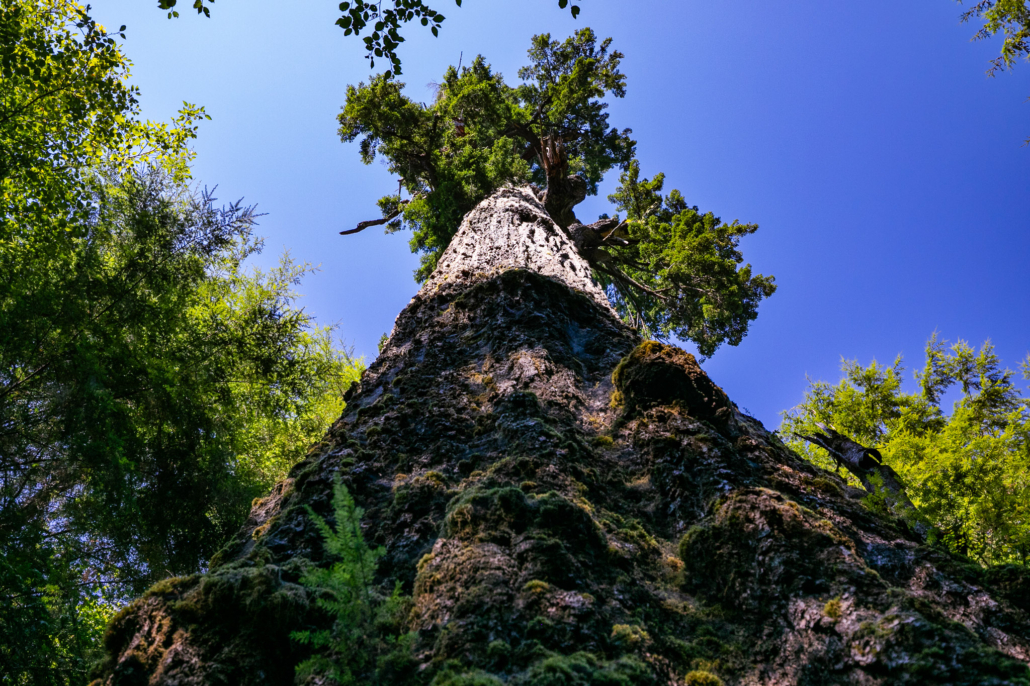
UPDATED: Port Renfrew Big Trees Map
Explore the updated Port Renfrew Big Trees Map with new directions, trails, and routes to iconic giants like Big Lonely Doug, Eden Grove, and more.
https://staging.ancientforestalliance.org/wp-content/uploads/2025/05/13-Red-Creek-Fir.jpg
1365
2048
TJ Watt
https://staging.ancientforestalliance.org/wp-content/uploads/2026/05/Ancient-Forest-Alliance-logo.svg
TJ Watt2026-05-29 15:39:342026-05-29 15:40:49UPDATED: Port Renfrew Big Trees Map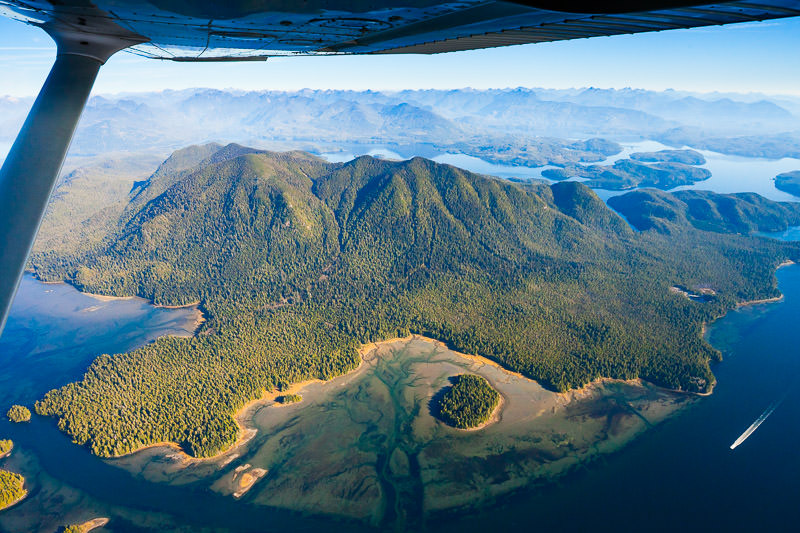
NEW! West Coast Old-Growth Hiking Guide
Explore AFA’s NEW West Coast old-growth hiking guide. From Clayoquot Sound to Port Alberni, there are trails for every skill level!
https://staging.ancientforestalliance.org/wp-content/uploads/2026/05/meares-island-big-tree-trail-tofino-1200px-338.jpg
533
800
TJ Watt
https://staging.ancientforestalliance.org/wp-content/uploads/2026/05/Ancient-Forest-Alliance-logo.svg
TJ Watt2026-05-29 12:06:002026-05-29 15:42:38NEW! West Coast Old-Growth Hiking Guide
Now Hiring: Contract Graphic Designer!
Ancient Forest Alliance is hiring a contract Graphic Designer to help bring our campaigns to life through print and digital materials.
https://staging.ancientforestalliance.org/wp-content/uploads/2026/05/flores-island-wildside-trail-1200px-430.jpg
800
1200
TJ Watt
https://staging.ancientforestalliance.org/wp-content/uploads/2026/05/Ancient-Forest-Alliance-logo.svg
TJ Watt2026-05-22 12:22:292026-05-22 12:22:29Now Hiring: Contract Graphic Designer!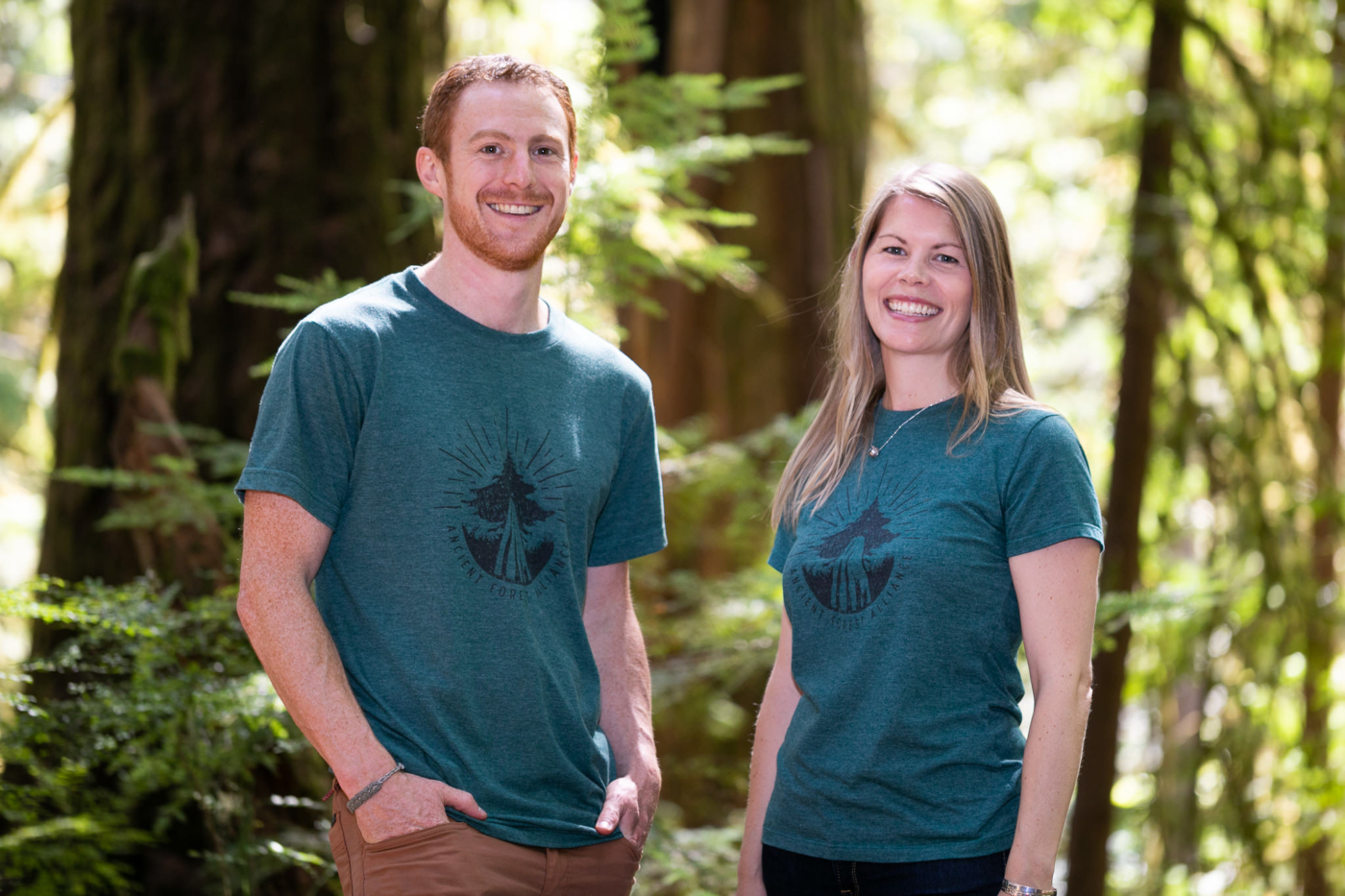
Design AFA’s Next T-Shirt and Help Protect Old-Growth Forests!
Calling all artists! For Earth Month, AFA is launching our first-ever Community T-Shirt Design Contest.
https://staging.ancientforestalliance.org/wp-content/uploads/2026/04/AFA-T-Shirt-Green-Mens-Womens.jpg
1365
2048
TJ Watt
https://staging.ancientforestalliance.org/wp-content/uploads/2026/05/Ancient-Forest-Alliance-logo.svg
TJ Watt2026-05-15 08:13:232026-05-19 09:33:44Design AFA’s Next T-Shirt and Help Protect Old-Growth Forests! Donate
 Send a Message
Media Release: Timber Committee Opens Back Door for Potential Logging of Protected Forests
/in Media ReleaseFor Immediate Release
August 15, 2012
Timber Committee Opens Back Door for Potential Logging of Protected Forest Reserves in BC’s Central Interior
Committee also recommends continued overcutting, logging of “marginal” stands (ie. slow growing subalpine forests) and creating more “area-based tenures” ie. increasing private property-like rights on public forest lands.
Today the Special Committee on Timber Supply released its report on how to deal with a timber shortfall in BC’s Central Interior in relation to the forest industry’s regional overcapacity. See the report here: https://www.leg.bc.ca/cmt/39thparl/session-4/timber/reports/PDF/Rpt-TIMBER-39-4-GrowingFibreGrowingValue-2012-08-15.pdf
Of greatest environmental concern was the committee’s recommendation to create local committees to review the possibility of opening up protected forest reserves for logging. These forest reserves include:
– Old-Growth Management Areas that currently protect old forests
– Wildlife Habitat Areas that protect species at risk
– Visual Quality Objectives that protect scenery for tourism
– Riparian Management Areas that protect water quality and fish habitat
– Ungulate Winter Range that protects the winter habitat of large herbivores like mountain caribou
– Recreation Areas for camping, hiking, outdoor activities
Recommendation 2.2 calls for the BC government to:
“Design a science-based review process for local use by monitoring committees in the assessment of existing sensitive-area designations to ascertain if they are still defensible or whether they need to be modified.”
“Instead of opening up protected forest reserves directly, which they know is highly unpopular with the public, they’re recommending a back door entry point for the logging industry into these currently protected forests. It’s based on the false notion that because there are many beetle-killed trees, that the entire ecosystem is not ‘living’ and therefore clearcutting and punching roads into vast swaths of protected forests – which are a mix of living and dead trees that are part of very vibrant, alive, and continually growing ecosystems – does little incremental damage. That’s just plain false and any ecosystem-based science review will show that,” stated Ken Wu, executive director of the Ancient Forest Alliance. “In particular, it looks like they’re recommending an expedited process for logging sensitive areas in the Burns Lake region, with other regions to follow.”
Pine beetle-affected forests include living, unaffected trees of various species, younger regenerating trees, and intact understory vegetation and soil structures, while the dead trees and woody debris provide homes for much wildlife. The extent of the pine beetle infestation is unnatural, caused by anthropogenic climate change and decades of wildfire suppression by the forest industry – however, further clearcutting of these living, dynamic forest ecosystems by removing all the living and dead trees and punching road networks throughout them, leading to soil erosion, vastly increases the environmental damage.
The potential environmental deregulation would take place in four Timber Supply Areas (TSA’s): the Prince George, Quesnel, Williams Lake, and Lakes (Burns Lake area) TSA’s.
“However, I should also point out that if the government does follow up on this recommendation, then it does open the door for the potential expansion of protected forest reserves if it is guided by a true ecosystem-based science framework. Such a science framework, particularly with the advancement of landscape ecology and conservation biology over the past two decades, would clearly reveal the inadequacy of the existing land-use plans and their system of protected forest reserves to stem the decline of species at risk, to sustain old-growth ecosystems, to support scenery for tourism, and to protect fish habitat. If anything, a true science-based review process would lead to an expansion of forest protections in the old land-use plan areas. But I wouldn’t count on the BC Liberal government, given the pressure by the massive timber lobby, to not create a rigged-game in the terms of reference and constraints placed on such a process,” notes Wu.
The Special Committee on Timber Supply, consisting of four BC Liberal MLA’s and three NDP MLA’s, held public hearings in rural communities in July in the Cariboo-Chilcotin region and met with stakeholders in Vancouver to gather input. Prior to the tour, Committee Chair John Rustad, BC Liberal MLA for Nechako Lakes, had spoken in the media several times with a heavy bias towards justifying logging in forest reserves and even suggested opening up Tweedsmuir Provincial Park for logging.
The rationale for opening up forest reserves is that an impending shortfall of available timber to support local sawmills will soon take effect, known as the “falldown effect”. This shortfall in timber in relation to an overcapacity in the forest industry is the result of the loss of mature forests from the pine beetle infestation (caused by climate change and forest fire suppression) and a massive industry expansion in the Interior in recent years to take advantage of the infestation.
Other destructive recommendations by the committee include:
– Expanded harvesting of “marginal” forest types (Recommendation 2.1), that is, in high elevation subalpine regions with slower growth rates and where regeneration after logging is slower. This will not only damage sensitive ecosystems, but will result in an expansion of Not Sufficiently Restocked (NSR) sites in the province.
– Expanding area-based tenures (Recommendation 5.1), as opposed to volume-based tenures and timber sales. Area-based tenures, ie. Tree Farm Licenses, ultimately limit the diversity of firms in the industry. Over time typically larger entities will acquire area-based tenures in areas with higher timber values, as the history of the province shows. While Community Forest Tenures can be progressive additions to BC’s system of forestry, most area-based tenures are a means towards corporate concentration in the industry. They also diminish the public’s ability to regulate such lands and to create new protected areas, as they confer more private-property type rights on technically public lands.
Instead of opening up protected forest reserves and ensuring more overcutting that will only exacerbate the future falldown, the AFA is calling for a forest and jobs transition strategy involving ending massive wood waste in clearcuts, incentives for value-added wood manufacturing industries, support and training for unemployed forestry workers, expanded protection of forests to sustain ecosystems and communities, and economic diversification of rural communities.
“More overcutting and opening up protected forest reserves to try to prop-up an unsustainable industry a bit longer is like burning parts of your house for firewood after depleting all other wood sources. In the end, you’re a lot worse off,” stated Wu. “Rewarding unsustainable behaviour with more unsustainable behavior is completely the wrong approach. The Interior timber industry’s unsustainable expansion and overcutting of beetle-affected wood and vast areas of living trees should not be rewarded with more of the same inside of our protected forest reserves – that’s the worst, most myopic course of action possible and it’s precisely the type of mindset that has brought this planet to the ecological brink.”
Lift on logging restraints would be ill-advised
/in News CoverageAs members of a hastily convened committee of the provincial legislature meet to consider a controversial government proposal to escalate logging activities in British Columbia’s already hard-hit Interior forests, questions arise about whether the commit-tee is in any position at all to make an informed decision.
Thanks to the bravery of an unnamed public servant who decided in April to leak a provincial cabinet briefing document that outlined the contentious plan, the provincial government was forced to appoint the committee, consisting of both Liberal and NDP MLAs, and to hold public hearings.
A whirlwind tour of 16 communities in less than a month followed, with the committee, wrapping up its public consultations with back-to-back meetings in Merritt and Kamloops on July 12. As a result, members of the “special committee on timber supply” are now wading through the transcripts of nearly 200 people to appear before them as well as nearly 500 written submissions, before making their recommendations, which are expected in mid-August.
A consistent theme running through many of those submissions is that it would be highly unwise for commit-tee members to side with the government’s proposal to lift limited constraints on logging remnant patches of old-growth forests among others, in an effort to buy a few more years worth of logging for an industry that simply has too much milling horse-power given what forest remains.
The reason why is simple. For more than a decade, the provincial Forest Service – guardian of the public’s forests – has been hammered with deep funding and staff cuts. That, coupled with the ravages visited upon our forests by the climate-change-fuelled mountain pine beetle attack and all of the escalated logging activities in response to it, means that no one in government can credibly claim to know what, exactly, is going on in our forests.
In Kamloops, committee members heard such from Sean Curry, a veteran forest professional. Curry noted that most of us have at least an idea of what’s in our bank accounts. Checking our forest bank account is even more critical given withdrawals in the form of logging, insect attacks and fires, and because interest rates in the form of growing trees are so highly variable. Trees may be healthy one year, dead the next.
Curry’s choice of the banking analogy was obvious. If you don’t check, you risk over-drawing. In other words, we’re relying on younger trees that were planted or that naturally re-seeded following logging to be there in future years. The trouble is we’re not checking up on them nearly enough, despite compelling evidence that that is precisely what we need to do.
The recent work of two Forest Ser-vice scientists tells us why. In 2008, Alex Woods and Wendy Bergerud reported on field studies they did in the Lakes Timber Supply Area. The team found trouble in nearly one out of every five previously declared healthy or “free-growing” plots of trees that they looked at. Significantly, their report was based on fieldwork done in 2005 – before the mountain pine beetle completely overran the region near the community of Burns Lake, where a sawmill burned to the ground at the beginning of this year and that has become a focal point for commit-tee members as they weigh the merits of lifting logging constraints.
By 2007, Woods and Bergerud noted, many of the sample plots they had looked at had subsequently been attacked by the beetle – proof, they said, of the need to do even more assessments, particularly in light of climate change.
This July, a report by Tom Ethier, assistant deputy minister in the Ministry of Forests, Lands and Natural Resource Operations, noted that the problems identified by Woods and Bergerud are more widespread. Of 266 allegedly “free-growing” forest patches in five timber supply areas, “the majority” had experienced tree losses in the decade after they were declared healthy.
The good news, Curry says, is that for modest increases in Forest Service funding and a bit of patience – waiting a couple of years while the field-work is done – we could have a far better idea of what’s in our forests.
This, then, is not the time for the committee to endorse logging increases, a decision that in the absence of good data would be at best irresponsible and at worst highly dangerous.
Ben Parfitt is resource policy analyst with the Canadian Centre for Policy Alternatives and author of many forestry reports, including Making the Case for a Carbon Focus and Green Jobs in B.C.’s Forest Industry.
Read more: https://www.vancouversun.com/Lift+logging+restraints+would+advised/7050666/story.html
More logging won’t cure forestry trade’s ills
/in News CoverageThe B.C. Liberal government stirred up controversy recently by proposing to remove scenic forest protections in the Harrison, Chehalis and Stave Lakes regions near Vancouver. Their “quick-fix” attempt to provide more timber for logging fails to recognize that the coastal forest industry’s 20-year decline has fundamentally been driven by their own resource depletion policies.
The overcutting of the biggest and best old-growth stands in the lowlands that historically built the industry has resulted in diminishing returns as the trees get smaller, lower in value, and harder to reach. Today, more than 90 per cent of the most productive old-growth forests in the valley bottoms on B.C.’s southern coast are gone, according to satellite photos.
This practice of high-grade resource depletion and the accompanying job losses in B.C.’s forests has its parallels throughout the history of unsustainable resource extraction. As always, those responsible for the crisis deny all evidence that the resource is being over-exploited — until the very end.
Unless the B.C. government reorients the coastal forest industry toward sustainable, value-added second-growth forestry — rather than old-growth liquidation, overcutting and raw log exports — the crisis will only continue.
In a report for the B.C. Ministry of Forests (Ready for Change, 2001), Dr. Peter Pearse described this history of high-grade overcutting: “The general pattern was to take the nearest, most accessible, and most valuable timber first, gradually expand up coastal valleys and mountainsides into more remote and lower quality timber, less valuable, and costlier to harvest. Today, loggers are approaching the end of the merchantable old-growth in many areas … Caught in the vise of rising costs and declining harvest value, the primary sector of the industry no longer earns an adequate return …”
The virtual elimination of old-growth Douglas firs — 99 per cent of them — and Sitka spruce on B.C.’s southern coast has been followed by the current high-grading of cedars, previously a lower-value species. Next in line are the smaller hemlocks and Amabilis firs, sought by new Chinese markets.
However, the B.C. government’s PR spin still aims to convince all that our monumental ancient forests are not endangered. They do this by statistically lumping in vast tracts of old-growth “bonsai” trees in bogs and stunted, slow-growing “snow forests” at high elevations, together with the productive stands with moderate to fast growth rates, i.e. the areas with large trees where almost all logging takes place.
It’s like combining your Monopoly money with your real money and then claiming to be a millionaire, so why curtail spending?
As our old-growth forests are eliminated, so too are the human and natural communities that depend on them.
B.C.’s coastal forest industry, once Canada’s mightiest, is now a mere remnant of its past. Over the past decade, more than 70 B.C. mills have closed and over 30,000 forestry jobs lost. As old-growth stands are depleted and harvesting shifts to the second-growth, B.C.’s forestry jobs are being exported as raw logs to foreign mills due to a failure to retool our old-growth mills to handle the smaller second-growth logs and invest in related manufacturing facilities.
In his 2001 report, Pearse also stated: “Over the next decade, the second-growth component of timber harvest can be expected to increase sharply, to around 10 million cubic metres … To efficiently manufacture the second-growth component of the harvest, 11 to 14 large mills will be needed.” Today, more than a decade later, there is only one large and a handful of smaller second-growth mills on the coast.
Similarly, B.C.’s wildlife are being pushed to the brink by old-growth depletion. More than a thousand spotted owls once inhabited the Lower Mainland’s old-growth forests. Today, half a dozen individuals survive in B.C.’s wilds. The unique Vancouver Island wolverine — a 27-kilogram, wilderness-dependent mustelid that can fight off a bear — hasn’t been seen since 1992. Only 1,700 mountain caribou remain as logging has fragmented B.C.’s inland rainforest. Coastal rivers and streams, once overflowing with spawning salmon, are now sad remnants of their former glory, degraded by logging debris and silt.
It’s not like we haven’t had chances to learn. The pattern of resource depletion, ecosystem collapse, and ensuing unemployment has long been paralleled in our oceans where “fishing down the food chain” from larger to smaller species has caused successive stocks to collapse. Thousands of jobs have been shed along the way.
The most prominent example of this was the loss of 40,000 Canadian fishing jobs with the collapse of the North Atlantic cod stocks, once the world’s richest fishery. In B.C., giant Chinook salmon or “tyees” were once common, and smaller species like pink salmon were heavily targeted only when the preferred species declined. Since the commercial salmon industry’s peak in the 1980s, thousands of fishing jobs have been lost, and the effects of habitat destruction, climate change and fish farm parasites on wild salmon now compound the problem.
The B.C. Liberal government’s myopic response to their own resource depletion policies is to try to open up protected forest reserves. It’s like burning up parts of your house for firewood after you’ve used up all your other wood sources. It won’t last long, and in the end you’re a lot worse off.
To try to defer the consequences of unsustainable actions with more unsustainable actions is precisely what has brought this planet to the ecological brink.
The B.C. government has a responsibility to learn from — rather than to repeat — history’s mistakes. They must forge a new path based on old-growth protection, value-added second-growth forestry, and a diversified green economy.
Ken Wu is the executive director of the Ancient Forest Alliance.
Read more: https://www.vancouversun.com/business/Opinion+More+logging+cure+forestry+trade+ills/7020432/story.html