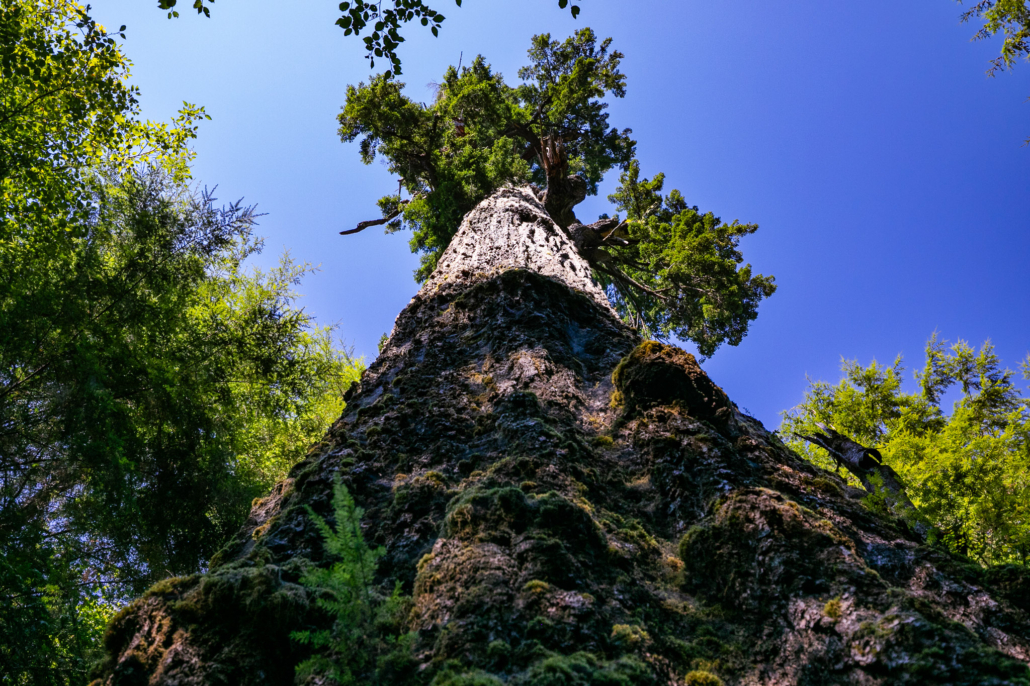
UPDATED: Port Renfrew Big Trees Map
Explore the updated Port Renfrew Big Trees Map with new directions, trails, and routes to iconic giants like Big Lonely Doug, Eden Grove, and more.
https://staging.ancientforestalliance.org/wp-content/uploads/2025/05/13-Red-Creek-Fir.jpg
1365
2048
TJ Watt
https://staging.ancientforestalliance.org/wp-content/uploads/2026/05/Ancient-Forest-Alliance-logo.svg
TJ Watt2026-05-29 15:39:342026-05-29 15:40:49UPDATED: Port Renfrew Big Trees Map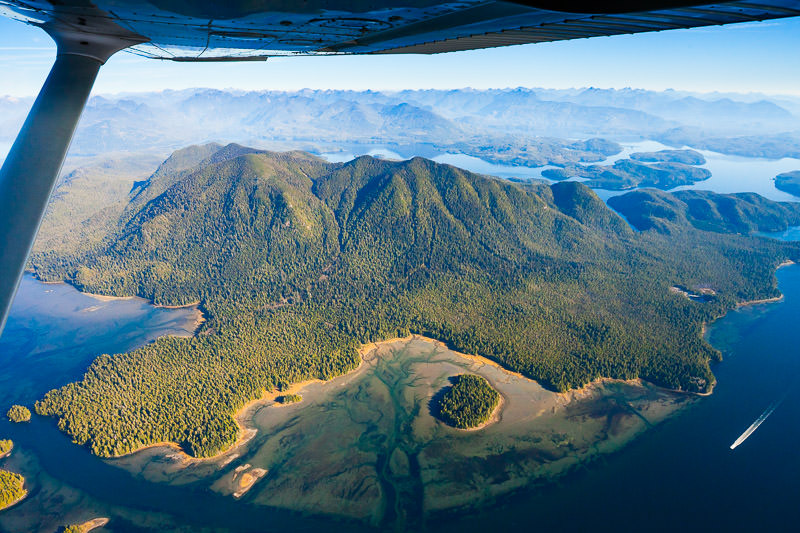
NEW! West Coast Old-Growth Hiking Guide
Explore AFA’s NEW West Coast old-growth hiking guide. From Clayoquot Sound to Port Alberni, there are trails for every skill level!
https://staging.ancientforestalliance.org/wp-content/uploads/2026/05/meares-island-big-tree-trail-tofino-1200px-338.jpg
533
800
TJ Watt
https://staging.ancientforestalliance.org/wp-content/uploads/2026/05/Ancient-Forest-Alliance-logo.svg
TJ Watt2026-05-29 12:06:002026-05-29 15:42:38NEW! West Coast Old-Growth Hiking Guide
Now Hiring: Contract Graphic Designer!
Ancient Forest Alliance is hiring a contract Graphic Designer to help bring our campaigns to life through print and digital materials.
https://staging.ancientforestalliance.org/wp-content/uploads/2026/05/flores-island-wildside-trail-1200px-430.jpg
800
1200
TJ Watt
https://staging.ancientforestalliance.org/wp-content/uploads/2026/05/Ancient-Forest-Alliance-logo.svg
TJ Watt2026-05-22 12:22:292026-05-22 12:22:29Now Hiring: Contract Graphic Designer!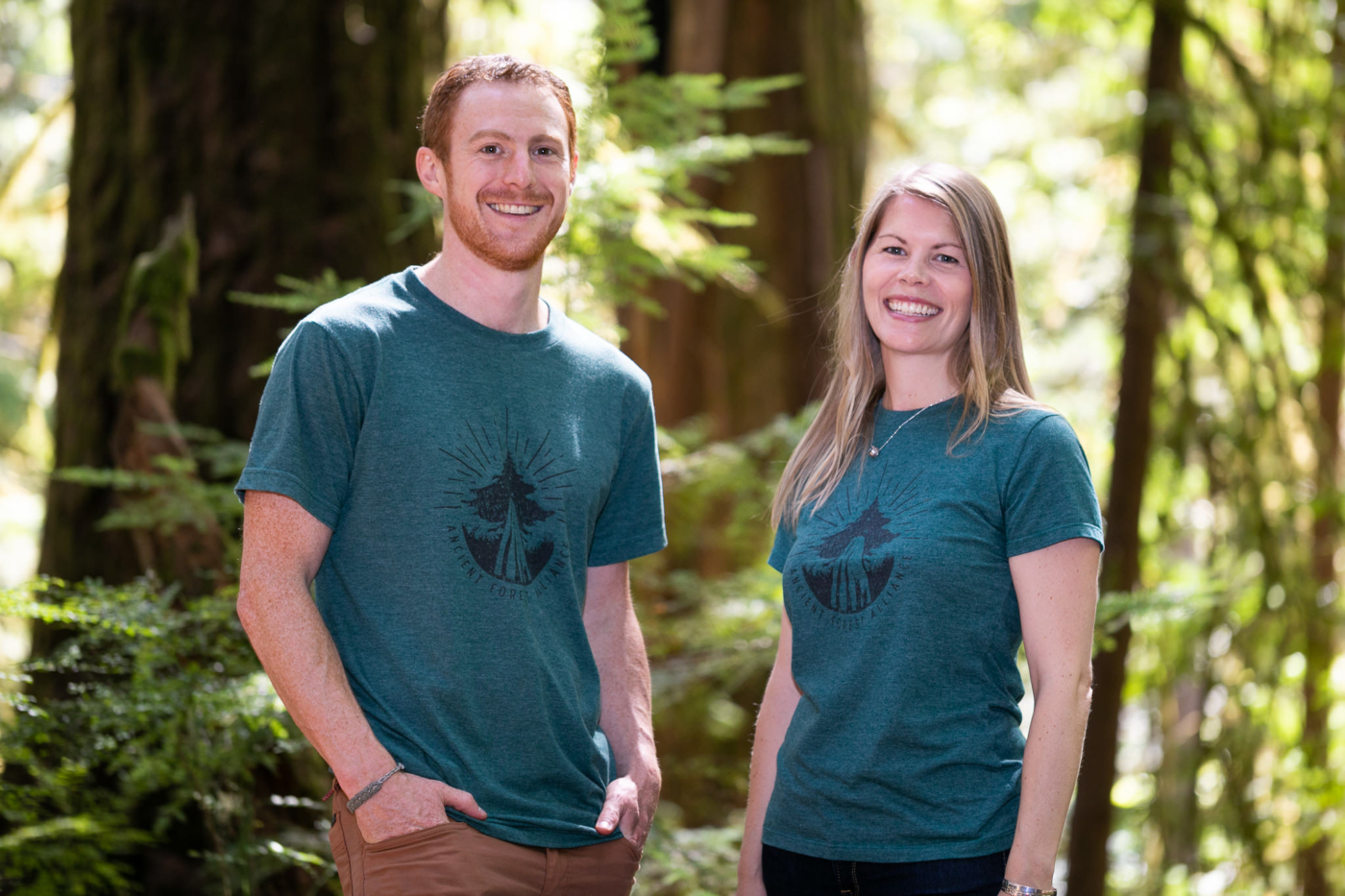
Design AFA’s Next T-Shirt and Help Protect Old-Growth Forests!
Calling all artists! For Earth Month, AFA is launching our first-ever Community T-Shirt Design Contest.
https://staging.ancientforestalliance.org/wp-content/uploads/2026/04/AFA-T-Shirt-Green-Mens-Womens.jpg
1365
2048
TJ Watt
https://staging.ancientforestalliance.org/wp-content/uploads/2026/05/Ancient-Forest-Alliance-logo.svg
TJ Watt2026-05-15 08:13:232026-05-19 09:33:44Design AFA’s Next T-Shirt and Help Protect Old-Growth Forests! Donate
 Send a Message
Rollover Legislation: Claims and Facts
/in News CoverageThe government and the Minister of Forests continue to spread disinformation about the forestry rollover legislation that was introduced this month. You can read the proposed law for yourself here, in Section 24.
During a February 28th interview, Minister Thomson made the following claims:
“Clearly in that legislation we’ve talked about the process. We’ve talked about the need for public consultation that’s embedded in the legislation. We’ve talked about that this would only occur when it is in the public interest. It would be by invitation, so it’s not a de facto privatization. And it responds to the recommendations of the mid-term timber supply committee report that have clearly said we need to look at increasing the diversity of area-based management. There are significant benefits to area-based management in terms of investments in forest management, increasing fibre supply, and we think this is one of the tools that will assist in addressing the mid-term timber supply needs.”
I’ve responded to the government and minister’s statements below.
1. Claim: This legislation comes as a direct result of a recommendation by the Special Committee on Timber Supply.
Fact: There was no such recommendation. The Timber Supply Committee gave cautionary recommendations “if conversion to more area-based tenures is desirable.”[1]
2. Claim: This legislation is about increasing the diversity of area-based tenures, like community forests, woodlots and First Nations tenures.
Fact: It’s about conversion of one specific type of volume-based license, called a replaceable forest license, to a specific type of area-based tenure, a Tree Farm License (TFL). The majority of the volume held under these licenses is in the control of five major forest products companies.
The government already has the ability to create more community forests, First Nations area-based tenures, and woodlots. It still hasn’t met its stated 2003 objective of having these types of tenures comprise 10 per cent of the province-wide annual allowable cut.
3. Claim: Area-based tenures result in better forest management.
Fact: Area-based tenures may result in better forest management, but it’s not necessarily the case, because area-based tenure holders only have to meet the minimum requirements of the Forest Act. There are no legal requirements for companies to manage their forests to a higher standard.
There has not been a definitive assessment of whether the public forest land base is actually better managed under a TFL. In fact, the worst managed public forest in BC has historically been TFL #1, on the north coast.
4. Claim: Area-based tenures will increase mid-term timber supply.
Fact: There is no evidence to support this claim. Some TFLs have improved their silviculture investments enough to warrant an increase in their AAC. However, many TFLs have seen their AACs reduced, and those that are able to demonstrate an improvement in timber volume get to cut that volume today based on their projected results for future improvements in forest growth. These projections do not account for climate change, fire, pests, and disease, which could wipe out any incremental gains.
5. Claim: There will be public consultation.
Fact: There is no public consultation required by law at any point in the rollover process. The only requirement is to make an accepted proposal “available” for public comment for a period of not less than 60 days. This is a passive process that does not compel the applicant to actively notify and engage First Nations, local governments, other licensees, and community stakeholders.
6. Claim: First Nations will be consulted.
Fact: The maps for new TFLs will be drawn by the applicants and negotiated in secret with the Minister. There is no legal requirement for direct pre- or post-consultation with First Nations. This omission will likely trigger “duty to consult” litigation against both the legislation and any applications made under the legislation
7. Claim: The public interest will be protected.
Fact: There is no “public interest” definition in the legislation. No requirements for investment, job creation, mills to be built, or incremental forest management. The government press release promises the public will be consulted this summer before the legislation is used in order to “refine” the policy around public interest. However, as the Auditor General’s report on the release of private lands from existing TFLs clearly points out, the government did not protect the public interest in that case, and public interest policy can be adapted without any public consultation.
8. Claim: This legislation simply enables the minister to invite replaceable license holders to apply for an area-based tenure. There is no government policy to rollover replaceable forest licenses to TFLs.
Fact: This same rationalization was used when the government changed the Forest Act to allow the removal of private lands from TFLs. After the first application to remove private lands form a TFL was approved, successive applications resulted in the removal of virtually all of the private lands in TFLs province-wide. The Auditor General’s report on private land removals concluded that the public interest was not protected in this process.
9. Claim: The invitation to apply will be publicly advertised according to a prescribed process and will lay out the criteria for a successful application.
Fact: The prescribed process and criteria are not in law. In most TSAs, only one or two major companies hold most of the available volume in their replaceable forest licenses, and only they would be eligible to submit a proposal in the first place.
10. Claim: This legislation is not “privatization” of our public forests.
Fact: TFLs give exclusive rights to private companies over a defined area (or areas) of our public forest land. Once awarded, the minister has virtually no oversight or input into the sale of TFLs, and there are no public consultation requirements or First Nation consultation requirements when TFLs change hands. Foreign state-owned entities are able to buy TFLs without notice to the public or any public input. In fact, a Chinese business person who purchased TFL #1 is under scrutiny in China for defrauding the Chinese government when he purchased Skeena Cellulose and the licenses associated with that mill.
TFLs are no longer taken back if processing facilities are sold, and they can be managed to minimum standards without penalty. TFL #47 formerly fed mills in the Campbell River area, but those mills are closed. The TFL is now primarily logged for log exports, and the TFL is owned by a pension fund.
If government wants to take back areas of a TFL in order to protect other values, create parks, settle land claims, or attract investment for other timber or non-timber economic activity, compensation to TFL holders is significantly higher because of the exclusive territorial rights awarded to the license holder. In short, we have to buy back our public forests from TFL licensees, just as if we were purchasing private land.
11. Claim: This legislation is about mid-term timber supply and community stability.
Fact: This legislation is about Burns Lake and Hampton Affiliates. Hampton Affiliates is an Oregon-based company that was a member of the Coalition for Fair Lumber Imports in the US, which received money from the $1 billion the US Government took from Canadian companies when the Harper government signed the 2006 Softwood Lumber Agreement.[2] Hampton is potentially facing charges under the Workers’ Compensation Act for the events leading up to the explosion of the Babine Forest Products Mill. The government started promising Hampton Affiliates a TFL as early as April 2012, long before the Timber Supply Committee was struck.
The Minister promised to introduce this legislation for Hampton in a letter of intent he wrote to the company in September 2012:
“We will bring legislation to the House at the next session. Conversion of Babine Forest Products licenses will be one of the first priorities for implementation under any resultant legislation. Babine has submitted a proposal for an area based tenure in historic Babine operating areas and we would expect a portion or portions of this area to be included in the area based licence that would be offered to Babine. The total area that would be offered will be commensurate with the proportion of cut held by Hampton.”
This legislation was created for the wrong reasons, without proper consultation, and the law itself does not provide the protections the government and minister say it does. There are only two weeks in which the law could be debated and passed. If it comes before the House again, I will stand up and fight this bill.
Please also see Bob’s media release on this subject.
Read More: https://www.bobsimpsonmla.ca/rollover-legislation-claims-and-facts/
Ancient Forest Alliance (AFA) Celebrates its Three Year Anniversary
/in Media ReleaseDocuments show government is already breaking proposed forestry law
/in News CoverageIndependent MLA Bob Simpson says documents show that the BC Liberals have no intention of following their proposed law to enable the conversion of volume-based forest licenses to area-based tenures.
“The Liberal cabinet is writing yet another ugly chapter in the long and sordid history of forestry legislation in this province,” said Simpson. He points to a leaked cabinet document from April 2012 and a letter written by the Minister of Forests to Hampton Affiliates on September 11, 2012, as proof that they will not follow their proposed law.
“It’s clear from the leaked cabinet document and Minister Thomson’s letter that Hampton Affiliates has already been promised the first Tree Farm License under the Liberals’ proposed legislation,” said the MLA for Cariboo North. “The government doesn’t have the right to make this offer because there is no legal way they can fulfill it unless Bill 8 passes. At the same time, Bill 8 would require that the minister start this process with a public advertisement of the criteria that would be used to judge these proposals from all replaceable licensees in a Timber Supply Area [TSA].”
The history of Tree Farm Licenses (TFLs) in BC has been fraught with controversy. In the 1940s, the first two TFLs issued were directly linked to political donations to the Liberal government. In the 1970s, W.A.C. Bennett’s Minister of Forests, “Honest” Bob Sommers, went to jail for receiving kickbacks when he issued a TFL. In 1988, Bill Vander Zalm’s Forest Minister, Dave Parker, tried to enact legislation similar to Bill 8 and delayed consultation until after the law was passed. Both Parker and his deputy minister lost their jobs when the public rejected the creation of additional TFLs during the consultation process, and the legislation was repealed.
“There are four replaceable licensees in the Lakes TSA where Hampton has been promised preferential treatment,” said Simpson. “The three other licensees — Canfor, West Fraser and L&M Lumber, all BC-based companies — all need timber from the Lakes TSA to keep their Highway 16 mills operating.”
“It puzzles me why the Liberals have decided that Hampton should be the winner in the fight for timber,” said Simpson. “They are a U.S.-based firm and a member of the Coalition for Fair Lumber Imports. They received money from the $1 billion that was stolen from Canadian companies in the 2006 softwood lumber settlement, and they could still face charges under the Workers Compensation Act for their role in the events leading up to the explosion at the Burns Lake sawmill.”
Both the leaked cabinet document and the Minister’s letter to Hampton state that other license holders in the Lakes TSA would have to have their licenses transferred to adjacent TSAs.
“The admission that the other companies in the Lakes TSA would need to move their licenses is clear proof that there isn’t enough timber in the Highway 16 corridor to sustain all the mills that are currently operating there,” said Simpson. “By turning forest policy on its head to favour Hampton, the government is putting other jobs and Highway 16 communities at risk.”
Simpson has been calling on the government to work with the community of Burns Lake to find alternative economic models instead of rebuilding a traditional lumber mill that will employ less than 40 per cent of the original workforce.
“Breaking the law by promising Hampton Affiliates a TFL without due process will absolutely guarantee the public rejects this form of tenure once again,” said Simpson. “The government should not bring Bill 8 up for debate. They need to work with the community of Burns Lake on more creative and forward-looking solutions and inform Hampton that it will not be getting a TFL.”
https://www.bobsimpsonmla.ca/documents-show-government-is-already-breaking-proposed-forestry-law/