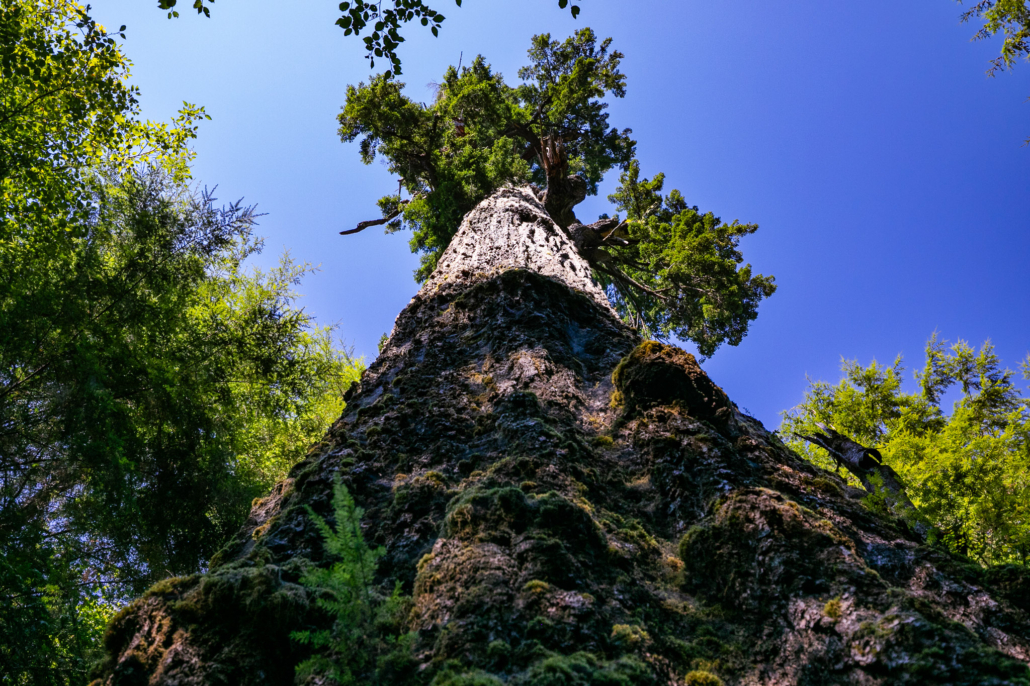
UPDATED: Port Renfrew Big Trees Map
Explore the updated Port Renfrew Big Trees Map with new directions, trails, and routes to iconic giants like Big Lonely Doug, Eden Grove, and more.
https://staging.ancientforestalliance.org/wp-content/uploads/2025/05/13-Red-Creek-Fir.jpg
1365
2048
TJ Watt
https://staging.ancientforestalliance.org/wp-content/uploads/2026/05/Ancient-Forest-Alliance-logo.svg
TJ Watt2026-05-29 15:39:342026-05-29 15:40:49UPDATED: Port Renfrew Big Trees Map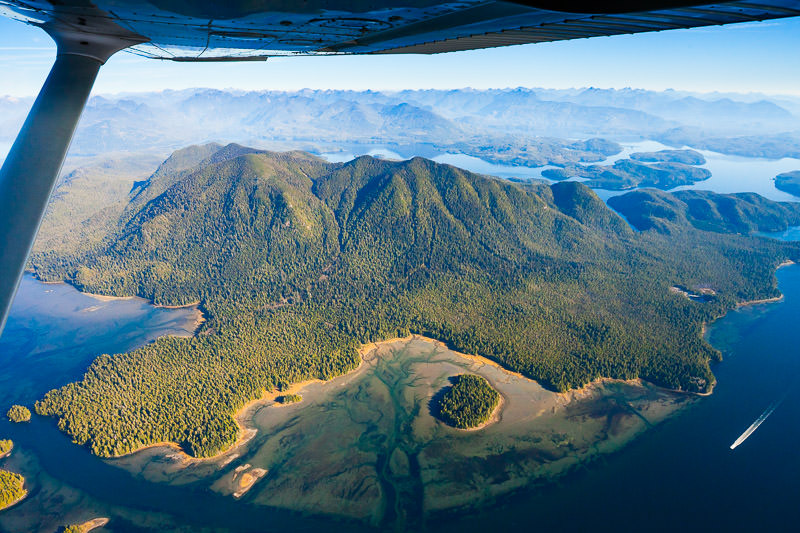
NEW! West Coast Old-Growth Hiking Guide
Explore AFA’s NEW West Coast old-growth hiking guide. From Clayoquot Sound to Port Alberni, there are trails for every skill level!
https://staging.ancientforestalliance.org/wp-content/uploads/2026/05/meares-island-big-tree-trail-tofino-1200px-338.jpg
533
800
TJ Watt
https://staging.ancientforestalliance.org/wp-content/uploads/2026/05/Ancient-Forest-Alliance-logo.svg
TJ Watt2026-05-29 12:06:002026-05-29 15:42:38NEW! West Coast Old-Growth Hiking Guide
Now Hiring: Contract Graphic Designer!
Ancient Forest Alliance is hiring a contract Graphic Designer to help bring our campaigns to life through print and digital materials.
https://staging.ancientforestalliance.org/wp-content/uploads/2026/05/flores-island-wildside-trail-1200px-430.jpg
800
1200
TJ Watt
https://staging.ancientforestalliance.org/wp-content/uploads/2026/05/Ancient-Forest-Alliance-logo.svg
TJ Watt2026-05-22 12:22:292026-05-22 12:22:29Now Hiring: Contract Graphic Designer!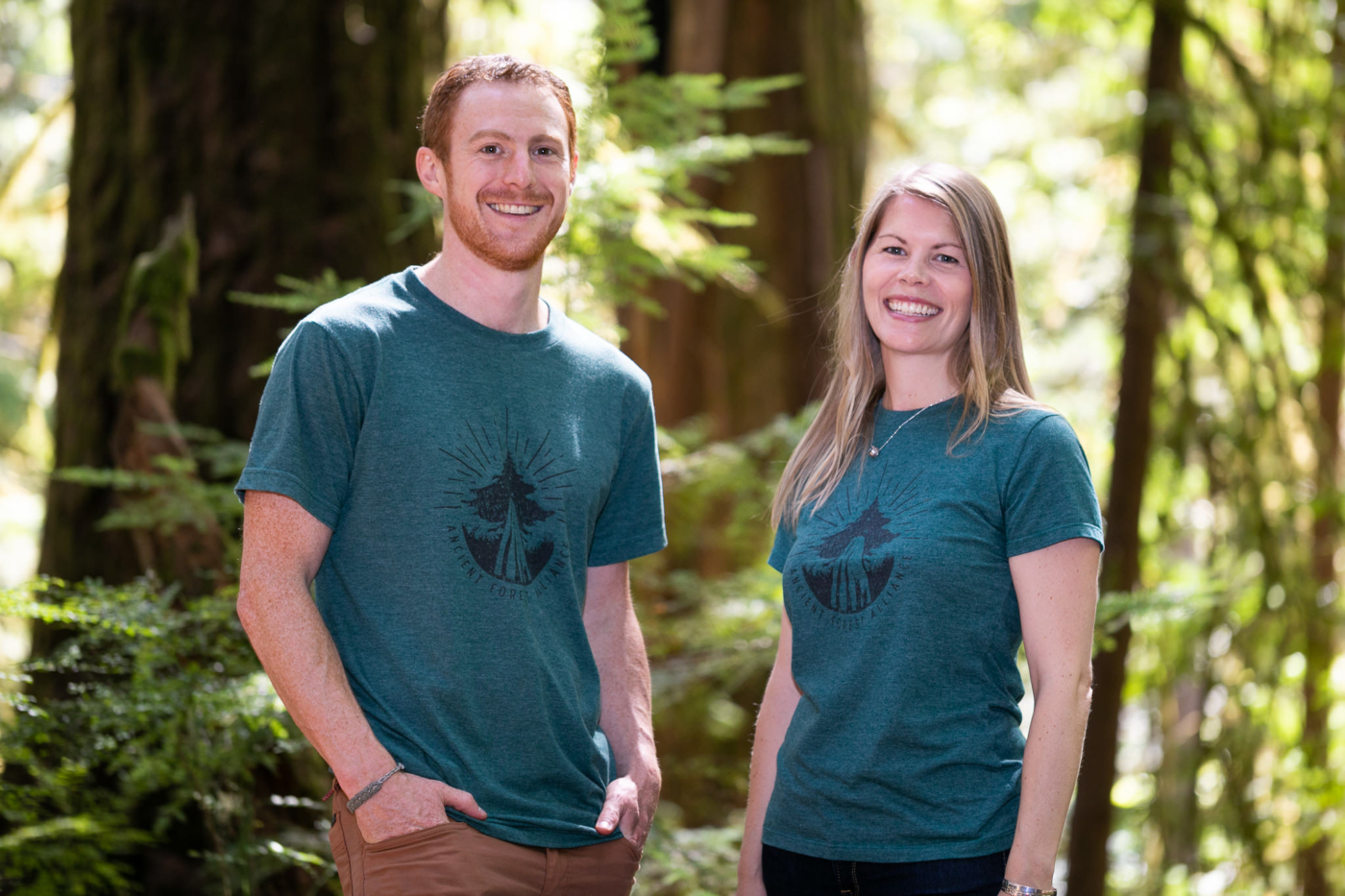
Design AFA’s Next T-Shirt and Help Protect Old-Growth Forests!
Calling all artists! For Earth Month, AFA is launching our first-ever Community T-Shirt Design Contest.
https://staging.ancientforestalliance.org/wp-content/uploads/2026/04/AFA-T-Shirt-Green-Mens-Womens.jpg
1365
2048
TJ Watt
https://staging.ancientforestalliance.org/wp-content/uploads/2026/05/Ancient-Forest-Alliance-logo.svg
TJ Watt2026-05-15 08:13:232026-05-19 09:33:44Design AFA’s Next T-Shirt and Help Protect Old-Growth Forests! Donate
 Send a Message
Conservationists Launch Petition for BC’s Endangered Mountain Caribou, Call on BC’s Politicians to Protect Ecologically Vital Forests
/in Media ReleaseConservationists have launched an on-line petition calling on BC’s politicians to commit to protecting critical lowland forests that buffer the province’s gravely endangered Mountain Caribou against predators. Clearcuts adjacent to Mountain Caribou habitat support increased moose and deer, and so bolster predator populations that also prey on caribou. See the petition at: www.change.org/en-CA/petitions/help-save-canada-s-mtn-caribou
Mountain Caribou are the world’s most southerly reindeer and Canada’s largest old-growth dependent animal. Resident almost exclusively in British Columbia, their population has declined precipitously in recent decades, from 2500 animals in 1995, to 1900 animals by 2007, to 1500 animals by 2013 (i.e., a 40% decline since the 1990s). Since 2002, they have been formally designated as Threatened in Canada. See: www.env.gov.bc.ca/wld/speciesconservation/mc/
The petition comes in response to pending plans by Canfor to undertake major logging in the Clearwater Valley adjacent to the southern boundary of Wells Gray Provincial Park. It calls for an immediate moratorium on logging in the valley through a provincial Land Use Order. It also urges the B.C. government to establish low-elevation “Caribou Matrix Management Zones” throughout the range of the Mountain Caribou. Such management zones are needed adjacent to high-elevation winter habitat, which already receives protection. Link here for maps and further details: www.wellsgrayworldheritage.ca
The petition has the backing of the Ancient Forest Alliance (www.AncientForestAlliance.org), a provincial conservation group working to protect BC’s endangered forests, and is being spearheaded by Trevor Goward, a well-known lichenologist and naturalist who makes his home in the Clearwater Valley.
“Surely it ‘s unthinkable that the BC government would endorse logging plans guaranteed to enhance wolf and cougar populations adjacent to Wells Gray, home of one of the largest remaining mountain caribou herds anywhere,” stated Goward. “Wells Gray’s southern herd has declined by about one-third in the past decade. If we can’t maintain a viable population of Mountain Caribou in a vast wilderness park like Wells Gray, then what hope is there of doing so elsewhere? This makes a mockery of B.C.’s Mountain Caribou Recovery Strategy.”
“BC’s politicians have a moral obligation to save one of BC’s most endangered and iconic large mammals by establishing a moratorium on industrial logging in the Clearwater Valley by Wells Gray Park, and to restrict logging in the lowland matrix habitat across the Mountain Caribou’s range,” stated Ken Wu, Ancient Forest Alliance executive director. “We’ve seen old-growth dependent species decline, including the Spotted Owl, Marbled Murrelet, and now the Mountain Caribou, under successive BC Liberal and NDP governments who’ve lacked the will to do what it takes to halt their slide towards extinction. Now is the time, before the upcoming election, for BC’s politicians to commit to make it right.”
On paper the BC Liberal government’s 2008 Mountain Caribou Plan looks good, promising to rebuild BC’s Mountain Caribou population from 1,700 in 2008 to 2,500 animals by 2027. This will be achieved, it claims, through a three-pronged approach comprising: first, 2.2 million hectares of mostly high-elevation forests set aside as winter habitat; second, intense predator control targeted at wolves and cougars; and third, management of mechanized backcountry winter recreation.
Actually, one government caribou recovery team argued for inclusion of a fourth prong, what they called ‘matrix habitat’: low to mid-elevation forest not necessarily occupied by mountain caribou but capable, when logged, of supporting moose and deer and hence their predators in substantial numbers. “What the recovery team was urging,” notes Goward “was a commitment by government to refrain from creating ever more clearcuts in matrix habitat. Unfortunately, this did not happen. As a consequence, the government’s plan has largely entrusted the Mountain Caribou’s future to a costly regime of predator control: a war on wolves.”
“The very idea that a workable recovery strategy could be founded on a war against predator populations largely of its own creation seems incredible. It is like hoping to raise chickens without building a chicken coop. You can blast away at predators as long as you like, but the problem never disappears. Sooner or later you lose your chickens,” Goward notes.
Wells Gray Provincial Park supports the world’s second largest populations of Mountain Caribou. However, since 2002 the park’s southern herd has declined from 325 animals to only 200 animals a few years ago. By creating more habitat for deer and moose, and hence for predators, the pending logging proposal by Canfor would further stress a herd already in serious decline.
Goward would like to see an extension to the park’s boundaries southward to help make Wells Gray ecologically self-sustaining. This has been done twice in the past: once in the mid- ‘50s, and again in the mid- ‘90s. The habitat needs of Mountain Caribou played a major role in both decisions. Protecting a small area adjacent to the park would be a significant step towards the recovery of the Wells Gray herd.
The Ancient Forest Alliance is running a campaign calling on the province to protect old-growth and endangered forests, to ensure sustainable, value-added forestry jobs, to implement a sustainable rate of cut, and to end the export of raw, unprocessed logs from BC to foreign mills.
Authorized by the Ancient Forest Alliance, registered sponsor under the Election Act
Ancient Forest, Alliance, Victoria Main PO, PO Box 8459, Victoria, BC, V8W 3S1 Canada
NDP’s forestry-policy plank sparks partisan ire, disappoints ecologists
/in News CoveragePRINCE GEORGE – New Democrat Leader Adrian Dix has released a multimillion dollar election plan that he believes will help grow and improve B.C.'s forest industry, but critics say the proposal makes promises that will be hard to keep.
In Prince George Monday, Dix announced the five-point forestry plan that would see $310 million invested in the industry over five years if his party wins the election in May.
The NDP leader announced his government would invest in skills training, to improve forest health, to expand global markets for B.C. lumber and to cut raw log exports, while it reinstates a jobs protection commissioner.
“Skills training is really the principle focus of our economic plan, to ensure young people have the skills they need for the jobs of the future,'' Dix said.
The B.C. Liberal Party immediately criticized the plan, saying it lacks policy details.
“After months of delay, I think British Columbians were expecting more,'' said Forest Minister Steve Thomson in a news release.
George Hoberg, a forest policy expert at the University of British Columbia, said Dix's promise to reduce raw log exports will be hard to keep.
“Raw logs are always something that politicians talk about, but it's actually very hard to deliver in terms of either policy or real change in the industry,'' Hoberg said.
“Our comparative advantage is in raw resource material or in commodities, not in more labour-intensive value-added production,''
he said.
The NDP's commitment to improve forest health includes an emphasis on increasing the province's research capacity, updating forest inventories and doubling the number of seedlings planted annually.
Hoberg said he is impressed with the plan's focus on forest health.
“The biggest challenge that we face in forestry is renewing the forest that has been disseminated by the mountain pine beetle and the Liberals have not been particularly effective at investing resources on that,'' Hoberg said.
“The one big change that we will likely see, if the NDP is elected, is a greater commitment to government funding of inventory and silviculture,'' he said.
Hoberg was surprised at the lack of discussion of environmental issues in the NDP plan – something he said the Liberal forestry plan also lacks.
Ken Wu at the Ancient Forest Alliance called the plan “a big disappointment ecologically.''
“It essentially continues the unsustainable status quo of old growth liquidation and over cutting which has led to the collapse of ecosystems and communities,'' Wu said.
Dix campaigned for party leadership with a promise to address old growth deforestation, but he now appears to be reneging on his commitment, Wu said.
“We are hoping that the party will move forward with additional policy commitments in the lead up to the election so that Dix fulfills his promise to develop a provincial old growth plan which was his 2011 leadership bid promise,'' Wu said.
Dix said the plan was developed in consultation with forest industry businesses, union leaders and with communities.
Some of the suggestions are in line with a 2011 report created by the B.C. Government and Service Employees Union, which suggests tightening raw log exports and increasing staff levels within the B.C. forest service.
A spokesperson from the Council of Forest Industries, which represents over a dozen forest companies in the province, wasn't available for comment.
Globe and Mail online article: www.theglobeandmail.com/news/british-columbia/ndps-forestry-policy-plank-sparks-partisan-ire-disappoints-ecologists/article11253131/
NDP forest plan ‘minor deviation from unsustainable status quo’: critic
/in News CoverageThe New Democratic Party's forestry platform released this morning is a major disappointment, said Ken Wu, the executive director of the Ancient Forest Alliance environmental group.
“I'm just looking at this with rage here,” he said in an interview. “This is a minor deviation from the unsustainable status quo.”
This morning NDP leader Adrian Dix released a five point plan for forestry. It included a commitment to skills training for the industry, more emphasis on forest health, improved inventory and building markets for B.C. wood. It also talked about reducing the export of raw logs and re-instating a jobs protection commissioner.
The plan calls for $30 million in added spending on forestry in 2013-2014, building to $100 million five years from now.
“There are some aspects that are progressive, but there's not a lot of detail,” said Wu. Restricting raw log exports is positive, for example, but today's announcement didn't say how the NDP would do that, he said.
During the NDP leadership contest, Dix promised an NDP government would develop “a long-term strategy for old-growth forests,” which Wu made note of at the time.
“He has not kept his promise,” said Wu, adding the NDP could still make that commitment. “They need to do it soon. At this point I'd say the NDP just don't get it on forest conservation. They still have a chance, but this forestry platform is a flop ecologically.”
Wu said individual MLAs such as Scott Fraser in Alberni-Pacific Rim have championed the protection of old growth forests. “We need the entire NDP party to make it part of their platform to protect endangered old growth and ensure sustainable second growth forestry.”
The NDP platform says the party would take five years to double the number of seedlings planted by the government on Crown land to 50 million annually.
In a February interview, NDP forestry critic Norm Macdonald criticized the BC Liberal government for failing to meet an earlier commitment to be planting 50 million seedlings a year by 2012.
Noting at least one million hectares were already known to be not sufficiently restocked, Macdonald said, “Any competent government, and it comes down to competence, any competent government looks after its most valuable asset.”
Link to article on The Tyee website: https://thetyee.ca/Blogs/TheHook/2013/04/15/ForestStatus/