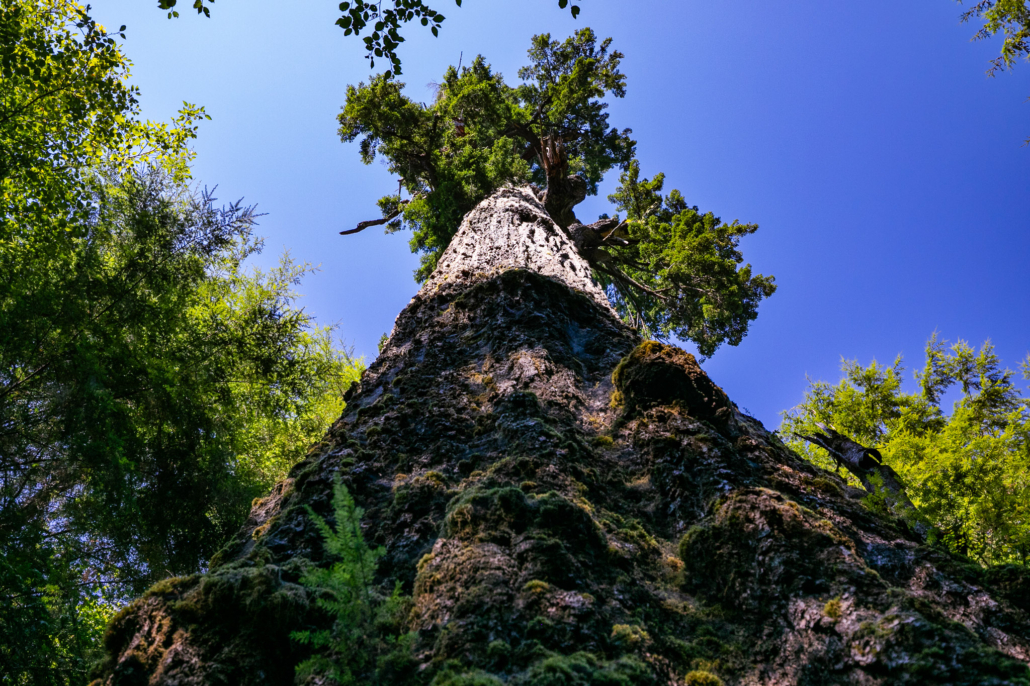
UPDATED: Port Renfrew Big Trees Map
Explore the updated Port Renfrew Big Trees Map with new directions, trails, and routes to iconic giants like Big Lonely Doug, Eden Grove, and more.
https://staging.ancientforestalliance.org/wp-content/uploads/2025/05/13-Red-Creek-Fir.jpg
1365
2048
TJ Watt
https://staging.ancientforestalliance.org/wp-content/uploads/2026/05/Ancient-Forest-Alliance-logo.svg
TJ Watt2026-05-29 15:39:342026-05-29 15:40:49UPDATED: Port Renfrew Big Trees Map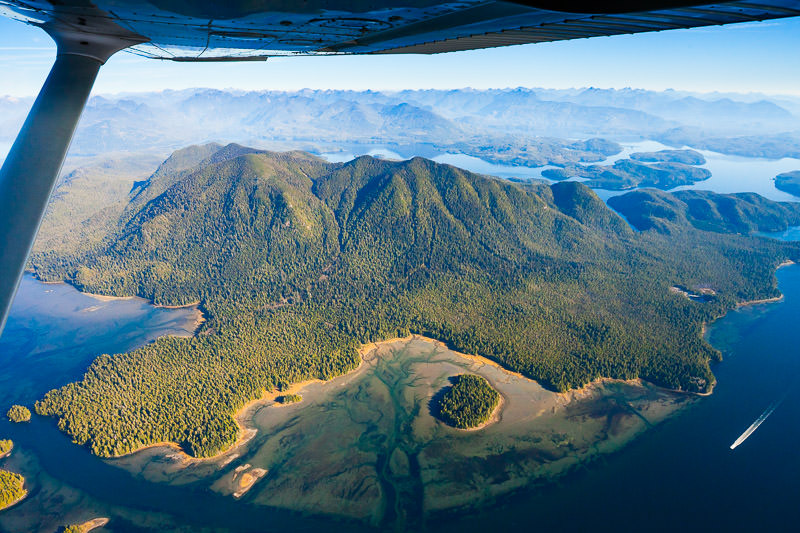
NEW! West Coast Old-Growth Hiking Guide
Explore AFA’s NEW West Coast old-growth hiking guide. From Clayoquot Sound to Port Alberni, there are trails for every skill level!
https://staging.ancientforestalliance.org/wp-content/uploads/2026/05/meares-island-big-tree-trail-tofino-1200px-338.jpg
533
800
TJ Watt
https://staging.ancientforestalliance.org/wp-content/uploads/2026/05/Ancient-Forest-Alliance-logo.svg
TJ Watt2026-05-29 12:06:002026-05-29 15:42:38NEW! West Coast Old-Growth Hiking Guide
Now Hiring: Contract Graphic Designer!
Ancient Forest Alliance is hiring a contract Graphic Designer to help bring our campaigns to life through print and digital materials.
https://staging.ancientforestalliance.org/wp-content/uploads/2026/05/flores-island-wildside-trail-1200px-430.jpg
800
1200
TJ Watt
https://staging.ancientforestalliance.org/wp-content/uploads/2026/05/Ancient-Forest-Alliance-logo.svg
TJ Watt2026-05-22 12:22:292026-05-22 12:22:29Now Hiring: Contract Graphic Designer!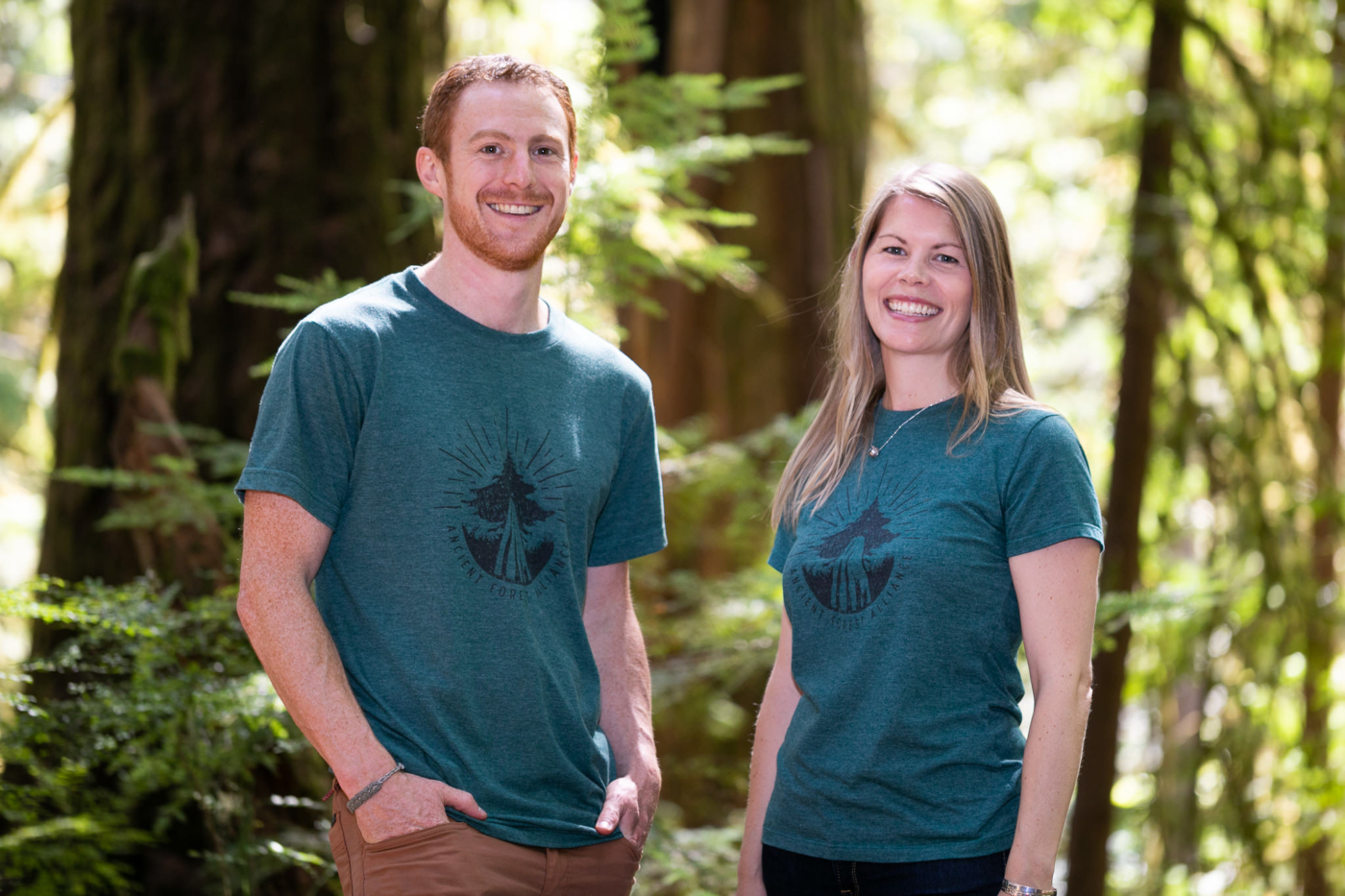
Design AFA’s Next T-Shirt and Help Protect Old-Growth Forests!
Calling all artists! For Earth Month, AFA is launching our first-ever Community T-Shirt Design Contest.
https://staging.ancientforestalliance.org/wp-content/uploads/2026/04/AFA-T-Shirt-Green-Mens-Womens.jpg
1365
2048
TJ Watt
https://staging.ancientforestalliance.org/wp-content/uploads/2026/05/Ancient-Forest-Alliance-logo.svg
TJ Watt2026-05-15 08:13:232026-05-19 09:33:44Design AFA’s Next T-Shirt and Help Protect Old-Growth Forests! Donate
 Send a Message
BC Liberal Government More Than Tripled Raw Log Exports to Foreign Mills
/in Media ReleaseThe BC Liberal government more than tripled the amount of unprocessed, raw logs leaving the province to foreign mills during their reign of power, according to recent figures provided by BC’s Ministry of Forests, Lands, and Natural Resource Operations (Min. of FLNRO) to the Ancient Forest Alliance (AFA).
From 2002 to 2012, over 47 million cubic meters of raw logs were exported from BC to foreign mills in China, the USA, Japan, Korea, and other nations. This contrasts to about 14.8 million cubic meters from 1991 to 2001 under the NDP government. Over the past two years alone, in 2011 and 2012, record levels of raw logs were exported from BC, 13.2 million cubic meters in total. [see info sources and details below]
“The BC Liberals have decimated the province’s forestry workforce through massive raw log exports, industry deregulation, and unsustainable practices. 30,000 BC forest workers lost their jobs and over 70 mills were shut down under the BC Liberals, yet they’ve allowed companies to cut at near record levels,” stated Arnold Bercov, national forestry officer of the Pulp, Paper, and Woodworkers of Canada. “Under the BC Liberals, we lost both our forests and our jobs, it’s nuts.”
Conservationists and forestry workers have found common ground in opposing raw log exports and have joined together in numerous rallies and protests over the past decade for sustainable forestry. The BC Liberal government expedited raw log exports by removing the local milling requirements (appurtenancy) that historically tied companies with logging rights on Crown lands to also provide BC milling jobs; by removing vast areas of Tree Farm Licences that once regulated private forest lands on Vancouver Island and the Sunshine Coast; by issuing record numbers of log export permits on Crown lands; by removing log export restrictions from vast regions of BC’s northern coast; and by overruling the recommendations of their own Timber Exports Advisory Committee.
At the same time the BC Liberal government failed to create any regulations or adequate incentives to retool old-growth mills to handle second-growth logs or to develop value-added facilities. “The BC Liberal government has been a failure on both counts: to ensure that BC logs go to BC mills that can process them, and to foster new mills and value-added facilities to handle logs currently without BC processors,” stated Bercov.
“If we’re going to protect our endangered old-growth forests while maintaining forestry employment levels, we need to do more with less – that is, we need to develop a value-added, sustainable second-growth forest industry. Ramping-up raw log exports while overcutting our forests goes precisely in the opposite direction, it’s doing less with more,” stated Ken Wu, executive director of the Ancient Forest Alliance. “The BC Liberal government’s forestry policies can be summed up as: liquidate the old-growth, close the old-growth mills; liquidate the second-growth, export the raw logs; remove the TFL’s and sell-off prime forest lands for real estate development. The BC Liberals have acted as the despoilers of beautiful British Columbia for both natural and human communities.”
Additional BackGround Info
BRITISH COLUMBIA – RAW LOG EXPORTS
Year Crown lands (m3) Private Lands (m3) TOTAL (m3)
2002 1.5 million 2.3 million 3.8 million
2003 1.5 million 2.1 million 3.6 million
2004 1.2 million 2.3 million 3.5 million
2005 1.8 million 3.0 million 4.8 million
2006 1.5 million 2.8 million 4.3 million
2007 0.9 million 2.6 million 3.5 million
2008 1.0 million 1.9 million 2.9 million
2009 1.3 million 1.4 million 2.7 million
2010 2.5 million 2.0 million 4.5 million
2011 4.0 million 2.8 million 6.8 million
2012 4.0 million 2.4 million 6.4 million
Total 21.2 million 25.6 million 46.8 million (rounded sum)
47,025,665 (exact sum)
Source: Ministry of Forest, Lands, and Natural Resource Operations (MFLNRO) – data provided to the Ancient Forest Alliance in April, 2013
See a chart on historic log export levels (eg. through the 1990`s under the NDP government) on page 20 of the Log Exports Review at: https://www.for.gov.bc.ca/ftp/het/external/!publish/web/exports/generating-more-wealth.pdf
See the decline in forestry employment levels in BC, most dramatic during the reign of the BC Liberal party: https://staging.ancientforestalliance.org/drop-in-employment-in-bcs-forestry-sector/
There were about 1,067 cubic metres of timber harvested per job in 2019: https://theorca.ca/resident-pod/less-bang-for-our-bucking/
At its core, the massive export of raw logs has been driven by a combination of the BC Liberal government’s deregulation of the forest industry and by the industry’s unsustainable depletion of the biggest best old-growth trees at the lower elevations.
The overcutting of the prime stands of old-growth redcedars, Douglas-firs and Sitka spruce in the lowlands that historically built the wealth of the forest industry – and for which coastal sawmills were originally built to process – has resulted in diminishing returns as the trees get smaller, lower in value, different in species, and harder to reach high up the mountainsides and in the valley headwaters. Today, more than 90 per cent of the most productive old-growth forests in the valley bottoms on B.C.’s southern coast are gone.
Coastal mills generally haven’t been retooled to handle the changing profile of the forest with smaller trees as the lowland ancient forests have been depleted. Today hemlock and Amabilis fir stands (“hem-bal” in industry jargon) constitute most of the remaining old-growth stands, and Douglas-fir, cedar, and hemlock constitute most of the maturing second-growth stands. At a critical juncture in 2003 the BC Liberal government removed the local milling requirements (through the Forestry Revitalization Act), thus allowing tenured logging companies to shut down their mills instead of being forced to retool them to handle the changing forest profile. This allowed the companies to then export the unprocessed logs to foreign countries.
In a report for the B.C. Ministry of Forests (Ready for Change, 2001), Dr. Peter Pearse described the history of high-grade overcutting in BC`s coastal forests: “The general pattern was to take the nearest, most accessible, and most valuable timber first, gradually expand up coastal valleys and mountainsides into more remote and lower quality timber, less valuable, and costlier to harvest. Today, loggers are approaching the end of the merchantable old-growth in many areas … Caught in the vise of rising costs and declining harvest value, the primary sector of the industry no longer earns an adequate return …”
B.C.’s coastal forest industry, once Canada’s mightiest, is now a remnant of its past. Over the past decade, more than 70 B.C. mills have closed and over 30,000 forestry jobs lost. As old-growth stands are depleted and harvesting shifts to the second-growth, B.C.’s forestry jobs are being exported as raw logs to foreign mills due to a failure to retool old-growth mills to handle the smaller second-growth logs and invest in related manufacturing facilities.
In his 2001 report, Pearse also stated: “Over the next decade, the second-growth component of timber harvest can be expected to increase sharply, to around 10 million cubic metres … To efficiently manufacture the second-growth component of the harvest, 11 to 14 large mills will be needed.” Today, more than a decade later, there is only one large and a handful of smaller second-growth mills on the coast.
While old-growth forests are being liquidated, second-growth stands are also currently being overcut at a rapid pace mainly for raw log exports, thus limiting future options in general for a sustainable forest industry.
Authorized by the Ancient Forest Alliance, registered sponsor under the Election Act
Ancient Forest, Alliance, Victoria Main PO, PO Box 8459, Victoria, BC, V8W 3S1 Canada
Lawsuit aims to save endangered Douglas fir ecosystems on Vancouver Island
/in News CoverageEnvironmental groups are suing the provincial government in hopes of saving the last remaining pockets of coastal Douglas fir forests on Vancouver Island.
The Wilderness Committee, ForestEthics Solutions and Ecojustice filed a lawsuit in B.C. Supreme Court on Thursday seeking a court order preventing the province from allowing logging on Crown land in the coastal Douglas fir biogeoclimatic zone.
The groups are claiming that the province is violating its own laws, which are supposed to protect ecosystems from destruction.
“This is a greenwash test case,” said Valerie Langer, ForestEthics Solutions forest conservation director.
“The province brags that it has world-leading environmental laws. Clearly this is misleading and it’s about time that the province put some teeth into environmental protection.”
Coastal Douglas fir forests were recognized by the province as endangered ecosystems in 2006. But, since then, it has been logging as usual, said Torrance Coste, Wilderness Committee Vancouver Island campaigner.
“This forest type is listed under B.C.’s forest laws as being at risk, but instead of being protected, the entire forest is being wiped out,” he said.
The issue came to a head with the province giving the go-ahead in 2011 for the logging of DL 33, a patch of coastal Douglas fir near Nanoose Bay, Coste said.
A fraction of the remaining ecosystem is on provincial Crown land, and only a few hectares of that is prime old-growth, which should make it vital for the province to enforce full protection, Coste said.
A Forests Ministry statement said it would be inappropriate to comment on the lawsuit.
There are 256,800 hectares of coastal Douglas fir remaining on southern Vancouver Island and parts of the Fraser Valley and Sunshine Coast, but only 23,500 hectares are on provincial Crown land. Of that, 39 per cent is fully protected, including 1,600 hectares protected under the Land Act in July 2010, the ministry statement said.
About 80 per cent, or 205,800 hectares, is privately owned. The remaining 11 per cent, or 27,400 hectares, is on federal and municipal land.
“The major threat to coastal Douglas fir ecosystems is continued urbanization, not logging,” a ministry spokeswoman said.
Last year, the province formed a partnership with local governments and conservation groups to further protect ecosystems and educate private landowners, she said.
Coste said the record of private owners, mainly large logging companies, is “appalling” and he has little hope the patches of endangered forest will be protected.
The aim of the court case, expected to be heard this year, is to protect what is left of coastal Douglas fir on Crown land, said Devon Page, executive director of Ecojustice, whose lawyers are leading the case.
“Do our laws say ‘protect the environment’ in one clause, but, in the next, provide a loophole to legally destroy it, or is the province legally required to protect these endangered forests and species,” Page said.
“If the government is breaking its own law, then we want the courts to make the province take action to protect the last of these endangered forests.”
Read More:https://www.timescolonist.com/lawsuit-aims-to-save-endangered-douglas-fir-ecosystems-on-vancouver-island-1.145148
Drop in Employment in BC’s Forestry Sector
/in AnnouncementsThe following is a graph from Statistics Canada showing the steep decline in forestry employment levels in British Columbia that took place most dramatically during the reign of the BC Liberal Party from 2001 until 2013 (2011 is the last year shown in this graph).
Source: BC Stats “BC’s Exports Moving out of the Woods” March 2012
Authorized by the Ancient Forest Alliance, registered sponsor under the Election Act
Ancient Forest, Alliance, Victoria Main PO, PO Box 8459, Victoria, BC, V8W 3S1 Canada