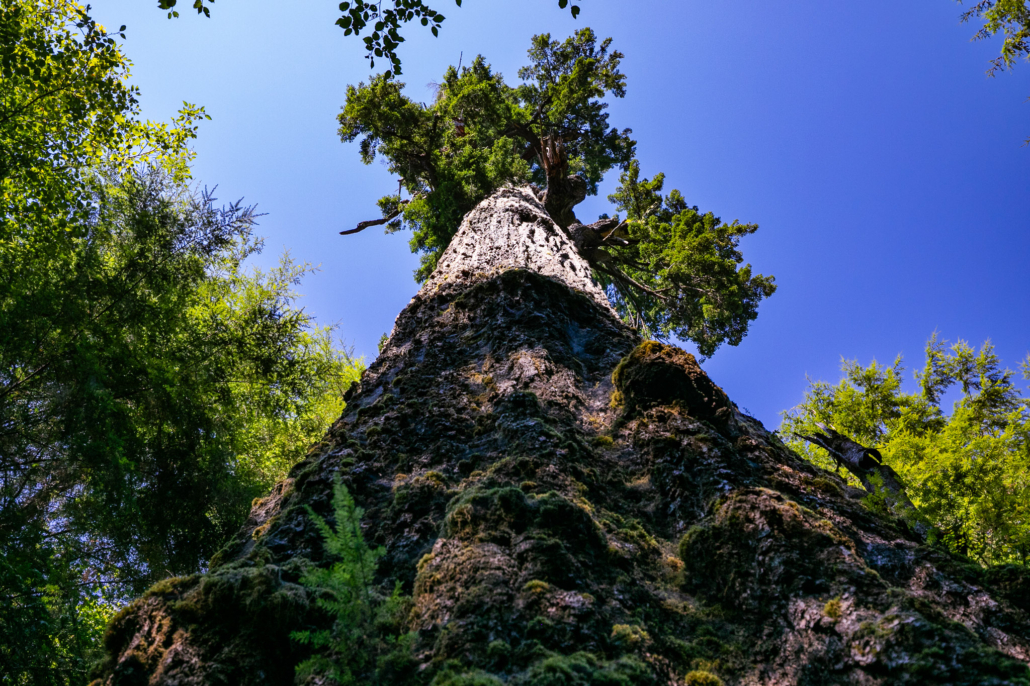
UPDATED: Port Renfrew Big Trees Map
Explore the updated Port Renfrew Big Trees Map with new directions, trails, and routes to iconic giants like Big Lonely Doug, Eden Grove, and more.
https://staging.ancientforestalliance.org/wp-content/uploads/2025/05/13-Red-Creek-Fir.jpg
1365
2048
TJ Watt
https://staging.ancientforestalliance.org/wp-content/uploads/2026/05/Ancient-Forest-Alliance-logo.svg
TJ Watt2026-05-29 15:39:342026-05-29 15:40:49UPDATED: Port Renfrew Big Trees Map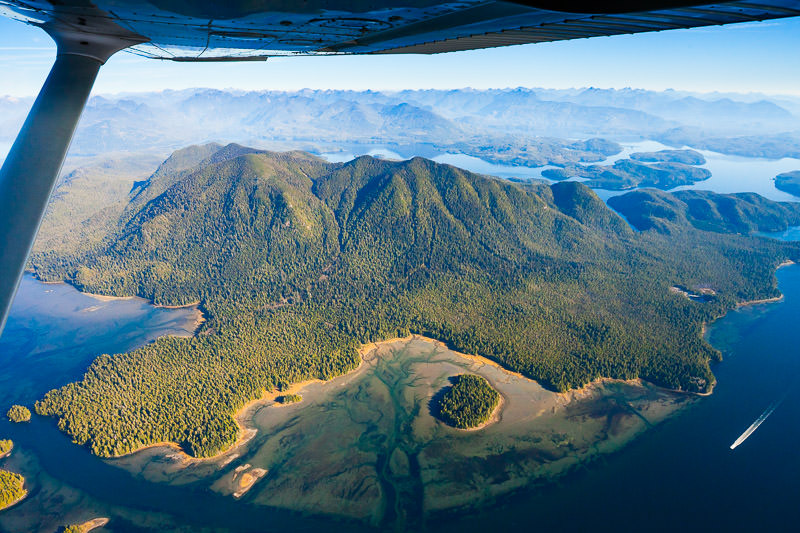
NEW! West Coast Old-Growth Hiking Guide
Explore AFA’s NEW West Coast old-growth hiking guide. From Clayoquot Sound to Port Alberni, there are trails for every skill level!
https://staging.ancientforestalliance.org/wp-content/uploads/2026/05/meares-island-big-tree-trail-tofino-1200px-338.jpg
533
800
TJ Watt
https://staging.ancientforestalliance.org/wp-content/uploads/2026/05/Ancient-Forest-Alliance-logo.svg
TJ Watt2026-05-29 12:06:002026-05-29 15:42:38NEW! West Coast Old-Growth Hiking Guide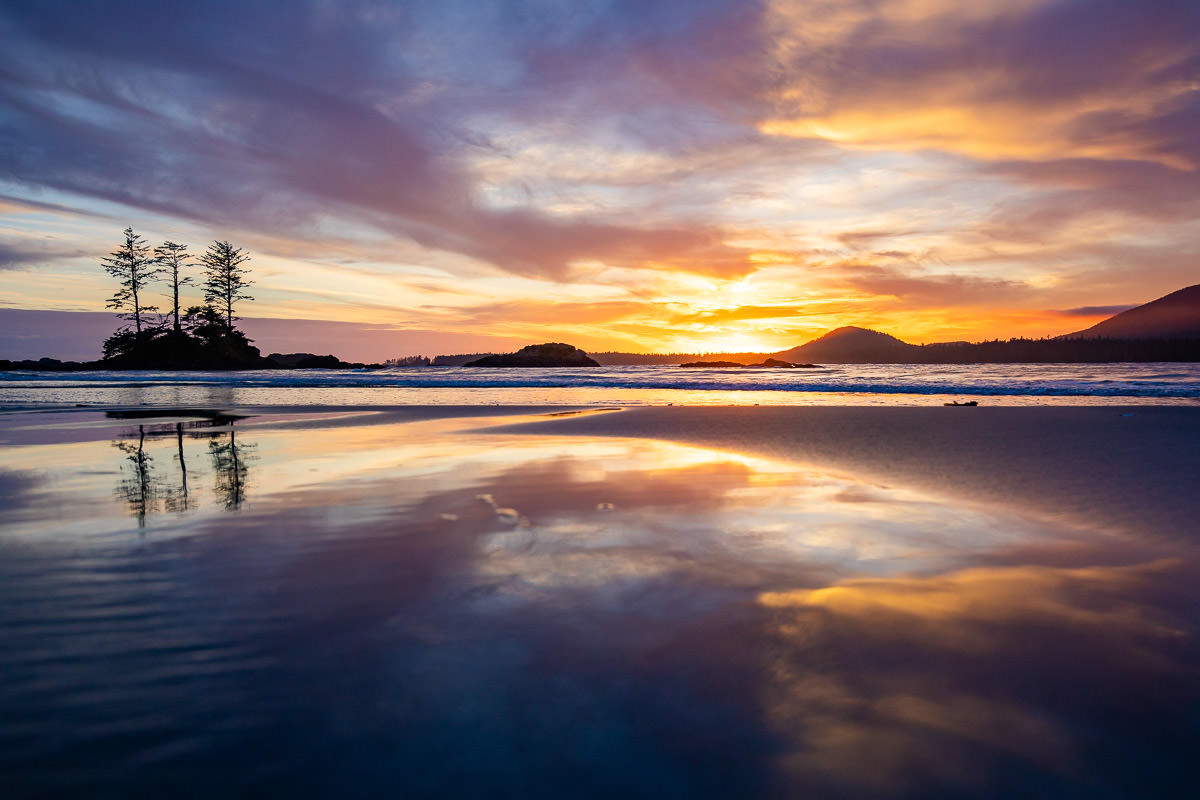
Now Hiring: Contract Graphic Designer!
Ancient Forest Alliance is hiring a contract Graphic Designer to help bring our campaigns to life through print and digital materials.
https://staging.ancientforestalliance.org/wp-content/uploads/2026/05/flores-island-wildside-trail-1200px-430.jpg
800
1200
TJ Watt
https://staging.ancientforestalliance.org/wp-content/uploads/2026/05/Ancient-Forest-Alliance-logo.svg
TJ Watt2026-05-22 12:22:292026-05-22 12:22:29Now Hiring: Contract Graphic Designer!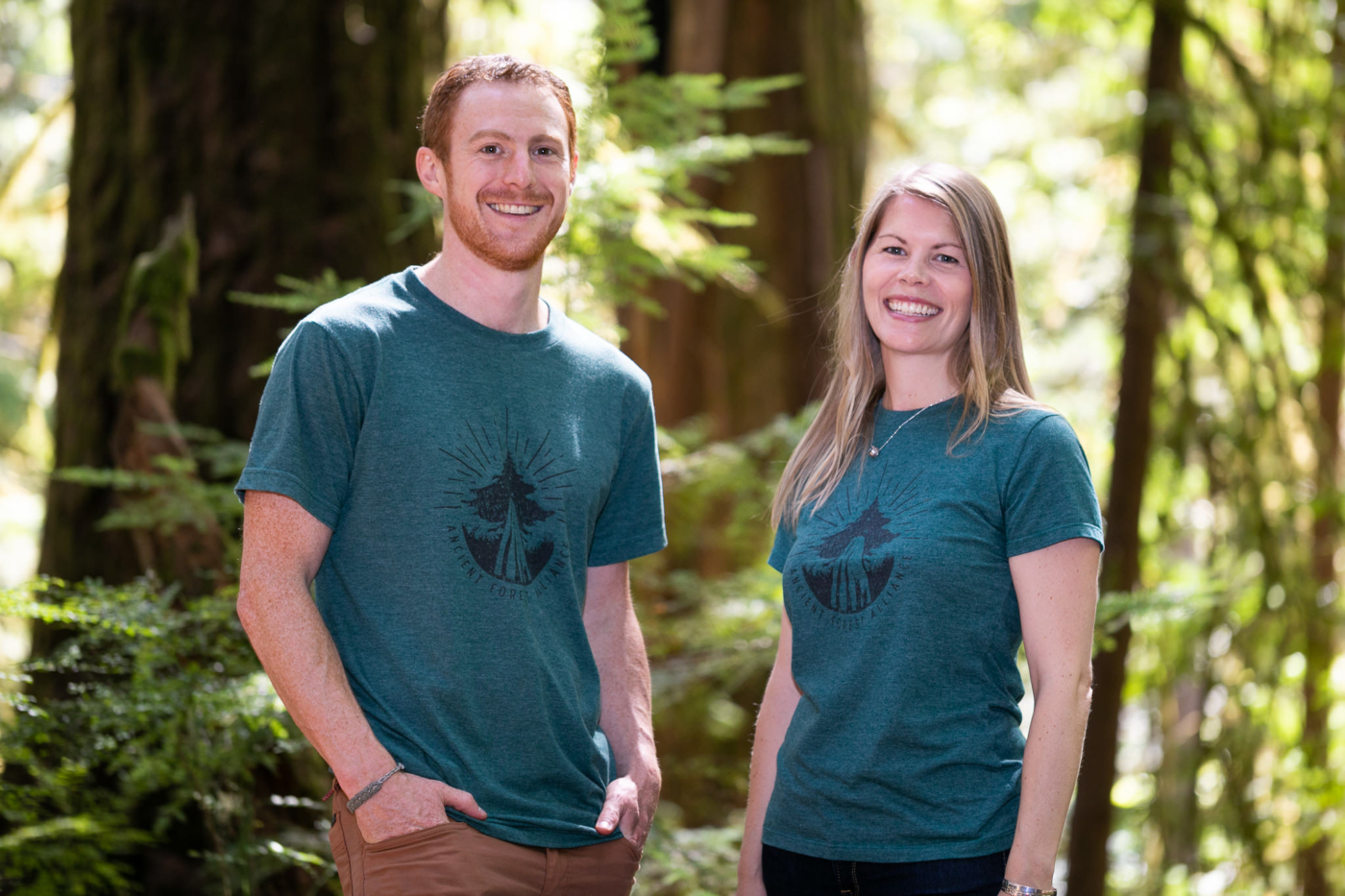
Design AFA’s Next T-Shirt and Help Protect Old-Growth Forests!
Calling all artists! For Earth Month, AFA is launching our first-ever Community T-Shirt Design Contest.
https://staging.ancientforestalliance.org/wp-content/uploads/2026/04/AFA-T-Shirt-Green-Mens-Womens.jpg
1365
2048
TJ Watt
https://staging.ancientforestalliance.org/wp-content/uploads/2026/05/Ancient-Forest-Alliance-logo.svg
TJ Watt2026-05-15 08:13:232026-05-19 09:33:44Design AFA’s Next T-Shirt and Help Protect Old-Growth Forests! Donate
 Send a Message
Oldies but goodies: The oldest establishments in B.C., and a couple of people as well
/in News CoverageOldest Tree Ever
If you were expecting Canada’s longest-lived tree to be a towering monolith, you’re in for a disappointment. B.C.’s oldest tree is a 1,835-year-old yellow cedar stump in the Caren Range of the Sunshine Coast.
You might glance at the remains and think: “That’s no tree — it’s a tombstone.”
You’d be wrong. It’s no grave marker or monument to a butchered giant.
The Caren yellow cedar is as close as B.C. gets to the predictive power of the ancient Greek oracle of Delphi.
Like the oracle, it tells the future.
“You can learn a lot from studying the rings of older trees,” says botanist Andy MacKinnon, a research ecologist with B.C.’s forests ministry.
“You have a much better chance of appreciating how, and whether or not, today’s climate is different from the climate of the last couple of millenniums, and what you might expect for the future.”
The Caren cedar was 1,835 years old when it was felled in 1980. The Friends of Caren, a Sunshine Coast community group, discovered the huge stump in 1993.
How did it grow to such an age? Ken Wu, executive director of the Ancient Forest Alliance, says it would have been spared wind, fire and destructive insects.
MacKinnon says yellow cedars are naturally long-lived. Nor are the province’s oldest trees its biggest trees.
“We have discovered that a lot of the oldest trees are growing at higher elevations in more extreme environments and are growing very slowly,” MacKinnon says. “This yellow cedar is probably three times the age of the giant Western red cedar and Douglas fir in Cathedral Grove.”
Identifying the province’s oldest living tree is challenging because Western red cedars get hollow in the middle as they age, Wu says. Some reds may be older than the Caren yellow but because the rings are gone from their interior base, nobody knows, Wu says.
“It’s reasonable to assume that the oldest tree in British Columbia is still out there, unmeasured,” MacKinnon says.
Oldest Treehugger
B.C.’s oldest treehugger began to track down the province’s evergreen giants almost a century ago.
Victoria resident Al Carder, 103, has been working to identify and protect the province’s tallest trees for close to 97 years.
His devotion to big trees grew from a child’s sense of self-preservation in Cloverdale in 1917, when his father suggested he accompany him to measure a nearby Douglas fir felled by loggers. Carder did the sensible thing and went along.
“He was scared of his father’s wrath. He was rather a disciplinarian,” says Judith Carder, Al’s daughter.
As they measured the 104-metre behemoth, the seven-year-old boy caught the Big-Tree Bug. Carder has spent his working life as an agro-meteorologist — he was Canada’s first — but his fascination with big trees abided. Carder has written three books about trees. His most recent book, Reflections of a Big Tree Enthusiast, was published when he was 100.
Carder, who has lost most of his hearing but still lives independently, is an inspiration to young environmentalists.
Ken Wu, executive director of the Ancient Forest Alliance, points out that Carder has outlasted B.C.’s 80-year-old second-growth forests, which replaced its felled old-growth giants.
“I’ve heard of his work since I was a child as one of the early people who valued and promoted protection of the province’s monumental giant trees long before it was cool,” Wu says.
Judith says her father is fine with being called a treehugger but doesn’t consider himself an extremist.
“He says that at 103, he won’t be chaining himself to a tree.”
Read more: https://blogs.theprovince.com/2014/02/23/oldies-but-goodies-the-oldest-establishments-in-b-c-and-a-couple-of-people-as-well/
Conservation and industry reach agreement on protecting old growth in the Great Bear
/in News CoverageThe B.C. government announced last week that environmental groups and forestry companies have jointly submitted recommendations to ‘increase conservation while maintaining economic activity in the Great Bear Rainforest.’
The agreement — which will preserve another 500,000 hectares of old growth — increases forest protection to nearly 70 per cent in the mid-coast region from the 50 per cent level already protected by 2009. The addition pushes the amount of old-growth forest preserved to more than three million hectares, an area larger than Metro Vancouver.
An 82 page submission from the ‘Joint Solutions Project,’ a working group of environmental groups and forest companies that includes Western Forest Products, Interfor, Howe Sound Pulp and Paper, BC Timber Sales and Catalyst, and three environmental groups ForestEthics, Greenpeace and Sierra Club of BC, contains numerous recommendations.
The submission proposes that additional areas be set aside for conservation, that harvest levels be adjusted to maintain viable forestry operations, and advocates a new approach to landscape planning that better accounts for old growth, cultural values, biodiversity and riparian zones.
The process of protecting the central coast began in 2001 with then-premier Gordon Campbell. At that time environmentalists around the world were putting the pressure on B.C. to act by a campaign against provincial forest products, and by 2009 large areas of the Great Bear were under protection.
The recommendations will now be evaluated by the Province, Nanwakolas Council and Coastal First Nations. The government has reconciliation agreements with both these groups of First Nations. In addition, 12 other First Nations will need to be consulted since they also have traditional territory in the Great Bear Rainforest. Ministry staff will review the recommendations for legislative and fiscal implications and implications to other resource users, and First Nations will review for implications to their interests.
Coastal First Nations executive director Art Sterritt said they don’t expect to call for massive changes. Sterritt also noted that several First Nations hold tenures in the mid-coast area and will also want to protect the eco-system while participating in logging. But, he also pointed out that expects some conflict between the First Nations and industry on which areas to protect and which to log.
“We are pleased that the Joint Solutions Project has completed its work,” said Sterritt. “Coastal First Nations will now take this report to our communities for review and discussion prior to finalizing legal objectives with the Province for the Great Bear Rainforest.”
ForestEthics senior campaigner Valerie Langer said this is the final step in protecting the Great Bear Rainforest. “There’s never been any conservation of this scale achieved. To do this in a collaborative way with unlikely allies over an area the size of some countries, and to both protect the forest and maintain viability of an industry, is a great achievement,” she said.
Industry officials are also in support of the recommendations, reflecting on past conflicts that made it seem that an agreement of this type would be impossible to reach.
“This has been a long time coming. It was not just done in the last week, or last month,” said Interfor vice-president and chief forester Ric Slaco. “This looks to be the final chapter. That’s a big deal.”
Government is also pleased with the outcome. “I congratulate the forest companies and environmental groups for their continued cooperation and efforts in finding solutions that manage both the environment and local economies in this unique region of the world,” said Steve Thomson, Minister of Forests, Lands and Natural Resource Operations.
Read more: https://www.coastmountainnews.com/news/conservation-and-industry-reach-agreement-on-protecting-old-growth-in-the-great-bear/
Tree growth never slows
/in News CoverageMany foresters have long assumed that trees gradually lose their vigour as they mature, but a new analysis suggests that the larger a tree gets, the more kilos of carbon it puts on each year.
“The trees that are adding the most mass are the biggest ones, and that holds pretty much everywhere on Earth that we looked,” says Nathan Stephenson, an ecologist at the US Geological Survey in Three Rivers, California, and the first author of the study, which appears today in Nature. “Trees have the equivalent of an adolescent growth spurt, but it just keeps going.”
The scientific literature is chock-full of studies that focus on forests' initial growth and their gradual move towards a plateau in the amount of carbon they store as they reach maturity. Researchers have also documented a reduction in growth at the level of individual leaves in older trees.
In their study, Stephenson and his colleagues analysed reams of data on 673,046 trees from 403 species in monitored forest plots, in both tropical and temperate areas around the world. They found that the largest trees gained the most mass each year in 97% of the species, capitalizing on their additional leaves and adding ever more girth high in the sky.
Although they relied mostly on existing data, the team calculated growth rates at the level of the individual trees, whereas earlier studies had typically looked at the overall carbon stored in a plot.
Estimating absolute growth for any tree remains problematic, in part because researchers typically take measurements at a person's height and have to extrapolate the growth rate higher up. But the researchers' calculations consistently showed that larger trees added the most mass. In one old-growth forest plot in the western United States, for instance, trees larger than 100 centimetres in diameter comprised just 6% of trees, but accounted for 33% of the growth.
The findings build on a detailed case study published in 2010, which showed similar growth trends for two of the world’s tallest trees — the coast redwood (Sequoia sempervirens) and the eucalyptus (Eucalyptus regnans), both of which can grow well past 100 metres in height. In that study, researchers climbed, and took detailed measurements of, branches and limbs throughout the canopy to calculate overall tree growth. Stephen Sillett, a botanist at Humboldt State University in Arcata, California, who led the 2010 study, says that the latest analysis confirms that his group’s basic findings apply to almost all trees.
Decline in efficiency
The results are consistent with the known reduction in growth at the leaf level as trees age. Although individual leaves may be less efficient, older trees have more of them. And in older forests, fewer large trees dominate growth trends until they are eventually brought down by a combination of fungi, fires, wind and gravity; the rate of carbon accumulation depends on how fast old forests turn over.
“It’s the geometric reality of tree growth: bigger trees have more leaves, and they have more surface across which wood is deposited,” Sillett says. “The idea that older forests are decadent — it’s really just a myth.”
The findings help to resolve some of these contradictions, says Maurizio Mencuccini, a forest ecologist at the University of Edinburgh, UK. The younger trees may grow faster on a relative scale, he says, meaning that they take less time to, say, double in size. ”But on an absolute scale, the old trees keep growing far more.”
The study has broad implications for forest management, whether in maximizing the yield of timber harvests or providing old-growth habitat and increasing carbon stocks. More broadly, the research could help scientists to develop better models of how forests function and their role in regulating the climate.
Read more: https://www.nature.com/news/tree-growth-never-slows-1.14536