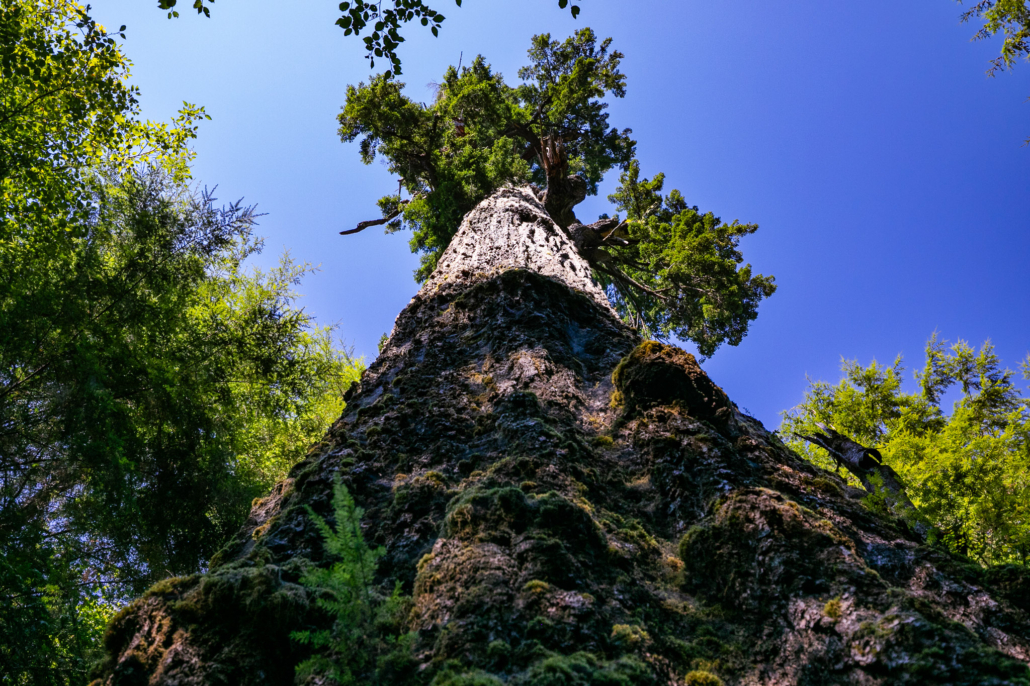
UPDATED: Port Renfrew Big Trees Map
Explore the updated Port Renfrew Big Trees Map with new directions, trails, and routes to iconic giants like Big Lonely Doug, Eden Grove, and more.
https://staging.ancientforestalliance.org/wp-content/uploads/2025/05/13-Red-Creek-Fir.jpg
1365
2048
TJ Watt
https://staging.ancientforestalliance.org/wp-content/uploads/2026/05/Ancient-Forest-Alliance-logo.svg
TJ Watt2026-05-29 15:39:342026-05-29 15:40:49UPDATED: Port Renfrew Big Trees Map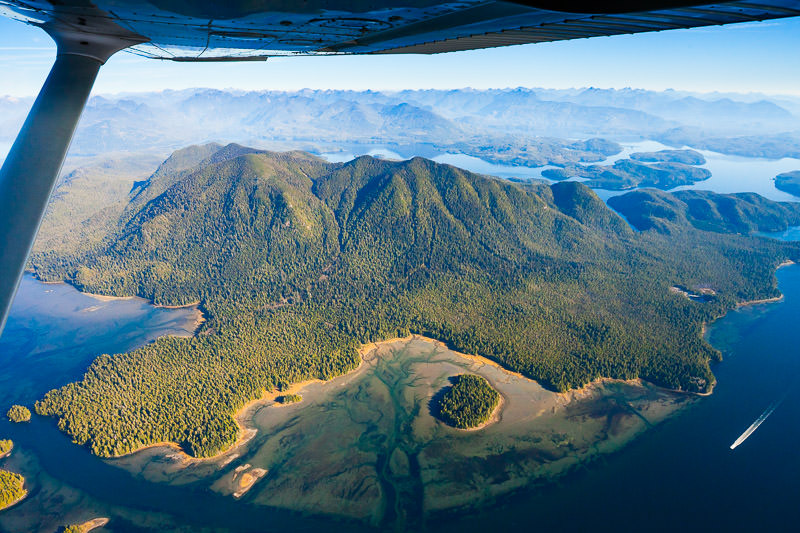
NEW! West Coast Old-Growth Hiking Guide
Explore AFA’s NEW West Coast old-growth hiking guide. From Clayoquot Sound to Port Alberni, there are trails for every skill level!
https://staging.ancientforestalliance.org/wp-content/uploads/2026/05/meares-island-big-tree-trail-tofino-1200px-338.jpg
533
800
TJ Watt
https://staging.ancientforestalliance.org/wp-content/uploads/2026/05/Ancient-Forest-Alliance-logo.svg
TJ Watt2026-05-29 12:06:002026-05-29 15:42:38NEW! West Coast Old-Growth Hiking Guide
Now Hiring: Contract Graphic Designer!
Ancient Forest Alliance is hiring a contract Graphic Designer to help bring our campaigns to life through print and digital materials.
https://staging.ancientforestalliance.org/wp-content/uploads/2026/05/flores-island-wildside-trail-1200px-430.jpg
800
1200
TJ Watt
https://staging.ancientforestalliance.org/wp-content/uploads/2026/05/Ancient-Forest-Alliance-logo.svg
TJ Watt2026-05-22 12:22:292026-05-22 12:22:29Now Hiring: Contract Graphic Designer!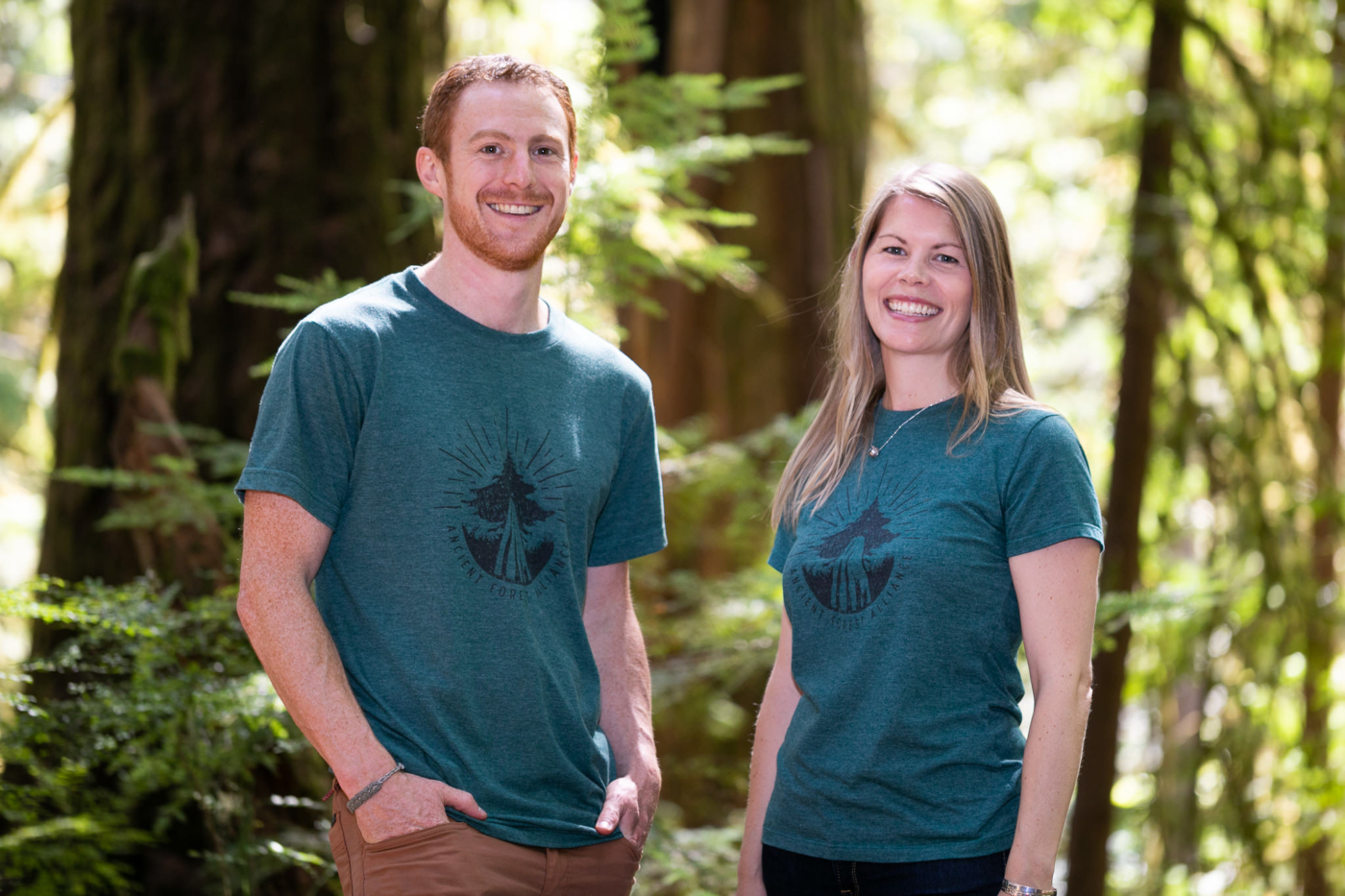
Design AFA’s Next T-Shirt and Help Protect Old-Growth Forests!
Calling all artists! For Earth Month, AFA is launching our first-ever Community T-Shirt Design Contest.
https://staging.ancientforestalliance.org/wp-content/uploads/2026/04/AFA-T-Shirt-Green-Mens-Womens.jpg
1365
2048
TJ Watt
https://staging.ancientforestalliance.org/wp-content/uploads/2026/05/Ancient-Forest-Alliance-logo.svg
TJ Watt2026-05-15 08:13:232026-05-19 09:33:44Design AFA’s Next T-Shirt and Help Protect Old-Growth Forests! Donate
 Send a Message
Photo of Burnt Vancouver Island Clearcut Chosen for Exhibition in International Photography Competition in London
/in Media ReleasePhoto of Burnt Vancouver Island Clearcut Chosen for Exhibition in International Photography Competition in London
Tragic photo of a logged and burnt old-growth forest on Vancouver Island, taken in January by Ancient Forest Alliance photographer TJ Watt, highlights the environmental destruction taking place in British Columbia’s “Tree Farm Licences” (TFL’s). The BC government’s plan to expand TFL’s to give exclusive logging rights to major logging companies on BC’s public lands is in its final week of public input.
A tragic photo of a person standing among giant, burnt stumps in an old-growth clearcut on Vancouver Island taken by Victoria-based photographer and conservationist TJ Watt has been chosen by the Atkins CIWEM Environmental Photographer of the Year competition to be featured in an exhibition this summer at the Royal Geographical Society in London and around national forest venues across England. Exhibited photos will be further judged to potentially win first prize in the competition. See the photo here: https://staging.ancientforestalliance.org/pic.php?pID=797
The photo is currently being circulated in social media to show the unsustainable forestry practices in BC’s Tree Farm Licences where large logging companies have exclusive logging rights over vast areas of public forest lands – a designation that the BC government is looking to expand, pending the finalization of public input at the end of this week on May 30. See the Ancient Forest Alliance’s campaign website at www.BCForestMovement.com
The photo was taken in January of this year in a former old-growth red cedar and hemlock forest on public (Crown) land in the Klanawa Valley in “Tree Farm Licence 44”, an “area-based licence” held by Western Forest Products, a few kilometers from the West Coast Trail on southern Vancouver Island (south of the town of Bamfield). The BC government states: “It is in the best interests of the licence holder to ensure the long-term sustainability of the area to secure future harvests,” in their discussion paper promoting an expansion of Tree Farm Licences in BC (see BC Government’s “Discussion Paper: Area-Based Forest Tenures”, page 8 – https://engage.gov.bc.ca/foresttenures/files/2014/03/Forest_Tenure_Discuss_Paper.pdf)
“This photo highlights the brutal mismanagement of BC’s old-growth forests – in fact the annihilation of these forests – in Tree Farm Licences on public lands. It’s such a tragic place, when you see the contrast between what would’ve been lush green rainforest, and what it is today – a charred and barren landscape of blackened stumps, not unlike a scene from the end of the world” stated TJ Watt. “I hope this photo provides a striking reminder of the ongoing destruction of British Columbia’s last endangered old-growth forests within Tree Farm Licences – a designation shown throughout the coast to be rife with environmentally disastrous forestry practices.”
The clearcut was likely burnt due to an accident. Clearcuts are more prone to fires as the dead wood and vegetation dry-out when exposed to the direct summer sunshine without overhead canopy, while sparks caused by logging equipment, as well as human carelessness and lightning, can readily ignite dried-out clearcuts. Companies also set intentional burns to reduce waste wood.
The photo will on display at the competition in London from June 23 – July 4, 2014, followed by a tour to forest venues nationally, supported by Forestry Commission England. The Atkins CIWEM Environmental Photographer of the Year competition is an international showcase for the very best in environmental photography and film. The exhibition will feature the top picks including Watt’s burnt clearcut photo, among a large number of entries from around the world, with the winning entry receiving a £5000 prize for the Atkins CIWEM Environmental Photographer of the Year award. Over 10,000 images were submitted for judging.
In April, the BC Liberal government revived their plans to allow major logging companies to receive exclusive logging rights over vast areas of public forest lands through the expansion of Tree Farm Licences. Despite being killed by widespread public opposition in 2013, they’ve resurrected this “forest giveaway scheme” like a zombie, in a bid to increase property rights for timber corporations on our public lands. These lands are vital for wildlife, recreation, scenery, clean water, wild salmon, First Nations, and smaller forestry operators.
This proposal would increase the compensation rights to be paid for by BC taxpayers to logging companies with Tree Farm Licences in lieu of new parks, protected areas and First Nations treaty settlements. Thus, it would make it harder to protect forests and settle First Nations land claims, as well as to diversify forestry in BC to communities and smaller operators in a way that truly supports forestry-dependent communities. Ultimately, it will further entrench the status quo of massive overcutting in BC by large corporations that is resulting in the collapse of human communities and ecosystems – a process well-advanced on BC’s southern coast, and now underway in BC’s interior.
THOUSANDS of people have already spoken up against the plan and many more will likely speak up during this final week of public input. Those who want to write-in must do so by 12 noon on May 30, to Jim Snetsinger, public engagement coordinator on TFL expansion, at: forest.tenures@gov.bc.ca (Cc. a copy to Forests Minister Steve Thomson at FLNR.minister@gov.bc.ca). See the official government website on participating on their Blog site at: https://engage.gov.bc.ca/foresttenures/
The public consultation process itself is considered a flawed or “rigged” process, as the terms of reference ask “how” not “whether” or not Tree Farm Licences should be expanded. Government info sheets only list “potential benefits” but no “potential problems” of expanding Tree Farm Licences.
“The public relations claim that major timber companies will operate in an environmentally sustainable manner if they are given greater property rights is contradicted by the actual evidence – let’s remember that much of the southern coast has had Tree Farm Licences for decades. Corporations are not communities, they are not tied to the land, looking at the long term – they are highly mobile, buying and selling their Tree Farm Licences regularly after logging what they want, and moving on. Nor is it in their financial interest to manage the forests for biodiversity, recreation, water quality or wild salmon, as they don’t make money from such things – they make money from the timber alone,” stated Ken Wu, Ancient Forest Alliance executive director. “Some of the province’s most notorious examples of massive overcutting, landslides, destruction of salmon streams, annihilation of old-growth forests, locked gates, and ruined scenery and recreational opportunities, are in the province’s Tree Farm Licences. This current plan is the BC Liberal government’s attempt to facilitate the last great timber grab by the major companies to log until the end of the resource – at the expense of communities and ecosystems.”
See the Ancient Forest Alliance’s media release and links to various articles and the BC government’s website at: https://staging.ancientforestalliance.org/news-item.php?ID=772
Opinion: Tree-farm licences a failure in forest management
/in News CoverageBritish Columbia’s forests are 93-per cent owned by commoners and comprise a part of what has been known for centuries as The Commons.
As such, it is incumbent on policy-makers to ensure the common interest prevails over self-interest and government interest in the governance of these forestlands.
Unfortunately, misguided thinking is undermining the common interest as the government struggles to deal with the aftermath of the mountain-pine-beetle infestation in Interior B.C.
For over half a century, the forests ministry allowed vast areas of aging pine forests in the B.C. Interior to become increasingly susceptible to infestation by the mountain pine beetle.
Although scientists and forest insect specialists did not foretell the magnitude of the beetle infestation, they are in general agreement that climate change caused it and poor government forest policies exacerbated it.
The government’s initial response to the beetle infestation was to deal with the symptom (dead pine trees) and implicitly deny the cause (global warming).
The government immediately raised the rates of logging and the limits placed on allowable cuts to unsustainable levels in the mountain-pine-beetle zone with little regard for the cumulative affects it would have on the soil, water and animals, not to mention the people of Interior B.C.
The recession of the last decade allowed senior forest officials to deceive themselves into thinking that over-harvesting and unsustainable logging rates are in the best interests of forest-dependent communities for at least a couple of political election cycles, but not beyond. Yet, the government, while claiming to have spent a billion dollars on mitigating the affects of the beetle infestation, appears to have completely neglected to do any strategic planning needed to deal with the inevitable social and economic consequences of the predicted crash in available timber.
The only evident plan is to keep the rates of timber harvesting unsustainably high, thereby making the eventual collapse of available timber even more painful for forest-dependent communities, a policy based on the premise that it is better to have more jobs today and none tomorrow rather than fewer jobs today and some tomorrow.
Instead of focusing on the common good, on getting a reliable forest inventory and on defining a long-term vision for forestry in British Columbia with attendant strategies, goals and objectives, the government is preoccupied with rewarding an oligopoly of companies with exclusive timber rights over public forests within quasi-private timber farms (Tree Farm Licences)
In its zeal to justify further enclosure of The Commons and increased corporate control over the commoners’ timber, the government’s twisted thinking becomes so bent that it defines mountebank politics.
The false argument, or syllogism, goes like this. Area-based forest management is preferable to volume-based management. Tree-farm licences are a type of area-based tenure. Therefore, forest management on tree-farm Licences must be better than it is on volume-based tenures.
The government then takes that syllogism to the people and pretends to consult publicly by inviting selected stakeholders to a meeting with the consultation leader and by arranging an Internet blog on which the public can post comments and send written submissions by email.
The declared purpose of the consultation is to obtain input on the criteria to be considered in evaluating proposals for converting some or a portion of some volume-based forest licences to new or expanded area-based tree-farm licences. More tree-farm licences are a foregone conclusion. The public has no say.
The whole consultation process is a sham. The language used is a complete turnoff for any member of the public unversed in forestry jargon. To participate meaningfully, the public would need clear evidence of whether public benefits from previously awarded tree-farm licences have materialized as background to an open question as to whether more timber farms are desirable and in the common interest.
History shows forest tenure under tree-farm licences is a singular failure resulting in British Columbians being robbed of control of their forests and denied the promised benefits from them.
British Columbians need a full, public and provincewide discussion — not a phoney consultation — on what type of forest governance might best address the concerns and needs of forest-dependant communities during this century of rapid climate change.
Today, common sense is the cement needed to unite British Columbians to re-establish control over their forest commons. Until noon on May 30, use your common sense to say no to more Tree Farm Licences by sending an email to: forest.tenures@gov.bc.ca
Anthony Britneff recently retired from a 40-year career with the B.C. Forest Service during which he held senior professional positions in inventory, silviculture and forest health.
Read more: https://www.vancouversun.com/Opinion+Tree+farm+licences+failure+forest+management/9879112/story.html
B.C. forest giveaway threatens to speed up collapse
/in News CoverageHISTORICALLY, SOCIETIES HAVE collapsed because they cling to business as usual when a vital resource is becoming scarce. From Easter Island to the Mayans, history tells us what happens when societies ignore the signs they have stretched finite resources beyond their limits.
Here in British Columbia, we are seeing the same ominous pattern when it comes to our forests. Even in regions that are running out of trees, government acts as if finding more trees to cut is the only priority, no matter what the cost in the longer term.
To this short-sighted end, the provincial government is inviting comments until the end of May on a tenure change proposal that offers logging companies a change from “volume-based” to “secure area-based” tenures in the form of tree farm licences.
This would give greater corporate control over more public forest land. It would mean unsustainable harvest levels would continue. And it would mean the consequences of years of poor forest management would be made far worse. The government attempted similar changes before the 2013 election, but withdrew them after being roundly rejected by diverse community, environmental, and economic interests.
How did we get to this point? It is no secret that this redressed proposal is especially aimed at companies operating in the Interior. After the mountain pine beetle epidemic, the province allowed a significant increase to the annual cut to deal with massive quantities of dead or dying trees in this region. But that process has almost run its course: dead wood is running out and forest companies are cutting down more and more living trees, also known as green timber. In a headline-making case, West Fraser and Canfor took one million cubic metres of green timber over and above the allocated cut, without penalty by the B.C. government.
Making this challenge even greater, the value of our remaining healthy forests is increasing by the day because of climate change. Forests are indispensable for clean air, clean water, carbon stored in trees and soils, wildlife, recreation, and many other environmental services. We cannot survive without them. But global warming impacts like shifting ecosystems, droughts, more insect infestations, more wildfires, and more landslides are already here. Global warming means that we can no longer take these key functions of our forests for granted, without doubling our efforts to maintain them healthy.
Forest-dependent communities in the Interior have already been hit with the double whammy of years of overharvesting compounded by the mountain pine beetle epidemic. The consequences have been devastating for many communities.
But the answer is not to continue cutting at unsustainable levels. That’s business as usual.
Unless the government acts to reduce the cut and begin forest restoration today, forest-dependent communities will not only lose even more jobs, but will be exposed to increased flooding and landslides as our forests lose their ability to provide essential environmental services.
B.C. needs a broader conversation about the future of our forests, one that is honest about the current state of our forests and how that limits our options for the future. One thing we know: business as usual has got to stop.
We need to develop a comprehensive forest action plan to manage our forests today and for future generations. Such a plan would include better inventory and research, sustainable logging rates, better government oversight, protection of critical species habitat, and an effective approach to reforestation. It would also include support for communities impacted by reduced logging activity, more First Nations and non-native community control over forest lands, and the creation of value-added forestry jobs. In the light of the climate crisis it is absolutely critical to reduce the massive forest carbon emissions from provincial forest lands to ensure that that our forests help slow down global warming instead of marking it worse (in 2011 uncounted net carbon dioxide emissions from B.C. forests due to logging, pests, and fire were 35 million tonnes, equivalent to more than half of B.C.’s total official emissions).
There is one bright spot on the provincial map, in one of the most spectacular forest regions of the planet. Full implementation of the Great Bear Rainforest Agreements endorsed by the B.C. government, First Nations, a group of major logging companies, and a group of environmental organizations is scheduled for this year and will result in increasing conservation and a long-term timber supply based on ecosystem-based management. We need a similar coherent approach for sound, sustainable forest management for the entire province.
In the past, societies have collapsed because they did not understand the consequences of their actions. Today, we have overwhelming scientific evidence about the decline of our forests and its potential impacts on our lives. We can ignore that evidence and stick to business as usual. Or we can build a better future for our forests and the communities that depend on them by developing a comprehensive action plan for our forests. If you believe in the latter course, let the provincial government know by emailing forest.tenures@gov.bc.ca before noon on May 30.
Jens Wieting is a forest and climate campaigner for Sierra Club B.C.
Read more: https://www.straight.com/news/651411/jens-wieting-bc-forest-giveaway-threatens-speed-collapse