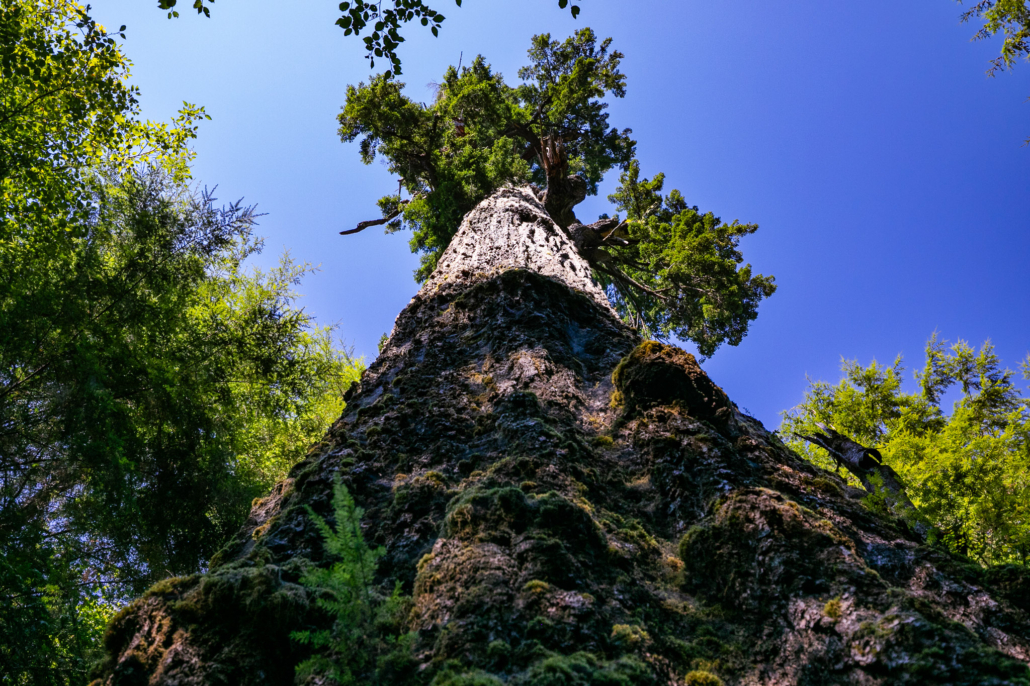
UPDATED: Port Renfrew Big Trees Map
Explore the updated Port Renfrew Big Trees Map with new directions, trails, and routes to iconic giants like Big Lonely Doug, Eden Grove, and more.
https://staging.ancientforestalliance.org/wp-content/uploads/2025/05/13-Red-Creek-Fir.jpg
1365
2048
TJ Watt
https://staging.ancientforestalliance.org/wp-content/uploads/2026/05/Ancient-Forest-Alliance-logo.svg
TJ Watt2026-05-29 15:39:342026-05-29 15:40:49UPDATED: Port Renfrew Big Trees Map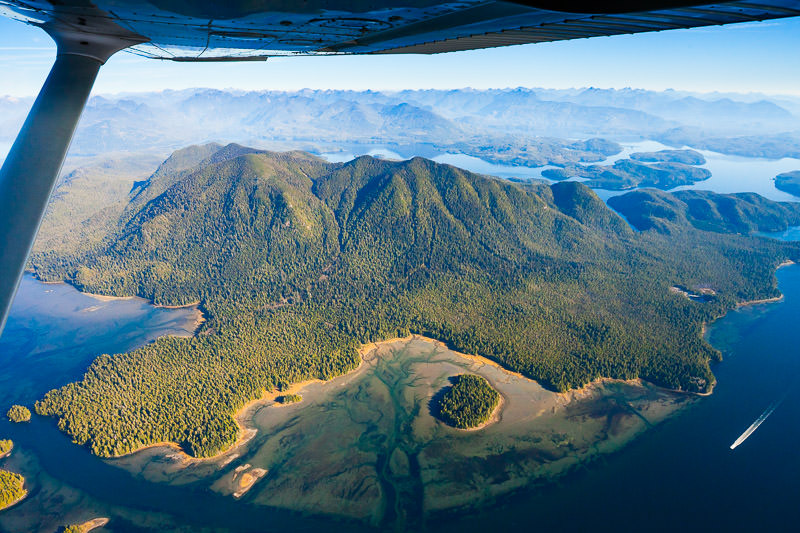
NEW! West Coast Old-Growth Hiking Guide
Explore AFA’s NEW West Coast old-growth hiking guide. From Clayoquot Sound to Port Alberni, there are trails for every skill level!
https://staging.ancientforestalliance.org/wp-content/uploads/2026/05/meares-island-big-tree-trail-tofino-1200px-338.jpg
533
800
TJ Watt
https://staging.ancientforestalliance.org/wp-content/uploads/2026/05/Ancient-Forest-Alliance-logo.svg
TJ Watt2026-05-29 12:06:002026-05-29 15:42:38NEW! West Coast Old-Growth Hiking Guide
Now Hiring: Contract Graphic Designer!
Ancient Forest Alliance is hiring a contract Graphic Designer to help bring our campaigns to life through print and digital materials.
https://staging.ancientforestalliance.org/wp-content/uploads/2026/05/flores-island-wildside-trail-1200px-430.jpg
800
1200
TJ Watt
https://staging.ancientforestalliance.org/wp-content/uploads/2026/05/Ancient-Forest-Alliance-logo.svg
TJ Watt2026-05-22 12:22:292026-05-22 12:22:29Now Hiring: Contract Graphic Designer!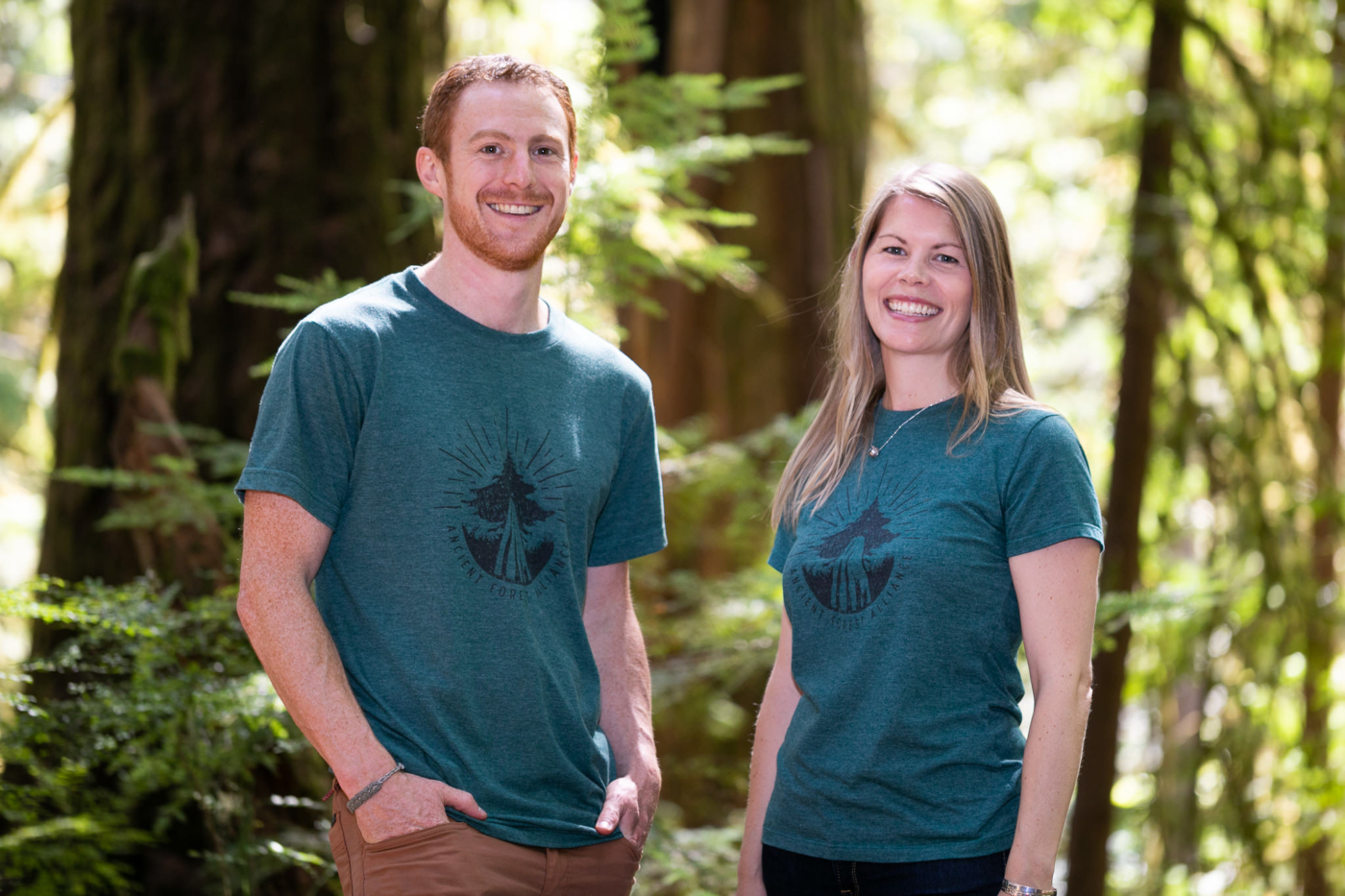
Design AFA’s Next T-Shirt and Help Protect Old-Growth Forests!
Calling all artists! For Earth Month, AFA is launching our first-ever Community T-Shirt Design Contest.
https://staging.ancientforestalliance.org/wp-content/uploads/2026/04/AFA-T-Shirt-Green-Mens-Womens.jpg
1365
2048
TJ Watt
https://staging.ancientforestalliance.org/wp-content/uploads/2026/05/Ancient-Forest-Alliance-logo.svg
TJ Watt2026-05-15 08:13:232026-05-19 09:33:44Design AFA’s Next T-Shirt and Help Protect Old-Growth Forests! Donate
 Send a Message

We’re hiring door canvassers in Victoria!
/in EmploymentAncient Forest Alliance is hiring enthusiastic and self-motivated door canvassers to support our campaign through outreach and fundraising in Victoria, BC.
APPLY NOW
Our door-to-door canvassers are a daily driver behind our campaign. Utilizing their exceptional people skills and passion for old-growth forests, canvassers are essential to growing our campaign by educating and engaging diverse communities and raising funds and awareness to protect these precious old-growth ecosystems and ensure a transition to a sustainable, second-growth forest industry. You will gain valuable career-building experience while honing your grassroots communications, outreach, and fundraising skills.
Details
This position is great for those seeking a flexible schedule, such as post-secondary students, as canvassing hours are typically Monday–Thursday, 4–8:30pm, with optional weekends. Earn a competitive, living wage with performance-based incentives while working with fun, like-minded environmentalists.
No experience is necessary, but people skills are a plus!
About Ancient Forest Alliance:
The Ancient Forest Alliance (AFA) is a registered non-profit organization focused on protecting old-growth forests and ensuring a transition to a sustainable, value-added second-growth industry. Founded in 2010, AFA has quickly become BC’s main organization working toward province-wide legislation to end the logging of endangered old-growth forests.
Built on grassroots outreach and fundraising, we rely on stellar fundraisers to sustain our campaigns and have a strong track record of success over our 15-year history. Face-to-face connections with thousands of people are essential for strengthening the old-growth protection movement. Door-to-door canvassing has played an integral role in building our support base and continues to be an important source of donations.
Apply directly through our application form, or contact Nadia at canvass@ancientforestalliance.org.
Ancient Forest Alliance provides equal opportunities to all employees and applicants and welcomes diverse, conservation-minded members of our community to apply.
APPLY NOW
Testimonials:
Canvasser Spotlight: Paarth Mittal, former Victoria canvasser and field manager
“Canvassing for the AFA allowed me to help grow an important movement to save our vital old-
growth forests, while gaining valuable skills in communication, fundraising, and mentoring team
members. As someone still connected to the AFA family, I encourage current and future
canvassers to take every experience as a lesson that inspires growth, and to always think back to why they are doing what they do: creating a sustainable, just, and livable world for all living
beings.”
Canvasser Spotlight: Tiara Dhenin, former Victoria Canvass team
“Canvassing has drastically improved my confidence in public speaking and my ability to engage meaningfully with people in all contexts. I’ve met hundreds of locals, learned from them, and grown personally from my experiences. Nothing beats the rush or sense of accomplishment after a successful night of canvassing for such an important cause.”
Canvasser Spotlight: Joel Smith, former Victoria Canvass team
“During my time as a canvasser, I had countless interactions with people at their homes which left me feeling uplifted and encouraged. Each person has something to share, and as a canvasser, I learned to offer space for people to open up about why they care about old-growth forests and why they feel they are important. My people and listening skills improved and I became more articulate and efficient in the relaying of information pertinent to the cause. It was great to be working with a team of canvassers as well. Before each canvass, we would meet up to prepare, and after we would share our experiences and encourage each other. If you have any free time and have a passion for forests, plants, animals, and/or people, I wholly encourage you to consider joining the Ancient Forest Alliance as a canvasser.”
Thank you Elements Outfitters for being an outstanding business supporter!
/in Thank YouWe’re very grateful to all the businesses that support our mission here at Ancient Forest Alliance (AFA).
This month, we specifically want to thank our friends at Elements Outfitters, who not only contribute to AFA as part of their 1% For The Planet program but also sell our merchandise at their Patagonia Victoria store. For over 10 years, they’ve generously backed our efforts to help protect endangered old-growth forests in BC, including iconic places where people love to hike and explore. We cannot thank them enough!
If you’re a business owner and would like to support our work, please email us at info@ancientforestalliance.org.
The Narwhal: New marching orders are in for BC’s cabinet. They sideline the environment, observers warn
/in News CoverageJanuary 22, 2025
The Narwhal
By: Ainslie Cruickshank and Shannon Waters
Original article here.
As economically devastating tariffs threatened by U.S. President Donald Trump loom, BC Premier David Eby has directed his cabinet to prioritize economic development and make it easier for corporate interests to feel confident investing in the province.
Eby’s new mandate letters for cabinet focus heavily on finding ways to support BC’s industries — including forestry, mining and oil and gas development — by speeding up permitting processes and reducing regulatory burdens, spurring concerns from conservation groups that environmental initiatives and protections could be sidelined.
“There were virtually no environmental directions in the letters that weren’t qualified by industry interests or by economic considerations,” Jessica Clogg, the executive director and senior counsel at West Coast Environmental Law, said in an interview.
“The most extreme interpretation is it’s a whole-scale abdication of the values and direction that we thought this government stood for,” she said.
In his letters to cabinet ministers, B.C. Premier David Eby said the province is facing a “profoundly challenging geopolitical environment,” noting the threat of tariffs from U.S. President Donald Trump. It remains to be seen how tariffs would impact trade, including though ports like Deltaport in Metro Vancouver. Photo: Alana Paterson / The Narwhal
The NDP government’s focus on boosting economic growth and easing the permitting process is explicit in Environment and Parks Minister Tamara Davidson’s mandate letter, which directs her to have the BC Environmental Assessment Office “develop specific measures that will expedite authorizations and permitting for major projects,” with input from other ministries with permitting authority, including the forestry and mining ministries.
Davidson’s mandate letter also makes it clear Eby is keen to eliminate environmental assessment requirements for certain projects: it directs Davidson to get rid of assessments in cases where the process “is duplicative, delays projects with environmental advantages or offers only limited value while impeding projects that will benefit the province as a whole.”
Davidson is responsible for executing the government’s plan, announced in December, to exempt new wind power projects from environmental assessments. The wind power exemption was followed by Eby’s announcement last week that the North Coast transmission line — which will deliver power for the liquefied natural gas (LNG), mining and other industries — will not be subject to an environmental assessment. The project will instead receive permits and authorizations from the BC Energy Regulator, which is largely funded by the oil and gas industry.
“Proposed measures such as exempting whole classes of projects from environmental assessment or arbitrarily limiting timeframes for permitting are nothing but a recipe for conflict and uncertainty,” Clogg said in a statement.
Meanwhile, Energy Minister Adrian Dix’s mandate letter directs him to find ways to “dramatically accelerate” permitting for clear and low-carbon energy projects while maintaining “world-leading environmental standards.”
Government remains committed to 30-by-30 conservation goals, old-growth protections
Sarah Korpan, government relations manager for the environmental law charity Ecojustice, said the new mandates signal “the environment is nothing more than an afterthought” for the NDP government. “They fail to carry forward even the bare minimum of previous commitments related to the prioritization of biodiversity and ecosystems,” she said in a statement.
The Canadian Parks and Wilderness Society, Sierra Club BC and Wilderness Committee also issued statements expressing alarm about the lack of environmental urgency in the mandate letters.
“These aren’t just gaps in the mandate letters — this is a deliberate and near-total exclusion of any commitments to biodiversity and species-at-risk protection,” Wilderness Committee conservation and policy campaigner Lucero Gonzalez said in a press release. “Despite what Premier David Eby seems to believe, BC is not immune to the biodiversity crisis, and prioritizing logging, mining and oil and gas corporations over ecosystems amidst an extinction crisis isn’t just negligence — it’s an environmental and moral failure.”
The B.C. government says it remains committed to old-growth forest protections, even as conservation groups raise concerns that new mandate letters for ministers appear to sideline core environmental commitments. Photo: Taylor Roades / The Narwhal
In an emailed statement a government spokesperson said the NDP’s commitments to protecting old-growth forests and 30 per cent of the province’s land and water by 2030 remain intact.
“Our government’s inclusive land use planning process will not only provide greater certainty about what areas of the province need to be protected, but also clearly identify those areas where resource development and industrial activity can occur,” the statement said.
“Choosing between the economy and protecting the environment is a ‘false choice,’ ” the statement continued. “We can and we must do both.”
Mandate letters emphasize economic growth, red-tape reduction
In his mandate letters, Eby said BC is facing a “profoundly challenging geopolitical environment.”
“Close friends and neighbours to our south are contemplating imposing draconian tariffs on our products that would hurt both Americans and Canadians,” he wrote. “Global inflation, snarled supply chains and war are threatening global economic growth and prosperity as well as the transition to a low-carbon economy.”
The premier gave comparatively little attention to the marquee initiatives his government was working on prior to last October’s election to address declining wildlife populations, protect remaining old-growth forests and conserve nature in the face of a deepening global biodiversity crisis.
Eby’s letter to new Forests Minister Ravi Parmar, for instance, is a stark departure from the letter issued to Parmar’s predecessor one year ago. The 2024 mandate letter to former forests minister Bruce Ralston mentioned old-growth forest protections multiple times and directed Ralston to work with the minister of Water, Land and Resource Stewardship to speed up implementation of recommendations made in a strategic review, including the immediate deferral from logging of old-growth forest at the greatest risk of biodiversity loss.
But Parmar’s letter mentions old-growth forests only once.
BC Premier David Eby directed Forests Minister Ravi Parmar to protect old-growth forests while ensuring 45 million cubic meters of timber is available for harvest every year. Photo: Louis Bockner / The Narwhal
Eby directs Parmar to fulfill the NDP government’s “commitment to protect old growth,” while ensuring 45 million cubic metres of timber are available for harvest each year, roughly the same amount available today.
The government spokesperson noted work to implement old-growth forest commitments has begun.
“It is critical that we continue taking action, with the understanding that the scope of work to fulfill all the recommendations will take place in the years ahead,” the statement said.
Only two of the 2020 review’s 14 recommendations — “engage the full involvement of Indigenous leaders and organizations” and “defer development in old forests at high risk, until a new strategy is implemented” — were at an advanced stage of implementation, according to a government update published in May 2024. Nearly half the recommendations were still in an “initial action” stage.
Eby also directed new Water, Land and Resource Stewardship Minister Randene Neill to balance conservation measures with economic diversification that supports the technology, tourism and resource development industries. Neill’s mandate letter doesn’t mention biodiversity, the old-growth strategic review or BC’s wildlife protection strategy, called “Together for Wildlife.” The only reference the letter makes to BC’s commitment to conserve 30 per cent of land by 2030 comes alongside a directive to enable mine exploration and development in the province’s northwest in partnership with First Nations.
“The commitment, in theory, is there to 30-by-30, but there’s nothing in the mandate letters that gives me confidence that we’re going to be moving with any speed towards that goal,” Clogg said.
According to the government spokesperson, BC has established 13 conservancies and two provincial parks since August 2017.
“The BC government remains committed to protecting 30 per cent of land and water by 2030,” the spokesperson said. “Expanding our parks and protected areas secures the rich biodiversity BC is known for and ensures these special places will be here for future generations.”
Kaska organization sees path forward for proposed Indigenous-led protected area
Gillian Staveley, the director of culture and land stewardship at the Dena Kayeh Institute, which is working to establish a Kaska Dena Indigenous protected area called Dene K’éh Kusān in northern BC, said she’s “cautiously optimistic” after reading through the mandate letters.
“We know that a lot of nations, a lot of British Columbians want to see more land protected in the province, and they also want to address that pressing need for critical minerals, especially in these urgent and challenging times,” Staveley said in an interview. “I truly believe you can achieve both, but it’s going to take cooperation and partnership and willingness for us to seek that balance together.”
Dene K’éh Kusān, a proposed Indigenous protected area in northeast BC, would safeguard a significant portion of northern mountain caribou ranges. Photo: Taylor Roades / The Narwhal
Staveley said she believes the mandate letters show Eby remains committed to the 30-by-30 conservation target and she’s confident there’s a path forward for the Dene K’éh Kusān protected area.
“We know that it’s going to take initiatives like ours, like the Kaska [Indigenous Protected and Conserved Area] for BC to achieve that goal,” she said “We know that they’re going to need to work with us and we’re sitting here with open arms, ready to get to work and make that a reality.”
In the meantime, Staveley said she and her team at the Dena Kayeh Institute are continuing to engage the public more broadly to increase understanding of Indigenous Protected and Conserved Areas.
Dene K’éh Kusān would protect 40,000 square kilometres in Kaska Dena territory, safeguarding a largely intact expanse of land that’s home to numerous species at risk.
“A lot of people see the value in that, but they also see the value in the robust economy that we’re trying to create through conservation,” Staveley said.
“We are quite hopeful for what the future is going to look like,” she said. “We’re not going to let, necessarily, what isn’t written within the mandate letters impact the work that we need to be doing going forward.”
Lack of incentives to spur more sustainable forestry, conservation economy disappointing, conservation group says
Ken Wu, the executive director of the Endangered Ecosystem Alliance, told The Narwhal that Eby’s emphasis on the economy in the new crop of mandate letters isn’t a bad thing, but said the minimal mentions of protections for old-growth forests and other endangered ecosystems left him uneasy.
In an interview, Wu noted none of the mandate letters mention the biodiversity and ecosystem health framework the BC NDP promised to address growing biodiversity and species loss. The government initially said it would finalize the framework in the spring of 2024, but, almost one year later, the initiative remains in draft form. Nor did the mandate letters mention any plans to add new old-growth logging deferrals, which were meant to serve as temporary protections until a new long-term approach to forest management was finalized.
“It’s certainly not ‘paradigm shift’ material in their mandate letters, that’s for sure,” he said, referencing the recommendation in the landmark old-growth strategic review that BC implement a paradigm shift to manage forests primarily for biodiversity and not allow timber production to continue to eclipse other values.
In the statement, the government spokesperson said the biodiversity and ecosystem health framework is now expected to be finalized this year, but did not provide any details on the next steps, noting the ministry is “assessing current mandate priorities.”
“There’s a greater emphasis on the economy and that’s important,” Wu said about the letters.
But he added that he wished the mandate letters were more explicit about the incentives and regulations needed to transition the province’s forestry sector towards younger, second-growth forests and higher-value products and to develop conservation-based economies in regions where protected areas are created or expanded.
“The biggest commitments are mentioned, but they certainly haven’t been emphasized,” he pointed out.
Wu said the Endangered Ecosystem Alliance will hold the BC NDP government and the opposition parties to account on these issues. He also said it’s crucial for environmental groups to communicate to the public the value of a healthy environment — including to BC’s economy.
Neither the BC Conservatives, the BC Greens or the Business Council of British Columbia were available to comment by publication time.
Updated Jan. 22, 2025, at 1:45 p.m. PT: A quote from Gillian Staveley was corrected to say “…we’re sitting here with open arms….”