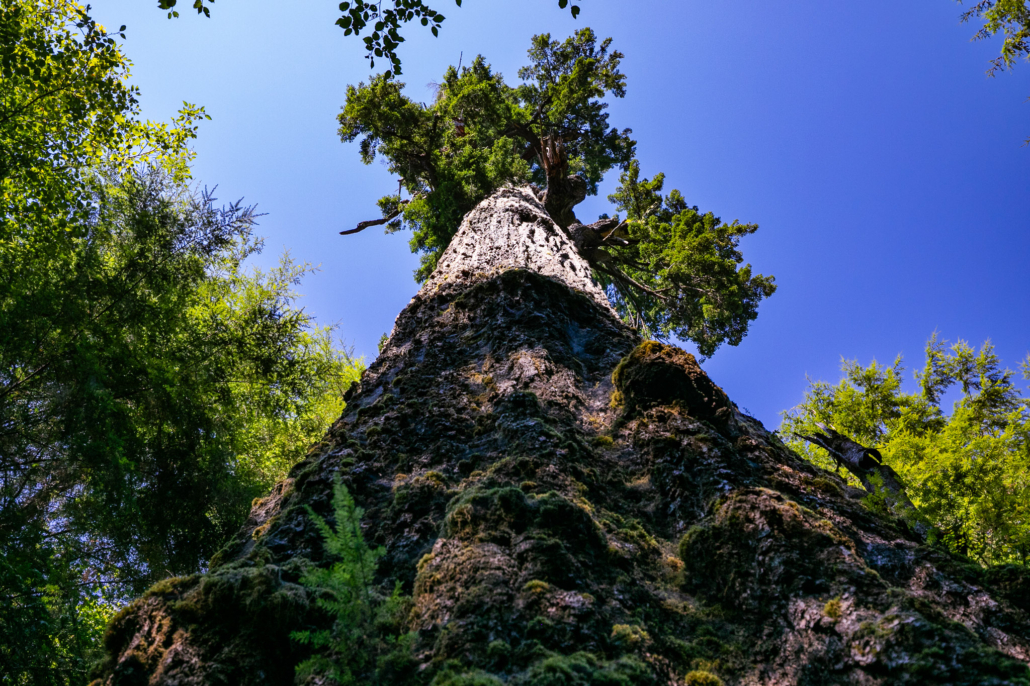
UPDATED: Port Renfrew Big Trees Map
Explore the updated Port Renfrew Big Trees Map with new directions, trails, and routes to iconic giants like Big Lonely Doug, Eden Grove, and more.
https://staging.ancientforestalliance.org/wp-content/uploads/2025/05/13-Red-Creek-Fir.jpg
1365
2048
TJ Watt
https://staging.ancientforestalliance.org/wp-content/uploads/2026/05/Ancient-Forest-Alliance-logo.svg
TJ Watt2026-05-29 15:39:342026-05-29 15:40:49UPDATED: Port Renfrew Big Trees Map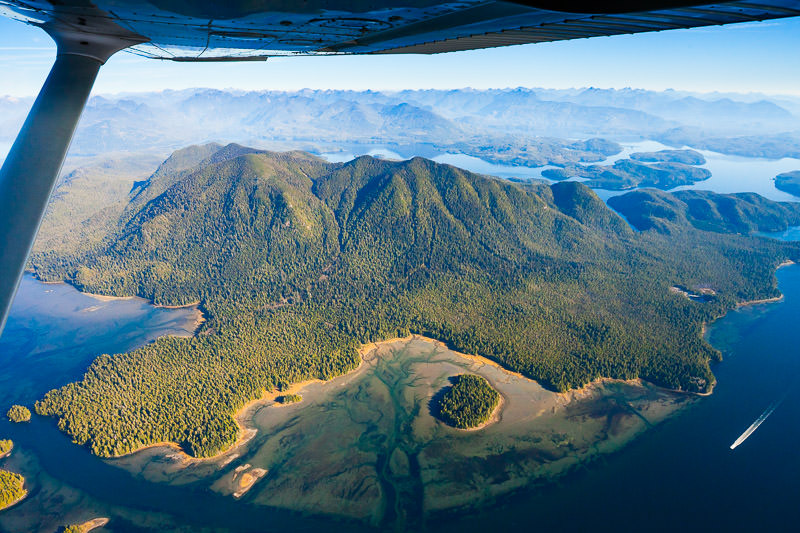
NEW! West Coast Old-Growth Hiking Guide
Explore AFA’s NEW West Coast old-growth hiking guide. From Clayoquot Sound to Port Alberni, there are trails for every skill level!
https://staging.ancientforestalliance.org/wp-content/uploads/2026/05/meares-island-big-tree-trail-tofino-1200px-338.jpg
533
800
TJ Watt
https://staging.ancientforestalliance.org/wp-content/uploads/2026/05/Ancient-Forest-Alliance-logo.svg
TJ Watt2026-05-29 12:06:002026-05-29 15:42:38NEW! West Coast Old-Growth Hiking Guide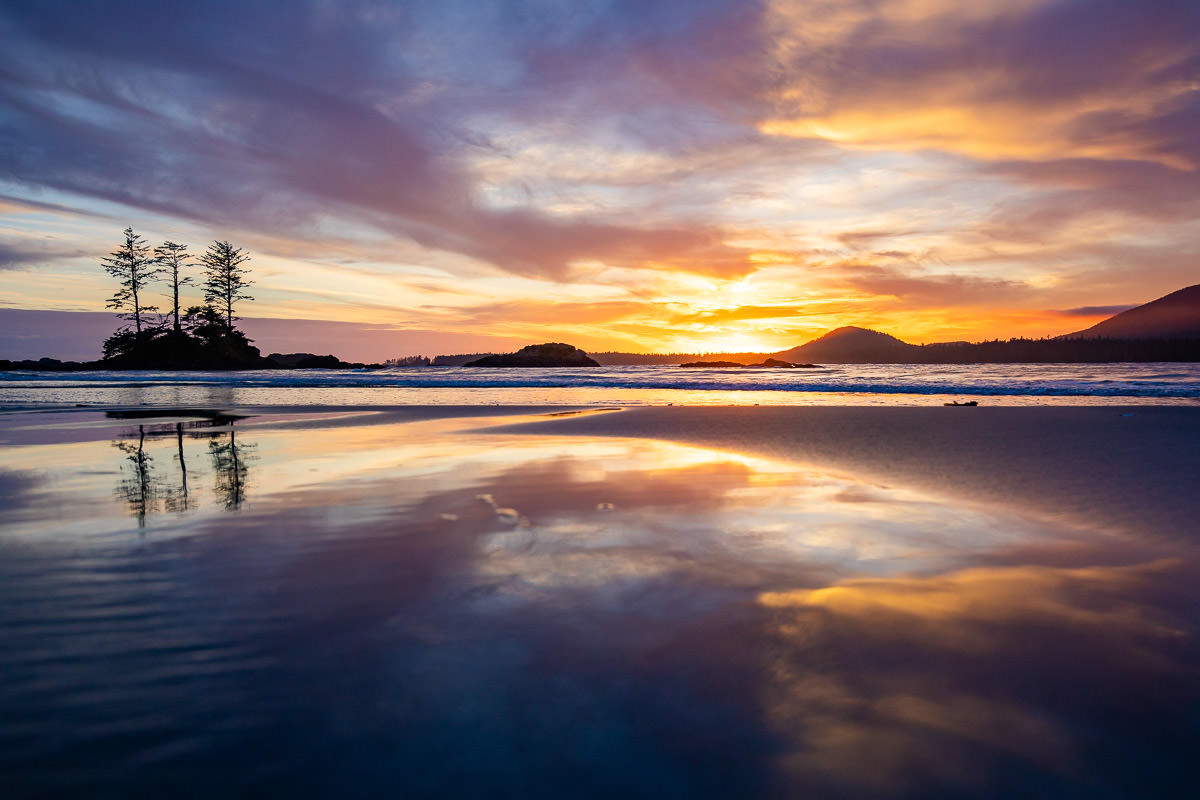
Now Hiring: Contract Graphic Designer!
Ancient Forest Alliance is hiring a contract Graphic Designer to help bring our campaigns to life through print and digital materials.
https://staging.ancientforestalliance.org/wp-content/uploads/2026/05/flores-island-wildside-trail-1200px-430.jpg
800
1200
TJ Watt
https://staging.ancientforestalliance.org/wp-content/uploads/2026/05/Ancient-Forest-Alliance-logo.svg
TJ Watt2026-05-22 12:22:292026-05-22 12:22:29Now Hiring: Contract Graphic Designer!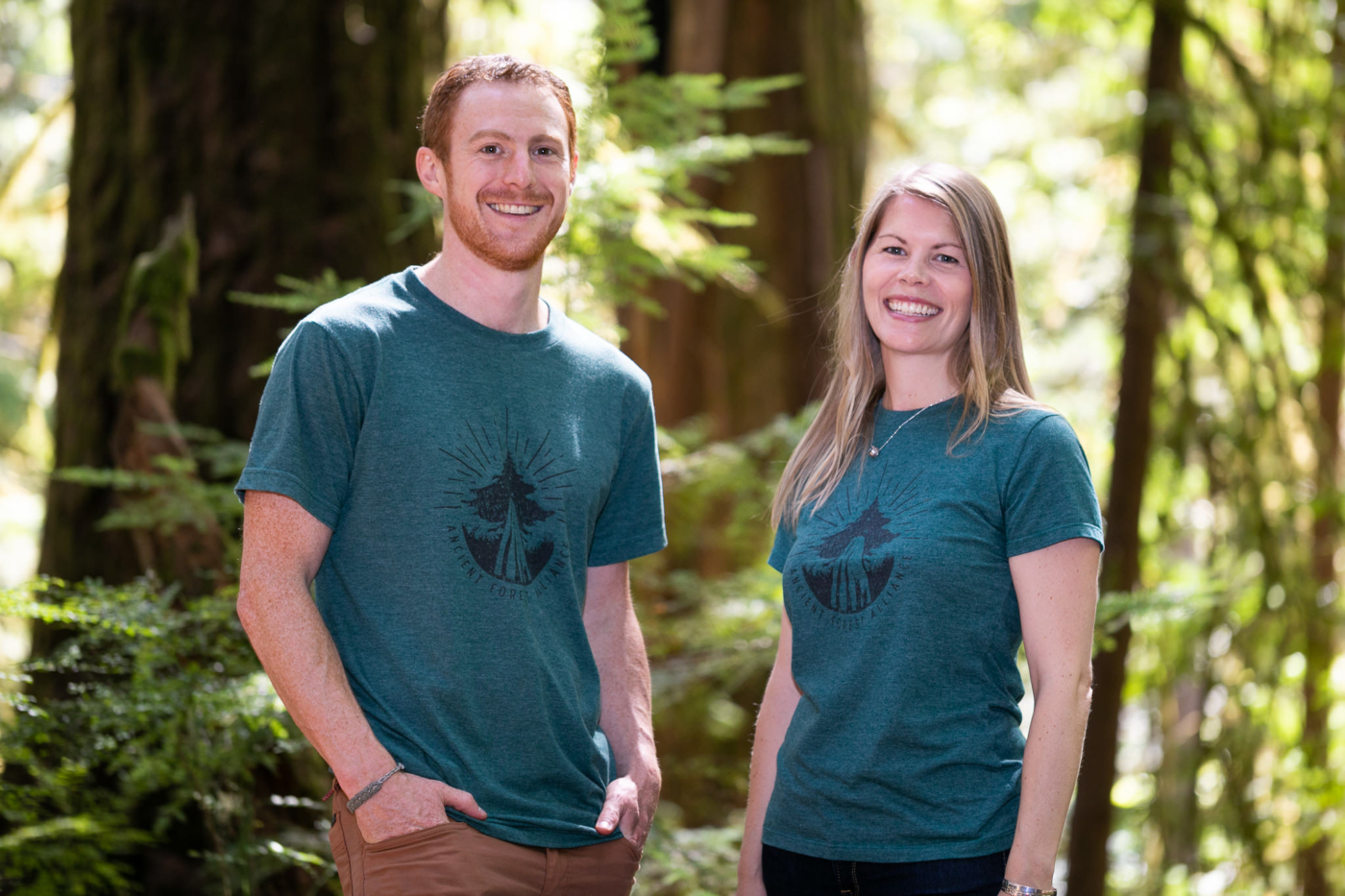
Design AFA’s Next T-Shirt and Help Protect Old-Growth Forests!
Calling all artists! For Earth Month, AFA is launching our first-ever Community T-Shirt Design Contest.
https://staging.ancientforestalliance.org/wp-content/uploads/2026/04/AFA-T-Shirt-Green-Mens-Womens.jpg
1365
2048
TJ Watt
https://staging.ancientforestalliance.org/wp-content/uploads/2026/05/Ancient-Forest-Alliance-logo.svg
TJ Watt2026-05-15 08:13:232026-05-19 09:33:44Design AFA’s Next T-Shirt and Help Protect Old-Growth Forests! Donate
 Send a Message
PLEASE WRITE to Victoria City Council and Saanich Council to support resolutions for a BC Natural Lands Acquisition Fund!
/in Take ActionThe Victoria City Council will be voting on Thursday and the Saanich Council on Monday on a motion asking the BC government to implement a BC Natural Lands Acquisition Fund (aka Fund for Nature's Future), a proposed, annual provincial fund to purchase and protect endangered ecosystems on private lands. The District of Highlands recently passed the resolution, and now it's time to snowball the support from various municipalities to pressure the provincial government!
Please WRITE an EMAIL to Victoria Council at councillors@victoria.ca or Saanich Council at council@saanich.ca to express your support for this motion! Ask them to:
*** Be sure to include your full name and address so that they know you are a real person.
More Details:
Momentum is growing as 18 major BC conservation and recreational groups have recently signed onto a call for the BC government to establish a dedicated provincial fund that can be used to purchase and protect endangered private lands of high environmental and recreational significance.
The University of Victoria's Environmental Law Centre has prepared a report for the Ancient Forest Alliance outlining some potential mechanisms to support such a fund, including the proceeds from unredeemed beverage container deposits, resource taxes on fossil fuels, property transfer taxes, income tax check-offs, etc.
About 5% of British Columbia’s land base is private, where new protected areas require the outright purchase of private lands from willing sellers, while 95% is Crown (public) lands where new protected areas are established by government legislation. However, a high percentage of BC’s most endangered and biologically diverse and rich ecosystems are found on private lands – which tend to be found in temperate lower elevations and major valleys where most humans live. As a result, private lands are disproportionately important for conservation efforts. In particular, southeastern Vancouver Island, the Gulf Islands, the Lower Mainland, the Sunshine Coast, and the Okanagan Valley contain much of the private lands in BC, the greatest concentrations of endangered species, and the most heavily visited natural areas, and would benefit the most from such a fund.
The provincial fund would be similar to the Capital Regional District's existing Land Acquisition Fund that has helped to protect thousands of hectares of beloved green spaces around Victoria including the Sooke Hills, Sooke Potholes, Jordan River, and Mount Maxwell on Saltspring Island.
Read our MEDIA RELEASE at: https://staging.ancientforestalliance.org/news-item.php?ID=963
See a recent article in the Times Colonist at: https://www.timescolonist.com/news/local/push-for-provincial-land-acquisition-fund-gathers-steam-1.2156674 and in Island Tides at: https://islandtides.com/assets/reprint/environment_20160128.pdf and the original article in the Times Colonist at: https://www.timescolonist.com/news/local/jack-knox-pop-bottles-could-give-green-funding-extra-fizz-1.2131156
Read the report by the UVic Environmental Law Centre (ELC), 'Finding the Money to Buy and Protect Natural Lands': https://www.elc.uvic.ca/wordpress/wp-content/uploads/2015/12/FindingMoneyForParks-2015-02-08-web.pdf
Old-Growth Momentum Grows as Businesses, City Councils, and Naturalists Speak Up & Renowned Filmmaker Comes to Port Renfrew
/in Media ReleaseThe Port Renfrew and Sooke Chambers of Commerce, the town councils of Metchosin, Victoria, and Tofino, and the Federation of BC Naturalists (BC Nature) have joined conservation groups in calling on the BC government to protect Vancouver Island’s old-growth forests in the Walbran Valley. In addition, renowned two-time Sundance filmmaker Joe Callander whose documentaries have been featured in the New York Times is on Vancouver Island to do a story about the old-growth forests around Port Renfrew.
Interest and concern for the fate of Vancouver Island’s endangered old-growth forests is on the rise, as a renowned filmmaker and his crew arrived earlier this week from the US to do a piece about the old-growth forests around Port Renfrew. In addition, a growing and diverse base of businesses, municipal councils, and natural history associations have joined the chorus of concerned citizens calling on the province to protect the endangered old-growth forest in the Central Walbran Valley on Vancouver Island near Port Renfrew.
Two-time Sundance filmmaker Joe Callander has been in Port Renfrew, Lake Cowichan, and Duncan this past week with the Ancient Forest Alliance and various forestry workers, business leaders, and scientists to document the endangered old-growth forests and forest industry in the area. Callander’s award-winning documentary work has been shown at over 30 festivals globally, as well as being featured in the New York Time’s Op-docs section on NYTimes.com. The New York Times has the largest circulation of any metropolitan newspaper in the USA, as well as over one million paying digital-only subscribers for its online content.
The Sooke and Port Renfrew Chambers of Commerce, the Metchosin, Tofino, and Victoria councils, and the Federation of BC Naturalists (the umbrella organization representing 53 naturalist clubs, encompassing 6000 members) have all joined the call for the BC government to protect the endangered old-growth forests of the Central Walbran Valley. The Metchosin council resolution calls on the BC government to amend the 1994 Vancouver Island Land Use Plan to protect the remaining old-growth forests across Vancouver Island, which would include the Walbran Valley.
Near Port Renfrew, the 500 hectare Central Walbran Ancient Forest is part of the 13,000 hectare Walbran Valley, of which about 5500 hectares of the valley is protected within the Carmanah-Walbran Provincial Park and 7500 hectares of the watershed lies outside of the park. About 2600 hectares lies in a “Special Management Zone” (including the 500 hectare Central Walbran), where the size of clearcuts is smaller but which still allows for most of the old-growth forests to be logged. The Central Walbran is the last, largely intact portion of the valley outside of the park, while much of the rest has been highly fragmented and tattered by clearcuts to different degrees. Teal-Jones has 8 cutblocks planned for the Central Walbran Valley, of which one, Cutblock 4424, has been granted a cutting permit by the Ministry of Forests, Lands, and Natural Resource Operations. The company recently stated that they will defer logging plans in the Central Walbran Valley for now, a welcome step forward. The company is actively logging in other parts of the Special Management Zone at this time and protesters have sporadically been blockading their logging operations in recent months. The Walbran Valley is in the unceded territory of the Pacheedaht band in Tree Farm Licences 44 and 46 on Crown lands.
Port Renfrew, formerly a logging town, has been transformed in recent years into a big tree tourism destination as hundreds of thousands of tourists have come from around the world to visit some of Canada’s largest trees in the nearby Avatar Grove, the Red Creek Fir (the world’s largest Douglas-fir tree), Big Lonely Doug (Canada’s 2nd largest Douglas-fir tree), San Juan Spruce (until recently Canada’s largest Sitka spruce tree – its top broke off in a recent storm unfortunately), the Harris Creek spruce (one of the largest Sitka spruce trees in Canada), and the Central Walbran Valley.
• See spectacular photos of the Walbran.
• See the Port Renfrew Chamber of Commerce’s statement for the Walbran here.
• See the Sooke Chamber of Commerce’s Walbran statement here.
• See the Victoria city council motion for the Walbran here.
• See a recent Youtube clip using drone footage over the Central Walbran.
“The publicity about the old-growth forests near Port Renfrew in recent years has brought in a flood of visitors from Europe, the USA, Canada, and diverse countries to visit Port Renfrew. This has especially been true since the protection of the Avatar Grove in 2012. Big tree tourism has increased the total flow of dollars spent in Port Renfrew, in our rental accommodations, restaurants, grocery stores, and businesses in general. Along with sport fishing, old-growth forest tourism has become a staple of our local economy,” states Dan Hager, president of the Port Renfrew Chamber of Commerce. “Recently, increasing numbers of visitors are heading through town to visit the Central Walbran Valley to see its old-growth forest. If the Central Walbran were to be protected, it would be a great addition to our town’s repertoire of big tree attractions.”
“The Central Walbran is one of the most magnificent places that anyone could visit. With its gargantuan trees, emerald-coloured swimming holes, amazing waterfalls, and perfect camping areas, in all of my experiences the Walbran is virtually unmatched for recreational and scenic grandeur in the world. To riddle the whole area with clearcuts and giant stumps would be the lowest, worse use of a place like this,” states Ken Wu, Ancient Forest Alliance executive director.
“The Central Walbran Valley is truly exceptional in so many ways. It has the most extensive, densely-packed groves of old-growth western redcedars in the country – including some of the near-largest on record, such as the Tolkien and Castle Giants,” stated TJ Watt, Ancient Forest Alliance photographer and campaigner. “Not only are old-growth forests important for the climate, but also for tourism, endangered species, clean water, wild salmon, and many First Nations cultures.”
“The old growth forests of the Walbran Valley are very important biologically for the great variety of plants and animals living there – some of which are at risk such as the Queen Charlotte Goshawk and Marbled Murrelet. The second growth forests which replace the old growth lack much of the biodiversity present in old growth”, stated Eric Marshall, president of Cowichan Valley Naturalists.
Ancient Forest Alliance campaigners recently located and measured two huge western redcedar trees, one of which makes it into the top 10 widest redcedars in BC according to the BC Big Tree Registry, in the Central Walbran Valley – the 4.6 metre (15 feet) wide “Tolkien Giant” and the “Karst Giant”. See: www.ancientforestalliance.org/news-item.php?ID=944
The recent agreement in BC’s northern coastal rainforest, the Great Bear Rainforest, where 85% of the old-growth forests will be protected in a combination of legislated parks, conservancies, and forest reserves (through Ecosystem-Based Management), sets a science-based precedent to increase protection now for BC’s southern rainforest – on Vancouver Island and the southern Mainland Coast, where only 8% of the original, productive old-growth forests are protected in parks and conservancies (6%) and Old-Growth Management Areas (2%).
The Ancient Forest Alliance is calling on the province to protect its endangered old-growth forests, ensure a sustainable second-growth forest industry, and end the export of raw, unprocessed logs to foreign mills in order to support BC forestry jobs. An Old-Growth Protection Act has been developed by the University of Victoria’s Environmental Law Centre for the Ancient Forest Alliance. See: https://www.elc.uvic.ca/wordpress/wp-content/uploads/2015/01/An-Old-Growth-Protection-Act-for-BC_2013Apr.pdf
On BC’s southern coast (Vancouver Island and the southwest mainland), 75% of the original, productive old-growth forests have already been logged, including over 90% of the valley bottoms where the largest trees grow. 3.3 million hectares of productive old-growth forests once stood on the southern coast, and today 860,000 hectares remain, while only 260,000 hectares are protected in parks and Old-Growth Management Areas. www.ancientforestalliance.org/old-growth-maps.php
Federation of BC Naturalists (BC Nature) join call to protect Central Walbran Valley
/in AnnouncementsThanks to the Federation of BC Naturalists (BC Nature), who have joined multiple Chambers of Commerce and municipal councils calling for the protection of the endangered Central Walbran Valley. The federation consists of 53 naturalist clubs representing 6000 members in British Columbia, including biologists, ecologists, and various natural history enthusiasts. The federation has sent a letter of support for the Cowichan Valley Naturalists in their call to the province requesting protection of the Central Walbran Ancient Forest. The 500 hectare Central Walbran Valley is threatened with potential logging by Teal-Jones, and is the most intact part of a 2600 hectare Special Management Zone. The Ancient Forest Alliance is working with diverse partners calling for the region's protection, along with legislation to protect endangered old-growth forests across BC and new policies to ensure a sustainable, value-added second-growth forest industry.
See the Federation of BC Naturalists (BC Nature) online at: www.bcnature.ca