Ancient Forest Alliance
  • Home
  • About Us
        • The six AFA team members stand beside each other in front of an old-growth Douglas-fir tree.
        • Our Mission & Team
        • History & Successes
        • Work With Us
        • Contact Us
  • Our Work
    • Campaigns
    • Building Alliances
    • Activity Reports
  • Ancient Forests
    • Hiking Guides
    • Old-Growth 101
    • Old-Growth Forests in BC: FAQs
    • Before & After Old-Growth Maps
    • Myths & Facts
    • Directions to Avatar Grove
    • Port Renfrew Big Trees Map
  • Recent News
    • Recent News
    • Media Releases
    • Research & Reports
    • Publications
    • Educational
  • Photos & Media
        • Map of Gallery Locations
        • Themes
          • Biggest Trees
          • Biggest Stumps
          • Low Productivity Old-Growth
        • Videos
        • Vancouver Island North
          • East Creek Rainforest
          • Klaskish Inlet
          • Quatsino
            • Grove of Giant Cedars Clearcut in Quatsino Sound
            • Quatsino Old-Growth Under Threat 2023
            • Mahatta River Logging
          • Spruce Bay
          • Tsitika Valley
          • White River Provincial Park
        • Vancouver Island Central
          • Barkley Sound
            • Vernon Bay
          • Clayoquot Sound
            • Canada’s Most Impressive Tree – Flores Island
            • Flores Island
            • Meares Island
            • Sydney River Valley
          • Cortes Island
            • Children’s Forest
            • Squirrel Cove Ancient Forest
          • Nootka Island
          • Port Alberni
            • Cameron Valley Firebreak
            • Cathedral Grove Canyon
            • Juniper Ridge
            • Katlum Creek
            • Nahmint Valley
            • Nahmint Logging 2024
            • McLaughlin Ridge
            • Mount Horne
            • Taylor River Valley
          • Tahsis
            • McKelvie Valley
            • Tahsis: Endangered Old-Growth Above Town
        • Vancouver Island South
          • Carmanah
            • Climbing the Largest Spruce in Carmanah
            • Carmanah Research Climb
          • Caycuse Watershed
            • Before & After Logging – Caycuse Watershed
            • Before and After Logging Caycuse 2022
            • Caycuse Logging From Above
            • Lower Caycuse River
            • Massive Trees Cut Down
          • Klanawa Valley
          • Koksilah
          • Mossy Maples
            • Mossy Maple Gallery
            • Mossy Maple Grove
          • Port Renfrew
            • Avatar Boardwalk
            • Avatar Grove
            • Big Lonely Doug and Clearcut
            • Bugaboo Ridge Ancient Forest
            • Eden Grove
            • Exploring & Climbing Ancient Giants
            • Fairy Creek Headwaters
            • Granite Creek Logging
            • Jurassic Grove
            • Loup Creek
            • Mossome Grove
            • Mossome Grove Tree Climb
          • Walbran Valley
            • Castle Grove
            • Central Walbran Ancient Forest
            • Hadikin Lake
            • Walbran Headwaters At Risk
            • Walbran Overview
            • Walbran Logging
        • Haida Gwaii
          • Haida Gwaii 2013
          • Yakoun Lake Old-Growth
          • Yakoun River Old-Growth Forests
        • Sunshine Coast
          • Day Road Forest
          • Mt. Elphinstone Proposed Park Expansion
          • Powell River
            • Eldred River Valley
            • Mt. Freda Ancient Forests
          • Roberts Creek Headwaters
          • Stillwater Bluffs
        • Inland Rainforest
          • Ancient Forest/ Chun T’oh Whudujut Provincial Park
          • Parthenon Grove
        • Mainland
          • Echo Lake
          • Kanaka Bar IPCA Proposal
  • Take Action
    • Send A Message to the BC Government
    • Sign a Resolution
  • Store
  • Donate
  • Click to open the search input field Click to open the search input field Search
  • Menu Menu
  • Store
  • Donate

Blog Archive Layout

Some say the fate of British Columbia’s old-growth forests rests in the balance

Jun 5 2016/in News Coverage

Here's a new article featuring renowned forest ecologist Dr. Andy MacKinnon about the fate of BC's endangered old-growth forests. Take note that the forest industry and BC government are spinning the situation about old-growth forests to make it appear as if they are not endangered and that they are already well protected – this is completely false, and they do this by including vast areas of stunted marginal non-commercial stands (bog forests, high elevation and far northern old-growth forests on steep rock faces with small trees, etc.) with the productive old-growth stands with big trees that have been heavily logged, and by combining the southern rainforest (Vancouver Island and Lower Mainland) with its different ecosystems, higher levels of logging, and far lower protection levels, with the northern rainforests (Great Bear Rainforest) where 20 years of boycotts by environmental groups of logging companies in the area resulted in a far greater level of protection in a more intact region of the province, ie. they are two different regions.

*******

Saanich -— The Douglas fir Andy MacKinnon leans against is 40 metres tall. It’s likely more than 500 years old and its fire-scarred trunk is almost two metres in diameter.

In most other countries, the tree would be the largest in the land, says MacKinnon, a forest ecologist who spent three decades with British Columbia’s government researching old-growth forests.

At Francis/King Regional Park, minutes from Victoria, the park’s trees are protected from logging, but about 150 kilometres west of Victoria, old-growth forests with 1,000-year-old trees twice the size of those in the park are being cut down every day, said MacKinnon.

The world’s largest trees face dangers similar to elephants, whales and bison that have been hunted to the brink of extinction, he said.

Right now, MacKinnon said it’s open season on B.C.’s old-growth forests outside of parks or protected areas.

“You hear debates about how much old growth we’d like out on the landscape and some people will say ‘X’ and some people will say ‘Y,’ but I think most people will agree that when you are down to less than one per cent, that’s too little,” he said.

MacKinnon is behind a push by some communities, business groups and politicians to stop logging in old-growth forests. The B.C. Chamber of Commerce recently endorsed a resolution to increase protection of old-growth forests where they have a greater economic benefit if they are left standing.

Port Renfrew, northwest of Victoria, has reported an increase in tourism in Avatar Grove, a 50-hectare section of old-growth forest named after the Hollywood adventure movie.

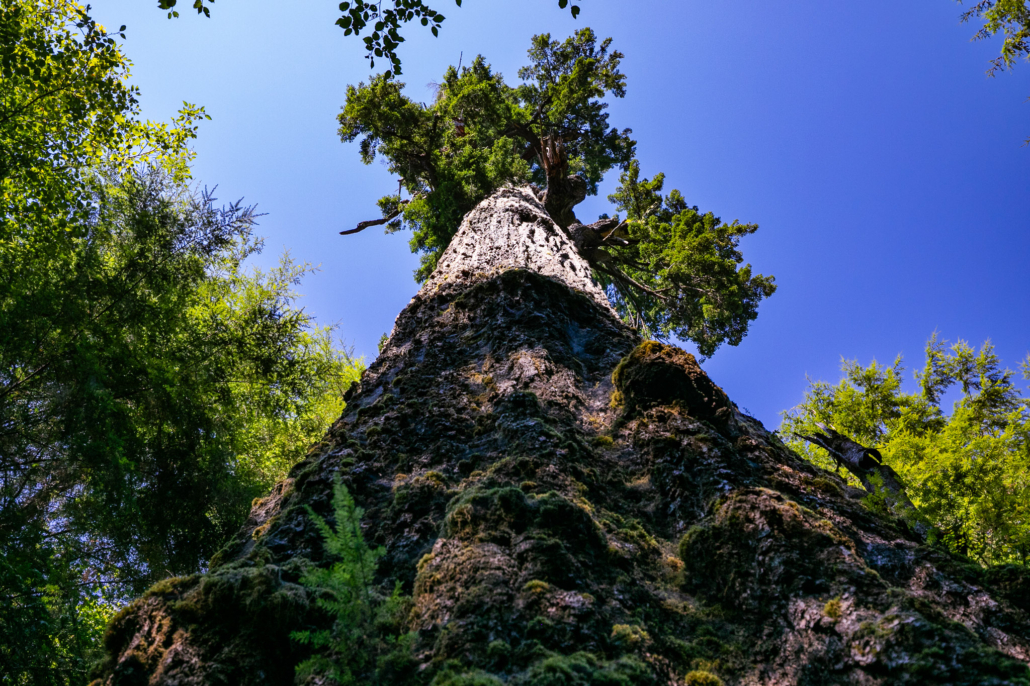
The Port Renfrew area is also known for Canada’s largest living trees, including a 70-metre tall Douglas fir named “Big Lonely Doug” by environmentalists because it was the only tree left standing after a logging clear cut.

The B.C. government is taking steps to protect forests, including the Great Bear Rainforest protection agreement. It will protect 85 per cent of the world’s largest intact temperate rainforest from logging in an area on the central and northern coast of the province.

There are 1,000-year-old western red cedars and 90-metre tall Sitka spruce trees in the rainforest, which is also home to the white kermode bear.

Environmentalists, forest companies and First Nations cheered the deal as a model of compromise after two decades of protests and difficult negotiations.

The environmental applause continued with a new provincial park east of Prince George that’s the world’s only inland temperate rainforest. Cedar and hemlock trees were slated for logging, but local citizens, First Nations and academics built a series of trails into the area known as the Ancient Forest where thousands now marvel at trees with trunks measuring 16 metres in circumference.

Rick Jeffery, president of Coast Forest Products Association, said 55 per cent of B.C.’s coastal forests are under some form of protection from logging.

The days of leaving one tree in a clear cut are gone, said Jeffery, whose organization represents major forest companies that employ 38,000 forest workers in the province.

“This isn’t a jobs versus environment thing,” he said. “We can have both if we do this smartly.”

Steve Thomson, B.C.’s forests, lands and natural resource operations minister, said the Great Bear and Ancient Forest agreements highlight the government’s commitment to protecting old-growth forests.

“It’s about protecting important values and making sure we have that balance that continues to provide jobs and employment in the forest sector.”

The Ancient Forest is considered a natural wonder, a temperate rainforest inland, hundreds of kilometres away from similar coastal rainforests. The province said it would work with the federal government to declare the forest a UNESCO world heritage site.

“Scientifically, the trees are pretty amazing,” said Darwyn Coxson, a plant ecologist at the University of Northern British Columbia. “They really shouldn’t be there.”

Coxson said because the trees take 1,000 years to grow, it’s prudent to focus on what is in the forests now.

“We have a finite supply and the ones that are out there are realistically all you are ever going to have.”

B.C.’s old-growth forests by the numbers

— British Columbia’s old-growth forests boast huge trees that are more than 1,000 years old, but many fear their days are numbered. Here are some numbers on the trees:

— The government says there are 55 million hectares of forests in B.C.

— Twenty-five million hectares are old-growth forests.

— Four million hectares of old-growth hectares are fully protected from logging.

— The Red Creek fir near Port Renfrew on Vancouver Island is listed as the world’s largest Douglas fir tree at 73.8 metres tall and its trunk has a diameter of 4.2 metres.

— The Cheewaht Lake cedar in Pacific Rim National Park on the southwest edge of Vancouver Island has a circumference of 18.34 metres. It is estimated to be between 2,000 and 2,500 years old.

Read more: https://vancouversun.com/news/local-news/some-say-the-fate-of-british-columbias-old-growth-forests-rests-in-the-balance

https://staging.ancientforestalliance.org/wp-content/uploads/2018/08/VanSun_Andy_OG_large.jpg 600 800 TJ Watt https://staging.ancientforestalliance.org/wp-content/uploads/2014/10/cropped-AFA-Logo-1000px.png TJ Watt2016-06-05 00:00:002023-04-06 19:07:49Some say the fate of British Columbia’s old-growth forests rests in the balance

Vancouver Island growing away from old growth logging?

Jun 5 2016/in News Coverage

Here’s a very insightful article about the shift underway in the economy and attitudes among the business community and in rural communities (spearheaded by the efforts of the Port Renfrew Chamber of Commerce and the Ancient Forest Alliance, with a growing chorus of voices gathering steam, including the BC Chamber of Commerce and the AVICC) towards favouring increased protection of old-growth forests – in part to support a more sustainable economy! This is worth sharing!
Again take note that the BC government and logging industry’s stats on how much old-growth remains and is protected are deliberately misleading by including stunted non-commercial bogs and subalpine stands on steep rocky mountainsides with the productive stands with big trees targeted by the logging industry, and by combining the northern rainforest (the Great Bear Rainforest) where huge progress in protection levels has occurred as a result of environmental boycotts of logging companies (followed by 15 years of negotiations) along with the southern rainforest (Vancouver Island and the southwest mainland) where protection levels are very minor, old-growth forests have been much more heavily logged, and the forests are different (ie. different biodiversity, ecosystems, and generally much larger, grander ancient trees), ie. the northern and southern coasts are two very different regions and should not be confused and mixed together, unless your goal is to mislead people…

*********

It stands at a little more than 70 metres high, 14 metres taller than the Leaning Tower of Pisa.

Experts believe it may have been around even longer than the world-famous Italian landmark, which began to take shape nearly 850 years ago.

Big Lonely Doug looms over a clearcut hillside in the Gordon River Valley, surrounded by stumps and scrub brush, maybe 15 kilometres northwest of Port Renfrew.

The second-biggest tree in Canada, this massive Douglas fir is, for some, a a stark reminder of the glory days of Vancouver Island logging, when massive old-growth timber fed myriad sawmills, sparking a booming industry that made towns like Port Alberni and Lake Cowichan rich.

But in the wake of a media blitz in 2014, Doug has found itself with something else in common with the Leaning Tower: it has become a destination.

And with that, it has also become a symbol of a dramatic shift in Island thinking.

Citing the power of old growth trees as a tourism resource, Vancouver Island communities voted in April to seek a total ban on old growth harvesting on the Island’s Crown land.

And they received support this week from a surprising source: the B.C. Chamber of Commerce, which voted to support the same principle across the province in instances where old growth trees “have or can likely have a greater net economic value for communities if they are left standing.”

The Renfrew Tall Trees Experience

Dan Hager runs a Port Renfrew cottage rental business called Handsome Dan’s Accommodations. He is the president of the community’s chamber of commerce and the one who successfully pitched the old growth resolution to the B.C. chamber.

While he lauds old growth for its environmental benefits, he said the main motivations for the chamber motion were dollars and sense.

“It just boils down to basic math. This is not a comment about logging. It’s about economics and marketing,” he said. “Port Renfrew now has a product people can’t get anywhere else.”

In 2012 the Victoria-based environmental watchdog group the Ancient Forest Alliance successfully lobbied to protect an extraordinary grouping of trees near Port Renfrew it dubbed Avatar Grove.

In the months that followed, increasing numbers of visitors began to pour into the community. Hager said the community didn’t do any scientific studies as to why, but conversations and guestbook entries made it obvious: prompted by media reports, they were there to see the majestic trees.

He told the B.C. chamber that since that summer, accommodation providers in Port Renfrew have reported demand for accommodations has increased 75% to 100% annually. And he said the visitor streams continue outside the summer fishing season — typically the only time visitors had previously been coming.

Entirely by accident, the environmental movement had given the 300-resident town an unexpected economic boom.

“Thanks to the trees, Port Renfrew is no longer a one-industry tourism town and has been able to successfully brand itself the Tall Tree Capital of Canada,” he said. “They created Avatar and we benefitted from it.”

Hager said he no trouble convincing the business community this is an opportunity other B.C. regions can and should be taking advantage of. He relayed his message through the following example.

“In 2012 a kayaking company in Discovery Islands did an illuminating economic analysis. It calculated the economic value of 60 hectares of timber scheduled to be logged above and around the kayaking base camp across from the world-famous Robson Bight.

“It was determined that the value of the 60 hectares of timber was worth about $3.6 million. Since the regeneration cycle meant the area could be cut only once every 60 years, the yearly economic value of the timber was $60,000.

“The economic value to the kayaking company, however, was $416,000 per year, or $24.96 million for the same 60-year period. In stark contrast to the approximately 300 person-days employment from logging the 60 hectares just once, the kayaking company provided 20,160 person-days of employment during the 60-year cycle.

“And this simple economic analysis didn’t include the employment and earnings for the 40 other ecotourism businesses using the same area.”

He said it is the government’s role to do what’s best for communities and increasingly that means letting trees stand.

“In Port Renfrew there are maybe a a half-dozen people that gain their living from forestry. A lot more than that get it from tourism.”

Concerned Industry Warns Of Crisis

Hager wants to make it clear: the B.C. chamber did not endorse an old-growth logging ban, what it endorsed was protection for those old growth stands that generate more economic benefits for communities if they are left standing.

But the Association of Vancouver Island and Coastal Communities went a step beyond that in April when members voted to ask the provincial government to amend the Vancouver Island Land Use Plan to protect all of Vancouver Island’s remaining old growth forest on provincial Crown land.

According to David Elstone, executive director of Truck Loggers Association, a ban on old growth logging would devastate the industry.

Elstone was caught off guard by both motions and unclear why there has been a shift in thinking from organizations that have traditionally been in the industry’s corner.

“In general, I am concerned about the tone and the concept. Don’t know if all the facts are being drawn forward,” Elstone said. “I don’t want to fall back on being alarmist, but if you suddenly turn that off there doesn’t take much imagination to see the impact.”

Rick Jeffery, president and CEO of Coast Forest Products Association, agreed and was concerned both the AVICC and the B.C. chamber may have made decisions in absence of all the facts.

“I have no idea on what basis they are making these claims. I just don’t,” he said. “I was surprised they didn’t ask us.

“Our take-home message is that we have to sit down and talk. We will bring facts and figures.”

One message Jeffery wants to get across is that forestry and conservation already co-exist in local forests. Another is that 55 per cent of the old growth on the B.C. coast is already protected, something he says will increase over time due to conservation practices in the unprotected areas.

“Old growth is going to be here forever,” he said. “People don’t understand that.”

Elstone said 45 per cent of the coastal harvest comes from old growth trees. Forestry accounts for 38,000 direct jobs on the Island and the neighbouring coast, and 61,000 across the province.

Would a ban old growth harvesting mean a loss of 45% of the jobs?

“You’d probably lose a lot more than that,” he said.

Jeffery said certain mills are only set up to process old growth and the industry as a whole depends on economies of scale it would not be able to sustain, leading clients to look elsewhere.

“You would have an average allowable cut drop,” he said. “It would put a lot of mills out of business and put pulp mills in jeopardy.”

According to Elstone, the word “crisis” would not be an overstatement.

“It’s a vital part of our history and always will be an integral part of the success of our communities,” he said. “There are still a hell of a lot of communities that rely on forestry. We need to protect our working forests or else there will be significant impact.”

To help determine the degree of that impact, Black Press contacted Susan Mowbray, senior economist with MNP and author 2015’s State of the Island Economic Report.

Her answer is that it is impossible to tell when the economic benefits of an old growth logging halt would exceed those of continued harvesting without further study. One can’t simply subtract the loss of those logs without considering the spin-off effects.

“If, all of sudden, you can’t harvest the old growth (in a certain location), it may not make sense to harvest the low value timber there either,” she said.

She added the lack of consideration of such variables makes her very skeptical that the Discovery Islands kayaking case presented by Hager to the BC chamber painted a realistic picture. For example, every forestry job creates 1.5 other jobs. Tourism jobs don’t have the same impact.

“There are some jobs that get substituted. The difference is forestry jobs are higher-paying,” Mowbray said. “There needs to be a better understanding of what it means. In some communities forestry is all there is.

“More analysis has to be done before I can unequivocally say.”

A shifting community mindset?

A possible test case for such an analysis could be Tofino, the poster child for replacing a resource-based economy with eco-tourism. Mowbray said she has yet to crunch those numbers.

Anecdotally, Tofino Mayor Josie Osborne said embracing and protecting the rainforest certainly seems to working there.

A lifelong Island resident, she agreed the mindset of Island residents has definitely been shifting.

“Yes, I really think it is. Global tourism is on the rise, the role of primary resource extraction has changed.”

While councillors from communities like Port Hardy and Port Alberni spoke out against the AVICC motion — presented by Metchosin — as being too broad, or too damaging to the north Island, she said a majority embraced it as necessary in shaping the direction of the Island’s future.

“I think that 10 or 15 years ago it would have been more contentious,” she said. “When things become rare, we value them more. Frankly it’s something I’ve come to expect from Vancouver Island. There has been much more thinking like an Island, realizing that we are all in this together.”

Port Hardy councillor Fred Robertson believes part of that should also be a recognition that well-managed forests are crucial to a healthy north Island. While he respects the opinions expressed by his neighbours further south, he thinks they have to consider that old growth logging may still have a net benefit in some parts of the Island.

“In my mind it doesn’t have to be an either-or,” he said. “It’s important to understand all perspectives. There is an economic and social impact in communities like ours.”

”You can have working forests and still attract people to a pretty spectacular part of the world.”

Elstone said that as the industry has shrunk residents of some communities may have lost their perspective on its overall importance.

“There has probably been a migration from urban centres into our smaller communities,” he said.

James Byrne, regional managing partner with MNP and another lifelong Island resident, said some may have lost sight of how valuable logging is in communities like Campbell River, Port Hardy and Woss and how the harvest feeds businesses further south.

“Don’t estimate the importance of old growth. Logging is not what it used to be, but it still has a significant impact up and down the Island,” he said.

Sierra Club campaigner Jens Wieting doesn’t dispute that, only its relative significance.

“Logging no longer has the same economic importance,” he said. “We have two trends: there are fewer benefits from logging and increasing benefits of keeping trees standing.”

Wieting echoed Osborne in saying old growth preservation has worth beyond the economy: water conservation, clean air and the spiritual satisfaction of preserving an ecology found nowhere else in the world are values more Vancouver Islanders have embraced.

He said despite the fact 15 per cent of the Island’s forests are protected, only three per cent of its biggest, most iconic trees are safe from harvesting.

“People are still looking for places where they can find intact nature,” he said. “When are we going to make the transition? The time to make the shift on Vancouver Island is overdue.”

Wieting was instrumental in the push that led to protection of 85 per cent of the Great Bear Rainforest. The preservation of Vancouver Island’s remaining old growth forests is the environmental movement’s next big target.

Getting a majority of Island communities, as well as the provincial business community on side is a big step.

“This is indeed huge. It is a reflection of the shifting landscape,” he said. “I feel very privileged to live in this part of the world. It is really something you can’t find anymore anywhere.”

[Original BC Local News article no longer available]

https://staging.ancientforestalliance.org/wp-content/uploads/2018/08/LocalNews_BLG_large.jpg 800 533 TJ Watt https://staging.ancientforestalliance.org/wp-content/uploads/2014/10/cropped-AFA-Logo-1000px.png TJ Watt2016-06-05 00:00:002024-06-12 18:57:12Vancouver Island growing away from old growth logging?
Ancient Forest Alliance

The Economics of Protecting Old-Growth Forest: An Analysis of Spotted Owl Habitat in the Fraser Timber Supply Area of British Columbia

Jun 4 2016/in Announcements

A 2008 study from SFU showed that old-growth forests in the southwestern mainland of BC are more valuable if left standing than if logged, based on their value for tourism, recreation, carbon, and non-timber forest products. Vancouver Island has even more old-growth forest tourism and carbon rich forests than the Fraser Timber Supply Area on the mainland where the study focused, and it's likely that any such economic analysis would show even stronger results for the economic case to protect our old-growth forests on the Island. See the study: https://davidsuzuki.org/publications/reports/2008/the-economics-of-protecting-old-growth-forest-an-analysis-of-spotted-owl-habitat/ And see the full resolution of the BC Chamber of Commerce calling for expanded protection of old-growth forests here:
https://staging.ancientforestalliance.org/news-item.php?ID=1009

********

This document is a detailed economic study of forests inhabited by the endangered spotted owl. The study, led by Duncan Knowler, an associate professor at Simon Fraser University's School of Resource and Environmental Management, looks at the economics of protecting old-growth forests inhabited or known to have been home to the spotted owl, one of the most endangered forest-dwelling bird species on the North American continent.

The goal of this study was to take a first step towards a rigorous examination of the main land use options for coastal old growth forest with the intent of determining which one is optimal for society. Its authors do not estimate the value of all costs and benefits associated with the different land use options; instead, they focus on estimating the forest values related to timber, non-timber forest products, recreation and carbon sequestration/storage. They do not attempt to estimate other ecosystem services such as watersheds, nutrient cycling, and control of soil erosion. The report assesses the opportunity costs of preservation of old growth forests with adjustment for these selected potential benefits from preservation. As such, the study is concerned with spotted owl conservation but not exclusively so. The study considers a specific forest area, the Fraser Timber Supply Area (TSA), which is located in southwestern British Columbia to the east and northeast of Vancouver.

The results suggest that under a broad range of parameter assumptions there would be a net benefit rather than an opportunity cost associated with increased preservation of old growth forests. In other words, the benefits of preservation in terms of increased recreational opportunities, non-timber forest products, and carbon sequestration and storage outweigh the costs in terms of lost producer surplus from timber harvesting.

A short summary of this report, Dollars and Sense: The Economic Rationale to Protect Spotted Owl Habitat in BC, is also available.

See here to download PDF of report

https://staging.ancientforestalliance.org/wp-content/uploads/2014/10/cropped-AFA-Logo-1000px.png 0 0 TJ Watt https://staging.ancientforestalliance.org/wp-content/uploads/2014/10/cropped-AFA-Logo-1000px.png TJ Watt2016-06-04 00:00:002023-04-06 19:07:49The Economics of Protecting Old-Growth Forest: An Analysis of Spotted Owl Habitat in the Fraser Timber Supply Area of British Columbia
Page 220 of 529«‹218219220221222›»

Pages

  • ACTION ALERT: Tell the NDP government FRPA amendments must protect old-growth forests
  • AFA Policy Recommendations – 2025
  • Ancient Forests
  • BC Protected Areas Strategy (PAS)
  • Before & After Logging – Caycuse Watershed
  • Before and After Logging Caycuse 2022
  • Biggest Trees
  • BLOG ARCHIVE TEMPLATE
  • Brave testing
  • Bugaboo Ridge Ancient Forest
  • Call Premier Horgan to demand funding for old-growth protection in Budget 2022
  • Call the BC government
  • Cameron Firebreak
  • Canada’s Most Impressive Tree – Flores Island
  • Cast Your Vote for Ancient Forest Protection!
  • Caycuse Logging From Above
  • Central Walbran Valley
  • Climbing the Largest Spruce in Carmanah
  • Conservation Financing
  • Contact
  • Donate Stocks, Securities, and Mutual Funds
  • Echo Lake
  • Economic Valuation of Old-Growth Forests on Vancouver Island
  • Ecosystem-Based Targets
  • Edinburgh Mountain Ancient Forest
  • Eldred River Valley
  • Exploring & Climbing Ancient Giants
  • Fairy Creek Headwaters
  • Granite Creek Logging
  • Grove of Giant Cedars Clearcut in Quatsino Sound
  • Have your say on the BC government’s Old-Growth Strategy
  • Hiking Guides
  • Hiking Guides (copy)
  • Home
  • Join the Growing Number of BC Businesses Calling for Old-Growth Forest Protection
  • Juniper Ridge
  • Kanaka Bar Indigenous Protected and Conserved Area
  • Kanaka Bar IPCA Proposal
  • Katlum Creek
  • Katlum Creek
  • Klaskish Inlet
  • Loup Creek
  • Lower Caycuse River
  • Mahatta River Logging
  • Massive Trees Cut Down
  • McKelvie Valley
  • McLaughlin Ridge
  • Mossy Maple Rainforest
  • Mount Horne
  • Mt. Freda Ancient Forests
  • Nahmint Logging 2024
  • Nahmint Valley
  • Nahmint Valley
  • Old Growth Strategic Review Questionnaire Guide
  • Old-Growth 101 – The Facts on Ancient Forests in BC
  • Old-Growth Campaigns
  • Old-Growth Forest Hikes Near Port Renfrew
  • Old-Growth Forest Hikes Near Victoria BC
  • Our Mission & Team
  • Our Work
  • Petition
  • Photographer TJ Watt
  • Photos & Media
  • Policy recommendations to support sustainable, value-added, second-growth forestry jobs in BC
  • Pop for Parks Report
  • Privacy Policy
  • Protect Old-Growth Forests & Endangered Ecosystems in BC
  • Provincial Biodiversity and Ecosystem Health Framework
  • Provincial Land Acquisition Fund
  • Quatsino Old-Growth Under Threat 2023
  • Recent News
  • Salmon Parks Initiative
  • Send a Message
  • Send a Message
  • Send a Message
  • Spruce Bay Old Growth Trail – Port Alice
  • Sydney River Valley
  • Taylor River Valley
  • Thank you for speaking up for ancient forests!
  • Thank you for speaking up for BC’s last remaining ancient forests!
  • Thank you for speaking up for BC’s last remaining ancient forests!
  • Thank you for speaking up for endangered ecosystems!
  • Thank You for Speaking Up for Old-Growth Forests!
  • Thank you for taking action for ancient forests, your call will begin shortly!
  • Thank you for taking action for old-growth
  • Thank you for taking action for old-growth
  • Vernon Bay
  • Videos
  • Walbran Headwaters At Risk
  • Ways to Take Action
  • White River Provincial Park
  • Work With Us
  • Yakoun Lake Old-Growth
  • Yakoun River Old-Growth Forests
  • z__Archive Footer – DO NOT EDIT
  • z__Pre-Footer – DO NOT EDIT
  • z__Single Post Footer – DO NOT EDIT
  • z__Take Action row – DO NOT EDIT
  • z_Send a Message – Call for Ecosystem Based Targets
  • Activity Reports
  • Ancient Forest / Chun T’oh Whudujut Provincial Park
  • Before & After Old-Growth Maps
  • 2018 Activity Report & Financials
  • History & Successes
  • Old-Growth Forests in BC: Frequently Asked Questions
  • Parthenon Grove
  • 2017 Activity Report & Financials
  • Directions to Avatar Grove
  • Upper Tsitika Valley
  • 2016 Activity Report & Financials
  • Avatar Boardwalk
  • Building Alliances
  • 2015 Activity Report & Financials
  • Avatar Grove
  • Myths & Facts
  • Big Lonely Doug and Clearcut
  • Policy Recommendations
  • Biggest Stumps
  • Port Renfrew Big Trees Map
  • Publications
  • Cameron Valley Firebreak
  • Research & Reports
  • Carmanah Research Climb
  • Castle Grove
  • Cathedral Grove Canyon
  • Central Walbran Ancient Forest
  • Children’s Forest
  • Day Road Forest
  • East Creek Rainforest
  • Echo Lake
  • Eden Grove
  • Flores Island
  • Hadikin Lake
  • Haida Gwaii
  • Jurassic Grove
  • Klanawa Valley
  • Koksilah
  • Low Productivity Old-Growth
  • McKelvie Valley
  • McLaughlin Ridge
  • Meares Island
  • Mossome Grove
  • Mossome Grove Tree Climb
  • Mossy Maple Gallery
  • Mossy Maple Grove
  • Mount Horne
  • Mt. Elphinstone Proposed Park Expansion
  • Nootka Island
  • Roberts Creek Headwaters
  • Squirrel Cove Ancient Forest
  • Stillwater Bluffs
  • Tahsis: Endangered Old-Growth Above Town
  • Tree Climb 2014
  • Tree Climb 2016
  • Walbran Logging
  • Walbran Overview

Categories

  • Announcements
  • Creature Feature
  • Educational
  • Employment
  • Events
  • Media Release
  • News Coverage
  • Notes From The Field
  • Photo Gallery
  • Take Action
  • Thank You
  • Video

Archive

  • December 2025
  • November 2025
  • October 2025
  • September 2025
  • August 2025
  • July 2025
  • June 2025
  • May 2025
  • April 2025
  • March 2025
  • February 2025
  • January 2025
  • December 2024
  • November 2024
  • October 2024
  • September 2024
  • August 2024
  • July 2024
  • June 2024
  • May 2024
  • April 2024
  • March 2024
  • February 2024
  • January 2024
  • December 2023
  • November 2023
  • October 2023
  • September 2023
  • August 2023
  • July 2023
  • June 2023
  • May 2023
  • April 2023
  • March 2023
  • February 2023
  • January 2023
  • December 2022
  • November 2022
  • October 2022
  • September 2022
  • August 2022
  • July 2022
  • June 2022
  • May 2022
  • April 2022
  • March 2022
  • February 2022
  • January 2022
  • December 2021
  • November 2021
  • October 2021
  • September 2021
  • August 2021
  • July 2021
  • June 2021
  • May 2021
  • April 2021
  • March 2021
  • February 2021
  • January 2021
  • December 2020
  • November 2020
  • October 2020
  • September 2020
  • August 2020
  • July 2020
  • June 2020
  • May 2020
  • April 2020
  • March 2020
  • February 2020
  • January 2020
  • December 2019
  • November 2019
  • October 2019
  • September 2019
  • August 2019
  • July 2019
  • June 2019
  • May 2019
  • April 2019
  • March 2019
  • February 2019
  • January 2019
  • December 2018
  • November 2018
  • October 2018
  • September 2018
  • August 2018
  • July 2018
  • June 2018
  • May 2018
  • February 2018
  • January 2018
  • December 2017
  • November 2017
  • October 2017
  • September 2017
  • August 2017
  • July 2017
  • May 2017
  • April 2017
  • March 2017
  • February 2017
  • December 2016
  • November 2016
  • October 2016
  • September 2016
  • August 2016
  • July 2016
  • June 2016
  • May 2016
  • April 2016
  • March 2016
  • February 2016
  • January 2016
  • December 2015
  • November 2015
  • October 2015
  • September 2015
  • August 2015
  • July 2015
  • June 2015
  • May 2015
  • April 2015
  • March 2015
  • February 2015
  • January 2015
  • December 2014
  • November 2014
  • October 2014
  • September 2014
  • August 2014
  • July 2014
  • June 2014
  • May 2014
  • April 2014
  • March 2014
  • February 2014
  • January 2014
  • December 2013
  • November 2013
  • October 2013
  • September 2013
  • August 2013
  • July 2013
  • June 2013
  • May 2013
  • April 2013
  • March 2013
  • February 2013
  • January 2013
  • December 2012
  • November 2012
  • October 2012
  • September 2012
  • August 2012
  • July 2012
  • June 2012
  • May 2012
  • April 2012
  • March 2012
  • February 2012
  • January 2012
  • December 2011
  • November 2011
  • October 2011
  • September 2011
  • August 2011
  • July 2011
  • June 2011
  • May 2011
  • April 2011
  • March 2011
  • February 2011
  • January 2011
  • December 2010
  • November 2010
  • October 2010
  • September 2010
  • August 2010
  • July 2010
  • June 2010
  • May 2010
  • April 2010
  • March 2010
  • February 2010
  • January 2010

Related Posts

Announcements

Help AFA raise $250,000 by December 31st – we’re over halfway there!

Dec 15 2025
Support the protection of old-growth forests in BC through Indigenous-led conservation, science, and public action. Donate to help safeguard ancient forests.
Read more
Announcements
Read More >
https://staging.ancientforestalliance.org/wp-content/uploads/2025/12/yakoun-river-old-growth-spruce-grove-662.jpg 1366 2048 TJ Watt https://staging.ancientforestalliance.org/wp-content/uploads/2014/10/cropped-AFA-Logo-1000px.png TJ Watt2025-12-15 15:20:282025-12-15 17:55:17Help AFA raise $250,000 by December 31st – we’re over halfway there!
An aerial of a BCTS cutblock in the Nahmint Valley
News Coverage

Chek News: Document reveals approval to harvest remnant old-growth in B.C.’s northwest

Dec 8 2025
BC Timber Sales has ended a policy protecting remnant old-growth in northwest B.C., citing First Nations’ positions, sparking concerns from ecologists and residents.
Read more
News Coverage
Read More >
https://staging.ancientforestalliance.org/wp-content/uploads/2025/12/namhint-valley-logging-bcts-2024-29.jpg 1365 2048 TJ Watt https://staging.ancientforestalliance.org/wp-content/uploads/2014/10/cropped-AFA-Logo-1000px.png TJ Watt2025-12-08 13:49:362025-12-08 13:49:36Chek News: Document reveals approval to harvest remnant old-growth in B.C.’s northwest
Announcements

Thank You to Our Silent Auction business Donors!

Dec 8 2025
Thank you to these local businesses for generously donating items and experiences to our first-ever online Silent Auction!
Read more
Announcements
Read More >
https://staging.ancientforestalliance.org/wp-content/uploads/2025/10/Artlish-River-Spruce-Issy.jpg 1366 2048 TJ Watt https://staging.ancientforestalliance.org/wp-content/uploads/2014/10/cropped-AFA-Logo-1000px.png TJ Watt2025-12-08 13:17:322025-12-08 13:50:51Thank You to Our Silent Auction business Donors!
Ancient Forest Alliance photographer and campaign director TJ Watt stands beside the fallen remains of an ancient western redcedar approximately 9 feet (3 metres) wide, cut down by BC Timber Sales in the Nahmint Valley near Port Alberni in Hupačasath, Tseshaht, and Yuułuʔiłʔatḥ First Nation territory. (2024)
Announcements

Statement on the Provincial Forest Advisory Council’s Interim Report – AFA & EEA

Nov 21 2025
The Provincial Forest Advisory Council’s (PFAC) interim report falls short of addressing the root causes of BC’s forestry crisis or outlining the bold, decisive actions needed to reverse it, warn the Ancient Forest Alliance (AFA) and Endangered Ecosystem Alliance (EEA).
Read more
Announcements
Read More >
https://staging.ancientforestalliance.org/wp-content/uploads/2025/09/3-Giant-Cedar-Log-Nahmint-Valley.jpg 1365 2048 TJ Watt https://staging.ancientforestalliance.org/wp-content/uploads/2014/10/cropped-AFA-Logo-1000px.png TJ Watt2025-11-21 10:13:452025-11-21 10:15:43Statement on the Provincial Forest Advisory Council’s Interim Report – AFA & EEA
See All Posts

Take Action

 Donate

Support the Ancient Forest Alliance with a one-time or monthly donation.
How to Give

 Send a Message

Send an instant message to key provincial decision-makers.
Take Action

Get in Touch

Phone

(250) 896-4007 (Mon-Fri 9am-5pm)

Address

205-620 View Street
Victoria, B.C. V8W 1J6

Privacy Policy

  • Link to Facebook
  • Link to Instagram
  • Link to Youtube
  • Link to TikTok
  • Link to Bluesky
  • Link to Reddit

Resources

  • Recent News
  • Old-Growth 101
  • Photos & Media
  • Videos
  • Hiking Guides
  • Research & Reports

Who We Are

  • Our Mission & Team
  • History & Successes
  • Activity Reports
  • Contact
Ancient Forest Alliance

The Ancient Forest Alliance (AFA) is a registered charitable organization working to protect BC’s endangered old-growth forests and to ensure a sustainable, value-added, second-growth forest industry.

AFA’s office is located on the territories of the Lekwungen Peoples, also known as the Songhees and Esquimalt Nations.
Copyright © 2026 Ancient Forest Alliance • All Rights Reserved
Earth-Friendly Web Design by Fairwind Creative
Scroll to top
Ancient Forest AllianceLogo Header Menu
  • Home
  • About Us
    • Our Mission & Team
    • History & Successes
    • Work With Us
    • Contact Us
  • Our Work
    • Our Work
    • Activity Reports
    • Building Alliances
    • Campaigns
  • Ancient Forests
    • Hiking Guides
    • Old-Growth 101
    • Old-Growth Forests in BC: FAQs
    • Before & After Old-Growth Maps
    • Myths & Facts
    • Directions to Avatar Grove
    • Port Renfrew Big Trees Map
  • Recent News
    • Recent News
    • Research & Reports
    • Media Releases
    • Publications
    • Educational
  • Photos & Media
    • Map of Gallery Regions
    • Themes
      • Biggest Trees
      • Biggest Stumps
      • Low Productivity Old-Growth
    • Videos
    • Inland Rainforest
      • Ancient Forest/ Chun T’oh Whudujut Provincial Park
      • Parthenon Grove
    • Mainland
      • Echo Lake
      • Kanaka Bar IPCA Proposal
    • Haida Gwaii
      • Yakoun River Old-Growth
    • Sunshine Coast
      • Day Road Forest
      • Mt. Elphinstone Proposed Park Expansion
      • Roberts Creek Headwaters
      • Stillwater Bluffs
    • Sunshine Coast: Powell River
      • Eldred River Valley
      • Mt. Freda Ancient Forests
    • Vancouver Island South
      • Climbing the Largest Spruce in Carmanah
      • Carmanah Research Climb
      • Klanawa Valley
      • Koksilah
    • VI South: Caycuse Watershed
      • Before & After Logging – Caycuse Watershed
      • Before and After Logging Caycuse 2022
      • Caycuse Logging From Above
      • Lower Caycuse River
      • Massive Trees Cut Down
    • VI South: Mossy Maples
      • Mossy Maple Gallery
      • Mossy Maple Grove
    • VI South: Port Renfrew
      • Avatar Boardwalk
      • Avatar Grove
      • Big Lonely Doug and Clearcut
      • Bugaboo Ridge Ancient Forest
      • Eden Grove
      • Exploring & Climbing Ancient Giants
      • Fairy Creek Headwaters
      • Granite Creek Logging
      • Jurassic Grove
      • Loup Creek
      • Mossome Grove
      • Mossome Grove Tree Climb
    • VI South: Port Alberni
      • Cameron Valley Firebreak
      • Cathedral Grove Canyon
      • Juniper Ridge
      • Katlum Creek
      • Nahmint Valley
      • Nahmint Logging 2024
      • McLaughlin Ridge
      • Mount Horne
      • Taylor River Valley
    • VI South: Walbran Valley
      • Castle Grove
      • Central Walbran Ancient Forest
      • Hadikin Lake
      • Walbran Headwaters At Risk
      • Walbran Overview
      • Walbran Logging
    • Vancouver Island Central
      • Barkley Sound: Vernon Bay
      • Nootka Island
    • VI Central: Clayoquot Sound
      • Canada’s Most Impressive Tree – Flores Island
      • Flores Island
      • Meares Island
      • Sydney River Valley
    • VI Central: Cortes Island
      • Children’s Forest
      • Squirrel Cove Ancient Forest
    • VI Central: Tahsis
      • McKelvie Valley
      • Tahsis: Endangered Old-Growth Above Town
    • Vancouver Island North
      • East Creek Rainforest
      • Klaskish Inlet
      • Mahatta River Logging
      • Quatsino
      • Spruce Bay
      • Tsitika Valley
      • White River Provincial Park
  • Take Action
    • Send a Message
    • Sign Petition
    • Sign a Resolution
  • Store
  • Donate