Help AFA raise $250,000 by December 31st – we’re over halfway there!
Support the protection of old-growth forests in BC through Indigenous-led conservation, science, and public action. Donate to help safeguard ancient forests.
https://staging.ancientforestalliance.org/wp-content/uploads/2025/12/yakoun-river-old-growth-spruce-grove-662.jpg
1366
2048
TJ Watt
https://staging.ancientforestalliance.org/wp-content/uploads/2014/10/cropped-AFA-Logo-1000px.png
TJ Watt2025-12-15 15:20:282025-12-15 17:55:17Help AFA raise $250,000 by December 31st – we’re over halfway there!
Chek News: Document reveals approval to harvest remnant old-growth in B.C.’s northwest
BC Timber Sales has ended a policy protecting remnant old-growth in northwest B.C., citing First Nations’ positions, sparking concerns from ecologists and residents.
https://staging.ancientforestalliance.org/wp-content/uploads/2025/12/namhint-valley-logging-bcts-2024-29.jpg
1365
2048
TJ Watt
https://staging.ancientforestalliance.org/wp-content/uploads/2014/10/cropped-AFA-Logo-1000px.png
TJ Watt2025-12-08 13:49:362025-12-08 13:49:36Chek News: Document reveals approval to harvest remnant old-growth in B.C.’s northwest
Thank You to Our Silent Auction business Donors!
Thank you to these local businesses for generously donating items and experiences to our first-ever online Silent Auction!
https://staging.ancientforestalliance.org/wp-content/uploads/2025/10/Artlish-River-Spruce-Issy.jpg
1366
2048
TJ Watt
https://staging.ancientforestalliance.org/wp-content/uploads/2014/10/cropped-AFA-Logo-1000px.png
TJ Watt2025-12-08 13:17:322025-12-08 13:50:51Thank You to Our Silent Auction business Donors!
Statement on the Provincial Forest Advisory Council’s Interim Report – AFA & EEA
The Provincial Forest Advisory Council’s (PFAC) interim report falls short of addressing the root causes of BC’s forestry crisis or outlining the bold, decisive actions needed to reverse it, warn the Ancient Forest Alliance (AFA) and Endangered Ecosystem Alliance (EEA).
https://staging.ancientforestalliance.org/wp-content/uploads/2025/09/3-Giant-Cedar-Log-Nahmint-Valley.jpg
1365
2048
TJ Watt
https://staging.ancientforestalliance.org/wp-content/uploads/2014/10/cropped-AFA-Logo-1000px.png
TJ Watt2025-11-21 10:13:452025-11-21 10:15:43Statement on the Provincial Forest Advisory Council’s Interim Report – AFA & EEA
Ahousaht First Nation applauded for logging ban
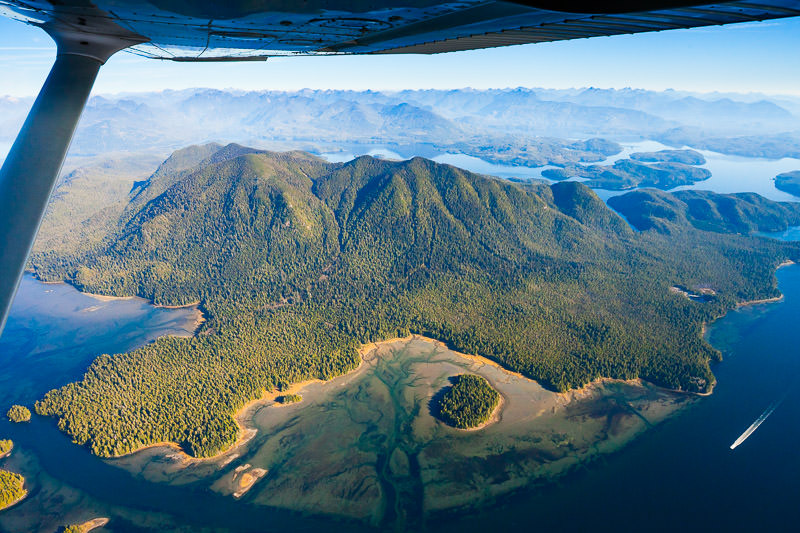
/in News CoverageThe remote Ahousaht First Nation, near Tofino, has more old growth forests in its traditional territory than any other First Nation on the BC South Coast.
Ahousaht Band leaders have decided it needs to be protected and they took steps to do just that this week to preserve those forests for the future.
Under the first phase of the plan, there will no mining or industrial logging allowed in Ahoushat traditional territory.
About 80 per cent of the territory , that’s more than 170,000 hectares, will be set aside as cultural and natural areas.
The goal is to conserve natural landscapes and biological diversity.
The Ancient Forest Alliance says it’s the largest leap in old-growth conservation in the last two decades on Vancouver Island.
The Nature Conservancy is calling it a blueprint for a sustainable future.
Environmentalists say only about 20 per cent of old-growth forests are still standing on Vancouver Island.
[Original article and video no longer available]
This First Nation Just Banned Industrial Logging and Mining from Vancouver Island Territory
/in News CoverageConnection to the land and ocean has guided the Ahousaht people throughout their history and that bond is now at the root of a new sustainable economic development plan for the First Nation whose territory spans the heart of the Clayoquot Sound UNESCO Biosphere Reserve.
Under the first phase of the plan, announced Thursday, there will be no mining or industrial logging in Ahousaht traditional territory and about Tweet: 80% of 171,000 hectares of #Ahousaht traditional territory will be set aside as cultural & natural areas https://bit.ly/2kvGsTu #bcpoli80 per cent of almost 171,000 hectares will be set aside as cultural and natural areas “to conserve biological diversity, natural landscapes and wilderness and to provide to Ahousaht continued spiritual, cultural and sustenance use.”
During recent years there has been controversy in Ahousaht territory over a proposed open pit copper mine on Catface Mountain on Flores Island and over old-growth logging, which was halted after Ahousaht hereditary chiefs declared a moratorium in 2015.
Another source of dissention has been salmon farms, which have operated in the area for several decades and employ Ahousaht members, and there will be community discussions before any decision is made on their future, hereditary Chief Maquinna Lewis George said at the announcement in Tofino.
The plan says no uses will be allowed that undermine community food fish resources.
“The economic sustainability of our community must be underpinned by sustainable marine and land use planning and that is where we are starting today,” Maquinna said.
The land use vision is the culmination of two years of community work led by the Maaqutusiis Hahoutlhee Stewardship Society, which represents the Ahousaht hereditary chiefs, with technical support from The Nature Conservancy, which has committed to raise a stewardship endowment fund to help implement the land use vision.
“This is the largest leap forward in old-growth forest conservation in over two decades on Vancouver Island,” Ken Wu, executive director of Ancient Forest Alliance, told DeSmog Canada.
The Ahousaht First Nation has more old-growth forests in their traditional territory — both in terms of percentage and in terms of remaining hectares — than any First Nation band on B.C.’s southern coast, he said.
“Their plan raises the bar for conservation across Vancouver Island…where only about 20 per cent of the remaining old-growth forests still stand.”
Nature Conservancy executive director Hadley Archer said the plan is “a blueprint for a sustainable future rooted in sacred cultural values and protective of a globally significant ecosystem.”
Ahousaht, which has about 2,000 members with one-third living on reserve, also received a financial boost last summer when Premier Christy Clark announced $1.25 million in economic development funds for the community over the next five years.
Hereditary Chief Shawn A-in-chut Atleo said the vision of a more diversified, sustainable local economy, with development of tourism opportunities and community forestry reaffirms traditional teachings that the Ahousaht people are inextricably linked to the natural world.
“This bold vision brings certainty to the future of old-growth forests and ensures functioning marine and aquatic ecosystems into the next millennia. It is a proud day to be Ahousaht,” he said.
The plan divides the territory into seven land use management areas that are designed to protect Ahousaht cultural and heritage resources, maintain and enhance the Ahousaht way of life, protect and maintain biological diversity and natural environments and provide community development opportunities.
Possible activities in the different zones include community infrastructure construction, light industrial development, run-of-river hydro-electric development, tourism and hospitality development, silviculture, food and community timber harvesting.
The plan is being applauded by environmental groups who praised Ahousaht leaders for taking a principled stand to protect their territory.
The land use visions “steps up to meet the environmental and social imperatives of the 21st century with solutions for rainforest conservation and community benefits within their famous territory, located in one of the most beautiful and ecologically rich landscapes in the world,” said Valerie Langer of Stand.earth.
Nuu-chah-nulth political scientist Eli Enns, North American regional coordinator for the Indigenous Peoples and Community Conserved Territories and Areas Consortium, said the agreement is part of a pattern of hereditary chiefs working for sustainable use of their territories.
The Ahousaht people always managed their territory in a sustainable fashion, but, in recent decades the community faced the frustration of seeing the decline of the fisheries and forestry sectors because of reckless decisions made by the provincial government, Enns said.
There was also the irritation of being left out of the booming tourism industry in other parts of Clayoquot Sound, such as Tofino, he said.
“A lot of the emotion of the last 15 to 20 years has been because of trying to transition, but also it has been a call for support,” Enns said, pointing out that many community members continue to struggle with the fallout from residential schools.
“I think the most important story here is resilience. People still know who they are and they still have their values,” he said.
Read more: [Original article no longer available]
The Ancient Forest Alliance – Towards 2017
/in AnnouncementsWhat have we accomplished? Where are we headed?
Please DONATE at https://staging.ancientforestalliance.org/donations.php
You can also still order 2017 calendars and cards at: https://staging.ancientforestalliance.org/store.php
Dear Ancient Forest Alliance supporter:
2016 has been the most significant and successful year so far for the Ancient Forest Alliance since our founding in 2010!
Not only did we grow significantly in 2016 because of your support – allowing us to build greater organizational capacity to achieve the enormous policy shift needed to save BC’s old-growth forests and ensure a sustainable, second-growth forest industry – but we’ve also made enormous leaps in the campaign towards actually achieving these goals.
At the Ancient Forest Alliance, we hold a philosophy that for the environmental movement to succeed in its fundamental goals, it must expand far beyond engaging its limited “echo chamber” of core environmental activists. We believe environmentalists must place a greater emphasis on green businesses and jobs, solutions and alternatives, and include far more diverse groups of people who are often not considered “environmentalists” in the typical sense – but who nonetheless share an interest in a healthy planet.
This is not a philosophy that comes out of the blue, but from decades of experience in the environmental and ancient forest movement. The Ancient Forest Alliance’s co-founder and executive director, Ken Wu, has been working for 26 years to protect old-growth forests in British Columbia. We recognize that the same old approach of mobilizing already-dedicated environmental activists, by itself, will simply not achieve our goals. A much broader, larger-scale movement is needed involving new and different groups of people. And we’re on our way there, thanks to YOUR help!
Major progress:
You might have heard that earlier this year, the BC Chamber of Commerce – the largest business lobby in the province, representing 36,000 businesses – passed a resolution calling on the province to expand the protection of BC’s old-growth forests in order to support the economy. This resolution – a tectonic shift in the political landscape of BC – was the culmination of similar resolutions passed by the Port Renfrew, Sooke, and WestShore Chambers of Commerce as a result of their collaboration with the Ancient Forest Alliance and our work with hundreds of BC’s tourism and local businesses.
In addition, the Union of BC Municipalities (UBCM), representing city, town, and regional governments across the province, also passed a resolution calling on the province to end logging of old-growth forests on Vancouver Island, while BC Nature (formerly the Federation of BC Naturalists) representing 53 naturalist clubs across the province called for an end to logging in BC’s iconic Central Walbran Valley.
This major expansion of voices for saving ancient forests is no accident, but has been fundamentally driven by the Ancient Forest Alliance’s work to diversify and expand the old-growth forest movement beyond its environmentalist base. In particular, it has been our work with the Port Renfrew Chamber of Commerce to successfully protect the Avatar Grove in 2012, subsequently building a boardwalk there and promoting a major eco-tourism economy based on big trees and old-growth forests, that has been a foundation and a driver for this year’s major progress in rounding up new allies.
We’ve also been working closely with several forestry workers unions and increasing numbers of faith congregations, and have launched a “Chinese-language ancient forest tours program” for the half a million Mandarin and Cantonese speakers in the Vancouver region, as part of our efforts to diversify, grow, and significantly strengthen the ancient forest movement.
In addition, earlier this year, the bar was raised to increase the amount of old-growth protection across BC as a result of the final Great Bear Rainforest agreement announced last May, where 70% of the forests were protected on BC’s central and northern mainland coast – which contrasts to the 9% of productive forests currently protected on Vancouver Island. This was due to the excellent work of the Rainforest Solutions Project organizations, who undertook decades of protests, markets campaigns, and negotiations to achieve this amazing leap forward. A large part of the agreement’s success is due to the environmental groups’ support for a fund to help finance First Nations’ sustainable economic development as an alternative to old-growth logging – a needed initiative for the rest of the province which we fully support.
So like no other time, heading into 2017 we have a new and most powerful momentum with us to protect ancient forests.
Because of your tremendous help, the Ancient Forest Alliance has grown from our founding in 2010 from just 1 full time staff and 300 donors, to 8 staff and 15,000 donors today, with a budget approaching half a million in 2017, overwhelmingly raised through individual grassroots donors like yourself.
With this capacity, we’ve been able to build a much broader, diverse and ultimately more powerful movement that will have the strength to ensure the protection of our last old-growth forests and ensure a sustainable, second-growth forest industry.
This coming year, we plan to:
1. Continue to expand the ancient forest movement among businesses, unions, faith groups, scientists and academics, outdoor recreation groups, and diverse cultural/ linguistic groups.
2. Collaborate with numerous organizations to end the logging of endangered old-growth forests across the province, to support sustainable economic development for local communities, and to support First Nations conservation plans.
3. Continue to explore and document endangered old-growth forests across BC with professional photography and videos.
4. Engage the news media on a major scale, particularly in the lead-up to the May 2017 provincial election.
5. Release several new ancient forest books and a smart phone app (details to be disclosed soon!)
6. Complete the Avatar Grove boardwalk (which was actually completed in October of this year, but was damaged soon after by a severe storm) near Port Renfrew, with an official launch in the spring of 2017.
7. Push for the immediate implementation of a new “legal tool” to protect BC’s biggest trees and grandest groves, as promised by the BC government a few years ago.
8. Issue a new report regarding a BC Natural Land Acquisition Fund, a provincial fund to purchase and protect endangered ecosystems on private lands, including old-growth forests.
9. Work with local activists to highlight and campaign for endangered old-growth forest “hotspots” on the southern coast and beyond.
10. Hire a new campaigner and other staff to increase our capacity to do all of this!
…and much more!!
And why are we doing all this?
BC’s old-growth forests are among the most awe-inspiring natural wonders on Earth – in league with the Serengeti plains of East Africa and the Grand Canyon in America. Next to California’s redwoods, BC’s coastal old-growth forests are the grandest of all forests. These ancient forests are vital to support unique old-growth dependent species, tourism, clean water, wild salmon, the climate, and the cultures of numerous First Nations who use old-growth cedars to make canoes, long houses, masks, and countless items of cultural importance.
Unfortunately, large-scale clearcutting still threatens millions of hectares of our old-growth forests. Already 75% of the original, productive old-growth forests have been logged on BC’s southern coast, including well over 90% of the richest forests with the largest trees in the valley bottoms.
Logging old-growth forests is like extracting fossil fuels – it’s a non-renewable resource. This is because under BC’s system of industrial forestry, the ensuing second-growth stands are to be re-logged every 50 to 80 years, never to become old-growth again.
Instead, we should be doing what almost every other western country is doing – only harvesting our second-growth forests, which now dominate BC’s productive forest lands. And we should do it sustainably, on much longer rotations, while fostering a value-added, second-growth manufacturing industry that employs British Columbian workers – rather than shipping the raw, unprocessed logs to mills in China and the USA.
However, with all of 2016’s momentum as we head into 2017, we believe that the time is coming for a major breakthrough for protecting old-growth forests across BC.
Please consider the Ancient Forest Alliance as a priority for your final donations in 2016! Our thousand year old ancient forest ecosystems will be most grateful.
Please donate at: https://staging.ancientforestalliance.org/donations.php
For the Wild,
Ken Wu, TJ Watt, Joan Varley, Hannah Carpendale, Amanda Evans, Kent MacWilliam, Ezra Bloom, Tiara Dhenin
Ancient Forest Alliance