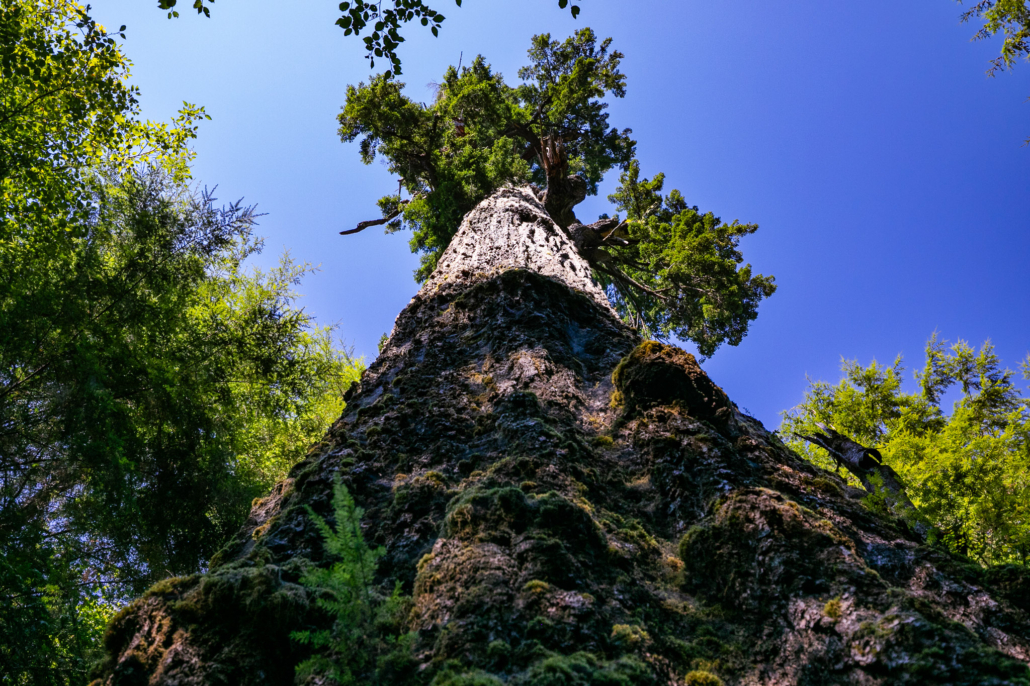
UPDATED: Port Renfrew Big Trees Map
Explore the updated Port Renfrew Big Trees Map with new directions, trails, and routes to iconic giants like Big Lonely Doug, Eden Grove, and more.
https://staging.ancientforestalliance.org/wp-content/uploads/2025/05/13-Red-Creek-Fir.jpg
1365
2048
TJ Watt
https://staging.ancientforestalliance.org/wp-content/uploads/2026/05/Ancient-Forest-Alliance-logo.svg
TJ Watt2026-05-29 15:39:342026-05-29 15:40:49UPDATED: Port Renfrew Big Trees Map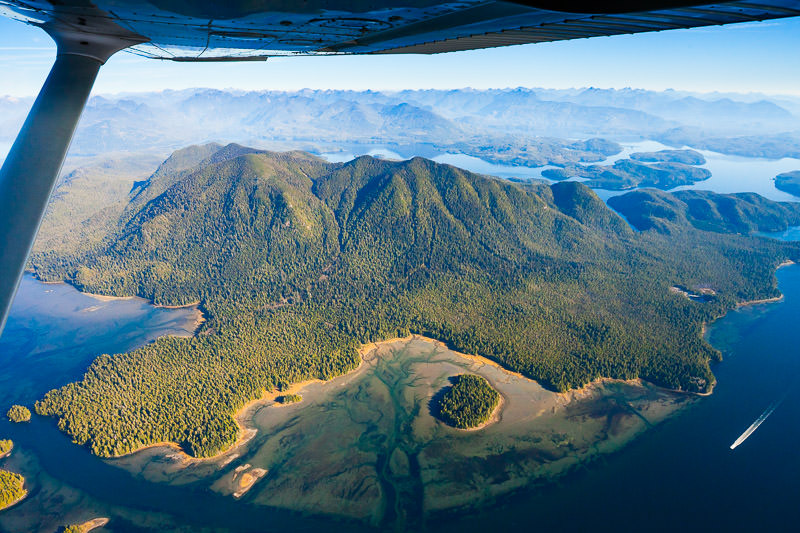
NEW! West Coast Old-Growth Hiking Guide
Explore AFA’s NEW West Coast old-growth hiking guide. From Clayoquot Sound to Port Alberni, there are trails for every skill level!
https://staging.ancientforestalliance.org/wp-content/uploads/2026/05/meares-island-big-tree-trail-tofino-1200px-338.jpg
533
800
TJ Watt
https://staging.ancientforestalliance.org/wp-content/uploads/2026/05/Ancient-Forest-Alliance-logo.svg
TJ Watt2026-05-29 12:06:002026-05-29 15:42:38NEW! West Coast Old-Growth Hiking Guide
Now Hiring: Contract Graphic Designer!
Ancient Forest Alliance is hiring a contract Graphic Designer to help bring our campaigns to life through print and digital materials.
https://staging.ancientforestalliance.org/wp-content/uploads/2026/05/flores-island-wildside-trail-1200px-430.jpg
800
1200
TJ Watt
https://staging.ancientforestalliance.org/wp-content/uploads/2026/05/Ancient-Forest-Alliance-logo.svg
TJ Watt2026-05-22 12:22:292026-05-22 12:22:29Now Hiring: Contract Graphic Designer!
Design AFA’s Next T-Shirt and Help Protect Old-Growth Forests!
Calling all artists! For Earth Month, AFA is launching our first-ever Community T-Shirt Design Contest.
https://staging.ancientforestalliance.org/wp-content/uploads/2026/04/AFA-T-Shirt-Green-Mens-Womens.jpg
1365
2048
TJ Watt
https://staging.ancientforestalliance.org/wp-content/uploads/2026/05/Ancient-Forest-Alliance-logo.svg
TJ Watt2026-05-15 08:13:232026-05-19 09:33:44Design AFA’s Next T-Shirt and Help Protect Old-Growth Forests! Donate
 Send a Message
Internationally-acclaimed artist Kelly Richardson moves to Victoria, turns attention to “Tall Trees Capital” of Canada – Port Renfrew
/in Media ReleaseFor Immediate Release
Tuesday, January 9, 2017
Victoria, BC – Vancouver Island’s famed old-growth forests near Port Renfrew – known as Canada’s “Tall Trees Capital” – have attracted the attention of internationally acclaimed artist Kelly Richardson, who will feature these ancient forests in an upcoming digital art installation to be projected on IMAX screens across the country as part of an upcoming large-format film series.
Richardson is known for creating hyper-real digital films of rich and complex landscapes that have been manipulated using CGI, animation and sound. Her projects have received major international acclaim, having been featured in the National Gallery of Canada, in galleries around the world, in an official Canada 150 exhibition this year, and in the upcoming large-format film series.
Taking cues from 19th century painting, 20th century cinema and 21st century scientific inquiries, Richardson creates works with strong environmental themes, asking viewers to consider what the future might look like if we continue on our current trajectory of planetary pillaging and consumption, and why we have allowed ourselves to arrive at such a moment of global environmental crisis.
Kelly Richardson said: “Having lived and worked in England for the last 14 years, I recently relocated to Victoria in order to be closer to the truly magnificent old-growth forests. After visiting Avatar Grove during a work trip in the fall of 2016, I was overwhelmed by my experience of those ancient stands, which was a huge influence in my decision to apply for a professorship at the University of Victoria where I now work. My upcoming projects will feature the old-growth forests in this region and I hope I can contribute to efforts to raise awareness about their outstanding beauty and the plight to protect what remains.”
Over the years, Vancouver Island’s old-growth forests have drawn considerable attention from the artistic community, including Emily Carr who produced pieces depicting the old-growth trees, giant stumps, and forests of the region (whose works in regards to her interest in ancient forests is currently on display in the Art Gallery of Greater Victoria.
) in the first half of the 20th century; scores of renowned artists who contributed to the best-selling art book “Carmanah: Visions of an Ancient Forest” (300,000 copies sold) in 1990; and increasing numbers of artists and filmmakers in recent years featuring the ancient forests around Port Renfrew, including Richardson.
“We’re excited to have such a renowned and original artist of Kelly Richardson’s caliber, focusing her talent to draw international attention through creativity to the endangered old-growth forests of Vancouver Island. Her work has gone far and wide across North America, Europe, and China, garnering major media attention, moving critics and reaching popular audiences, all while raising environmental themes in powerful ways”, stated Ken Wu, executive director of the Ancient Forest Alliance. “The old-growth forests around Port Renfrew – still largely endangered – are clearly continuing to impress increasing numbers of people – not only tourists, businesses, and news media, but acclaimed artists as well.”
Born in Canada, Kelly Richardson’s works have been widely acclaimed in North America, Asia and Europe, having been acquired by the National Gallery of Canada, Art Gallery of Ontario, and Musée d’art contemporain de Montréal in Canada and by museums around the world. Her video installations have been included in the Toronto International Film Festival, Sundance Film Festival and she was previously honoured at the Americans for the Arts National Arts Awards alongside Robert Redford, Salman Rushdie and fellow artist, Ed Ruscha. Her forthcoming work focusing on British Columbia’s old-growth forests will be featured in the upcoming XL-Outer Worlds Project, an exposition of five new large format films by five digital media artists, including Richardson, that will help highlight Canada’s invention of IMAX film technology, to be screened across the country in IMAX theatres in 2019.
Located only 20 minutes from Port Renfrew, the Avatar Grove or “T’l’oqwxwat” in the language of the local Pacheedaht First Nation, is home to one of the most spectacular and easily accessible stands of monumental old-growth trees in BC. It has become among the province’s most popular old-growth tourism destinations, attracting visitors from around the world (particularly with the completion of a boardwalk last August), the attention of countless national and international news media organisations, and a major investment in new businesses in the region.
The campaign to protect the grove, spearheaded by the Ancient Forest Alliance and the Port Renfrew Chamber of Commerce – a ground-breaking alliance of environmental activists and the local business community – has significantly fuelled a provincial movement of businesses, labour unions, city and town councils, and environmental groups calling on the British Columbian provincial government to protect old-growth forests and to ensure a sustainable, second-growth forest industry.
More BACKGROUND Information on artist Kelly Richardson
Kelly Richardson’s work has been acquired into significant museum collections across Canada, the UK, and the USA including the National Gallery of Canada, Art Gallery of Ontario, Musée d’art contemporain de Montréal, Hirshhorn Museum and Sculpture Garden (USA), Albright-Knox Art Gallery (USA), Arts Council Collection (England), among others. Recent one person exhibitions include Dundee Contemporary Arts, SMoCA, CAG Vancouver, VOID Derry, Naturhistorisches Museum Wien and a major survey at the Albright-Knox. Her work was selected for the Canadian, Beijing, Busan, Gwangju and Montréal biennales, and major moving image exhibitions including the The Cinema Effect: Illusion, Reality and the Moving Image at the Hirshhorn Museum and Sculpture Garden, Toronto International Film Festival and Sundance Film Festival.
Kelly Richardson was born in Burlington, Ontario, Canada. From 2003-2017 she resided in north east England where she was a Lecturer in Fine Arts at Newcastle University. She currently lives and works as a visitor on the traditional territory of the WSANEC peoples of the Coast Salish Nation on Vancouver Island, Canada. She is Associate Professor in Visual Arts at the University of Victoria. See her website at https://kellyrichardson.net
More BACKGROUND Information on BC’s Old-Growth Forests
Old-growth forests are vital to sustaining unique endangered species, climate stability, tourism, clean water, wild salmon, and the cultures of many First Nations. On BC’s southern coast, satellite photos show that at least 75% of the original, productive old-growth forests have been logged, including well over 90% of the valley bottoms where the largest trees grow. Only about 8% of Vancouver Island’s original, productive old-growth forests are protected in parks and Old-Growth Management Areas (see maps and stats at: https://staging.ancientforestalliance.org/ancient-forests/before-after-old-growth-maps/). Old-growth forests – with trees that can be 2000 years old – are a non-renewable resource under BC’s system of forestry, where second-growth forests are re-logged every 50 to 100 years, never to become old-growth again.
In recent times, the voices for old-growth protection have been quickly expanding, including numerous Chambers of Commerce, mayors and city councils, forestry unions, conservation groups, and First Nations across BC who have been calling on the provincial government to expand protection for BC’s remaining old-growth forests. The Ancient Forest Alliance is also calling on the province to support First Nations land use plans and the sustainable economic development and diversification of the communities as an alternative to old-growth logging. See a recent news article at: https://www.sookenewsmirror.com/news/groups-demand-protection-of-islands-old-growth-forests/
About the XL-Outer Worlds Project
Janine Marchessault of the Public Access Collective and Christian Kroitor (grandson of IMAX inventor Roman Kroitor) of True Frame Productions have come together to commission five new large-format digital film shorts in celebration of the 50th anniversary of the invention of IMAX. The theme for the commissioned program is in keeping with the cinematic genre typical of IMAX films: the larger-than-life landscape that forms an outer world. Participating Canadian media artists include: Oliver Husain, Lisa Jackson, Kelly Richardson, Michael Snow, and Leila Sujir. XL-Outer Worlds will result in a four-day Festival Celebration in 2019 at the Cinesphere, the world’s first permanent IMAX movie theatre located in Toronto at Ontario Place. This festival will showcase the commissioned films celebrating the invention of IMAX, alongside curated programs of early IMAX films. The XL-Outer Worlds festival will later tour the first IMAX cinemas across Canada in Victoria, Sudbury, Edmonton and Montreal. This is one of the 200 exceptional projects funded through the Canada Council for the Arts’ New Chapter program. With this $35M investment, the Council supports the creation and sharing of the arts in communities across Canada.
ACTION ALERT: Support Expanded Protection of the Endangered Coastal Douglas-Fir ecosystem in British Columbia!
/in Take ActionPlease take just a couple minutes to WRITE to the BC government, telling them you support their proposal to expand protections in the endangered Coastal Douglas-Fir ecosystem on Vancouver Island and in the Gulf Islands!
The BC government is seeking the public’s input on their proposal to increase the amount of Coastal Douglas-Fir ecosystem protected on public (Crown) lands on Vancouver Island’s southeast coast and in the southern Gulf Islands.
The Coastal Douglas-Fir (CDF) ecosystem is home to the highest number of species at risk in BC, including Garry oak trees, sharp-tailed snakes, alligator lizards, and Vancouver Island screech owl and pygmy owl subspecies. With less than four percent of the region’s ecosystems currently protected by the province, the proposed protection measures are greatly needed and are a significant step forward, although by themselves are not sufficient to halt the loss of biodiversity from the region.
The BC government is proposing to protect 21 parcels of public land in Bowser, Qualicum Beach, Nanoose Bay, Gabriola Island, Ladysmith, Galiano Island, and Saltspring Island. The proposed new protected areas total 1,125 hectares and expands upon a similar process in 2010 that resulted in the issuance similar land use orders, which protected 2,024 hectares of public lands on southeast Vancouver Island the Sunshine Coast.
See: https://www.for.gov.bc.ca/TASB/SLRP/southisland/CDFAmendment.html
Please write to the BC government until Monday, January 15th 2018, to express your support for this proposal and for greater protection of the Coastal Douglas-Fir ecosystem.
Email your written comments to CDFOrderAmendment2017@gov.bc.ca and Cc Forest Minister Doug Donaldson at FLNR.Minister@gov.bc.ca and Environment Minister George Heyman at env.minister@gov.bc.ca.
Tell them:
*Be sure to include your full name and address so that they know you are a real person.
More details:
The BC government is proposing to protect 21 parcels of public land covering 1,125 hectares in Bowser, Qualicum Beach, Nanoose Bay, Gabriola Island, Ladysmith, Galiano Island, and Saltspring Island. The protection measures expand upon a similar process undertaken in 2010, where land use orders were issued to protect 2,024 hectares of public lands on southeast Vancouver Island the Sunshine Coast.
The Coastal Douglas-Fir ecosystem, the smallest of BC’s 16 distinctive biogeoclimatic zones (classified according to their climatic and ecological features), is among the most endangered ecosystems in Canada.
The CDF ecosystem encompasses about 260,000 hectares on southeast Vancouver Island, the Gulf Islands south of Cortes Island, and a small area of the Sunshine Coast. About 50 percent of the entire ecosystem has been converted to human uses such as agriculture and urbanization. About one percent of the region’s original old-growth forest remains.
Only nine percent of the land base is provincial Crown land, so the purchase and protection of additional private land is also critical to help safeguard conservation values and species at risk.
The Ancient Forest Alliance is calling on the BC government to establish an annual $40 million provincial land acquisition fund to purchase and protect private lands in BC, including in the Coastal Douglas-fir zone, which has the highest percentage of private land in the province of any biogeoclimatic zone in BC.
The proposed fund would rise to an annual $100 million by 2024 through $10 million increases each year and would enable the timely purchase of significant tracts of endangered private lands of high conservation, scenic, and recreation value to add to BC’s parks and protected areas system.
Many regional districts in BC have land or “park” acquisition funds, including the Capital Regional District of Greater Victoria (CRD). The CRD’s fund generates about $3.7 million each year and, with its partners, has spent over $35 million to purchase over 4,500 hectares of land since its establishment in the year 2000, ensuring the protection of such iconic natural areas as the Sooke Hills and Potholes, Mount Maxwell on Saltspring Island, and lands between Thetis Lake and Mount Work. Like the CRD’s land acquisition fund, the proposed $40 million provincial fund could be used as leverage to raise additional funds from private land trusts, environmental groups and private donors.
See the Ancient Forest Alliance’s media release about the proposed expansion of Coastal Douglas-Fir zone protections at: https://staging.ancientforestalliance.org/news-item.php?ID=1162
Policy Recommendations for Old-Growth Forest Protection, support for First Nations, and Sustainable Forestry Jobs in BC
/in Photo GalleryPolicy Recommendations for Old-Growth Forest Protection, support for First Nations, and Sustainable Forestry Jobs in BC
Background
British Columbia's old-growth forests are an iconic part of the province’s identity and are home to the largest trees on Earth, surpassed only by the US redwoods in grandeur.
A century of industrialized logging has resulted in over 75 per cent of the original, productive old-growth forests being logged on BC’s southern coast, including well over 90 per cent of the valley bottoms where the richest biodiversity and largest trees are found.[1],[2] Continued old-growth logging threatens vulnerable plant and animal species, contributes heavily to the province’s carbon emissions,[3] degrades fresh water sources and wild fisheries, and is adversely impacting the economy, communities, and First Nations cultures, whose unceded lands these are.
For almost 50 years, the struggle to protect BC’s old-growth forests has led to some of the province’s most enduring conflicts. However, much has changed since the “War in the Woods” of the 1990s. The economic landscape has changed, resulting in a significant decline in forestry sector employment and an increase in the value of standing old-growth forests; vast areas of second-growth forests have reached maturity, constituting most of BC’s productive coastal forest lands; recognition of aboriginal rights has greatly expanded; the environmental movement and its values are more pervasive; environmental pressures such as climate change and biodiversity loss have compounded; and old-growth forests have become ever scarcer.
Employment levels in BC’s forestry sector have declined dramatically, from 99,000 jobs in 2000 to 65,000 in 2015, constituting a loss of one-third of all forestry jobs.[4] At the same time, the value of protecting old-growth forests now economically outweighs the economic benefits of logging them in large parts of the province, according to a 2008 study.[5]
In recent years, support for increased old-growth protection has broadened to include unions, chambers of commerce and municipalities. For example, the Union of BC Municipalities (UBCM), representing mayors, city and town councils, and regional districts across BC, and the Association of Vancouver Island and Coastal Communities (AVICC) have passed a resolution calling for an end to old-growth logging on Vancouver Island;the BC Chamber of Commerce, representing 36,000 BC businesses, has called for expanded old-growth forest protection in BC in order to benefit the economy; and two major forestry unions – the Private and Public Workers of Canada (PPWC) and Unifor, which represent thousands of BC forestry workers -have been working closely with environmental groups to upgrade environmental standards and forestry employment.
Developing a plan to protect the province’s old-growth forests while ensuring a sustainable, value-added second-growth forest industry will undoubtedly receive strong, widespread support. It is a first-rate opportunity for the NDP government.
Many BC First Nations communities have also taken action to protect old-growth in their territories and to develop conservation-based economies. For example, both the Ahousaht and Tla-o-qui-aht Nations in Clayoquot Sound have developed preliminary land use plans that place the majority of their territories off-limits to old-growth logging. In addition, First Nations communities in the province’s northern rainforests in Haida Gwaii and the Great Bear Rainforest have succeeded in achieving conservation financing support from the province, federal government, and environmental non-governmental organizations (ENGOs) to help develop sustainable economies in conjunction with implementing ecosystem-based management (EBM) guidelines for forestry.
BC NDP Government Commitments
In its 2017 election platform, the BC New Democratic Party promised to “apply an evidence-based scientific approach to land-use planning, using the ecosystem-based management of the Great Bear Rainforest as a model for managing…old-growth forests.” The NDP has also committed to finding “fair and lasting solutions that keep more logs in BC for processing”
and to partner with First Nations to “modernize land-use planning to effectively and sustainably manage BC’s…old-growth.” The 2017 Confidence and Supply Agreement between the BC Green and the BC NDP caucuses states that the government will “reinvigorate our forest sector to improve both environmental standards and jobs for local communities.”
The Ministerial Mandate for the Ministry of Forests, Lands, Natural Resource Operations and Rural Development (FLNRORD) from John Horgan on July 18th directs the new minister to “work with the Minister of Indigenous Relations, First Nations and communities to modernize land-use planning and sustainably manage B.C.’s ecosystems, rivers, lakes, watersheds, forests and old growth” and to “improve wildlife management and habitat conservation, and collaborate with stakeholders to develop long and short term strategies to manage B.C.'s wildlife resources.”
The following set of policy recommendations, compiled by a group of environmental organizations, is designed to help the new provincial government fulfill these commitments. They aim to protect BC’s endangered old-growth forests using science, while applying a system of incentives and regulations to support a vibrant forest industry, ensuring good paying jobs for working families through the sustainable harvesting and value-added manufacturing of second-growth stands.*
1) Seek a Dialogue with First Nations on how Old-Growth Protection can be Integrated into Indigenous-Led Land Use Planning, New Governance Models, and Economic Initiatives
Many of the province’s existing land use plans are out-dated and fail to align with the current political and legal authority of BC’s First Nations. However, only in a few parts of the province have indigenous land use plans been recognized and supported by provincial legislation and policies, notably in Haida Gwaii, Squamish and Lil’wat territory, and in the Great Bear Rainforest. The province should seek a dialogue with First Nations on how old-growth can be integrated into their land use plans, governance models, and economic initiatives. It should support the development of and formally recognize First Nations land use plans, Tribal Parks, and protected areas.
2) Develop an Old-Growth Forest Protection Act
The BC Government should develop a science-based, legislated plan that includes targets and timelines for protecting old-growth forests in all forest types based on best available science, including stronger protection for cultural old-growth values (such as Culturally Modified Trees); halts or quickly phases out logging of old-growth depending on their degree of endangerment; and establishes an extensive system of old-growth reserves that are selected using science-based criteria. [6] Read an example of an Old-Growth Forest Protection Act here.
3) Appoint an Independent Science Panel
An Old-Growth Forest Protection Act would require the BC government appoint an independent science panel, responsible for guiding the implementation of the Act and developing a framework for old-growth forest protection across the province. This would involve mapping BC’s old-growth forests by forest type and productivity level, determining how much old-growth must remain in each forest type to maintain ecological integrity, determining the current status of each forest type, and recommending minimum old-growth protection targets.
4) Support Conservation Financing Solutions and Economic Diversification for First Nations Communities
Many First Nations communities make significant revenues from old-growth logging, yet lack a range of alternative economic development opportunities that would support their local economies into the future and allow them to transition away from old-growth logging, should they wish to. In order to protect old-growth forests on a large scale in BC, the provincial government should fund conservation financing solutions to support First Nations sustainable economic development as an alternative to old-growth logging, similar to the $120 million (including $30 million in provincial funds) provided to nations in the Great Bear Rainforest in support of ecosystem-based management in that region. This is a fundamentally important precursor for the large-scale protection of old-growth forests in BC and for the NDP government to effectively implement its commitment to applying ecosystem-based management (EBM) to old-growth forests across BC.
5) Support a Sustainable, Value-Added Second-Growth Forest Industry
While most of the Western industrialized world is logging 50- to 100-year-old stands, including second-, third-, and fourth-growth forests, the status quo of old-growth liquidation is still underway across much of BC. By strengthening forest practices regulations and reducing the excessive rate of cut (i.e. implementing longer rotation ages), BC can achieve sustainable, second-growth forest industry. At the same time, if the BC government were to promote policies that support greater processing and value-added manufacturing of second-growth logs in the province, the total number of forestry jobs could be sustained and even increased in the province while old-growth logging is quickly phased out.
The following policies are recommended to support value-added, second-growth forestry jobs:
6) Immediately Declare a Moratorium for Old-Growth Hotspot Sites to Create a Solution Space while Long-Term Solutions are Developed
Some old-growth forests are considered to be greater conservation priorities than others. These include stands that are more extensive and intact, have high cultural significance for First Nations, consist of rare forest types, are of high significance for wildlife and species at risk, are located in drinking watersheds of local communities, are particularly grand, and are of particular importance for recreation and tourism. It is recommended the BC government declare a moratorium for old-growth hotspot sites, thereby creating a solution space to determine the future regarding the possibility of long-term protection through legislated provincial conservancies or parks.
7) Expand the Existing Forest Reserve Network
The NDP government introduced a system of forest reserves in the 1990s, including Old-Growth Management Areas (OGMAs), Wildlife Habitat Areas (WHAs), Ungulate Winter Ranges, Visual Quality Objectives, Riparian Management Zones, and Recreation Areas. This reserve system has not been fully implemented, leaving vast areas of old-growth forest vulnerable to logging. The new government should fully implement the forest reserve system by converting all non-legal reserves into legally binding ones and expand the system to protect additional endangered old-growth forests. This can be done by quickly implementing the Big Tree Protection legal tool currently under development by the Ministry of FLNRORD and enhancing it to include the province’s grandest groves. In time, thesereserves would be replaced by a new system of forest protection under an Old-Growth Protection Act – the implementation of which will take some time. It is further recommended the government remove the existing 1 per cent cap on how much forest reserves may affect the timber supply.
8) Use Government Control Over BC Timber Sales’ Planning and Operations to Accelerate Conservation of Endangered Old-Growth Forests
BC Timber Sales (BCTS), a division of FLNRORD, is the BC government’s logging agency that plans and directly issues logging permits for about 20 per cent of the province’s merchantable timber on Crown lands, which fall outside of forestry tenures. As the BC government retains full control over which cut blocks are auctioned each year through BCTS, the incoming government should use this control to quickly phase out issuing timber sales in old-growth forests in these areas.
9) Phase out Old-Growth Logging in the Allowable Annual Cut
Currently, the government’s Timber Supply Branch fails to distinguish between old-growth and second-growth harvest levels in the Allowable Annual Cut (AAC) of each timber supply area (TSA) and tree farm licence (TFL). In order to more effectively manage the rate of old-growth logging, the BC government should apportion the Allowable Annual Cut so it distinguishes between old-growth and second-growth cut allocations in order to scale-down and phase out old-growth cutting, according to the conservation needs identified by the independent science panel.
10) Establish a Land Acquisition Fund to Protect Endangered Ecosystems on Private Lands.
Many of BC’s most endangered and biologically rich and diverse ecosystems, including many old-growth stands, are found on private lands, which constitute about 5 per cent of the province’s land base. Establishing new protected areas on private land requires the outright purchase of lands from willing sellers. To this end, the B.C. government should implement a minimum annual $40 million provincial Natural Lands Acquisition Fund, which could increase by $10 million/year until the fund reaches $100 million/year. The proposed fund would enable the timely purchase of significant tracts of endangered private lands of high conservation, scenic, and recreation value to add to BC’s parks and protected areas system and resolve countless land use battles in the province.
*These recommendations would exclude the Great Bear Rainforest and Haida Gwaii, where science-based old-growth protection plans already exist and have resulted in high levels of old-growth forest protection.
[1] Ancient Forest Alliance, Maps: Remaining Old-Growth Forests on BC’s Southern Coast: https://staging.ancientforestalliance.org/ancient-forests/before-after-old-growth-maps/
[2] Sierra Club BC backgrounder, March 2016: https://sierraclub.bc.ca/wp-content/uploads/2015/08/South-Coast-Backgrounder_March-2016.pdf
[3] Sierra Club BC, BC Forests Carbon Meltdown, January 2014, https://sierraclub.bc.ca/wp-content/uploads/2015/08/forest-backgrounder_draft.pdf
[4] Statistics Canada, https://cfs.nrcan.gc.ca/statsprofile/employment/bc
[5] Knowler, D., 2008, The Economics of Protecting Old Growth Forest: An Analysis of Spotted Owl Habitat in the Fraser Timber Supply Area of British Columbia https://www.davidsuzuki.org/publications/downloads/2008/SPOWL_Final_report.pdf
[6] 2013 report by UVic Environmental Law Centre and Ancient Forest Alliance https://www.elc.uvic.ca/press/documents/AnOldGrowthProtectionActforBC-2013Apr10.pdf