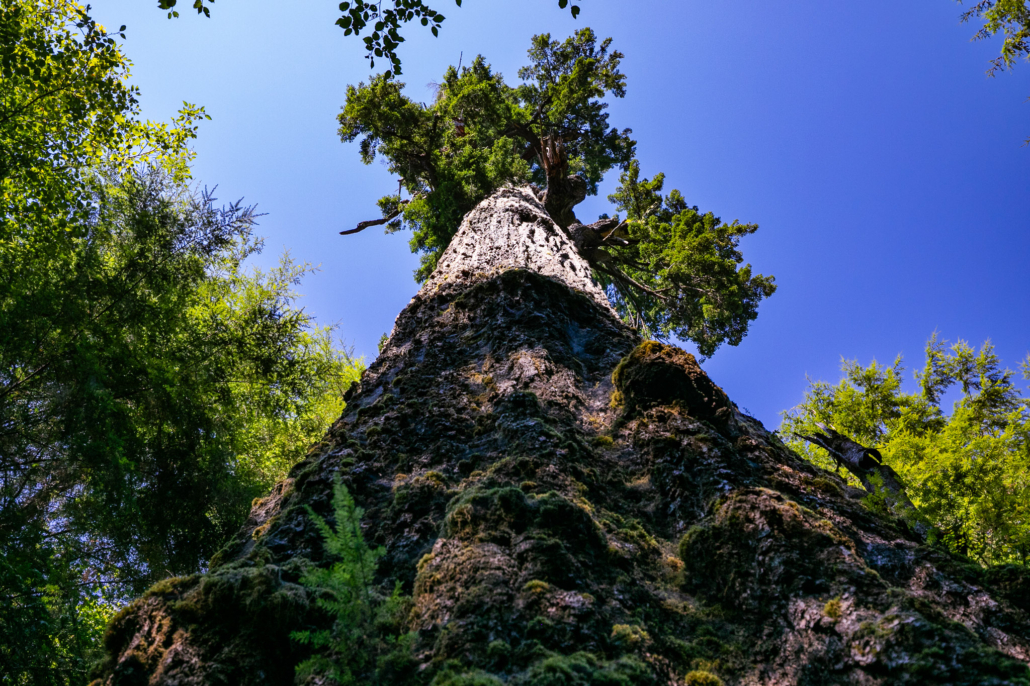
UPDATED: Port Renfrew Big Trees Map
Explore the updated Port Renfrew Big Trees Map with new directions, trails, and routes to iconic giants like Big Lonely Doug, Eden Grove, and more.
https://staging.ancientforestalliance.org/wp-content/uploads/2025/05/13-Red-Creek-Fir.jpg
1365
2048
TJ Watt
https://staging.ancientforestalliance.org/wp-content/uploads/2026/05/Ancient-Forest-Alliance-logo.svg
TJ Watt2026-05-29 15:39:342026-05-29 15:40:49UPDATED: Port Renfrew Big Trees Map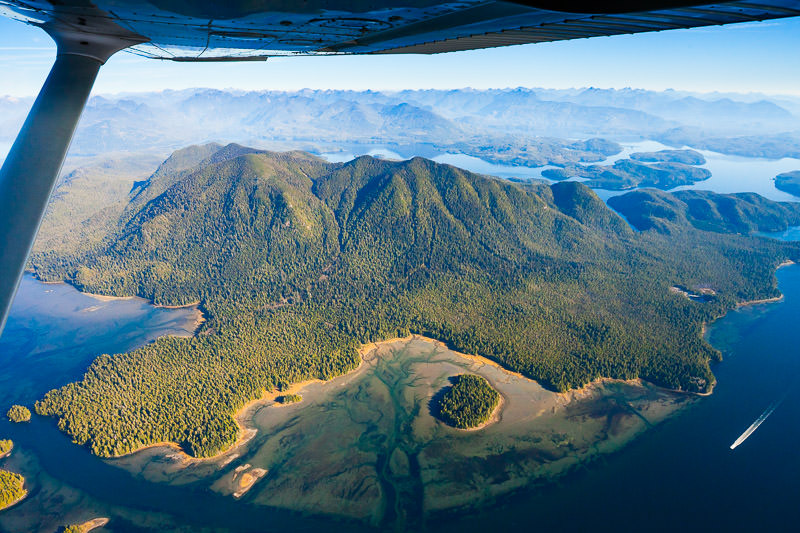
NEW! West Coast Old-Growth Hiking Guide
Explore AFA’s NEW West Coast old-growth hiking guide. From Clayoquot Sound to Port Alberni, there are trails for every skill level!
https://staging.ancientforestalliance.org/wp-content/uploads/2026/05/meares-island-big-tree-trail-tofino-1200px-338.jpg
533
800
TJ Watt
https://staging.ancientforestalliance.org/wp-content/uploads/2026/05/Ancient-Forest-Alliance-logo.svg
TJ Watt2026-05-29 12:06:002026-05-29 15:42:38NEW! West Coast Old-Growth Hiking Guide
Now Hiring: Contract Graphic Designer!
Ancient Forest Alliance is hiring a contract Graphic Designer to help bring our campaigns to life through print and digital materials.
https://staging.ancientforestalliance.org/wp-content/uploads/2026/05/flores-island-wildside-trail-1200px-430.jpg
800
1200
TJ Watt
https://staging.ancientforestalliance.org/wp-content/uploads/2026/05/Ancient-Forest-Alliance-logo.svg
TJ Watt2026-05-22 12:22:292026-05-22 12:22:29Now Hiring: Contract Graphic Designer!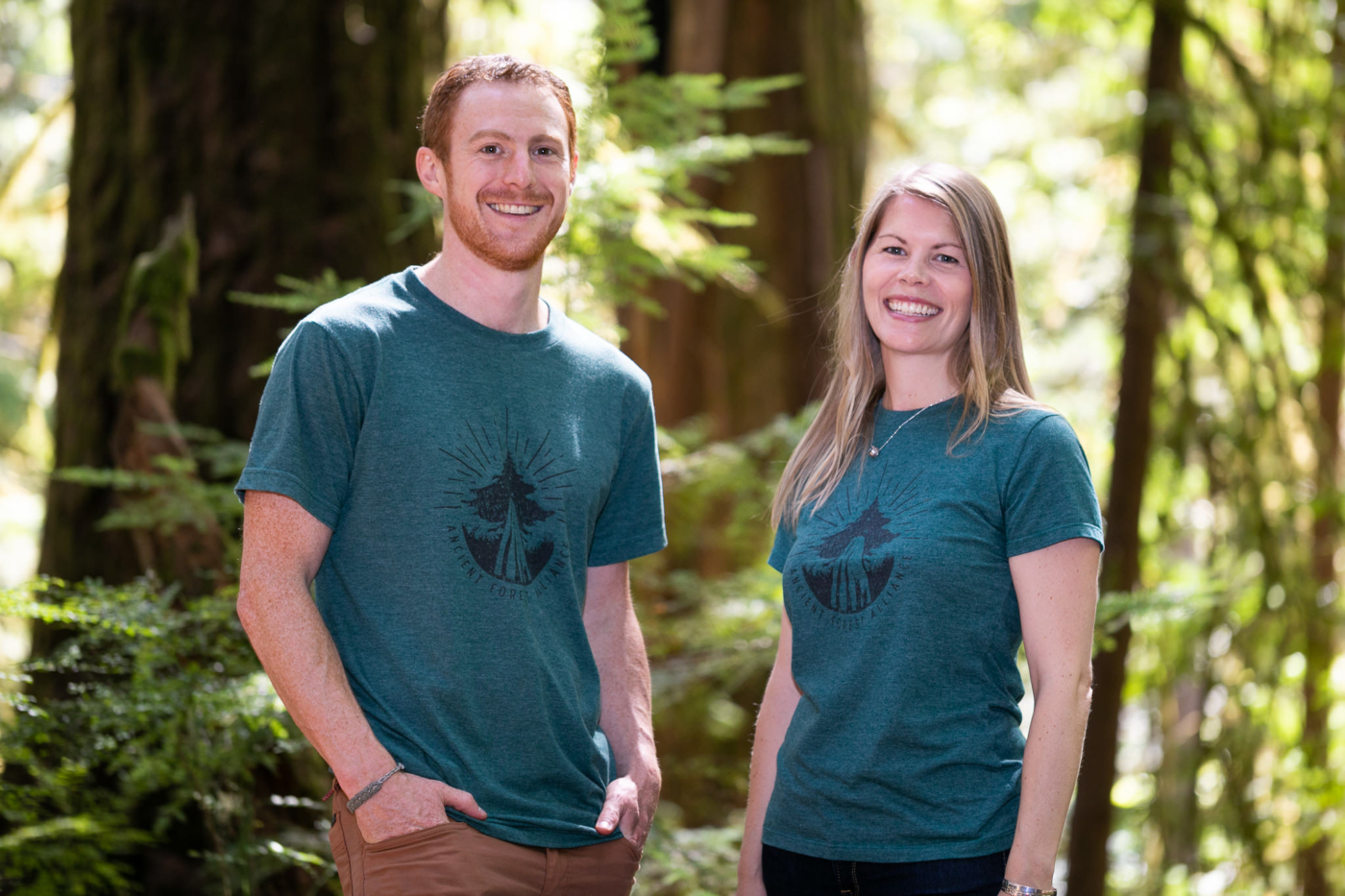
Design AFA’s Next T-Shirt and Help Protect Old-Growth Forests!
Calling all artists! For Earth Month, AFA is launching our first-ever Community T-Shirt Design Contest.
https://staging.ancientforestalliance.org/wp-content/uploads/2026/04/AFA-T-Shirt-Green-Mens-Womens.jpg
1365
2048
TJ Watt
https://staging.ancientforestalliance.org/wp-content/uploads/2026/05/Ancient-Forest-Alliance-logo.svg
TJ Watt2026-05-15 08:13:232026-05-19 09:33:44Design AFA’s Next T-Shirt and Help Protect Old-Growth Forests! Donate
 Send a Message
Times Colonist: Leaked report claims B.C. timber harvest is vastly overestimated
/in News CoverageNovember 19, 2025
By Stefan Labbé
See original article here.
A leaked technical review prepared for a group of First Nations claims British Columbia is greatly overestimating how much timber it can sustainably harvest in a push for short-term economic gains.
The previously unreleased report charges that the methods the province uses to calculate how many trees are on the landscape—and therefore how much can be logged—is fundamentally flawed and based on “wildly extreme assumptions” that hurt the long-term health of B.C.’s forests.
The report’s authors, a forest ecologist and a registered professional forester, only agreed to speak with BIV after it independently obtained a 572-page draft of the report originally dated September 2024.
“There’s a strong likelihood that throughout the province we’re cutting almost at twice the rate of what is considered sustainable,” said co-author Dave Radies. “We’re running out of wood.”
The report focuses on the Mackenzie timber supply area (TSA), a 6.41-million-hectare swath of land spanning the Rocky Mountains and the Peace River region.
In their analysis, the authors challenge the methods B.C. uses to determine the annual allowable cut (AAC)—how much timber can be cut in the region in a given year—concluding their numbers are likely double what can be harvested without causing significant long-term damage.
The findings could have province-wide implications, as experts say the same modelling framework used in Mackenzie is applied across all TSAs in B.C.
Peter Wood, a lecturer at the University of British Columbia’s Faculty of Forestry who recently reviewed the document, said the report raises a number of “very concerning” questions around how the province calculates annual allowable cut.
“There’s nothing more important than AAC determination in terms of how forestry is going to affect a landscape in B.C.—all subsequent decisions end up being constrained by this number,” said Wood.
Without oversight, what comes out of the Ministry of Forest’s “black box of calculations” has been difficult to prove or disprove, he said. Wood added the unreleased report offers a glimpse of those “inner workings.”
“It’s pretty incredible they were able to do that,” Wood said. “My first gut feeling when I read it was ‘This is how ghost towns are made.’”
Unrealistic assumptions threaten wildlife, Indigenous rights
Under the Forest Act, every 10 years the chief forester must carry out a review of what can be annually logged across all of B.C.’s 37 timber supply areas and 34 tree farm licences.
The Mackenzie region’s latest review came in May 2023, when B.C.’s chief forester Shane Berg officially determined 2.39 million cubic metres of timber could be removed from its forests each year. The calculation used a starting “base case” of 2.97 million cubic metres.
But when Radies and his co-author, registered professional forester Martin Watts, ran their own statistical analysis, they found the province’s base case could only be justified through extreme, unrealistic assumptions that ignore reality.
Even using the ministry’s own extremely conservative methodologies, harvesting more than 1.06 million cubic metres a year was found to put environmental values—including the health of caribou, grizzly bears, fish and other furbearing animals—at high risk.
Their conclusion: the annual cut approved by the province would negatively impact First Nations’ constitutionally protected rights to hunt, gather and fish.
B.C. forest model found to use manipulated inputs
Radies said the core of the problem is that the Minister of Forests can legally direct the chief forester to manipulate up to 49 inputs used to model how much timber is actually on the land base. That allows the minister to warp data and prioritize economic interests over what’s truly sustainable, he said.
“The fact is, the minister puts restrictions on the inputs to the model to serve an economic interest. That’s what creates a lack of transparency,” Radies said. “We’re not being honest with ourselves.”
Watts, who runs the Victoria-based firm FORCOMP Forestry Consulting Ltd. and carried out much of the report’s statistical analyses, said that when he ran his own models, he found the government relies on unverified forest growth estimates and operational assumptions that do not reflect current practices. That, he said, is leading to a massive overestimation of available wood.
The provincial calculations were found to assume that future tree plantations will not fail and that there will be no drought. Government models also assume minimal damage from insects and disease, despite the region losing 37 per cent of its forests to the mountain pine beetle epidemic in recent years, according to the report.
“They’ve got unrealistic projections of how that’s going to magically grow back in the future,” said Watts.
When the chief forester made the 2023 determination, the model assumed about 310 hectares of harvestable forests would burn and be lost every year.
But in the decade leading up to 2022, the annual loss of forests to fire averaged about 1,800 hectares per year. Even more dramatically, in 2023—the same year the calculation was made—record wildfires burned at least 50,000 hectares of harvestable timber in Mackenzie. Those losses are 160 times higher than what the province assumes will occur for the coming decades.
A study published that same year in the journal Nature found rising temperatures due to climate change have dried out B.C.’s forests, leading to a historic spike in wildfire activity over the past two decades.
The research is among multiple peer-reviewed investigations that indicate the province will become a global hot spot for increasingly powerful mega-fires.
Another study published in 2024 found exposure to increased levels of carbon dioxide in the atmosphere is accelerating the reproductive cycle of mountain pine beetles. The authors concluded that the pests are adapting to human-caused climate change and that B.C. should expect more outbreaks over the coming decades.
Radies said the gap between what the Ministry of Forests is modelling and what independent science is telling us about the impacts of climate change on forests is startling.
“It’s totally insane,” he said.
Collaboration ends abruptly
The report was produced as part of a three-year pilot project involving five First Nations: Tsay Keh Dene Nation, Takla Nation, Kwadacha Nation, Nak’azdli First Nation, and the McLeod Lake Indian Band (members of the Gitxsan Nation were involved to a lesser extent).
The project was meant to serve as a new way to implement B.C.’s Declaration on the Rights of Indigenous Peoples Act, and allow the nations to work closely with the Ministry of Forests to re-assess Mackenzie’s timber supply.
For three years, the First Nations working group gained unprecedented access to the government’s data and methods. The result, according to Radies, was the “most comprehensive independent review of a B.C. timber supply process ever conducted.”
The authors say their work was later validated: after reviewing the report’s methodology, the Ministry of Forests chief statistician acknowledged that the ministry’s own calculation was not appropriate and supported the statistical approach taken by Watts.
Despite the internal support, Radies said the ministry refused requests from the working group to look deeper into provincial modelling and sensitivity analyses.
When their independent conclusions began to challenge the province’s official numbers, the collaboration abruptly ended, according to the authors.
“They just shut the door on us,” Radies said. “They stopped communicating with us all together.”
Mike Morris, a former MLA who represented the Prince George-Mackenzie riding until 2024, said he was surprised that the science could be buried for more than a year.
“I read through the whole thing, and I was shocked at what I saw,” Morris said. “It shows the fatal flaw that’s been used for decades now.”
The former MLA said the damning findings are particularly explosive because they emerged from a process intended to be a model of transparency and collaboration.
He said First Nations in the Mackenzie TSA have raised concerns to him that releasing the report would directly challenge the chief forester’s credibility. That, in turn, could destroy their future economic opportunities with the province.
“Everybody is afraid to touch it,” Morris said. “It’s not a balanced playing field, and there’s a lot of pressure put on these First Nations because most of them are broke. They’re looking at any kind of economic advantage that they can get.”
With the report buried, access to timber in Mackenzie began changing hands. In September 2024, the timber giant Canfor Corp. (TSX:CFP) sold its tenure in the region to the McLeod Lake Indian Band and the Tsay Keh Dene Nation in a $69-million deal that gave each annual access to more than 430,000 cubic metres of wood.
At the time, McLeod Lake Indian Band Chief Harley Chingee said the deal would create “lasting economic benefits” and foster a “sustainable future for our people.”
BIV contacted all of the First Nations involved. Only one responded.
In a statement, Tsay Keh Dene Chief Johnny Pierre said his nation did not fund, endorse or technically review the report but that its findings are not surprising. He raised concerns that the harvesting approved in 2023 has focused logging operations in the TSA’s already over-harvested southwest area.
“This pattern is deeply concerning,” he said.
The Ministry of Forests defended the chief forester’s 2023 annual allowable cut determination for the Mackenzie TSA. In an unattributed statement, the ministry said the annual cut was lowered 20 per cent to address Indigenous rights, the environment, resource sustainability, and the needs of local communities.
Concerns raised in the report on data and methods “should be considered” in light of hundreds of hours of “unprecedented engagement and collaboration with First Nations” — a process that marks a “major step toward shared decision-making,” it added.
The ministry did not contest the report’s findings. It said all of the working group’s proposals could not be fully explored due to “limited resources” and that the ministry needs to improve how it works with First Nations.
A history of ‘voodoo science’ and ‘greed’
The systematic flaws identified in the Mackenzie TSA report are, according to the authors and other experts, a long-simmering crisis born from decades of political and industry pressure.
B.C. began its timber supply review program in 1992. The goal was to replace outdated data with a scientifically sound, transparent method that would include non-timber values—such as wildlife, water and biodiversity—and assure the public that the province was managing its forests sustainably.
Several experts BIV spoke to said that process was quickly compromised. Since the 1990s, Radies said forest industry lobbyists have pressured chief foresters to approve harvest levels based on what licences allowed and mills needed, rather than the true sustainable capacity of the forest.
“This is just the classic story of greed,” Radies said. “They loaded it up so much that there was no room for error.”
Independent forest ecologist and former government advisor Rachel Holt said she and other experts have been warning the province for decades over its plan to transition its forests into an agricultural model dominated by tree plantations.
The main risk has always been that second-growth replacement forests could not mature fast enough to keep up with government approvals to cut large swathes of primary forests, said Holt.
The gap in tree size has resulted in a massive reduction in available timber—a phenomenon anticipated as early as 1976 when a Royal Commission report warned the province’s depleted forest face the prospect of a great “fall down.”
“Yes—the timber supply crisis is not a crisis—it has literally been decades in the making,” said Holt.
When the mountain pine beetle epidemic hit in 1999, the whole forestry model saw its collapse accelerate even faster. The province reacted to the outbreak by boosting B.C.’s annual allowable cut to more than 85 million cubic metres by 2008.
Over the coming years, the amount of timber allowed to be cut in B.C. was sharply reduced, dropping to about 45 million cubic metres this year.
What actually gets cut every year is much lower, a consistent gap Radies said shows the province regularly approves more logging than the land can support.
“Most people define sustainability on fibre supply. I’m not even talking about environmental stuff,” he said. “I’m just talking about producing the same amount of two-by-fours because you’re still getting the same amount of trees out there.”
Nearly 50 sawmills have closed in B.C. over the past two decades. And since 2020, another half-dozen major pulp and paper mills have curtailed operations, indefinitely closed, or shut permanently in places like Powell River, Prince George and Crofton.
Paper Excellence permanently closed the Mackenzie pulp and paper mill in 2021. And in B.C.’s latest mill closure, West Fraser Timber Co. Ltd. (TSX:WFG) announced earlier this month it would permanently shutter and lay off 165 workers at its 100 Mile House operations.
The common denominator in both closures: mills could no longer access economically viable timber.
Some experts and former officials who spoke to BIV agree the report raises questions over the root cause of those closures.
One expert with the Ministry of Forests who spoke on condition of anonymity said the way timber supply reviews are conducted in B.C. amounts to “voodoo science” and grossly overestimates harvestable wood.
“It’s a dirty secret. But if you lower that number, it’s seen as some kind of loss,” said the government expert. “We just don’t want to look ourselves in the face.”
According to Wood, the flawed assumptions and glaring omissions raised in the report show how B.C.’s complex forestry policy hides the truth from the public.
“At the very minimum, the onus now is for the ministry to respond to legitimate concerns that the cut has been set too high,” he said.
For Morris, the report shows that what is happening in Mackenzie can be applied to timber supply areas across the province, from 100 Mile House to Prince George, the Okanagan and Vancouver Island.
“When you lump everything together that’s taken place over the last number of decades now, they are merely exposing what’s been taking place, only in a scientific way,” Morris said.
“I really do believe that we need to hold a public inquiry into forestry and get to the bottom of it.”
National Observer: Long-awaited changes to BC’s private forests not coming, government confirms
/in News CoverageLocal governments on Vancouver Island are frustrated after legislative changes are not coming to the law governing how private forest lands are managed in BC.
Join us: AFA’s 2025 Virtual Year-End Update & Fundraiser!
/in Announcements, EventsWednesday, November 26 | 7:00 – 8:00 pm PST | Online via Zoom
Join the Ancient Forest Alliance (AFA) team for our virtual year-end update and fundraiser to conclude AFA’s 15th year working to protect endangered old-growth forests in BC.
Register now! →
https://www.eventbrite.ca/e/ancient-forest-alliance-2025-virtual-year-end-update-fundraiser-tickets
You’ll be redirected to Eventbrite to complete your registration — that’s our official ticketing platform for the webinar.
The webinar will include:
Tickets: By donation. If there are any financial barriers to attending, please reach out to us at info@ancientforestalliance.org or 250-896-4007.
All proceeds from the event support AFA’s work to protect endangered old-growth forests and to ensure a sustainable, second-growth forestry industry.
A recording will be sent to all registrants after the event — so don’t worry if you can’t attend live!