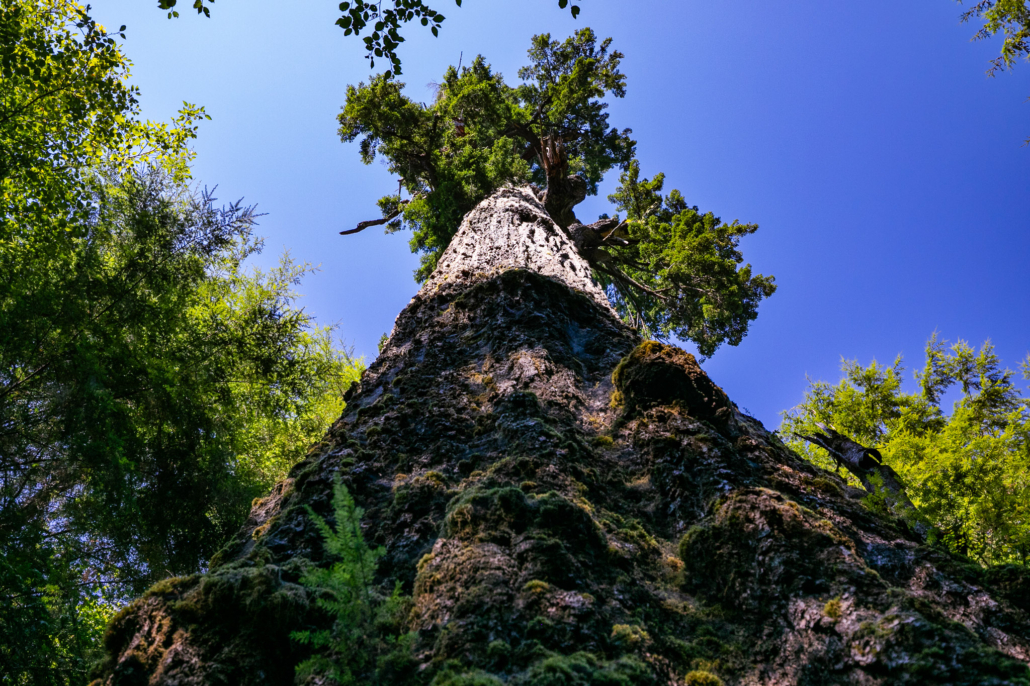
UPDATED: Port Renfrew Big Trees Map
Explore the updated Port Renfrew Big Trees Map with new directions, trails, and routes to iconic giants like Big Lonely Doug, Eden Grove, and more.
https://staging.ancientforestalliance.org/wp-content/uploads/2025/05/13-Red-Creek-Fir.jpg
1365
2048
TJ Watt
https://staging.ancientforestalliance.org/wp-content/uploads/2026/05/Ancient-Forest-Alliance-logo.svg
TJ Watt2026-05-29 15:39:342026-05-29 15:40:49UPDATED: Port Renfrew Big Trees Map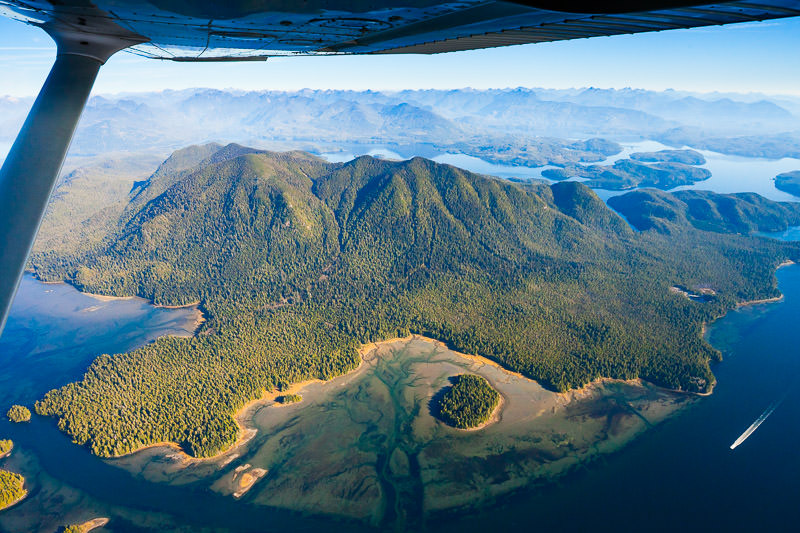
NEW! West Coast Old-Growth Hiking Guide
Explore AFA’s NEW West Coast old-growth hiking guide. From Clayoquot Sound to Port Alberni, there are trails for every skill level!
https://staging.ancientforestalliance.org/wp-content/uploads/2026/05/meares-island-big-tree-trail-tofino-1200px-338.jpg
533
800
TJ Watt
https://staging.ancientforestalliance.org/wp-content/uploads/2026/05/Ancient-Forest-Alliance-logo.svg
TJ Watt2026-05-29 12:06:002026-05-29 15:42:38NEW! West Coast Old-Growth Hiking Guide
Now Hiring: Contract Graphic Designer!
Ancient Forest Alliance is hiring a contract Graphic Designer to help bring our campaigns to life through print and digital materials.
https://staging.ancientforestalliance.org/wp-content/uploads/2026/05/flores-island-wildside-trail-1200px-430.jpg
800
1200
TJ Watt
https://staging.ancientforestalliance.org/wp-content/uploads/2026/05/Ancient-Forest-Alliance-logo.svg
TJ Watt2026-05-22 12:22:292026-05-22 12:22:29Now Hiring: Contract Graphic Designer!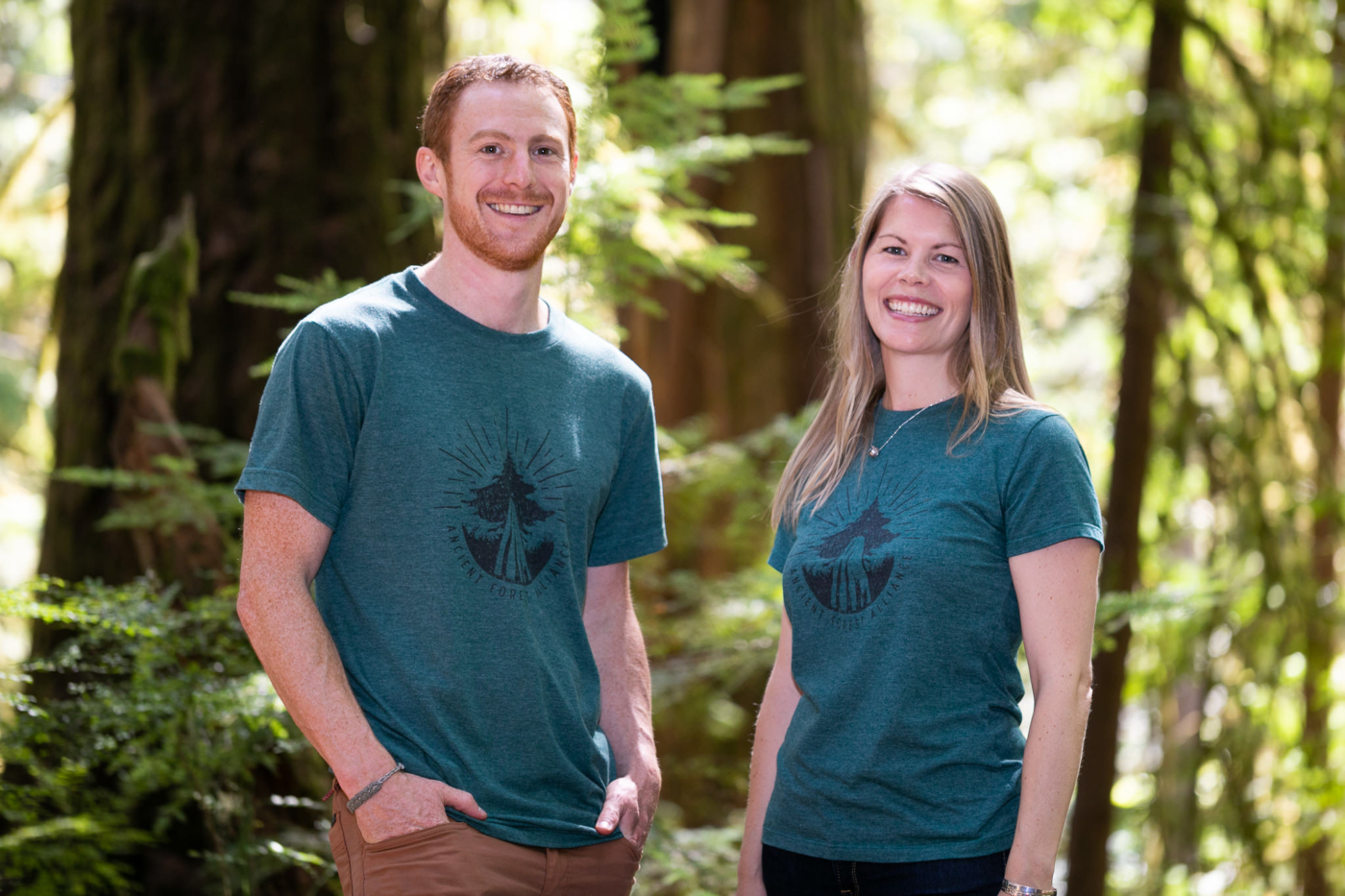
Design AFA’s Next T-Shirt and Help Protect Old-Growth Forests!
Calling all artists! For Earth Month, AFA is launching our first-ever Community T-Shirt Design Contest.
https://staging.ancientforestalliance.org/wp-content/uploads/2026/04/AFA-T-Shirt-Green-Mens-Womens.jpg
1365
2048
TJ Watt
https://staging.ancientforestalliance.org/wp-content/uploads/2026/05/Ancient-Forest-Alliance-logo.svg
TJ Watt2026-05-15 08:13:232026-05-19 09:33:44Design AFA’s Next T-Shirt and Help Protect Old-Growth Forests! Donate
 Send a Message

“Sustainable” forestry claims are false and misleading: citizen complaint
/in Media ReleaseCanadian citizens call for an investigation into Canadian Standards Association’s Sustainable Forest Management Standard, say it misleads buyers of forest products
VANCOUVER/UNCEDED xʷməθkʷəy̓əm (MUSQUEAM), Sḵwx̱wú7mesh (SQUAMISH) AND səlilwətaɬ (TSLEIL-WAUTUTH) TERRITORIES – As forestry companies continue to log endangered old-growth forests in British Columbia, six Canadians today requested the federal Competition Bureau to investigate the Canadian Standards Association (CSA) for promoting its forestry certification standard as an assurance of sustainability.
The “Sustainable Forest Management” standard (CSA SFM) certifies and promotes wood products from logging operations – including in BC’s old-growth forests – as sustainable, which the citizens call patently false and misleading.
The signatories on the complaint come from diverse backgrounds and vocations, but all have had their lives and livelihoods impacted by unsustainable forestry practices in Canada. They are foresters, scientists, First Nations leaders, tourism operators, environmentalists, and municipal leaders, with first-hand knowledge of CSA-certified logging.
“CSA is certifying the logging of our last ancient forests and calling it sustainable, and this is only possible because of its incredibly weak standards. This is completely unacceptable and will not only lead to the extinction of our ancient forests, but infringements and violations of Indigenous Title and Rights as First Nations seek to sustainably protect, manage, and steward the forests they hold jurisdiction over. In these times of renewed focus on the need to protect old-growth forests and their crucial importance for biodiversity and the climate, it’s clear that this logging is not remotely sustainable and is at odds with B.C.’s commitment to implement the Declaration on the Rights of Indigenous Peoples Act,” says Grand Chief Stewart Phillip, President of the Union of BC Indian Chiefs.
CSA has certified as “sustainable” the logging of some of BC’s most contentious old-growth forests, including Fairy Creek and the surrounding tenure on southwest Vancouver Island, the site of Canada’s longest-running logging blockade.
“What serious standards organization would certify the logging of the remaining three per cent of our most valuable, big tree forests as “sustainable”? This certification is meaningless, designed to fool consumers into thinking they’re doing the right thing by buying these products,” says environmentalist and conservation advocate Vicky Husband, another signatory.
Ecojustice, a non-profit environmental law firm, filed the request for an investigation with the federal Competition Bureau at the request of the signatories, supported by Stand.earth and Ancient Forest Alliance. The complainants seek an investigation and, if the Bureau finds the CSA’s sustainability claims are indeed false, recommend the organization be required to publicly retract the sustainability claims, and pay a $10 million fine, which could go towards supporting conservation projects such as the Indigenous Leadership Initiative for Indigenous Protected and Conserved Areas.
The CSA, most often associated with consumer product safety and quality control, ventured into certifying logging practices in Canada in 1996 at the request of provincial and national forest industry associations. Canada currently has 13 million hectares of forest certified to the CSA standard, two million of which are in BC. Canada has more certified forest area than any other country in the world, mostly to industry-led systems.
The complaint sets out how CSA certified companies are using the term “sustainable” to promote wood products, even though the CSA Standard does not require logging practices to meet any definition of “sustainable” nor “sustainable forest management.”
“Canada’s weak forestry laws give logging companies control over the forests, and they justify this by saying that the logging is ‘certified sustainable.’ This complaint clearly demonstrates that’s not true,” says Devon Page, Executive Director at Ecojustice. “Weaknesses in the CSA’s forest certification system make it incapable of guaranteeing that forest management is sustainable, resulting in destructive logging practices being sold as sustainable to consumers.”
Click here to see the inquiry submission.
About
Ecojustice: Ecojustice uses the power of the law to defend nature, combat climate change, and fight for a healthy environment. Its strategic, public interest lawsuits and advocacy lead to precedent-setting court decisions and law and policy that deliver lasting solutions to Canada’s most urgent environmental problems. As Canada’s largest environmental law charity, Ecojustice operates offices in Vancouver, Calgary, Toronto, Ottawa, and Halifax.
Stand.earth: Stand is an advocacy organization that brings people together to demand that corporations and governments put people and the environment first.
Ancient Forest Alliance: The Ancient Forest Alliance is a non-profit organization working to protect BC’s endangered old-growth forests and to ensure sustainable, second-growth forestry jobs.
For media inquiries:
Thais Freitas, communications specialist at Ecojustice
tfreitas@ecojustice.ca, 1-800-926-7744 ext. 277
Grand Chief Stewart Phillip, president of the Union of BC Indian Chiefs
250-490-5314
Tegan Hansen, forest campaigner at Stand
tegan@stand.earth
TJ Watt, campaigner and photographer at Ancient Forest Alliance
tj@15.222.255.145
Andrea Inness, campaigner-executive team at Ancient Forest Alliance
andrea@15.222.255.145
Profiles of Complainants
Anthony Britneff, RPF (Ret), worked for the B.C. Forest Service for 40 years, holding senior professional positions in inventory, silviculture and forest health. Now, he is devoted to replacing the status quo in B.C.’s forestry with a new paradigm based on the principles of conservation of soil, water, biodiversity, and carbon to address the dual crises of biodiversity loss and climate change.
Grand Chief Stewart Phillip has served as the President of the Union of BC Indian Chiefs for 23 years. During his presidency, and his previous 24 years on the Penticton Indian Band Council, Phillip has dedicated himself to advancing and safeguarding inherent Indigenous Title and Rights, including in the context of forest management.
Vicky Husband, Conservation advocate, is one of British Columbia’s best-known environmentalists. She has long fought for the protection of the ancient rainforests of BC, including Clayoquot Sound, and played a lead role in establishing Canada’s first grizzly bear sanctuary in the Khutzeymateen Valley. Her work has earned her numerous honours, including the Order of Canada, Order of BC, and a United Nations Global 500 Award for environmental achievement.
Dr Andy MacKinnon is a University of Victoria professor in Botany, following a 30-year career as an ecologist in the BC Ministry of Forests, Lands and Natural Resources. He is the co-author of six guidebooks to BC plants, and is a councillor in Metchosin on Vancouver Island.
Ben Geselbracht is a Nanaimo City Councillor, and currently co-chairs the Environment Committee. He also serves as a Director of the Nanaimo Regional District, Director-at-Large for the Union of BC municipalities; and on the Vancouver Island and Coastal Communities Climate Leadership Strategy Steering Committee.
Natasha Baert is the owner of Tofino Sea Kayaking, a business operated by her family in Clayoquot Sound for more than 30 years. She has been involved in conservation efforts throughout this time, and supports the work of local First Nations to establish a Tribal Park. Her family played a major role in building the local non-extractive economy, and can speak to the value of old growth forests in light of this.
Background information for media
The complaint
Desired Outcome
FAQ
What is forest certification?
Who funds the CSA?
How much certified forest is there in Canada? How much of that is CSA?
Old-growth in contentious Fairy Creek region could be worth more standing than logged
/in News CoverageCanada’s National Observer
June 30th, 2021
Ancient forests at the centre of a dispute around old-growth logging in B.C. are worth more standing in terms of tourism and ecosystem services, a new study finds. Photo by TJ Watt.
A new economic study shows ancient trees in the contentious Fairy Creek region on southern Vancouver Island are worth considerably more standing to nearby communities than if they were cut down.
And it confirms investments and efforts by the former forestry hub of Port Renfrew to rebrand itself as an ecotourism hot spot are right on track, business leaders say.
Protecting all the old-growth forests in the study area near Port Renfrew could result in an additional $40 million in net economic benefits over the next 100 years compared to logging as usual, said Andrea Inness of the Ancient Forest Alliance, which commissioned the independent research.
The cost-benefit analysis indicates carbon storage or sequestration, recreation, tourism, coho salmon habitat, non-timber forest products like floral greenery and mushrooms, along with research or education opportunities are worth more than timber extraction alone, Inness said.
“The findings are significant because they tell us that old-growth forests are not being managed in the broader public’s best interest,” Inness said.
“We need to see the province start making decisions around old-growth management that are in the best interest of all British Columbians — and not just the forest sector.”
The two-and-a-half-year study focused on the province’s Arrowsmith Timber Supply area in Pacheedaht and Ditidaht First Nations’ territories within a 35-kilometre radius of Port Renfrew, said Inness.
As only a portion of harvestable forests near Port Renfrew were analyzed, the study actually underestimates the overall value of standing old-growth, she said.
Ancient forests in the Port Renfrew region have been at the centre of old-growth logging blockades by Rainforest Flying Squad (RFS) activists since August.
Both the Pacheedaht and Ditidaht have asked the protesters to leave the region so they can develop a regional integrated resource management plan, but protesters have remained, with close to 350 people arrested as of Monday.
And the NDP government is under increasing public pressure at home and abroad to take more action to protect remaining at-risk, old-growth forests throughout the province.
The new study reflects the economic changes that Port Renfrew is experiencing on the ground, said Karl Ablack, president of the Port Renfrew Chamber of Commerce.
If all old-growth forests examined were protected, tourism itself would nearly make up for losses associated with timber extraction by adding an equivalent number of jobs and covering 66 per cent of the losses to GDP, the study said.
The economy of Port Renfrew, formerly a thriving resource community until the 1970s and ’80s, stalled with severe declines in forestry and the commercial fishing industry, Ablack said.
But the small community has revived itself over the last 20 to 25 years, first as a result of recreational fishing, and has since diversified into other ecotourism activities, including big tree tourism, he said.
In 2016, the community’s chamber put forth a resolution to the BC Chamber to support the protection of old-growth forests in areas where these forests had greater tourism value left standing. The resolution was unanimously adopted, noted Ablack.
Selling itself as the Tall Tree Capital of Canada, people flock from around the globe to visit the gnarly giants in the now-protected Avatar Grove, or Big Lonely Doug, a massive Douglas fir that stands alone in a clear-cut.
A strict visitor count has yet to be done, but approximately 5,000 cars a day travel to Port Renfrew during the height of summer via the Pacific Marine Circle Route — a loop on southern Vancouver Island featuring the region’s wild beaches and majestic forests, Ablack said.
“And there are days at Avatar Grove or at Lonely Doug where you can have 200 cars lined up on the side of the road,” he said.
“The numbers in the recent study have been very important to help quantify some of that data.”
Tourism is a core industry across the province, and virtually every community relies on revenue and employment generated from visitors, especially as pandemic travel restrictions ease, said Walt Judas, CEO of the Tourism Industry Association of BC (TIABC), in a statement.
International tourists in particular are keen to experience B.C.’s natural beauty not found anywhere else, he said.
“With much existing and potential tourism value to be gained from old-growth, it makes economic sense to keep what’s left standing,” Judas added.
Beyond a focus on tourism revenue, traditional economic analyses typically don’t tally up the valuable ecosystem services old-growth forests provide for free, and which are increasingly important as climate change intensifies, Inness said.
“If you only consider short-term job creation, revenues and impacts to GDP, the economics aren’t telling the whole story,” Inness said, adding old rainforests store large amounts of carbon above and below ground and release carbon slowly as they decay.
And harvesting ancient groves sends more carbon into the atmosphere than can be compensated for by tree-planting or creating secondary wood products, she said.
Carbon storage is the biggest economic benefit to justify leaving old-growth standing and to reduce the massive financial burdens climate change is having, she added.
If old-growth in the study region was left alone, forest carbon emissions would be reduced by 569,250 tonnes, she said.
“This fact seems particularly timely, given B.C. is hitting record high temperatures,” Inness said.
Though the Pacheedahts recently asserted their right to determine how forest resources should be used in their territory, the nation is also heavily invested in ecotourism — owning a gas station, general store, and a resort, as well as recently securing $1 million in COVID-19 relief funding to expand and upgrade its campsite.
Mike Hicks, director for the Juan de Fuca Electoral Area, which includes Port Renfrew, said logging will likely remain part of the region’s economy no matter what decisions are eventually made around old-growth.
Even if some old-growth logging continues, Hicks believes Port Renfrew’s economy is diversified enough to weather any limited damage to the community’s brand.
The area still boasts world-class recreational fishing, numerous beaches, surfing at Jordan River, excellent accommodations and restaurants, and Port Renfrew is still an entry point for the iconic West Coast Trail, he said.
And now with the availability of satellite internet services and the province’s recent commitment to extend cell service along Highway 14 between Sooke and Port Renfrew, the town has everything it needs to consolidate its reputation as a destination location, Hicks said.
“There is no stopping Port Renfrew,” Hicks said.
“It’s not going to live or die on old-growth logging because it’s got so much going for it.”
But keeping old-growth in the region has greater inherent value economically, Ablack said, adding second- or third-growth logging is likely to continue.
“Do I see logging going away? Absolutely not,” Ablack said.
“Do we need to redirect it to better serve sustainability? Certainly, we can look at that.”
[Editor’s Note: This story was updated Friday, July 2 to clarify the study examined harvestable old-growth in the provincial timber supply area within 35 kilometres of Port Renfrew – not all harvestable forests in that radius.]
Read the original article
Thank you to our generous business supporters!
/in Thank YouWe’re humbled by the support we receive from the local community, including the following businesses for organizing independent fundraisers in support of the ancient forest campaign:
Patagonia Vancouver for donating proceeds from hemp masks.
The organizers of the Ancient Trees 30-Day Art Challenge & Fundraiser. Each day until the end of May, a unique piece of nature-themed art was available for purchase with 50% of the proceeds designated for the AFA.
Spirit Roots Company teamed up with Mountain Moon Studio to raise awareness about BC’s ancient forests and raise funds for the AFA.
Windfall Carvings is donating proceeds from handmade artwork made from reclaimed wood, available at the Old School House Art Centre in Qualicum Beach. Visit their Facebook page to learn more.
MW Motor Werke for their generous monthly donations
The staff at Later for choosing the AFA for a workplace prize donation
Heart & Hands Health Collective for their generous support
Sarah Pike Pottery for donating partial proceeds from recent pottery sales
Heart & Hands Health Collective for their generous support.
To the organizers of the Ancient Trees 30-Day Art Challenge & Fundraiser. Unique nature-themed art is available for purchase with 50% of the proceeds designated for the AFA.
and Tantalus Design for generously donating year after year
Thank you again for your support! If you or your business would like to organize a fundraiser to support the AFA, please contact us at info@ancientforestalliance.org to learn more.