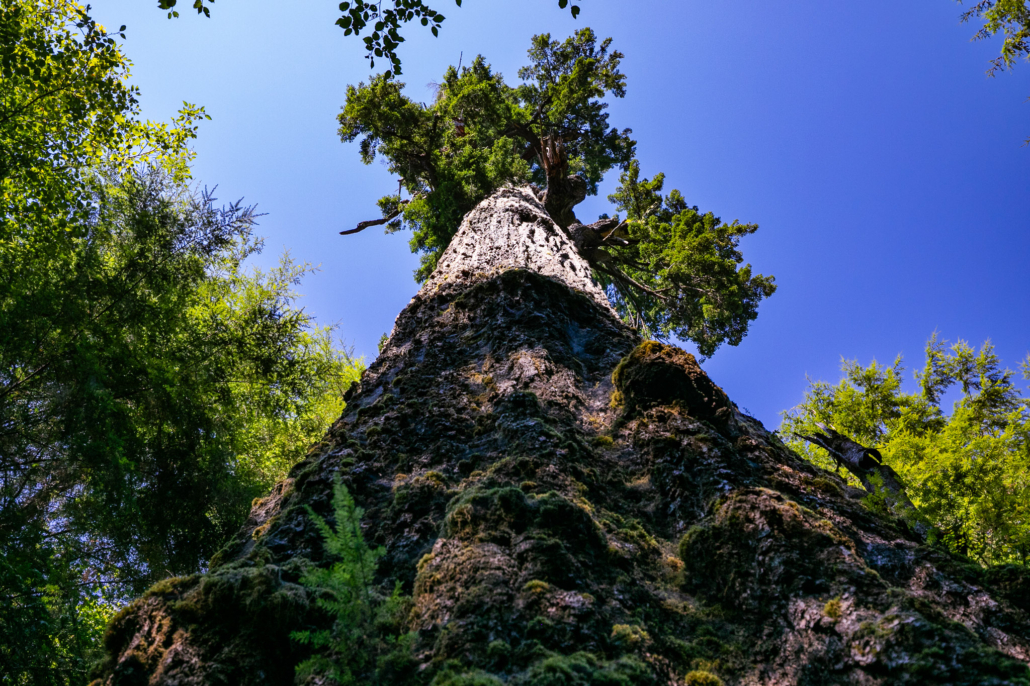
UPDATED: Port Renfrew Big Trees Map
Explore the updated Port Renfrew Big Trees Map with new directions, trails, and routes to iconic giants like Big Lonely Doug, Eden Grove, and more.
https://staging.ancientforestalliance.org/wp-content/uploads/2025/05/13-Red-Creek-Fir.jpg
1365
2048
TJ Watt
https://staging.ancientforestalliance.org/wp-content/uploads/2026/05/Ancient-Forest-Alliance-logo.svg
TJ Watt2026-05-29 15:39:342026-05-29 15:40:49UPDATED: Port Renfrew Big Trees Map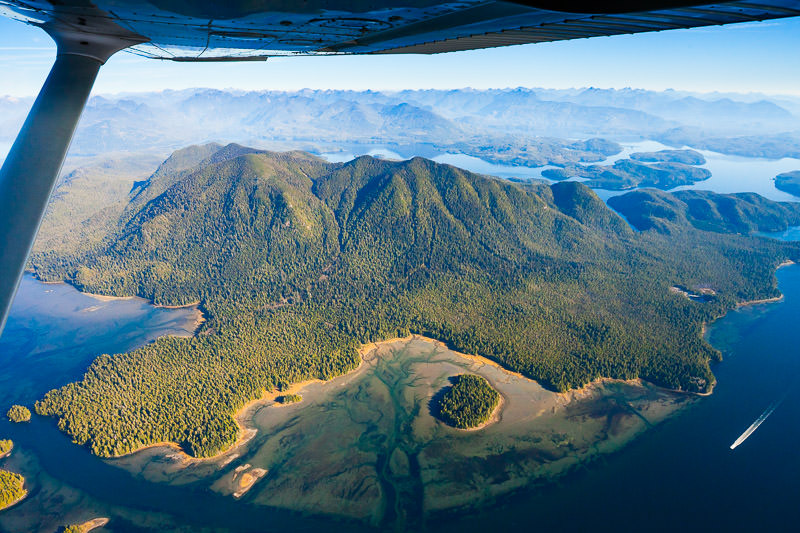
NEW! West Coast Old-Growth Hiking Guide
Explore AFA’s NEW West Coast old-growth hiking guide. From Clayoquot Sound to Port Alberni, there are trails for every skill level!
https://staging.ancientforestalliance.org/wp-content/uploads/2026/05/meares-island-big-tree-trail-tofino-1200px-338.jpg
533
800
TJ Watt
https://staging.ancientforestalliance.org/wp-content/uploads/2026/05/Ancient-Forest-Alliance-logo.svg
TJ Watt2026-05-29 12:06:002026-05-29 15:42:38NEW! West Coast Old-Growth Hiking Guide
Now Hiring: Contract Graphic Designer!
Ancient Forest Alliance is hiring a contract Graphic Designer to help bring our campaigns to life through print and digital materials.
https://staging.ancientforestalliance.org/wp-content/uploads/2026/05/flores-island-wildside-trail-1200px-430.jpg
800
1200
TJ Watt
https://staging.ancientforestalliance.org/wp-content/uploads/2026/05/Ancient-Forest-Alliance-logo.svg
TJ Watt2026-05-22 12:22:292026-05-22 12:22:29Now Hiring: Contract Graphic Designer!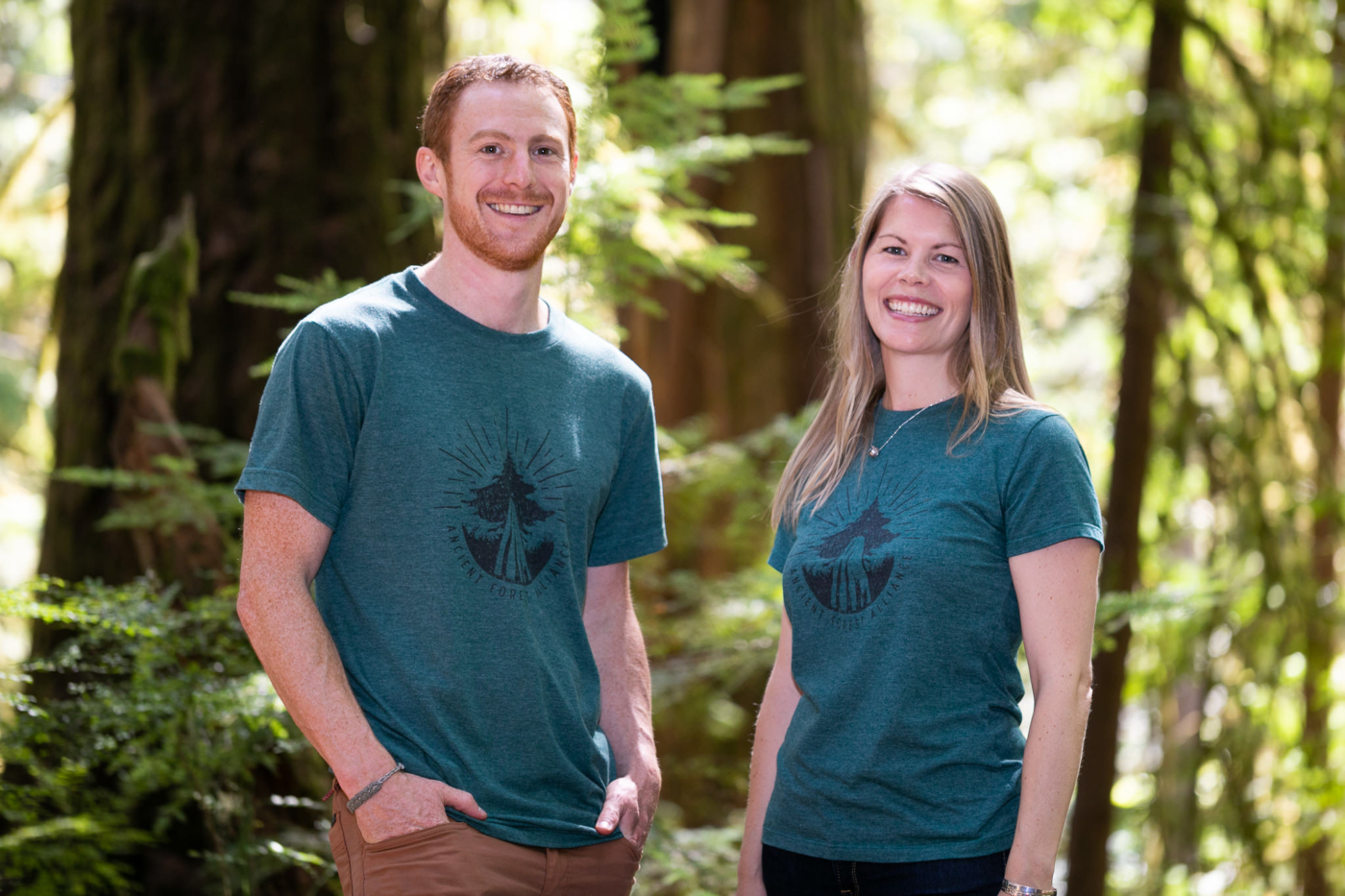
Design AFA’s Next T-Shirt and Help Protect Old-Growth Forests!
Calling all artists! For Earth Month, AFA is launching our first-ever Community T-Shirt Design Contest.
https://staging.ancientforestalliance.org/wp-content/uploads/2026/04/AFA-T-Shirt-Green-Mens-Womens.jpg
1365
2048
TJ Watt
https://staging.ancientforestalliance.org/wp-content/uploads/2026/05/Ancient-Forest-Alliance-logo.svg
TJ Watt2026-05-15 08:13:232026-05-19 09:33:44Design AFA’s Next T-Shirt and Help Protect Old-Growth Forests! Donate
 Send a Message
You’re invited to the AFA’s 2021 Virtual Year-End Update & Fundraiser!
/in AnnouncementsWe’re hosting our virtual year-end update and fundraiser on Thursday, November 25, from 7-8 pm (PST) on Zoom. Join us to learn what we’ve been up to this past year and what’s next for old-growth forests in BC. Plus, you could win some fun prizes!
With the BC government’s latest old-growth deferral announcement, the release of our groundbreaking report on the economic value of standing ancient forests, a federal funding commitment for BC old-growth, and mounting public pressure on the province to act, 2021 has been an eventful year for the ancient forest campaign.
Tune in to hear more about these and other developments, learn what AFA is doing to ensure the BC government follows through on all its old-growth promises, and help us celebrate all we’ve achieved this past year together.
The evening will feature a slideshow presentation from AFA campaigners TJ Watt, Andrea Inness, and Ian Illuminato about where we’ve been in 2021 and what’s next for ancient forests in BC, a Q&A session on all things old-growth, the chance to connect with the AFA team, and some fun giveaways.
You’ll also learn how you can support our campaigns, including by purchasing some great AFA gear (which make excellent holiday gifts!).
Event schedule:
7:00pm presentation followed by Q&A
Tickets: By donation. Register here
A Zoom link to join the webinar will be sent in your confirmation and reminder emails. If you have an Eventbrite account, you can also access the link on your online event page.
Proceeds from the event will go towards AFA’s campaign to protect endangered old-growth forests and ensure a sustainable, second-growth forest industry in BC.
We’re hosting our virtual year-end update and fundraiser on Thursday, November 25, from 7-8 pm (PST) on Zoom. Join us to learn what we’ve been up to this past year and what’s next for old-growth forests in BC. Plus, you could win some fun prizes!
With the BC government’s latest old-growth deferral announcement, the release of our groundbreaking report on the economic value of standing ancient forests, a federal funding commitment for BC old-growth, and mounting public pressure on the province to act, 2021 has been an eventful year for the ancient forest campaign.
Tune in to hear more about these and other developments, learn what AFA is doing to ensure the BC government follows through on all its old-growth promises, and help us celebrate all we’ve achieved this past year together.
The evening will feature a slideshow presentation from AFA campaigners TJ Watt, Andrea Inness, and Ian Illuminato about where we’ve been in 2021 and what’s next for ancient forests in BC, a Q&A session on all things old-growth, the chance to connect with the AFA team, and some fun giveaways.
You’ll also learn how you can support our campaigns, including by purchasing some great AFA gear (which make excellent holiday gifts!).
Event schedule:
7:00pm presentation followed by Q&A
Tickets: By donation. Register here
A Zoom link to join the webinar will be sent in your confirmation and reminder emails. If you have an Eventbrite account, you can also access the link on your online event page.
Proceeds from the event will go towards AFA’s campaign to protect endangered old-growth forests and ensure a sustainable, second-growth forest industry in BC.
We’re hosting our virtual year-end update and fundraiser on Thursday, November 25, from 7-8 pm (PST) on Zoom. Join us to learn what we’ve been up to this past year and what’s next for old-growth forests in BC. Plus, you could win some fun prizes!
With the BC government’s latest old-growth deferral announcement, the release of our groundbreaking report on the economic value of standing ancient forests, a federal funding commitment for BC old-growth, and mounting public pressure on the province to act, 2021 has been an eventful year for the ancient forest campaign.
Tune in to hear more about these and other developments, learn what AFA is doing to ensure the BC government follows through on all its old-growth promises, and help us celebrate all we’ve achieved this past year together.
The evening will feature a slideshow presentation from AFA campaigners TJ Watt, Andrea Inness, and Ian Illuminato about where we’ve been in 2021 and what’s next for ancient forests in BC, a Q&A session on all things old-growth, the chance to connect with the AFA team, and some fun giveaways.
You’ll also learn how you can support our campaigns, including by purchasing some great AFA gear (which make excellent holiday gifts!).
Event schedule:
7:00pm presentation followed by Q&A
Tickets: By donation. Register here
A Zoom link to join the webinar will be sent in your confirmation and reminder emails. If you have an Eventbrite account, you can also access the link on your online event page.
Proceeds from the event will go towards AFA’s campaign to protect endangered old-growth forests and ensure a sustainable, second-growth forest industry in BC.
We’re hosting our virtual year-end update and fundraiser on Thursday, November 25, from 7-8 pm (PST) on Zoom. Join us to learn what we’ve been up to this past year and what’s next for old-growth forests in BC. Plus, you could win some fun prizes!
With the BC government’s latest old-growth deferral announcement, the release of our groundbreaking report on the economic value of standing ancient forests, a federal funding commitment for BC old-growth, and mounting public pressure on the province to act, 2021 has been an eventful year for the ancient forest campaign.
Tune in to hear more about these and other developments, learn what AFA is doing to ensure the BC government follows through on all its old-growth promises, and help us celebrate all we’ve achieved this past year together.
The evening will feature a slideshow presentation from AFA campaigners TJ Watt, Andrea Inness, and Ian Illuminato about where we’ve been in 2021 and what’s next for ancient forests in BC, a Q&A session on all things old-growth, the chance to connect with the AFA team, and some fun giveaways.
You’ll also learn how you can support our campaigns, including by purchasing some great AFA gear (which make excellent holiday gifts!).
Event schedule:
7:00pm presentation followed by Q&A
Tickets: By donation. Register here
A Zoom link to join the webinar will be sent in your confirmation and reminder emails. If you have an Eventbrite account, you can also access the link on your online event page.
Proceeds from the event will go towards AFA’s campaign to protect endangered old-growth forests and ensure a sustainable, second-growth forest industry in BC.
Province uses best available science to identify and partially defer logging of at-risk old-growth, critical funding measures still missing
/in Media ReleaseVICTORIA (Unceded Lekwungen Territories) – Conservationists with the Ancient Forest Alliance (AFA) commend a BC government announcement made today releasing independent scientific mapping of BC’s endangered old-growth forests, and in principle accepting recommendations to defer logging in 2.6 million hectares of at-risk old-growth forests. The province has also immediately deferred all future BC Timber Sales (BCTS) cutblocks that overlap with identified at-risk forests. However, critical conservation funding to enable the full scale of deferral recommendations is still missing.
A summary report and new scientific mapping produced by an independent Old Growth Technical Advisory Panel have revealed there are 5 million hectares of unprotected, at-risk old-growth forest across BC. These forests are categorized into ancient, rare, and big tree forests. The panel recommended the province immediately defer logging in 2.6 million hectares of these forests, focusing on the most critically endangered stands.
“The independent mapping is a major step forward,” stated Ancient Forest Alliance campaigner TJ Watt. “For the first time in history, the province has used the best available science to accurately identify old-growth forests at risk. This mapping confirms what conservation organizations have been saying for years: that much of BC’s forests are at risk of irreversible biodiversity loss and must be protected.”
“The province’s acceptance of the recommendation to defer logging in 2.6 million hectares of the best and most at-risk old-growth forests is also unprecedented,” stated Watt “However, these are not immediate and without a matching provincial commitment of several hundred million dollars in conservation financing, with a primary focus on First Nations economic relief linked to deferrals, the full scale of the deferrals, and eventual permanent protection, will be impossible to achieve. We have the road map in hand, but we’re missing the gas in the tank.”
A highlight of the announcement is that BCTS, which has stood at the centre of considerable controversy for the logging of some of BC’s finest remaining old-growth stands, will see immediate logging deferrals. Covering about 20% of the province’s annual allowable cut, this could represent an area of about 500,000 hectares being placed under temporary deferral. This area is larger than all protected parkland on Vancouver Island put together, vastly exceeding all deferrals in place thus far. Included in this area are some of the most critical old-growth hotspots remaining in BC, such as the Artlish, Tsitika, and Nahmint watersheds, areas that conservationists have struggled to protect for decades.
The province also announced its plan to launch a suite of programs to support workers that will be impacted by the deferrals, including connecting workers with short-term employment opportunities, education and skills training, or funds to bridge to retirement. However, the province did not announce economic relief for lost forestry revenues in First Nations communities due to proposed deferrals. $12.69 million over three years was committed to providing capacity funding for First Nations to participate in planning and negotiation, but no money has yet been committed to providing further conservation financing.
“Today’s announcement is a historic step in the right direction, but there are some critical pieces still missing,” said AFA campaigner Andrea Inness. “Besides a lack of funding, the province has failed to provide timeframes or deadlines for the implementation of deferrals or any of the OGSR recommendations. Meanwhile, at-risk old-growth forests are being left on the chopping block while negotiations take place.”
“The province needs to show leadership in supporting First Nations-led old-growth conservation. The $12 million committed today to support capacity building for First Nations to participate in government-to-government negotiations doesn’t go nearly far enough.”
“It’s about ensuring First Nations in BC have funding made available to support logging deferrals, First Nations-led land-use planning, Indigenous protected areas that conserve old-growth, and economic diversification of First Nations’ communities,” said Inness. “There must also be support for joint decision-making and Indigenous self-determination. Currently, the province doesn’t have the political will to deliver on these pieces. That needs to change.”
The federal government recently committed $2.3 billion to expand protected areas across Canada. Of this, several hundred million dollars are available for the expansion of protected areas in BC, with $50 million specifically allocated to protect old-growth forests in BC.
The Ancient Forest Alliance is urging the BC government to commit several hundred million dollars in conservation financing to match this federal funding in the upcoming spring budget.
AFA Photographer TJ Watt receives Trebek Initiative grant and named National Geographic Explorer and Royal Canadian Geographical Society Explorer
/in Media ReleaseThe Ancient Forest Alliance’s co-founder and photographer working to protect old-growth forests has been awarded significant support and recognition by receiving a Trebek Initiative grant, naming him a National Geographic Explorer and Royal Canadian Geographical Society Explorer.
“I’m honoured and grateful to have been selected as one of the first grant recipients for the Trebek Initiative and to be named a National Geographic Explorer and a Royal Canadian Geographical Society Explorer,” noted Watt. “Combining art with exploration and environmental education is a lifelong passion of mine and I hope to shed new light on ancient forests to help see them saved.”
Watt’s project will focus largely on creating a new ‘before and after’ series of monumental old-growth trees standing and then cut, building on the impact of his first series captured in the Caycuse Valley that went viral around the world this year. The series garnered recognition in three international photo competitions: the Earth Photo 2021 Exhibition, the LensCulture Art Photography Awards, and Px3 ‘State of the World’ in Paris. The sobering images have also appeared in a number of major magazine publications such as Patagonia, Red Bulletin (Red Bull’s magazine), Outside Magazine, and the cover of British Columbia magazine.
Often exploring remote forests alone with just his camera gear and a GPS in hand, Watt hopes capturing photos of endangered old-growth will bring the attention needed to protect these forests before they’re clearcut.
“Ideally, no ‘after’ photos will have to be taken.”
“I have already captured my first set of ‘before’ images with support from the Trebek Initiative grant, which include giant old-growth redcedar and Sitka spruce trees within a recently approved cutblock along the lower Caycuse River, not far from the location where the previous series was shot,” noted Watt. “If the province doesn’t halt the logging here, the world will witness their unnecessary destruction.”
The solution to BC’s old-growth crisis lies in the need for conservation funding for indigenous communities. The Ancient Forest Alliance is calling on the province to support First Nations’ old-growth protection initiatives with several hundred million dollars, matching federal funds already allocated for expanding protected areas in BC.
“With our planet facing a global climate and biodiversity crisis, there’s a heightened urgency to ensure some of the world’s most ecologically and carbon-rich forests remain standing for centuries to come,” stated Watt.
The Trebek Initiative is named after the late Canadian host of Jeopardy! Alex Trebek and is a grantmaking partnership between the National Geographic Society and the Royal Canadian Geographical Society that supports emerging Canadian explorers, scientists, photographers, geographers, and educators with a goal of using storytelling to ignite “a passion to preserve” in all Canadians. This is the first year it has been awarded.
Learn more about the Trebek Initiative.